
High Precision Investment Casting Parts Guide for Industrial Applications
¡Bienvenido a mi blog!
¡Me encanta tenerte aquí! Antes de profundizar en el contenido, me encantaría que me acompañaras en mis redes sociales. Es donde comparto información adicional, conecto con nuestra increíble comunidad y te mantengo al tanto de las últimas noticias. Así es como puedes mantenerte conectado:
📘 Facebook: Shanghai Leierwo Industria Comercio Co., Ltd.
¡Ahora, emprendamos este viaje juntos! Espero que el contenido aquí te resulte no solo revelador, sino también inspirador y valioso. ¡Comencemos!
Tabla de contenido
Key Highlights of This Guide
- Deep technical understanding of investment casting parts and process flow
- Industry standards, tolerances, and engineering data
- Real-world applications across aerospace, automotive, energy, and medical sectors
- Cost structure, efficiency comparison, and ROI analysis
- Material engineering insights with performance benchmarks
- Case studies and industrial use scenarios
- Quality control systems and international standards (ISO, ASTM)
- Market trends, innovation outlook, and industry reports
- Comprehensive FAQ section for buyers and engineers
Introducción
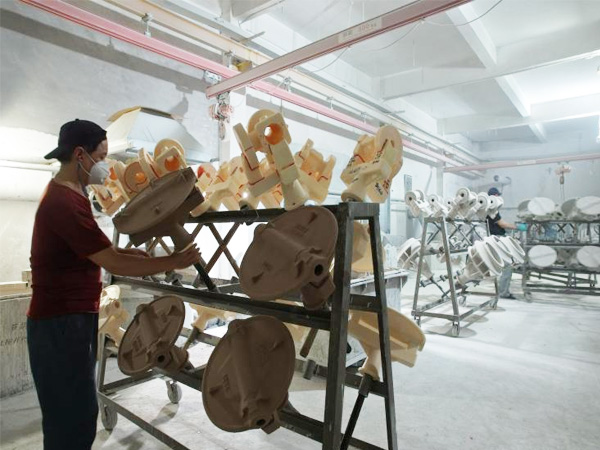
In today’s precision-driven manufacturing environment, industries are shifting toward processes that reduce machining, improve dimensional accuracy, and support complex geometries. Among these technologies, investment casting parts have become one of the most reliable solutions for high-performance applications.
Unlike traditional casting methods, investment casting enables engineers to achieve near-net-shape components with exceptional repeatability. This directly impacts production cost, lead time, and product performance. According to industry manufacturing reports, up to 60–80% reduction in machining operations can be achieved when switching from forging or sand casting to precision investment casting in complex components.
Global demand continues to grow, especially in aerospace, automotive electrification, and industrial automation sectors, where precision and lightweight design are critical.
What Are Investment Casting Parts?
Precision Metal Forming Process Overview
Investment casting parts are manufactured using a lost-wax process that allows molten metal to replicate highly detailed molds with extreme accuracy.
Process Breakdown (Engineering View)
- Wax pattern creation using injection molding
- Ceramic shell layering (5–9 layers typically)
- Dewaxing at 150–200°C
- High-temperature shell firing at 800–1100°C
- Metal pouring at controlled temperatures
- Shell breakage and finishing
Key Engineering Principle
The process ensures isotropic material properties, meaning strength distribution is uniform across the part, unlike forged components that often have directional grain structures.
Industry Standards for Investment Casting Parts
ISO & ASTM Compliance
High-quality manufacturers typically follow:
- ISO 8062: Geometrical tolerances for castings
- ASTM A958 / A995: Stainless steel casting standards
- ISO 9001:2015: Quality management system certification
- NADCAP certification (aerospace suppliers)
Typical Tolerance Ranges
| Parameter | Standard Range |
|---|---|
| Linear Tolerance | ±0.1 mm to ±0.5 mm |
| Rugosidad superficial | Ra 1.6 – 6.3 μm |
| Minimum Wall Thickness | 1.5 – 3 mm |
| Maximum Part Weight | Up to 100 kg (industrial casting lines) |
High Precision Investment Casting Parts Explained
Dimensional Accuracy Advantage
High precision casting eliminates multiple machining steps. This results in:
- Reduced production cost (up to 25–40% savings in machining-intensive parts)
- Improved assembly compatibility
- Lower defect rate in mass production
Surface Finish Performance
Investment casting achieves surface finishes significantly better than sand casting.
| Método | Rugosidad superficial (Ra) |
|---|---|
| Fundición de inversión | 1.6–6.3 μm |
| Fundición en arena | 6.3–25 μm |
| Forging (after machining) | 0.8–3.2 μm |
Materials Used in Investment Casting Parts
Stainless Steel (304, 316, 17-4PH)
- Corrosion resistance up to marine-grade environments
- High temperature tolerance (up to 870°C for 316 stainless)
- Common in valves, pumps, and marine hardware
Carbon Steel (A216 WCB)
- Tensile strength: 485–655 MPa
- Cost-effective for structural applications
- Widely used in industrial machinery
Superalloys (Inconel, Hastelloy)
- Temperature resistance above 1000°C
- Used in aerospace turbine systems
- High cost but superior performance
Industrial Applications of Investment Casting Parts
Industria aeroespacial
Investment casting is essential for turbine blades, fuel system components, and structural brackets.
Performance Requirement
- Temperature resistance: 900–1100°C
- Weight optimization critical
- Defect tolerance: near zero
Automotive Engineering
Used in:
- Turbocharger housings
- Transmission components
- Steering system parts
Electric vehicle growth has increased demand for lightweight precision castings by over 18% CAGR globally.
Sector energético
Used in:
- Gas turbines
- Wind turbine hubs
- Nuclear valve systems
Equipo médico
- Surgical tools
- Implantes ortopédicos
- Imaging device components
Investment Casting Parts vs Other Manufacturing Methods
Engineering Comparison Table
| Característica | Fundición de inversión | Forja | Fundición en arena | Mecanizado CNC |
|---|---|---|---|---|
| Precisión | Alto | Medio | Bajo | Muy alto |
| Eficiencia de costos | Medio | Medio | Bajo | Bajo |
| Design Complexity | Excelente | Limitado | Moderado | Excelente |
| Residuos de materiales | Bajo | Medio | Alto | Alto |
| Mass Production Suitability | Alto | Alto | Medio | Bajo |
Strategic Insight
Investment casting fills the gap between forging and machining by balancing complexity, cost, and production scalability.
Manufacturing Process Deep Dive
Wax Pattern Engineering
Precision wax injection molds define final geometry accuracy.
- Dimensional shrinkage compensation: 1.5–2.0%
- Pattern repeatability: ±0.05 mm in high-end systems
Ceramic Shell Technology
Modern shells use:
- Zircon sand for outer layers
- Silica sol or ethyl silicate binders
- 5–9 alternating layers for strength
Metal Pouring Control
- Temperature accuracy: ±10°C
- Vacuum or inert gas environments used for superalloys
Quality Control Systems in Investment Casting Parts
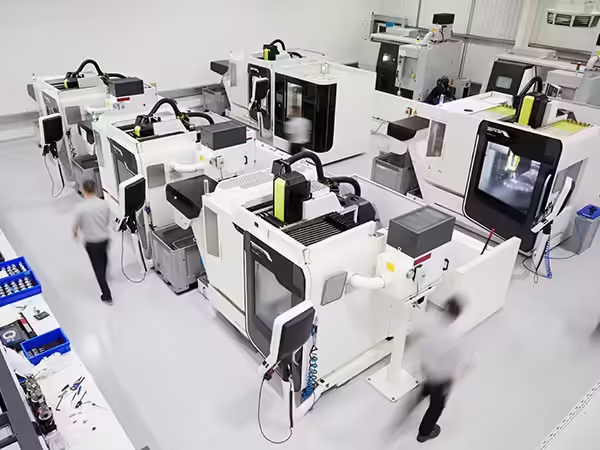
Métodos de inspección
- X-ray radiography for internal defects
- Coordinate Measuring Machines (CMM)
- Spectrographic material analysis
- Pruebas de colorante penetrante
Defect Rate Benchmark
- Advanced facilities: <1.5% defect rate
- Standard industry: 3–5% defect rate
Cost Structure Analysis of Investment Casting Parts
Factores de costo
- Tooling (wax injection dies)
- Selección de materiales
- Shell building cycles
- Post-processing and machining
Example Cost Breakdown
| Componente | Cost Share |
|---|---|
| Herramientas | 20–30% |
| Material | 25–35% |
| Processing | 30-40% |
| Acabado | 10-15% |
ROI Consideration
Although initial tooling is high, long-term production reduces cost per unit significantly after 1,000+ cycles.
Industry Case Studies
Case Study 1: Aerospace Supplier Optimization
A turbine component manufacturer reduced machining time by 72% after switching to investment casting.
Case Study 2: Automotive Gear Housing
A European automotive supplier achieved:
- 35% cost reduction
- 40% weight reduction
- 20% faster production cycle
Case Study 3: Industrial Valve Systems
Stainless steel valve bodies showed:
- 50% improvement in corrosion resistance lifespan
- Reduced leakage failure rate by 60%
Market Trends & Industry Reports
Global Market Growth
According to manufacturing industry reports:
- Global investment casting market is expected to exceed USD 28–32 billion by 2030
- CAGR estimated at 4.5%–6.2% annually
Key Growth Drivers
- Aerospace lightweighting demand
- EV manufacturing expansion
- Industrial automation growth
- Renewable energy infrastructure
Technology Trends
- 3D printed wax patterns
- AI-based defect detection
- Hybrid CNC + casting manufacturing
- Digital twin simulation for mold design
Advantages of Investment Casting Parts
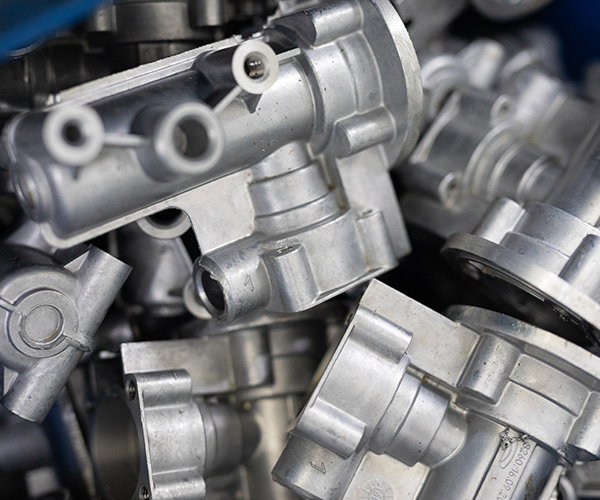
Engineering Benefits
- Complex geometry capability
- High dimensional repeatability
- Reduced assembly requirements
Economic Benefits
- Lower machining dependency
- Reduced material waste
- Scalable mass production
Beneficios ambientales
- Lower scrap rates
- Energy-efficient compared to forging in small batch production
Limitations and Engineering Challenges
High Initial Tooling Cost
Tooling can range from $5,000 to $50,000 depending on complexity.
Longer Production Cycle
Compared to die casting, cycle time is longer due to shell building.
Size Limitation
Extremely large components may require alternative casting methods.
How to Choose the Right Investment Casting Parts Supplier
Criterios de evaluación
- ISO 9001 certification
- Engineering simulation capability
- Material traceability system
- Defect rate performance history
Buyer Checklist
- Can they provide CMM reports?
- Do they support OEM customization?
- What is their lead time stability?
- Do they support small batch prototyping?
PREGUNTAS FRECUENTES
Qué utilizan las industrias investment casting parts most?
Aerospace, automotive, energy, and industrial machinery are the largest users.
Are investment casting parts expensive?
Initial tooling is high, but unit cost decreases significantly in mass production.
What is the accuracy of investment casting?
Typically ±0.1 mm for precision components depending on geometry.
Can investment casting replace forging?
Not fully. It replaces forging in complex, lightweight, or precision-demanding parts.
What is the lifespan of investment casting parts?
Depending on material, lifespan can exceed 10–20 years in industrial environments.
Conclusión
Investment casting technology continues to evolve as industries demand higher precision, lower weight, and more complex geometries. With strong compatibility across aerospace, automotive, and industrial sectors, investment casting parts remain a cornerstone of modern manufacturing.
The combination of precision engineering, material flexibility, and scalable production ensures this process will continue to play a critical role in global industrial supply chains for decades to come.
Categorías de productos
- Piezas de válvulas
- Piezas de la bomba de agua
- Piezas de la caja de cojinetes
- Piezas de fundición a presión
- Productos para bombas de acero inoxidable
- Productos para bombas de hierro fundido
- Piezas de válvulas para automóviles
- Recambios para automóviles
- Piezas de válvulas para uso civil
- Piezas de bomba de vacío KF

¡Comencemos tu próximo proyecto!
Inicie su proyecto con Leierwo
1. Envíe su consulta
2. Cálculo de costes
3. Inicio de la producción
4. Organizar la entrega
PREGUNTAS FRECUENTES
Sí, tenemos una amplia experiencia en el comercio internacional y podemos ayudar a los clientes con el despacho de aduanas de exportación y los arreglos de envío. Aceptamos varios métodos de pago internacionales, incluyendo T/T (transferencia telegráfica), transferencia bancaria y carta de crédito (L/C). Las condiciones de pago se pueden discutir con nuestro equipo de ventas.
Al asociarse con Leierwo, podrá disfrutar de precios competitivos y una calidad superior a la de otros proveedores. Además, ofrecemos una solución integral para entregar piezas acabadas, incluido el mecanizado CNC y el tratamiento de superficies, lo que garantiza un proceso de producción sin fisuras.
Contamos con avanzados equipos de fundición y estrictos sistemas de control de calidad. Nuestra capacidad de producción mensual es considerable y podemos fabricar productos a partir de dibujos o muestras proporcionados por el cliente. Aceptamos tanto pequeños pedidos de prueba como producciones a gran escala.
Nuestros productos cumplen normas internacionales como ASTM, AISI, DIN y JIS. Podemos proporcionar informes de pruebas de materiales y certificaciones pertinentes para garantizar que la calidad del producto cumple los requisitos del cliente.
Seguimos estrictamente el sistema de gestión de calidad ISO 9001 y realizamos múltiples inspecciones a lo largo del proceso de producción, incluidos análisis espectrográficos, pruebas de rayos X, pruebas ultrasónicas y mediciones dimensionales. Estas medidas de control de calidad garantizan que nuestras piezas de fundición cumplen las normas más estrictas.
Sin embargo, somos flexibles y estamos abiertos a discutir sus necesidades específicas.
Nuestro plazo de producción estándar es de 4 a 6 semanas, en función de la cantidad del pedido y la complejidad del producto. Nos esforzamos por acortar los plazos de entrega para satisfacer las demandas de los clientes.
Sí, podemos proporcionar muestras para la inspección de calidad. Los costes de las muestras y los gastos de envío pueden negociarse, y los gastos de las muestras pueden reembolsarse al realizar un pedido formal.
 Spanish
  English
  Arabic
  Malay
Malay  German