
High Precision Investment Casting Parts Guide for Industrial Applications
مرحباً بكم في مدونتي!
يسعدني وجودك هنا! قبل أن نتعمق في المحتوى، أود أن تنضموا إليّ على منصات التواصل الاجتماعي. هناك أشارككم أفكارًا إضافية، وأتواصل مع مجتمعنا الرائع، وأُطلعكم على آخر الأخبار. إليكم كيفية البقاء على تواصل:
📘 فيسبوك: شركة شنغهاي لييروو الصناعية التجارية المحدودة
الآن، لننطلق في هذه الرحلة معًا! آمل أن تجدوا هذا المحتوى مفيدًا ومُلهمًا وقيّمًا. هيا بنا!
جدول المحتويات
Key Highlights of This Guide
- Deep technical understanding of investment casting parts and process flow
- Industry standards, tolerances, and engineering data
- Real-world applications across aerospace, automotive, energy, and medical sectors
- Cost structure, efficiency comparison, and ROI analysis
- Material engineering insights with performance benchmarks
- Case studies and industrial use scenarios
- Quality control systems and international standards (ISO, ASTM)
- Market trends, innovation outlook, and industry reports
- Comprehensive FAQ section for buyers and engineers
مقدمة
In today’s precision-driven manufacturing environment, industries are shifting toward processes that reduce machining, improve dimensional accuracy, and support complex geometries. Among these technologies, investment casting parts have become one of the most reliable solutions for high-performance applications.
Unlike traditional casting methods, investment casting enables engineers to achieve near-net-shape components with exceptional repeatability. This directly impacts production cost, lead time, and product performance. According to industry manufacturing reports, up to 60–80% reduction in machining operations can be achieved when switching from forging or sand casting to precision investment casting in complex components.
Global demand continues to grow, especially in aerospace, automotive electrification, and industrial automation sectors, where precision and lightweight design are critical.
What Are Investment Casting Parts?
Precision Metal Forming Process Overview
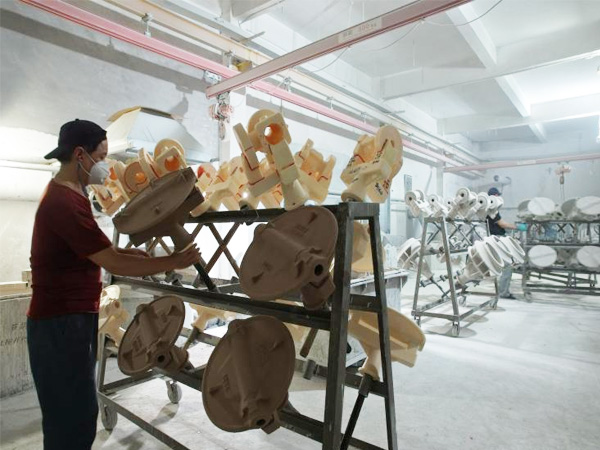
Investment casting parts are manufactured using a lost-wax process that allows molten metal to replicate highly detailed molds with extreme accuracy.
Process Breakdown (Engineering View)
- Wax pattern creation using injection molding
- Ceramic shell layering (5–9 layers typically)
- Dewaxing at 150–200°C
- High-temperature shell firing at 800–1100°C
- Metal pouring at controlled temperatures
- Shell breakage and finishing
Key Engineering Principle
The process ensures isotropic material properties, meaning strength distribution is uniform across the part, unlike forged components that often have directional grain structures.
Industry Standards for Investment Casting Parts
ISO & ASTM Compliance
High-quality manufacturers typically follow:
- ISO 8062: Geometrical tolerances for castings
- ASTM A958 / A995: Stainless steel casting standards
- ايزو 9001:2015: Quality management system certification
- NADCAP certification (aerospace suppliers)
Typical Tolerance Ranges
| Parameter | Standard Range |
|---|---|
| Linear Tolerance | ±0.1 mm to ±0.5 mm |
| خشونة السطح | Ra 1.6 – 6.3 μm |
| Minimum Wall Thickness | 1.5 – 3 mm |
| Maximum Part Weight | Up to 100 kg (industrial casting lines) |
High Precision Investment Casting Parts Explained
Dimensional Accuracy Advantage
High precision casting eliminates multiple machining steps. This results in:
- Reduced production cost (up to 25–40% savings in machining-intensive parts)
- Improved assembly compatibility
- Lower defect rate in mass production
Surface Finish Performance
Investment casting achieves surface finishes significantly better than sand casting.
| طريقة | خشونة السطح (Ra) |
|---|---|
| الاستثمار في الصب | 1.6–6.3 μm |
| صب الرمل | 6.3–25 μm |
| Forging (after machining) | 0.8–3.2 μm |
Materials Used in Investment Casting Parts
Stainless Steel (304, 316, 17-4PH)
- Corrosion resistance up to marine-grade environments
- High temperature tolerance (up to 870°C for 316 stainless)
- Common in valves, pumps, and marine hardware
Carbon Steel (A216 WCB)
- Tensile strength: 485–655 MPa
- Cost-effective for structural applications
- Widely used in industrial machinery
Superalloys (Inconel, Hastelloy)
- Temperature resistance above 1000°C
- Used in aerospace turbine systems
- High cost but superior performance
Industrial Applications of Investment Casting Parts
صناعة الطيران والفضاء
Investment casting is essential for turbine blades, fuel system components, and structural brackets.
Performance Requirement
- Temperature resistance: 900–1100°C
- Weight optimization critical
- Defect tolerance: near zero
Automotive Engineering
Used in:
- Turbocharger housings
- Transmission components
- Steering system parts
Electric vehicle growth has increased demand for lightweight precision castings by over 18% CAGR globally.
Energy Sector
Used in:
- Gas turbines
- Wind turbine hubs
- Nuclear valve systems
معدات طبية
- Surgical tools
- زراعة العظام
- Imaging device components
Investment Casting Parts vs Other Manufacturing Methods
Engineering Comparison Table
| ميزة | الاستثمار في الصب | التشكيل | صب الرمل | تصنيع الآلات باستخدام الحاسب الآلي |
|---|---|---|---|---|
| Precision | عالي | واسطة | قليل | عالية جدًا |
| كفاءة التكلفة | واسطة | واسطة | قليل | قليل |
| Design Complexity | ممتاز | محدود | معتدل | ممتاز |
| نفايات المواد | قليل | واسطة | عالي | عالي |
| Mass Production Suitability | عالي | عالي | واسطة | قليل |
Strategic Insight
Investment casting fills the gap between forging and machining by balancing complexity, cost, and production scalability.
Manufacturing Process Deep Dive
Wax Pattern Engineering
Precision wax injection molds define final geometry accuracy.
- Dimensional shrinkage compensation: 1.5–2.0%
- Pattern repeatability: ±0.05 mm in high-end systems
Ceramic Shell Technology
Modern shells use:
- Zircon sand for outer layers
- Silica sol or ethyl silicate binders
- 5–9 alternating layers for strength
Metal Pouring Control
- Temperature accuracy: ±10°C
- Vacuum or inert gas environments used for superalloys
Quality Control Systems in Investment Casting Parts
أساليب الفحص
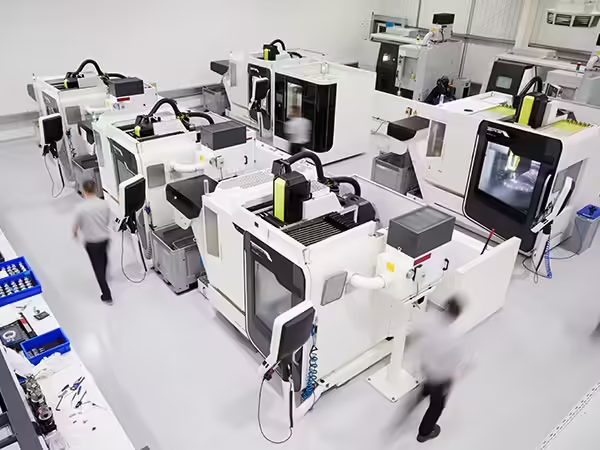
- X-ray radiography for internal defects
- آلات قياس الإحداثيات (CMM)
- Spectrographic material analysis
- اختبار اختراق الصبغة
Defect Rate Benchmark
- Advanced facilities: <1.5% defect rate
- Standard industry: 3–5% defect rate
Cost Structure Analysis of Investment Casting Parts
عوامل التكلفة
- Tooling (wax injection dies)
- اختيار المواد
- Shell building cycles
- Post-processing and machining
Example Cost Breakdown
| Component | Cost Share |
|---|---|
| Tooling | 20–30% |
| مادة | 25–35% |
| Processing | 30–40% |
| التشطيب | 10–15% |
ROI Consideration
Although initial tooling is high, long-term production reduces cost per unit significantly after 1,000+ cycles.
Industry Case Studies
Case Study 1: Aerospace Supplier Optimization
A turbine component manufacturer reduced machining time by 72% after switching to investment casting.
Case Study 2: Automotive Gear Housing
A European automotive supplier achieved:
- 35% cost reduction
- 40% weight reduction
- 20% faster production cycle
Case Study 3: Industrial Valve Systems
Stainless steel valve bodies showed:
- 50% improvement in corrosion resistance lifespan
- Reduced leakage failure rate by 60%
Market Trends & Industry Reports
Global Market Growth
According to manufacturing industry reports:
- Global investment casting market is expected to exceed USD 28–32 billion by 2030
- CAGR estimated at 4.5%–6.2% annually
Key Growth Drivers
- Aerospace lightweighting demand
- EV manufacturing expansion
- Industrial automation growth
- Renewable energy infrastructure
Technology Trends
- 3D printed wax patterns
- AI-based defect detection
- Hybrid CNC + casting manufacturing
- Digital twin simulation for mold design
Advantages of Investment Casting Parts
Engineering Benefits
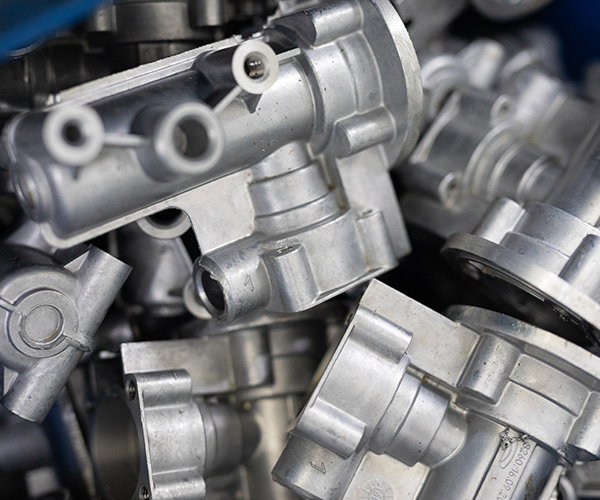
- Complex geometry capability
- High dimensional repeatability
- Reduced assembly requirements
Economic Benefits
- Lower machining dependency
- Reduced material waste
- Scalable mass production
الفوائد البيئية
- Lower scrap rates
- Energy-efficient compared to forging in small batch production
Limitations and Engineering Challenges
High Initial Tooling Cost
Tooling can range from $5,000 to $50,000 depending on complexity.
Longer Production Cycle
Compared to die casting, cycle time is longer due to shell building.
Size Limitation
Extremely large components may require alternative casting methods.
How to Choose the Right Investment Casting Parts Supplier
معايير التقييم
- ISO 9001 certification
- Engineering simulation capability
- Material traceability system
- Defect rate performance history
Buyer Checklist
- Can they provide CMM reports?
- Do they support OEM customization?
- What is their lead time stability?
- Do they support small batch prototyping?
الأسئلة الشائعة
ما هي الصناعات التي تستخدم investment casting parts most?
Aerospace, automotive, energy, and industrial machinery are the largest users.
Are investment casting parts expensive?
Initial tooling is high, but unit cost decreases significantly in mass production.
What is the accuracy of investment casting?
Typically ±0.1 mm for precision components depending on geometry.
Can investment casting replace forging?
Not fully. It replaces forging in complex, lightweight, or precision-demanding parts.
What is the lifespan of investment casting parts?
Depending on material, lifespan can exceed 10–20 years in industrial environments.
خاتمة
Investment casting technology continues to evolve as industries demand higher precision, lower weight, and more complex geometries. With strong compatibility across aerospace, automotive, and industrial sectors, investment casting parts remain a cornerstone of modern manufacturing.
The combination of precision engineering, material flexibility, and scalable production ensures this process will continue to play a critical role in global industrial supply chains for decades to come.
فئات المنتجات
- أجزاء الصمامات
- أجزاء مضخة المياه
- أجزاء صندوق المحمل
- أجزاء الصب بالقالب
- منتجات مضخات الفولاذ المقاوم للصدأ
- منتجات مضخات الحديد الزهر
- قطع غيار الصمامات لاستخدام السيارات
- قطع غيار السيارات
- أجزاء الصمامات للاستخدام المدني
- قطع غيار مضخة التفريغ KF

لنبدأ مشروعك القادم!
ابدأ مشروعك مع Leierwo
1. أرسل استفسارك
2. حساب التكلفة
3. بدء الإنتاج
4. ترتيب التسليم
الأسئلة الشائعة
نعم، لدينا خبرة واسعة في التجارة الدولية ويمكننا مساعدة العملاء في التخليص الجمركي للتصدير وترتيبات الشحن. نحن نقدم شروطًا تجارية مختلفة مثل FOB و CIF و DDP لتلبية الاحتياجات اللوجستية المختلفة، ونقبل طرق الدفع الدولية المختلفة، بما في ذلك T/T (التحويل البرقي) والتحويل البرقي وخطاب الاعتماد (L/C). يمكن مناقشة شروط الدفع مع فريق المبيعات لدينا.
من خلال الشراكة مع Leierwo، يمكنك الاستمتاع بأسعار تنافسية وجودة فائقة مقارنةً بالموردين الآخرين. بالإضافة إلى ذلك، نقدم حلاً شاملاً لتسليم الأجزاء الجاهزة، بما في ذلك التصنيع باستخدام الحاسب الآلي والمعالجة السطحية، مما يضمن عملية إنتاج سلسة.
لدينا معدات صب متقدمة وأنظمة صارمة لمراقبة الجودة. قدرتنا الإنتاجية الشهرية كبيرة، ويمكننا تصنيع المنتجات بناءً على الرسومات أو العينات المقدمة من العملاء. نحن نقبل كلاً من الطلبات التجريبية الصغيرة والإنتاج على نطاق واسع.
تتوافق منتجاتنا مع المعايير الدولية مثل ASTM و AISI و DIN و JIS. ويمكننا تقديم تقارير اختبار المواد والشهادات ذات الصلة لضمان توافق جودة المنتج مع متطلبات العملاء.
نحن نتبع بدقة نظام إدارة الجودة ISO 9001 ونجري عمليات فحص متعددة في جميع مراحل عملية الإنتاج، بما في ذلك التحليل الطيفي، واختبار الأشعة السينية، والاختبار بالموجات فوق الصوتية، وقياسات الأبعاد. تضمن تدابير مراقبة الجودة هذه أن مصبوباتنا تلبي أعلى المعايير.
يعتمد موك لدينا على نوع المنتج ومدى تعقيده، ومع ذلك، نحن مرنون ومنفتحون لمناقشة احتياجاتك الخاصة.
تتراوح مهلة الإنتاج القياسية لدينا من 4 إلى 6 أسابيع، حسب كمية الطلب وتعقيد المنتج. نسعى جاهدين لتقصير أوقات التسليم لتلبية طلبات العملاء.
نعم، يمكننا تقديم عينات لفحص الجودة. يمكن التفاوض بشأن تكاليف العينات ورسوم الشحن، ويمكن استرداد رسوم العينات عند تقديم طلب رسمي.
 Arabic
  English
  Spanish
  Malay
Malay  German