
High Precision Investment Casting Parts Guide for Industrial Applications
Selamat Datang ke Blog Saya!
Saya teruja untuk mempunyai anda di sini! Sebelum kita menyelami kandungan, saya ingin anda menyertai saya di platform media sosial saya. Di situlah saya berkongsi cerapan tambahan, berhubung dengan komuniti kami yang hebat dan memaklumkan anda tentang berita terkini. Begini cara anda boleh terus berhubung:
📘 Facebook: Shanghai Leierwo Industry Trade Co., Ltd.
Sekarang, mari kita mulakan perjalanan ini bersama-sama! Saya harap anda mendapati kandungan di sini bukan sahaja bernas tetapi juga memberi inspirasi dan berharga. Mari mulakan!
Jadual Kandungan
Key Highlights of This Guide
- Deep technical understanding of investment casting parts and process flow
- Industry standards, tolerances, and engineering data
- Real-world applications across aerospace, automotive, energy, and medical sectors
- Cost structure, efficiency comparison, and ROI analysis
- Material engineering insights with performance benchmarks
- Case studies and industrial use scenarios
- Quality control systems and international standards (ISO, ASTM)
- Market trends, innovation outlook, and industry reports
- Comprehensive FAQ section for buyers and engineers
pengenalan
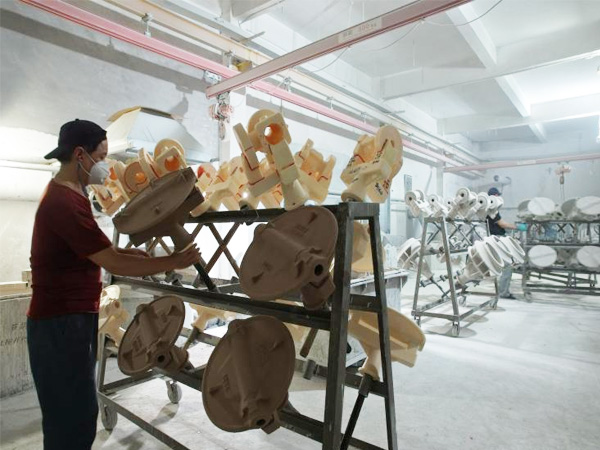
In today’s precision-driven manufacturing environment, industries are shifting toward processes that reduce machining, improve dimensional accuracy, and support complex geometries. Among these technologies, investment casting parts have become one of the most reliable solutions for high-performance applications.
Unlike traditional casting methods, investment casting enables engineers to achieve near-net-shape components with exceptional repeatability. This directly impacts production cost, lead time, and product performance. According to industry manufacturing reports, up to 60–80% reduction in machining operations can be achieved when switching from forging or sand casting to precision investment casting in complex components.
Global demand continues to grow, especially in aerospace, automotive electrification, and industrial automation sectors, where precision and lightweight design are critical.
What Are Investment Casting Parts?
Precision Metal Forming Process Overview
Investment casting parts are manufactured using a lost-wax process that allows molten metal to replicate highly detailed molds with extreme accuracy.
Process Breakdown (Engineering View)
- Wax pattern creation using injection molding
- Ceramic shell layering (5–9 layers typically)
- Dewaxing at 150–200°C
- High-temperature shell firing at 800–1100°C
- Metal pouring at controlled temperatures
- Shell breakage and finishing
Key Engineering Principle
The process ensures isotropic material properties, meaning strength distribution is uniform across the part, unlike forged components that often have directional grain structures.
Industry Standards for Investment Casting Parts
ISO & ASTM Compliance
High-quality manufacturers typically follow:
- ISO 8062: Geometrical tolerances for castings
- ASTM A958 / A995: Stainless steel casting standards
- ISO 9001:2015: Quality management system certification
- NADCAP certification (aerospace suppliers)
Typical Tolerance Ranges
| Parameter | Standard Range |
|---|---|
| Linear Tolerance | ±0.1 mm to ±0.5 mm |
| Kekasaran Permukaan | Ra 1.6 – 6.3 μm |
| Minimum Wall Thickness | 1.5 – 3 mm |
| Maximum Part Weight | Up to 100 kg (industrial casting lines) |
High Precision Investment Casting Parts Explained
Dimensional Accuracy Advantage
High precision casting eliminates multiple machining steps. This results in:
- Reduced production cost (up to 25–40% savings in machining-intensive parts)
- Improved assembly compatibility
- Lower defect rate in mass production
Surface Finish Performance
Investment casting achieves surface finishes significantly better than sand casting.
| Method | Kekasaran Permukaan (Ra) |
|---|---|
| Pemutus Pelaburan | 1.6–6.3 μm |
| Tuangan Pasir | 6.3–25 μm |
| Forging (after machining) | 0.8–3.2 μm |
Materials Used in Investment Casting Parts
Stainless Steel (304, 316, 17-4PH)
- Corrosion resistance up to marine-grade environments
- High temperature tolerance (up to 870°C for 316 stainless)
- Common in valves, pumps, and marine hardware
Carbon Steel (A216 WCB)
- Tensile strength: 485–655 MPa
- Cost-effective for structural applications
- Widely used in industrial machinery
Superalloys (Inconel, Hastelloy)
- Temperature resistance above 1000°C
- Used in aerospace turbine systems
- High cost but superior performance
Industrial Applications of Investment Casting Parts
Aerospace Industry
Investment casting is essential for turbine blades, fuel system components, and structural brackets.
Performance Requirement
- Temperature resistance: 900–1100°C
- Weight optimization critical
- Defect tolerance: near zero
Automotive Engineering
Used in:
- Turbocharger housings
- Transmission components
- Steering system parts
Electric vehicle growth has increased demand for lightweight precision castings by over 18% CAGR globally.
Energy Sector
Used in:
- Gas turbines
- Wind turbine hubs
- Nuclear valve systems
Peralatan Perubatan
- Surgical tools
- Orthopedic implants
- Imaging device components
Investment Casting Parts vs Other Manufacturing Methods
Engineering Comparison Table
| Ciri | Pemutus Pelaburan | Menempa | Tuangan Pasir | Pemesinan CNC |
|---|---|---|---|---|
| Ketepatan | tinggi | Sederhana | rendah | Sangat Tinggi |
| Kecekapan Kos | Sederhana | Sederhana | rendah | rendah |
| Design Complexity | Cemerlang | Terhad | Sederhana | Cemerlang |
| Sisa Bahan | rendah | Sederhana | tinggi | tinggi |
| Mass Production Suitability | tinggi | tinggi | Sederhana | rendah |
Strategic Insight
Investment casting fills the gap between forging and machining by balancing complexity, cost, and production scalability.
Manufacturing Process Deep Dive
Wax Pattern Engineering
Precision wax injection molds define final geometry accuracy.
- Dimensional shrinkage compensation: 1.5–2.0%
- Pattern repeatability: ±0.05 mm in high-end systems
Ceramic Shell Technology
Modern shells use:
- Zircon sand for outer layers
- Silica sol or ethyl silicate binders
- 5–9 alternating layers for strength
Metal Pouring Control
- Temperature accuracy: ±10°C
- Vacuum or inert gas environments used for superalloys
Quality Control Systems in Investment Casting Parts
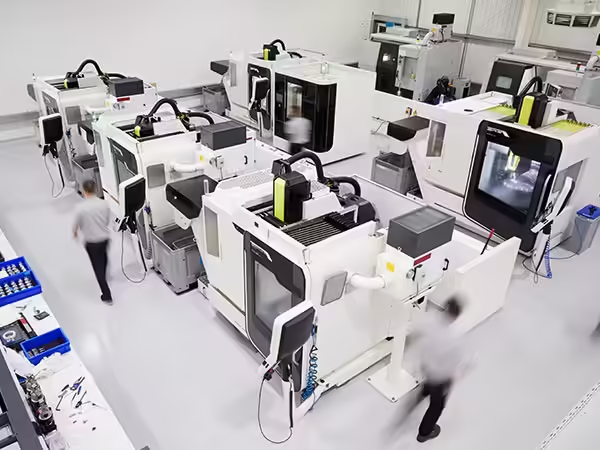
Kaedah Pemeriksaan
- X-ray radiography for internal defects
- Coordinate Measuring Machines (CMM)
- Spectrographic material analysis
- Dye penetrant testing
Defect Rate Benchmark
- Advanced facilities: <1.5% defect rate
- Standard industry: 3–5% defect rate
Cost Structure Analysis of Investment Casting Parts
Cost Drivers
- Tooling (wax injection dies)
- Pemilihan bahan
- Shell building cycles
- Post-processing and machining
Example Cost Breakdown
| Komponen | Cost Share |
|---|---|
| Tooling | 20–30% |
| bahan | 25–35% |
| Processing | 30–40% |
| Penamat | 10–15% |
ROI Consideration
Although initial tooling is high, long-term production reduces cost per unit significantly after 1,000+ cycles.
Industry Case Studies
Case Study 1: Aerospace Supplier Optimization
A turbine component manufacturer reduced machining time by 72% after switching to investment casting.
Case Study 2: Automotive Gear Housing
A European automotive supplier achieved:
- 35% cost reduction
- 40% weight reduction
- 20% faster production cycle
Case Study 3: Industrial Valve Systems
Stainless steel valve bodies showed:
- 50% improvement in corrosion resistance lifespan
- Reduced leakage failure rate by 60%
Market Trends & Industry Reports
Global Market Growth
According to manufacturing industry reports:
- Global investment casting market is expected to exceed USD 28–32 billion by 2030
- CAGR estimated at 4.5%–6.2% annually
Key Growth Drivers
- Aerospace lightweighting demand
- EV manufacturing expansion
- Industrial automation growth
- Renewable energy infrastructure
Technology Trends
- 3D printed wax patterns
- AI-based defect detection
- Hybrid CNC + casting manufacturing
- Digital twin simulation for mold design
Advantages of Investment Casting Parts
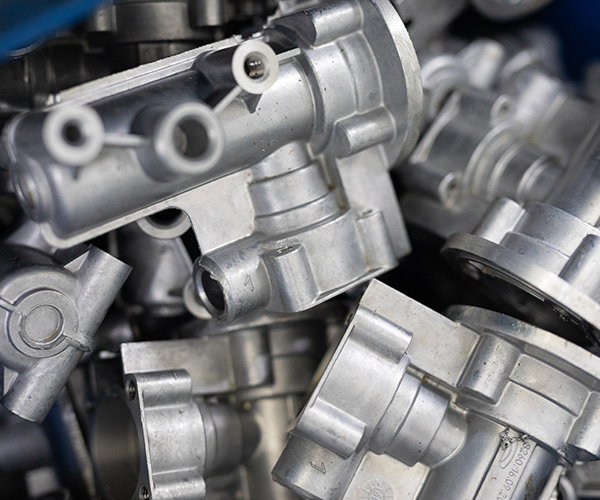
Engineering Benefits
- Complex geometry capability
- High dimensional repeatability
- Reduced assembly requirements
Economic Benefits
- Lower machining dependency
- Reduced material waste
- Scalable mass production
Environmental Benefits
- Lower scrap rates
- Energy-efficient compared to forging in small batch production
Limitations and Engineering Challenges
High Initial Tooling Cost
Tooling can range from $5,000 to $50,000 depending on complexity.
Longer Production Cycle
Compared to die casting, cycle time is longer due to shell building.
Size Limitation
Extremely large components may require alternative casting methods.
How to Choose the Right Investment Casting Parts Supplier
Evaluation Criteria
- ISO 9001 certification
- Engineering simulation capability
- Material traceability system
- Defect rate performance history
Buyer Checklist
- Can they provide CMM reports?
- Do they support OEM customization?
- What is their lead time stability?
- Do they support small batch prototyping?
Soalan Lazim
Industri apa yang digunakan investment casting parts most?
Aerospace, automotive, energy, and industrial machinery are the largest users.
Are investment casting parts expensive?
Initial tooling is high, but unit cost decreases significantly in mass production.
What is the accuracy of investment casting?
Typically ±0.1 mm for precision components depending on geometry.
Can investment casting replace forging?
Not fully. It replaces forging in complex, lightweight, or precision-demanding parts.
What is the lifespan of investment casting parts?
Depending on material, lifespan can exceed 10–20 years in industrial environments.
Kesimpulan
Investment casting technology continues to evolve as industries demand higher precision, lower weight, and more complex geometries. With strong compatibility across aerospace, automotive, and industrial sectors, investment casting parts remain a cornerstone of modern manufacturing.
The combination of precision engineering, material flexibility, and scalable production ensures this process will continue to play a critical role in global industrial supply chains for decades to come.
Kategori Produk
- Bahagian Injap
- Bahagian Pam Air
- Bahagian Kotak Galas
- Bahagian Die Casting
- Produk Pam Keluli Tahan Karat
- Produk Pam Besi Tuang
- Bahagian Injap Untuk Kegunaan Kereta
- Bahagian Kenderaan
- Bahagian Injap Untuk Kegunaan Awam
- Bahagian Pam Vakum KF

Mari mulakan projek anda yang seterusnya!
Mulakan Projek Anda dengan Leierwo
1. Hantar Pertanyaan Anda
2. Pengiraan Kos
3. Mulakan Pengeluaran
4. Susun Penghantaran
Soalan Lazim
Ya, kami mempunyai pengalaman yang luas dalam perdagangan antarabangsa dan boleh membantu pelanggan dengan urusan pelepasan kastam dan penghantaran eksport. Kami menawarkan pelbagai syarat perdagangan seperti FOB, CIF dan DDP untuk menampung keperluan logistik yang berbeza. Kami menerima pelbagai kaedah pembayaran antarabangsa, termasuk T/T (Pemindahan Telegraf), pindahan kawat dan Letter of Credit (L/C). Syarat pembayaran boleh dibincangkan dengan pasukan jualan kami.
Dengan bekerjasama dengan Leierwo, anda boleh menikmati harga yang kompetitif dan kualiti unggul berbanding pembekal lain. Selain itu, kami menawarkan penyelesaian sehenti untuk menghantar bahagian siap, termasuk pemesinan CNC dan rawatan permukaan, memastikan proses pengeluaran yang lancar.
Kami mempunyai peralatan pemutus termaju dan sistem kawalan kualiti yang ketat. Kapasiti pengeluaran bulanan kami adalah besar, dan kami boleh mengeluarkan produk berdasarkan lukisan atau sampel yang disediakan oleh pelanggan. Kami menerima kedua-dua pesanan percubaan kecil dan pengeluaran berskala besar.
Produk kami mematuhi piawaian antarabangsa seperti ASTM, AISI, DIN dan JIS. Kami boleh menyediakan laporan ujian material dan pensijilan yang berkaitan untuk memastikan kualiti produk memenuhi keperluan pelanggan.
Kami mematuhi sistem pengurusan kualiti ISO 9001 dengan ketat dan menjalankan pelbagai pemeriksaan sepanjang proses pengeluaran, termasuk analisis spektrografi, ujian X-ray, ujian ultrasonik dan ukuran dimensi. Langkah kawalan kualiti ini menjamin bahawa tuangan kami memenuhi piawaian tertinggi.
MOQ kami bergantung pada jenis produk dan kerumitan, Walau bagaimanapun, kami fleksibel dan terbuka untuk membincangkan keperluan khusus anda.
Masa utama pengeluaran standard kami ialah 4-6 minggu, bergantung pada kuantiti pesanan dan kerumitan produk. Kami berusaha untuk memendekkan masa penghantaran untuk memenuhi permintaan pelanggan.
Ya, kami boleh menyediakan sampel untuk pemeriksaan kualiti. Kos sampel dan yuran penghantaran boleh dirundingkan, dan yuran sampel boleh dikembalikan apabila membuat pesanan rasmi.
 Malay
Malay  English
  Spanish
  Arabic
  German