
Cost of Alloy Steel Investment Casting Explained: A Complete Industrial Guide
¡Bienvenido a mi blog!
¡Me encanta tenerte aquí! Antes de profundizar en el contenido, me encantaría que me acompañaras en mis redes sociales. Es donde comparto información adicional, conecto con nuestra increíble comunidad y te mantengo al tanto de las últimas noticias. Así es como puedes mantenerte conectado:
📘 Facebook: Shanghai Leierwo Industria Comercio Co., Ltd.
¡Ahora, emprendamos este viaje juntos! Espero que el contenido aquí te resulte no solo revelador, sino también inspirador y valioso. ¡Comencemos!
Tabla de contenido
Conclusiones clave
- Deep breakdown of alloy steel investment casting cost structure and pricing logic
- Industry-standard cost drivers including material grade, tooling, and tolerance requirements
- Real-world benchmarks from automotive, aerospace, and industrial sectors
- Comparison with forging, sand casting, and CNC machining economics
- Engineering strategies to reduce cost without sacrificing performance
Introducción
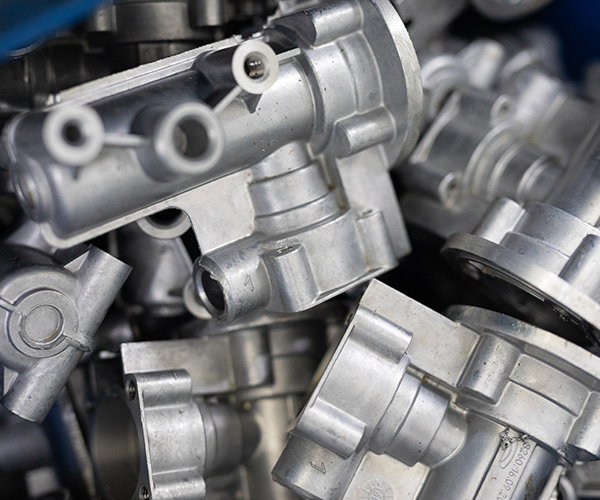
In global manufacturing, cost efficiency is no longer just a procurement concern—it directly affects competitiveness, supply chain resilience, and product lifecycle performance.
Alloy steel investment casting has become a preferred method for producing complex, high-strength metal components used in aerospace systems, automotive engines, energy equipment, and industrial machinery.
However, industry reports from manufacturing associations such as the Investment Casting Institute (ICI) and global foundry benchmarking studies show that cost variation for similar parts can exceed 300%–500% depending on design and production strategy.
This makes cost understanding not optional, but essential.
A poorly optimized casting design can increase:
- Material waste by 20–40%
- Machining cost by 30–60%
- Defect rate by up to 15%
This guide breaks down every element influencing alloy steel investment casting cost, supported by engineering principles, real-world pricing data, and industry best practices.
What Is Alloy Steel Investment Casting?
Alloy Steel Investment Casting Definition
Alloy steel investment casting is a precision manufacturing process that produces near-net-shape components using a wax pattern and ceramic shell mold system.
The Lost-Wax Manufacturing Principle
Step-by-Step Process Overview
- Wax injection into metal die
- Assembly of wax patterns into tree structure
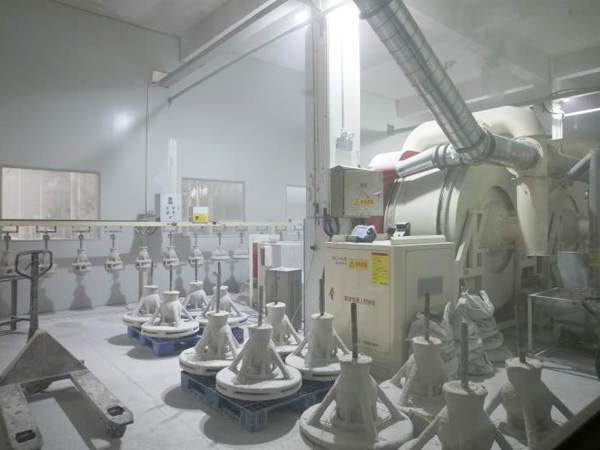
- Ceramic shell coating (multiple layers)
- Dewaxing (autoclave or flash fire)
- Molten alloy steel pouring
- Shell breaking and finishing
Why Alloy Steel Is Preferred in Casting Engineering
Mechanical Strength Advantage
Alloy steel offers tensile strength typically in the range of 500–1500 MPa, depending on composition.
Resistencia al calor
Chromium and molybdenum alloys allow performance above 600°C in industrial environments.
Resistencia al desgaste
Ideal for pump components, valves, and mining machinery.
Cost of Alloy Steel Investment Casting Explained: Full Breakdown Model
Alloy Steel Investment Casting Cost Structure Model
| Cost Element | Descripción | Typical Cost Contribution |
|---|---|---|
| Raw Alloy Steel | Material grade selection | 25%–40% |
| Tooling (Molds) | Wax injection dies | 10%–30% (amortized) |
| Production Process | Shell building & casting | 15%–25% |
| Tratamiento térmico | Hardness & strength optimization | 5%–15% |
| Mecanizado | CNC finishing operations | 10%–35% |
| Inspección | NDT, X-ray, dimensional checks | 3%–10% |
| Scrap & Yield Loss | Defect rejection factor | 5%–20% |
Key Engineering Factors Affecting Fundición en coquilla de acero aleado Costo

1. Alloy Composition and Metallurgy
Material Grade Impact
Different alloy steels have significantly different cost structures:
- Low alloy steel (e.g., 4140 type): baseline cost
- Chromium-molybdenum steel: +20–40% cost increase
- Nickel-based alloy steel: +80–150% cost increase
Metallurgical Complexity Factor
White Paper Insight
According to metallurgical research reports published in foundry engineering journals, increasing nickel content by 1% can increase raw material cost by approximately 3–5% depending on market conditions.
2. Design Complexity and Geometry Engineering
Complexity Cost Curve
As geometry complexity increases, cost does not rise linearly—it follows an exponential curve due to tooling and defect risk.
Engineering Examples
- Simple bracket: baseline cost
- Hollow turbine blade: +200–400% cost
- Multi-channel valve body: +150–300% cost
3. Tooling and Mold Engineering Cost
Tooling Investment Breakdown
- Aluminum die: lower durability
- Steel die: high durability but higher cost
- CNC precision die: highest accuracy, highest cost
Industry Benchmark
Tooling cost for investment casting typically ranges:
- Small parts: $3,000–$15,000
- Medium components: $15,000–$50,000
- Aerospace-grade molds: $50,000–$200,000+
4. Production Volume Economics
Economies of Scale Principle
Higher volume reduces unit cost due to fixed tooling amortization.
| Volumen de producción | Unit Cost Trend |
|---|---|
| 100 pcs | Alto |
| 1,000 pcs | Medio |
| 10,000+ pcs | Bajo |
5. Heat Treatment and Mechanical Processing
Common Heat Treatment Methods
- Quenching
- Tempering
- Normalizando
Impacto en los costos
Heat treatment can add 5–20% to total part cost, depending on hardness requirements.
Alloy Steel Investment Casting Cost vs Other Manufacturing Methods
Fundición de precisión vs. fundición en arena
| Característica | Fundición de inversión | Fundición en arena |
|---|---|---|
| Precisión | ±0.1–0.3 mm | ±1–3 mm |
| Acabado de la superficie | Ra 1.6–3.2 | Ra 6.3–25 |
| Cost per unit | Higher initial | Lower initial |
| Machining required | Bajo | Alto |
Investment Casting vs Forging
Strength Comparison
Forging produces higher grain density but limited geometry complexity.
Cost Insight
Forging becomes cost-effective only for high-volume simple shapes.
Investment Casting vs CNC Machining
Waste Material Factor
- CNC machining waste: up to 60%
- Investment casting waste: 5–15%
Cost Efficiency Threshold
Investment casting becomes more economical when:
- Part complexity is high
- Volume exceeds 500–1000 units
Industry Case Studies: Real Cost Benchmarks
Case Study 1: Automotive Turbocharger Housing
Material: Nickel-alloy steel
- Unit cost: $45–$120
- Machining reduction: 35%
- Weight reduction: 18%
Case Study 2: Industrial Valve Body
- Production method: investment casting
- Cost per unit: $25–$80
- Defect rate: <3% after optimization
Case Study 3: Aerospace Bracket Component
According to aerospace supplier whitepapers:
- Precision tolerance: ±0.05 mm
- Cost per unit: $200–$600
- Certification cost adds 20–30% overhead
Hidden Cost Drivers in Alloy Steel Investment Casting
Defect Rate and Yield Loss
Common Defects
- Porosidad
- Contracción
- Inclusion defects
Impacto en los costos
Defect rates above 5% can increase total cost by up to 15–25%.
Design Iteration Cost
Engineering Change Orders (ECO)
Each design revision can increase tooling cost by:
- 5–15% per iteration
Supply Chain and Raw Material Volatility
Steel Market Influence
According to global steel pricing reports:
- Alloy steel price fluctuation: ±10–25% annually
- Nickel price volatility significantly affects high-alloy grades
Cost Optimization Strategies for Engineers
1. Design for Manufacturability (DFM)
Key Principle
Simplify geometry to reduce shell complexity.
2. Material Substitution Strategy
Replace high-cost alloys with:
- Low-alloy alternatives where feasible
- Surface-treated steels instead of full alloy upgrades
3. Batch Consolidation
Increasing order batch size reduces:
- Tooling amortization impact
- Setup cost per unit
4. Precision Tolerance Optimization
Relaxing tolerances from ±0.05 mm to ±0.2 mm can reduce cost by 10–25%.
Industry Trends and Market Insights
Global Market Growth
According to manufacturing industry reports:
- Investment casting market growth: ~4.5–6% CAGR
- Alloy steel segment is fastest-growing in industrial applications
Automation Impact
Modern foundries using automated shell building systems:
- Reduce labor cost by up to 30%
- Improve consistency and yield rate
Sustainability Trend
Eco-friendly casting practices include:
- Wax recycling systems
- Low-emission furnaces
- Reduced sand waste processes
PREGUNTAS FRECUENTES
Why is alloy steel investment casting expensive?
Because it involves precision tooling, multi-stage processing, and high-cost alloy materials.
What is the biggest cost factor?
Material grade and tooling cost are the two largest contributors.
Is investment casting cheaper than machining?
Yes, for complex parts and medium-to-high production volumes.
How can cost be reduced effectively?
Through design optimization, batch scaling, and material selection.
Is it suitable for small production runs?
Yes, but unit cost will be significantly higher due to fixed tooling costs.
Conclusión
The real cost of alloy steel investment casting is not defined by material alone, but by a combination of engineering decisions, design complexity, production scale, and quality requirements.
Companies that optimize early-stage design and material selection can reduce total manufacturing cost by 20–40% without sacrificing performance.
In modern industrial supply chains, cost efficiency is no longer just about lowering price—it is about optimizing the entire lifecycle of the component from design to delivery.
Categorías de productos
- Piezas de válvulas
- Piezas de la bomba de agua
- Piezas de la caja de cojinetes
- Piezas de fundición a presión
- Productos para bombas de acero inoxidable
- Productos para bombas de hierro fundido
- Piezas de válvulas para automóviles
- Recambios para automóviles
- Piezas de válvulas para uso civil
- Piezas de bomba de vacío KF

¡Comencemos tu próximo proyecto!
Inicie su proyecto con Leierwo
1. Envíe su consulta
2. Cálculo de costes
3. Inicio de la producción
4. Organizar la entrega
PREGUNTAS FRECUENTES
Sí, tenemos una amplia experiencia en el comercio internacional y podemos ayudar a los clientes con el despacho de aduanas de exportación y los arreglos de envío. Aceptamos varios métodos de pago internacionales, incluyendo T/T (transferencia telegráfica), transferencia bancaria y carta de crédito (L/C). Las condiciones de pago se pueden discutir con nuestro equipo de ventas.
Al asociarse con Leierwo, podrá disfrutar de precios competitivos y una calidad superior a la de otros proveedores. Además, ofrecemos una solución integral para entregar piezas acabadas, incluido el mecanizado CNC y el tratamiento de superficies, lo que garantiza un proceso de producción sin fisuras.
Contamos con avanzados equipos de fundición y estrictos sistemas de control de calidad. Nuestra capacidad de producción mensual es considerable y podemos fabricar productos a partir de dibujos o muestras proporcionados por el cliente. Aceptamos tanto pequeños pedidos de prueba como producciones a gran escala.
Nuestros productos cumplen normas internacionales como ASTM, AISI, DIN y JIS. Podemos proporcionar informes de pruebas de materiales y certificaciones pertinentes para garantizar que la calidad del producto cumple los requisitos del cliente.
Seguimos estrictamente el sistema de gestión de calidad ISO 9001 y realizamos múltiples inspecciones a lo largo del proceso de producción, incluidos análisis espectrográficos, pruebas de rayos X, pruebas ultrasónicas y mediciones dimensionales. Estas medidas de control de calidad garantizan que nuestras piezas de fundición cumplen las normas más estrictas.
Sin embargo, somos flexibles y estamos abiertos a discutir sus necesidades específicas.
Nuestro plazo de producción estándar es de 4 a 6 semanas, en función de la cantidad del pedido y la complejidad del producto. Nos esforzamos por acortar los plazos de entrega para satisfacer las demandas de los clientes.
Sí, podemos proporcionar muestras para la inspección de calidad. Los costes de las muestras y los gastos de envío pueden negociarse, y los gastos de las muestras pueden reembolsarse al realizar un pedido formal.
 Spanish
  English
  Arabic
  Malay
Malay  German