
Cost of Alloy Steel Investment Casting Explained: A Complete Industrial Guide
Welcome to My Blog!
I’m thrilled to have you here! Before we dive into the content, I’d love for you to join me on my social media platforms. It’s where I share extra insights, connect with our amazing community, and keep you updated on the latest news. Here’s how you can stay connected:
📘 Facebook: Shanghai Leierwo Industry Trade Co., Ltd.
Now, let’s embark on this journey together! I hope you find the content here not only insightful but also inspiring and valuable. Let’s get started!
Table of Contents
Key Takeaways
- Deep breakdown of alloy steel investment casting cost structure and pricing logic
- Industry-standard cost drivers including material grade, tooling, and tolerance requirements
- Real-world benchmarks from automotive, aerospace, and industrial sectors
- Comparison with forging, sand casting, and CNC machining economics
- Engineering strategies to reduce cost without sacrificing performance
Introduction
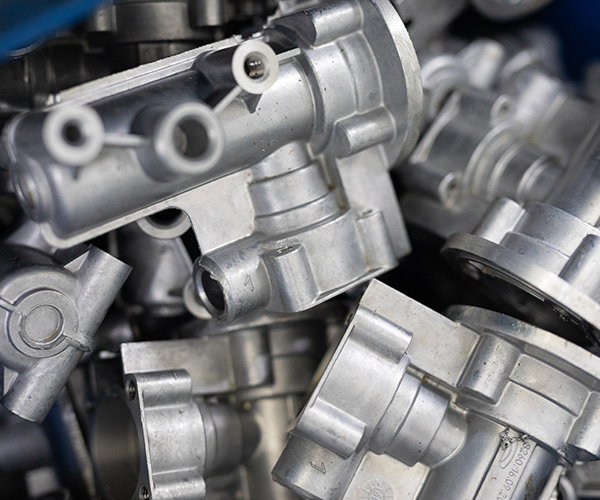
In global manufacturing, cost efficiency is no longer just a procurement concern—it directly affects competitiveness, supply chain resilience, and product lifecycle performance.
Alloy steel investment casting has become a preferred method for producing complex, high-strength metal components used in aerospace systems, automotive engines, energy equipment, and industrial machinery.
However, industry reports from manufacturing associations such as the Investment Casting Institute (ICI) and global foundry benchmarking studies show that cost variation for similar parts can exceed 300%–500% depending on design and production strategy.
This makes cost understanding not optional, but essential.
A poorly optimized casting design can increase:
- Material waste by 20–40%
- Machining cost by 30–60%
- Defect rate by up to 15%
This guide breaks down every element influencing alloy steel investment casting cost, supported by engineering principles, real-world pricing data, and industry best practices.
What Is Alloy Steel Investment Casting?
Alloy Steel Investment Casting Definition
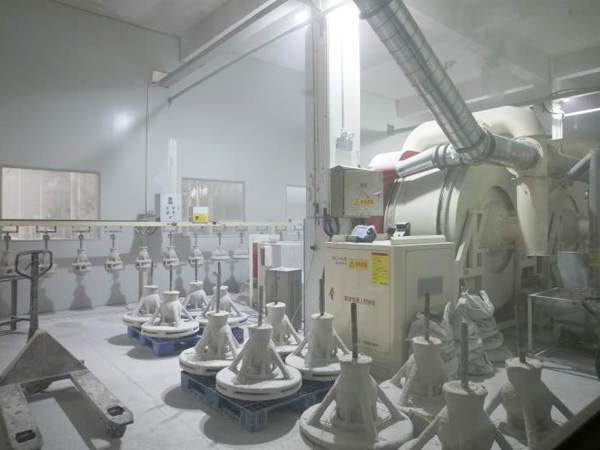
Alloy steel investment casting is a precision manufacturing process that produces near-net-shape components using a wax pattern and ceramic shell mold system.
The Lost-Wax Manufacturing Principle
Step-by-Step Process Overview
- Wax injection into metal die
- Assembly of wax patterns into tree structure
- Ceramic shell coating (multiple layers)
- Dewaxing (autoclave or flash fire)
- Molten alloy steel pouring
- Shell breaking and finishing
Why Alloy Steel Is Preferred in Casting Engineering
Mechanical Strength Advantage
Alloy steel offers tensile strength typically in the range of 500–1500 MPa, depending on composition.
Heat Resistance
Chromium and molybdenum alloys allow performance above 600°C in industrial environments.
Wear Resistance
Ideal for pump components, valves, and mining machinery.
Cost of Alloy Steel Investment Casting Explained: Full Breakdown Model
Alloy Steel Investment Casting Cost Structure Model
| Cost Element | Description | Typical Cost Contribution |
|---|---|---|
| Raw Alloy Steel | Material grade selection | 25%–40% |
| Tooling (Molds) | Wax injection dies | 10%–30% (amortized) |
| Production Process | Shell building & casting | 15%–25% |
| Heat Treatment | Hardness & strength optimization | 5%–15% |
| Machining | CNC finishing operations | 10%–35% |
| Inspection | NDT, X-ray, dimensional checks | 3%–10% |
| Scrap & Yield Loss | Defect rejection factor | 5%–20% |
Key Engineering Factors Affecting Alloy Steel Investment Casting Cost

1. Alloy Composition and Metallurgy
Material Grade Impact
Different alloy steels have significantly different cost structures:
- Low alloy steel (e.g., 4140 type): baseline cost
- Chromium-molybdenum steel: +20–40% cost increase
- Nickel-based alloy steel: +80–150% cost increase
Metallurgical Complexity Factor
White Paper Insight
According to metallurgical research reports published in foundry engineering journals, increasing nickel content by 1% can increase raw material cost by approximately 3–5% depending on market conditions.
2. Design Complexity and Geometry Engineering
Complexity Cost Curve
As geometry complexity increases, cost does not rise linearly—it follows an exponential curve due to tooling and defect risk.
Engineering Examples
- Simple bracket: baseline cost
- Hollow turbine blade: +200–400% cost
- Multi-channel valve body: +150–300% cost
3. Tooling and Mold Engineering Cost
Tooling Investment Breakdown
- Aluminum die: lower durability
- Steel die: high durability but higher cost
- CNC precision die: highest accuracy, highest cost
Industry Benchmark
Tooling cost for investment casting typically ranges:
- Small parts: $3,000–$15,000
- Medium components: $15,000–$50,000
- Aerospace-grade molds: $50,000–$200,000+
4. Production Volume Economics
Economies of Scale Principle
Higher volume reduces unit cost due to fixed tooling amortization.
| Production Volume | Unit Cost Trend |
|---|---|
| 100 pcs | High |
| 1,000 pcs | Medium |
| 10,000+ pcs | Low |
5. Heat Treatment and Mechanical Processing
Common Heat Treatment Methods
- Quenching
- Tempering
- Normalizing
Cost Impact
Heat treatment can add 5–20% to total part cost, depending on hardness requirements.
Alloy Steel Investment Casting Cost vs Other Manufacturing Methods
Investment Casting vs Sand Casting
| Feature | Investment Casting | Sand Casting |
|---|---|---|
| Precision | ±0.1–0.3 mm | ±1–3 mm |
| Surface Finish | Ra 1.6–3.2 | Ra 6.3–25 |
| Cost per unit | Higher initial | Lower initial |
| Machining required | Low | High |
Investment Casting vs Forging
Strength Comparison
Forging produces higher grain density but limited geometry complexity.
Cost Insight
Forging becomes cost-effective only for high-volume simple shapes.
Investment Casting vs CNC Machining
Waste Material Factor
- CNC machining waste: up to 60%
- Investment casting waste: 5–15%
Cost Efficiency Threshold
Investment casting becomes more economical when:
- Part complexity is high
- Volume exceeds 500–1000 units
Industry Case Studies: Real Cost Benchmarks
Case Study 1: Automotive Turbocharger Housing
Material: Nickel-alloy steel
- Unit cost: $45–$120
- Machining reduction: 35%
- Weight reduction: 18%
Case Study 2: Industrial Valve Body
- Production method: investment casting
- Cost per unit: $25–$80
- Defect rate: <3% after optimization
Case Study 3: Aerospace Bracket Component
According to aerospace supplier whitepapers:
- Precision tolerance: ±0.05 mm
- Cost per unit: $200–$600
- Certification cost adds 20–30% overhead
Hidden Cost Drivers in Alloy Steel Investment Casting
Defect Rate and Yield Loss
Common Defects
- Porosity
- Shrinkage
- Inclusion defects
Cost Impact
Defect rates above 5% can increase total cost by up to 15–25%.
Design Iteration Cost
Engineering Change Orders (ECO)
Each design revision can increase tooling cost by:
- 5–15% per iteration
Supply Chain and Raw Material Volatility
Steel Market Influence
According to global steel pricing reports:
- Alloy steel price fluctuation: ±10–25% annually
- Nickel price volatility significantly affects high-alloy grades
Cost Optimization Strategies for Engineers
1. Design for Manufacturability (DFM)
Key Principle
Simplify geometry to reduce shell complexity.
2. Material Substitution Strategy
Replace high-cost alloys with:
- Low-alloy alternatives where feasible
- Surface-treated steels instead of full alloy upgrades
3. Batch Consolidation
Increasing order batch size reduces:
- Tooling amortization impact
- Setup cost per unit
4. Precision Tolerance Optimization
Relaxing tolerances from ±0.05 mm to ±0.2 mm can reduce cost by 10–25%.
Industry Trends and Market Insights
Global Market Growth
According to manufacturing industry reports:
- Investment casting market growth: ~4.5–6% CAGR
- Alloy steel segment is fastest-growing in industrial applications
Automation Impact
Modern foundries using automated shell building systems:
- Reduce labor cost by up to 30%
- Improve consistency and yield rate
Sustainability Trend
Eco-friendly casting practices include:
- Wax recycling systems
- Low-emission furnaces
- Reduced sand waste processes
FAQ
Why is alloy steel investment casting expensive?
Because it involves precision tooling, multi-stage processing, and high-cost alloy materials.
What is the biggest cost factor?
Material grade and tooling cost are the two largest contributors.
Is investment casting cheaper than machining?
Yes, for complex parts and medium-to-high production volumes.
How can cost be reduced effectively?
Through design optimization, batch scaling, and material selection.
Is it suitable for small production runs?
Yes, but unit cost will be significantly higher due to fixed tooling costs.
Conclusion
The real cost of alloy steel investment casting is not defined by material alone, but by a combination of engineering decisions, design complexity, production scale, and quality requirements.
Companies that optimize early-stage design and material selection can reduce total manufacturing cost by 20–40% without sacrificing performance.
In modern industrial supply chains, cost efficiency is no longer just about lowering price—it is about optimizing the entire lifecycle of the component from design to delivery.
Product Categories
- Valve Parts
- Water Pump Parts
- Bearing Box Parts
- Die Casting Parts
- Stainless Steel Pump Products
- Cast Iron Pump Products
- Valve Parts For Automobile Use
- Auto Parts
- Valve Parts For Civil Use
- Vacuum Pump Parts KF

Let’s start your next project!
Start Your Project with Leierwo
1. Submit Your Inquiry
2. Cost Calculation
3. Start Production
4. Arrange Delivery
FAQ
Yes, we have extensive experience in international trade and can assist customers with export customs clearance and shipping arrangements. We offer various trade terms such as FOB, CIF, and DDP to accommodate different logistics needs.We accept various international payment methods, including T/T (Telegraphic Transfer), wire transfer, and Letter of Credit (L/C). Payment terms can be discussed with our sales team.
By partnering with Leierwo, you can enjoy competitive pricing and superior quality compared to other suppliers. Additionally, we offer a one-stop solution to deliver finished parts, including CNC machining and surface treatment, ensuring a seamless production process.
We have advanced casting equipment and strict quality control systems. Our monthly production capacity is substantial, and we can manufacture products based on customer-provided drawings or samples. We accept both small trial orders and large-scale production.
Our products comply with international standards such as ASTM, AISI, DIN, and JIS. We can provide material test reports and relevant certifications to ensure product quality meets customer requirements.
We strictly follow the ISO 9001 quality management system and conduct multiple inspections throughout the production process, including spectrographic analysis, X-ray testing, ultrasonic testing, and dimensional measurements. These quality control measures guarantee that our castings meet the highest standards.
Our MOQ depends on the product type and complexity, However, we are flexible and open to discussing your specific needs.
Our standard production lead time is 4-6 weeks, depending on order quantity and product complexity. We strive to shorten delivery times to meet customer demands.
Yes, we can provide samples for quality inspection. Sample costs and shipping fees can be negotiated, and sample fees may be refunded upon placing a formal order.
 English
  Spanish
  Arabic
  Malay
Malay  German