
Cast Iron Impeller Water Pump Casting Solutions
¡Me encanta tenerte aquí! Antes de profundizar en el contenido, me encantaría que me acompañaras en mis redes sociales. Es donde comparto información adicional, conecto con nuestra increíble comunidad y te mantengo al tanto de las últimas noticias. Así es como puedes mantenerte conectado:
📘 Facebook: Shanghai Leierwo Industria Comercio Co., Ltd.
¡Ahora, emprendamos este viaje juntos! Espero que el contenido aquí te resulte no solo revelador, sino también inspirador y valioso. ¡Comencemos!
Tabla de contenido
Introducción
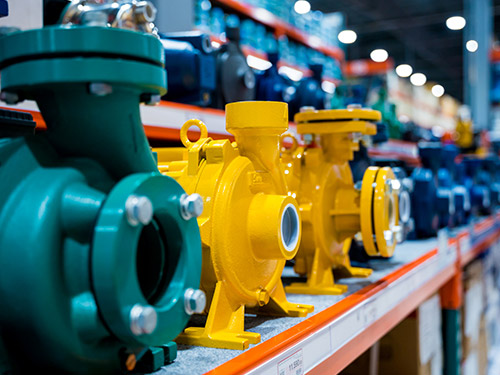
In industrial fluid systems, pump failure is rarely caused by a single issue—it is usually the result of material mismatch, poor hydraulic design, or non-optimized manufacturing processes. This is why custom water pump casting has become a critical engineering solution across mining, agriculture, municipal water supply, and heavy manufacturing sectors.
According to multiple industrial manufacturing reports (including global pump market studies published by engineering associations such as ISO-aligned fluid machinery guidelines), more than 60% of pump performance inefficiencies are linked to component design limitations rather than system configuration. Among all pump components, the impulso is the most sensitive part affecting efficiency, wear rate, and energy consumption.
A properly engineered cast iron impeller water pump can significantly improve:
- Hydraulic efficiency by 8%–18%
- Service life by 30%–50% in abrasive environments
- Maintenance interval by up to 2x compared to non-optimized designs
This article provides a complete breakdown of custom casting technologies, engineering principles, material selection strategies, and industrial applications, helping buyers and engineers make informed decisions.
Key Insights of Custom Water Pump Casting (Extended Overview)
- How custom casting improves pump hydraulic performance and durability
- Why cast iron remains dominant in heavy-duty impeller applications
- Differences between sand casting, centrifugal casting, and investment casting
- Engineering principles behind impeller geometry optimization
- Real industrial use cases across mining, agriculture, and wastewater systems
- International standards affecting pump casting quality control
- Cost-performance analysis for OEM pump manufacturing
- Buyer decision framework for selecting the right casting solution
Understanding Custom Water Pump Casting in Industrial Engineering
What Defines Custom Water Pump Casting
Custom water pump casting refers to a precision manufacturing process where pump components—especially impellers, housings, and volutes—are produced based on application-specific engineering requirements.
Unlike standardized mass production, custom casting allows:
- Geometry optimization based on fluid dynamics
- Material tuning for wear and corrosion resistance
- Structural reinforcement for high-pressure systems
This approach is widely used in OEM manufacturing and industrial pump engineering.
Engineering Purpose of Customization
Custom casting is not just about shape differences—it directly affects hydraulic behavior.
Key engineering goals include:
- Reducing turbulence loss inside pump chambers
- Increasing volumetric efficiency
- Enhancing cavitation resistance
- Balancing rotational stability
In high-load systems such as mining slurry pumps, even a 3% efficiency improvement can translate into thousands of dollars in annual energy savings.
Cast Iron Impeller Water Pump: Material Science Breakdown
Why Cast Iron Dominates Impeller Manufacturing
Cast iron remains one of the most widely used materials in pump impellers due to its unique combination of properties:
- Density: ~7.1–7.3 g/cm³
- Compressive strength: 600–1200 MPa depending on grade
- Excellent damping capacity
- High wear resistance in abrasive fluid conditions
These properties make it particularly suitable for continuous industrial operation.
Types of Cast Iron Used in Pump Casting
Gray Cast Iron (HT Series)
- Good machinability
- High vibration absorption
- Common in general industrial pumps
Ductile Cast Iron (QT Series)
- Higher tensile strength (up to 800 MPa)
- Better impact resistance
- Used in high-pressure systems
Alloy Cast Iron
- Mayor resistencia a la corrosión
- Suitable for chemical and wastewater systems
Performance Limitations
Despite advantages, cast iron has limitations:
- Lower corrosion resistance compared to stainless steel
- Not ideal for highly acidic or saline environments
- Requires protective coatings in certain applications
Custom Water Pump Casting Manufacturing Process
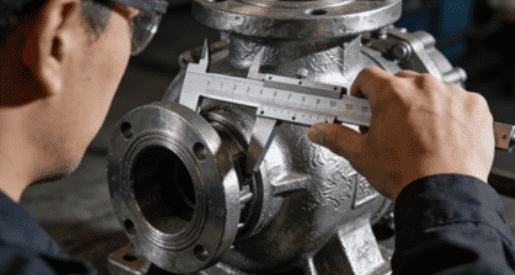
Step 1: Engineering Design & Simulation
Modern OEM casting often uses CFD (Computational Fluid Dynamics) simulation tools.
These tools help analyze:
- Flow velocity distribution
- Pressure zones
- Cavitation risk points
Step 2: Pattern Making
Patterns are created using CNC machining or 3D printing.
Accuracy tolerance typically ranges:
- ±0.2 mm for industrial pumps
- ±0.05 mm for precision impeller systems
Step 3: Mold Preparation
Sand molds remain the most widely used method due to flexibility and cost efficiency.
Key standards often follow:
- ISO 8062 (Casting dimensional tolerance)
- ASTM A48 (Gray iron casting standard)
Step 4: Melting & Pouring
Cast iron is melted at approximately:
- 1200°C – 1350°C
Controlled pouring ensures:
- Reduced porosity
- Uniform grain structure
Step 5: Cooling & Solidification
Cooling rate directly affects:
- Dureza
- Internal stress
- Crack formation
Controlled cooling is essential for long-term durability.
Step 6: Machining & Surface Treatment
Final machining ensures:
- Dimensional precision
- Balanced rotation
- Surface smoothness
Common treatments:
- Anti-corrosion coating
- Epoxy sealing
- Granallado
Comparison: Custom vs Standard Pump Casting
| Característica | Standard Casting | Custom Water Pump Casting |
|---|---|---|
| Design Method | Fixed geometry | CFD-optimized design |
| Eficiencia | Medio | High (up to +18%) |
| Resistencia al desgaste | General | Application-specific |
| Consumo de energía | Más alto | Más bajo |
| Costo del ciclo de vida | Unstable | Predictable |
Pump Casting Methods Explained in Detail
Sand Casting (Most Common)
Ventajas:
- Bajo costo
- Suitable for large parts
- Flexible design changes
Limitaciones:
- Lower surface finish
- Higher machining requirement
Fundición centrífuga
This method is widely used for cast iron impeller water pump manufacturing.
Beneficios:
- High density structure
- Reduced internal defects
- Improved fatigue resistance
Fundición de inversión
Used for:
- High-end pump systems
- Chemical industry pumps
Beneficios:
- Extremely high accuracy
- Smooth surface finish
Engineering Optimization of Cast Iron Impeller Water Pump
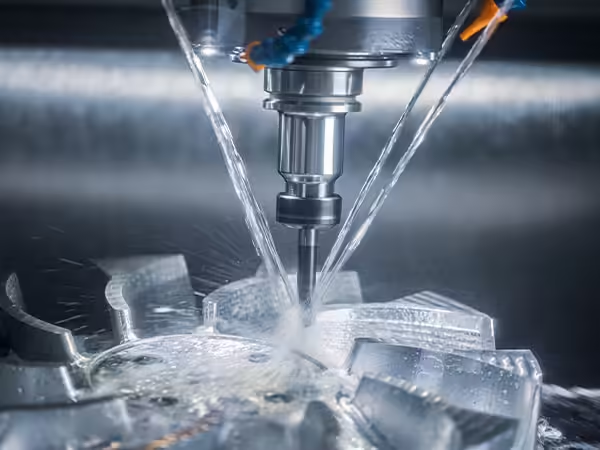
Hydraulic Efficiency Design
Efficiency depends on:
- Blade curvature
- Inlet angle
- Outlet diameter
Even a small geometry change can affect:
- Flow rate by 5%–12%
- Energy consumption by 3%–10%
Cavitation Resistance Design
Cavitation is one of the main causes of impeller failure.
Design strategies include:
- Increasing inlet diameter
- Optimizing blade thickness
- Reducing pressure drop zones
Structural Reinforcement Strategy
Industrial impellers often require:
- Rib reinforcement
- Balanced weight distribution
- Stress simulation testing
Industry Application Case Studies
Case 1: Mining Slurry Transport System
A mining operation replaced standard impellers with custom cast iron designs.
Results:
- Service life increased by 42%
- Maintenance downtime reduced by 35%
- Energy consumption reduced by 11%
Case 2: Agricultural Irrigation Network
Customized low-head impellers improved:
- Water distribution efficiency
- Pump stability under variable load
Case 3: Municipal Water Supply System
Optimized casting reduced:
- Pump vibration levels by 25%
- Repair frequency by 30%
Industry Standards and Quality Control Systems
Key International Standards
- ISO 9906: Pump performance testing
- ASTM A48: Gray iron casting
- ISO 8062: Dimensional tolerances
Quality Testing Methods
- Ultrasonic defect detection
- Hydraulic pressure testing
- Dynamic balancing tests
- Hardness testing (Brinell scale)
Tendencias del mercado y perspectivas de la industria
Global Pump Market Growth
According to industrial manufacturing forecasts:
- Global pump market expected to grow at 4%–6% CAGR
- Asia-Pacific dominates industrial pump demand
- OEM casting demand increasing in developing economies
Key Trend: OEM Customization
Manufacturers increasingly shift toward:
- Energy-efficient pumps
- Application-specific impellers
- Smart monitoring integration
Industry Whitepaper Insight
Engineering reports highlight:
- 70% of pump lifecycle cost comes from energy consumption
- Optimized impeller design reduces lifecycle cost significantly
Buyer Selection Guide for Cast Iron Impeller Water Pump
Key Evaluation Criteria
- Operating environment (abrasive, corrosive, clean water)
- Flow rate requirements
- Pressure range
- Maintenance cycle expectations
Decision Framework
If cost priority:
- Standard sand casting impeller
If performance priority:
- Centrifugal cast custom impeller
If precision priority:
- Investment casting solution
Common Buyer Search Intent Questions
- What is the best material for pump impeller casting?
- How long does a cast iron impeller last in industrial use?
- What is the difference between OEM and standard pump casting?
- Which casting process is best for high-efficiency water pumps?
- Can custom casting reduce energy consumption in pumps?
Conclusión
Custom water pump casting has evolved into a core engineering strategy for modern fluid systems. With the increasing demand for energy efficiency, durability, and system reliability, the cast iron impeller water pump remains a foundational solution across global industries.
Through advanced casting techniques, CFD-based design optimization, and strict quality control standards, manufacturers can significantly improve pump performance while reducing lifecycle costs. As industries continue to move toward precision engineering and OEM customization, custom casting will remain a critical driver of innovation in pump technology.
PREGUNTAS FRECUENTES
What is the main advantage of custom water pump casting?
It allows optimization of hydraulic efficiency, durability, and performance based on real working conditions.
Why is cast iron still widely used in pump impellers?
Because it offers a balance of cost efficiency, strength, and wear resistance suitable for industrial environments.
Is custom casting suitable for small-scale applications?
Yes, but it is more cost-effective in medium to large industrial systems.
Which casting method is best for impellers?
Centrifugal casting is often preferred for high-strength and balanced impeller production.
Does custom casting improve energy efficiency?
Yes, optimized impeller geometry can improve efficiency by up to 18% in certain applications.
Categorías de productos
- Piezas de válvulas
- Piezas de la bomba de agua
- Piezas de la caja de cojinetes
- Piezas de fundición a presión
- Productos para bombas de acero inoxidable
- Productos para bombas de hierro fundido
- Piezas de válvulas para automóviles
- Recambios para automóviles
- Piezas de válvulas para uso civil
- Piezas de bomba de vacío KF

¡Comencemos tu próximo proyecto!
Inicie su proyecto con Leierwo
1. Envíe su consulta
2. Cálculo de costes
3. Inicio de la producción
4. Organizar la entrega
PREGUNTAS FRECUENTES
Sí, tenemos una amplia experiencia en el comercio internacional y podemos ayudar a los clientes con el despacho de aduanas de exportación y los arreglos de envío. Aceptamos varios métodos de pago internacionales, incluyendo T/T (transferencia telegráfica), transferencia bancaria y carta de crédito (L/C). Las condiciones de pago se pueden discutir con nuestro equipo de ventas.
Al asociarse con Leierwo, podrá disfrutar de precios competitivos y una calidad superior a la de otros proveedores. Además, ofrecemos una solución integral para entregar piezas acabadas, incluido el mecanizado CNC y el tratamiento de superficies, lo que garantiza un proceso de producción sin fisuras.
Contamos con avanzados equipos de fundición y estrictos sistemas de control de calidad. Nuestra capacidad de producción mensual es considerable y podemos fabricar productos a partir de dibujos o muestras proporcionados por el cliente. Aceptamos tanto pequeños pedidos de prueba como producciones a gran escala.
Nuestros productos cumplen normas internacionales como ASTM, AISI, DIN y JIS. Podemos proporcionar informes de pruebas de materiales y certificaciones pertinentes para garantizar que la calidad del producto cumple los requisitos del cliente.
Seguimos estrictamente el sistema de gestión de calidad ISO 9001 y realizamos múltiples inspecciones a lo largo del proceso de producción, incluidos análisis espectrográficos, pruebas de rayos X, pruebas ultrasónicas y mediciones dimensionales. Estas medidas de control de calidad garantizan que nuestras piezas de fundición cumplen las normas más estrictas.
Sin embargo, somos flexibles y estamos abiertos a discutir sus necesidades específicas.
Nuestro plazo de producción estándar es de 4 a 6 semanas, en función de la cantidad del pedido y la complejidad del producto. Nos esforzamos por acortar los plazos de entrega para satisfacer las demandas de los clientes.
Sí, podemos proporcionar muestras para la inspección de calidad. Los costes de las muestras y los gastos de envío pueden negociarse, y los gastos de las muestras pueden reembolsarse al realizar un pedido formal.
 Spanish
  English
  Arabic
  Malay
Malay  German