
3D Printing vs Traditional Methods: Which Manufacturing Solution Fits Modern Industry?
¡Me encanta tenerte aquí! Antes de profundizar en el contenido, me encantaría que me acompañaras en mis redes sociales. Es donde comparto información adicional, conecto con nuestra increíble comunidad y te mantengo al tanto de las últimas noticias. Así es como puedes mantenerte conectado:
📘 Facebook: Shanghai Leierwo Industria Comercio Co., Ltd.
¡Ahora, emprendamos este viaje juntos! Espero que el contenido aquí te resulte no solo revelador, sino también inspirador y valioso. ¡Comencemos!
Tabla de contenido
Introducción
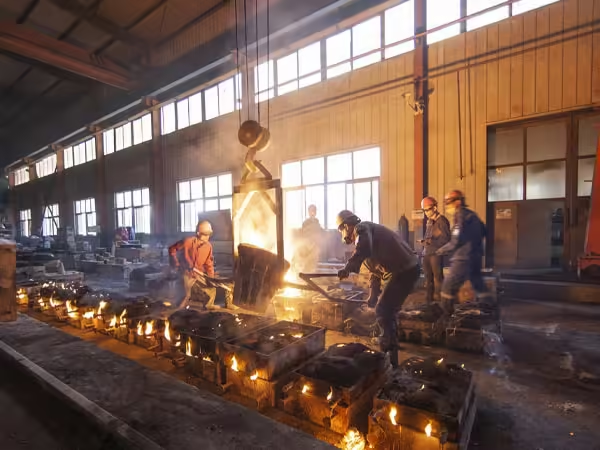
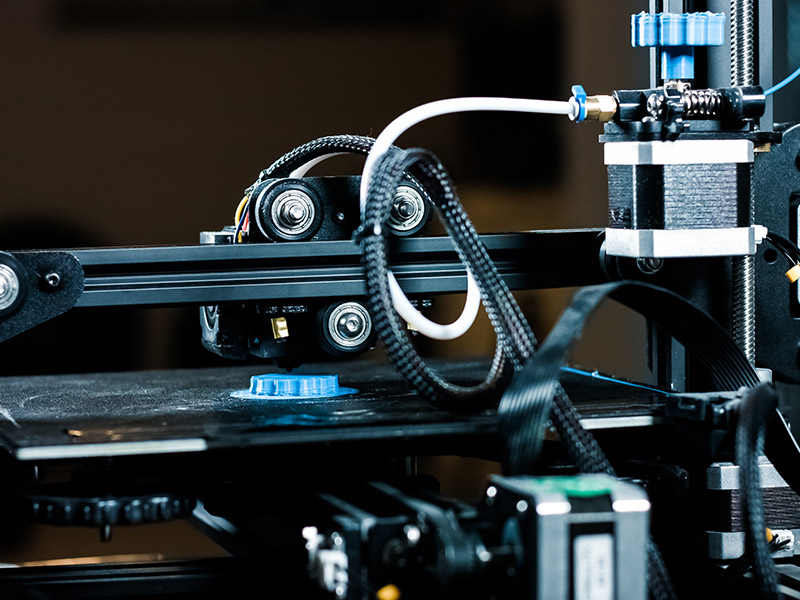
Manufacturing technology is evolving faster than ever before. Companies across aerospace, automotive, robotics, medical, and industrial sectors are under constant pressure to shorten development cycles, reduce production costs, improve product performance, and respond quickly to changing customer demands. In this environment, Impresión 3D has emerged as one of the most influential technologies reshaping modern manufacturing.
Unlike traditional subtractive manufacturing methods that remove material through cutting, drilling, or milling, additive manufacturing creates components layer by layer directly from digital models. This process allows engineers and manufacturers to produce highly complex geometries, lightweight structures, and customized products with remarkable precision.
The growing popularity of 3D Printing is driven by several factors:
- Faster prototyping and shorter time-to-market
- Reduced tooling and mold costs
- Greater design flexibility
- Lower material waste
- Improved customization capabilities
- Efficient low-volume production
- Enhanced supply chain flexibility
Today, many industrial manufacturers operate hundreds of advanced additive manufacturing systems covering mainstream technologies such as SLA, SLS, MJF, and SLM. These systems support metals, nylon, engineering plastics, resin materials, and composite materials, enabling manufacturers to provide flexible production solutions for industries worldwide.
At the same time, traditional manufacturing methods such as CNC machining, injection molding, forging, casting, and milling remain essential for mass production and large-scale industrial manufacturing. These processes continue to dominate industries requiring high-volume output, consistent repeatability, and lower per-unit costs.
The debate surrounding 3D Printing vs Traditional Methods is no longer about replacing one technology with another. Instead, businesses are exploring how both manufacturing approaches can complement each other to maximize efficiency, reduce costs, and improve innovation.
This article provides a comprehensive comparison between additive manufacturing and conventional manufacturing methods, covering technologies, applications, costs, materials, industry trends, standards, sustainability, real-world case studies, and future developments.
Conclusiones clave
- 3D Printing enables complex structures that are difficult or impossible with traditional manufacturing.
- Traditional manufacturing remains the preferred option for large-scale production.
- Additive manufacturing significantly reduces tooling requirements.
- Aerospace, automotive, robotics, and medical industries are rapidly adopting 3D Printing technologies.
- Rapid prototyping is one of the strongest advantages of additive manufacturing.
- Traditional methods often provide lower per-unit costs for mass production.
- Hybrid manufacturing strategies are becoming increasingly common.
What Is 3D Printing?
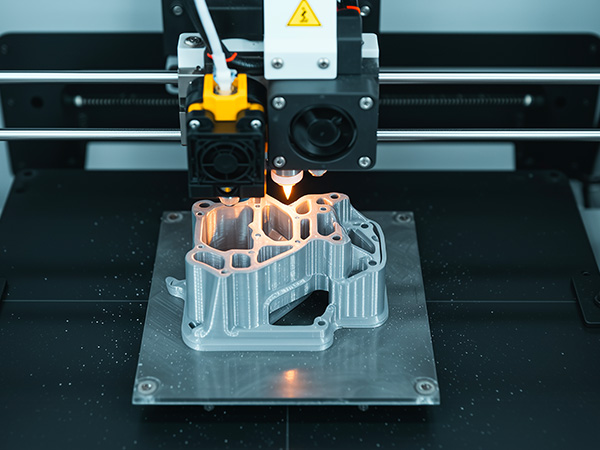
Impresión 3D is an additive manufacturing process where parts are built layer by layer using digital CAD models. The process transforms virtual designs into physical products through precise material deposition or fusion techniques.
The technology supports a broad range of materials including:
- Nylon
- Resina
- Acero inoxidable
- Titanio
- Aleaciones de aluminio
- Ceramics
- Carbon fiber composites
- Engineering plastics
Unlike subtractive manufacturing, which removes material from solid blocks, additive manufacturing only uses material where necessary. This creates opportunities for lightweight design optimization and reduced waste.
Core Characteristics of 3D Printing
Layer-by-Layer Production
Objects are manufactured progressively in thin layers. This allows extremely precise control over geometry and internal structures.
Libertad de diseño
Complex internal channels, lattice structures, hollow designs, and organic shapes can be created without specialized tooling.
Digital Manufacturing
Production begins directly from CAD files, reducing the need for molds and physical templates.
Rapid Customization
Designs can be modified digitally without changing hardware or tooling setups.
Eficiencia de materiales
Minimal waste is generated because material is deposited only where needed.
Main Types of 3D Printing Technologies
Modern additive manufacturing facilities often operate multiple technologies to meet different production requirements.
Tecnología de estereolitografía SLA
SLA technology uses ultraviolet lasers to cure liquid resin into solid layers.
Key Advantages of SLA
- Exceptional surface finish
- Alta precisión dimensional
- Fine detail reproduction
- Fast prototype production
Common SLA Applications
- Modelos médicos
- Dental aligners
- Consumer electronics prototypes
- Product concept validation
- Artistic models
Some industrial SLA systems now support build volumes exceeding 2100 × 1700 × 810 mm with lead times as short as 8 hours.
SLS Selective Laser Sintering Technology
SLS technology uses lasers to fuse powdered nylon materials into functional parts.
Advantages of SLS Printing
- Strong mechanical properties
- Excellent durability
- No support structures required
- Suitable for functional testing
Common SLS Applications
- Robotics housings
- Automotive brackets
- Aerospace ducting systems
- Industrial prototypes
Modern SLS systems can produce parts with dimensions up to 420 × 420 × 450 mm.
MJF Multi Jet Fusion Technology
MJF technology is widely recognized for fast production speed and strong nylon parts.
Advantages of MJF Technology
- Consistent surface quality
- Alta eficiencia de producción
- Excellent isotropic strength
- Suitable for low-volume production
Common MJF Applications
- Customized enclosures
- dispositivos médicos
- Prototipos funcionales
- Industrial tooling
High-performance materials such as HP PA12 are commonly used in MJF manufacturing.
Tecnología de fusión selectiva por láser SLM
SLM is one of the most important technologies in metal additive manufacturing.
Advantages of SLM
- Dense metal structures
- Lightweight optimization
- Reducción de la complejidad del montaje
- Excellent mechanical performance
Typical SLM Applications
- Rocket engine components
- Aerospace brackets
- Titanium medical implants
- High-performance automotive parts
Some SLM systems support extremely large build sizes exceeding 1258 × 1258 × 1600 mm.
What Are Traditional Manufacturing Methods?
Traditional manufacturing refers to conventional production processes that shape products through subtractive machining or forming operations.
The most common traditional manufacturing methods include:
| Proceso de fabricación | Primary Materials | Main Advantage |
|---|---|---|
| Mecanizado CNC | Metals, plastics | Alta precisión |
| Moldeo por inyección | Plastics | Low unit cost |
| Casting | Metals | Suitable for large parts |
| Forja | Steel, alloys | Superior strength |
| Milling | Metals, composites | Excellent surface control |
| Stamping | Sheet metal | High production speed |
These methods remain highly efficient for large-scale manufacturing where product designs remain stable over long production cycles.
3D Printing vs Traditional Methods: Major Differences
Flexibilidad de producción
3D Printing Offers Greater Flexibility
Additive manufacturing allows rapid design modifications without changing tooling.
Manufacturers can:
- Update CAD models instantly
- Produce customized products
- Manufacture multiple design variations simultaneously
- Reduce development timelines
This flexibility is especially important for startups, research teams, and industries with rapidly changing requirements.
Traditional Manufacturing Prioritizes Stability
Traditional production systems are optimized for repeatability and high-volume output.
Once molds and tooling are finalized:
- Production speed becomes extremely high
- Unit costs decrease significantly
- Quality consistency improves
However, changing product designs often requires expensive tooling modifications.
Design Complexity
Additive Manufacturing Supports Complex Geometries
3D Printing enables:
- Internal cooling channels
- Lightweight lattice structures
- Topology optimization
- Organic geometries
- Consolidated assemblies
Many aerospace companies reduce component count by integrating multiple parts into single printed structures.
Traditional Manufacturing Has Geometric Limitations
Complex shapes may require:
- Multiple machining operations
- Specialized cutting tools
- Complex mold systems
- Additional assembly processes
This increases manufacturing time and cost.
Residuos de materiales
3D Printing Reduces Waste
Additive manufacturing only deposits material where necessary.
For expensive materials such as titanium:
- Waste reduction can exceed 50%
- Material efficiency improves profitability
- Sustainability goals become easier to achieve
Traditional Manufacturing Produces More Scrap
CNC machining removes large portions of raw material during production.
In some aerospace applications:
- Up to 80% of titanium blocks may become scrap during machining
Tooling Requirements
Minimal Tooling in Impresión 3D
Most additive manufacturing technologies do not require:
- Molds
- Dies
- Fixtures
- Specialized cutting tools
This significantly reduces startup costs.
Traditional Manufacturing Depends on Tooling
Injection molding and casting often require:
- Expensive mold fabrication
- Long preparation cycles
- High upfront investment
Tooling costs may range from several thousand to hundreds of thousands of dollars.
Velocidad de producción
Faster Prototyping with 3D Printing
Rapid prototyping allows companies to:
- Validate designs quickly
- Accelerate product development
- Reduce engineering delays
Some prototypes can be completed within 24 hours.
Faster Mass Production with Traditional Methods
Injection molding systems can produce:
- Thousands of parts daily
- Highly consistent components
- Extremely low per-unit costs
Traditional manufacturing remains unmatched for large production volumes.
Industry Applications of 3D Printing
Industria aeroespacial
The aerospace industry is one of the largest adopters of additive manufacturing.
Key Benefits in Aerospace
- Weight reduction
- Fuel efficiency improvement
- Reducción de la complejidad del montaje
- Faster spare part production
According to industry reports:
- Some 3D-printed aerospace parts reduce weight by up to 40%
Aerospace Case Studies
Rocket engine manufacturers now use SLM technology to consolidate dozens of components into single printed assemblies.
NASA and private aerospace companies increasingly use additive manufacturing for:
- Satellite tanks
- Rocket nozzles
- Heat exchangers
- Turbine components
Industria automotriz
Automotive manufacturers use 3D Printing for:
- Creación rápida de prototipos
- Lightweight structures
- Custom tooling
- Concept vehicles
- Replacement parts
Example Applications
Porsche uses additive manufacturing to repair discontinued cylinder heads for classic vehicles.
Manufacturers also produce:
- Tire molds
- Airflow ducts
- Interior components
- Functional testing parts
Medical Industry
Medical applications continue expanding rapidly.
Common Medical Uses
- Prosthetics
- Dental aligners
- Surgical guides
- Customized implants
- Anatomical models
Patient-specific manufacturing improves comfort, precision, and treatment effectiveness.
Robotics Industry
Robotics manufacturers use additive manufacturing for:
- Lightweight frames
- Prototipos funcionales
- Waterproof housings
- Precision internal structures
Rapid iteration helps robotics developers accelerate testing cycles.
Consumer Product Industry
Impresión 3D supports:
- Product concept validation
- Small-batch production
- Personalized products
- Rapid market testing
This is particularly valuable for startups and e-commerce brands.
Surface Finishing and Post-Processing
Modern additive manufacturing includes advanced post-processing capabilities.
Common Surface Treatments
| Tratamiento de superficies | Función |
|---|---|
| Painting | Improve appearance |
| Dyeing | Add color consistency |
| Fine Grinding | Smooth surfaces |
| Steam Polishing | Reduce layer visibility |
| Electroplating | Increase corrosion resistance |
| Oxidación | Improve durability |
| Silk Screen Printing | Add logos and markings |
| Recocido | Enhance strength |
These processes improve both aesthetics and functional performance.
Industry Standards for 3D Printing
Quality standards are becoming increasingly important in additive manufacturing.
Major International Standards
ISO/ASTM 52900
Defines terminology and classification standards for additive manufacturing.
ASTM F42
Covers material specifications and testing procedures.
ISO 13485
Applies to medical manufacturing quality management systems.
ISO 17296
Defines data processing and manufacturing quality standards.
Compliance with these standards improves:
- Product reliability
- Seguridad
- International acceptance
- Regulatory approval
Cost Comparison Between 3D Printing and Traditional Manufacturing
| Factor de costo | Impresión 3D | Traditional Manufacturing |
|---|---|---|
| Initial Investment | Más bajo | Más alto |
| Costo de herramientas | Mínimo | Alto |
| Prototype Cost | Más bajo | Más alto |
| Mass Production Cost | Más alto | Más bajo |
| Costo de personalización | Bajo | Alto |
| Residuos de materiales | Bajo | Más alto |
| Production Scalability | Moderado | Excelente |
Sustainability and Environmental Impact
Reduced Material Waste
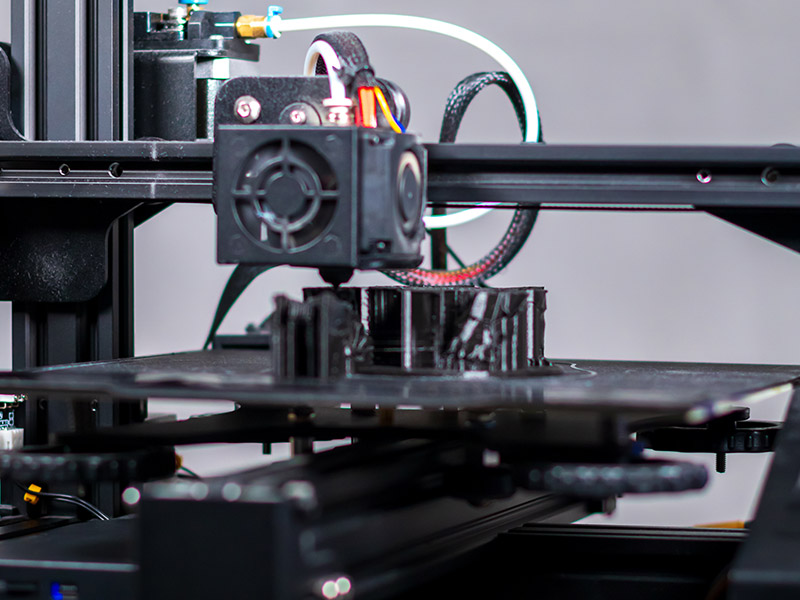
Additive manufacturing minimizes unnecessary raw material usage.
Localized Production
Distributed manufacturing reduces:
- Transportation emissions
- Inventory storage
- Global supply chain dependency
Inventory Reduction
On-demand manufacturing allows companies to:
- Produce only when needed
- Reduce warehouse costs
- Improve supply chain efficiency
Emerging Trends in 3D Printing
AI-Driven Design Optimization
Artificial intelligence helps engineers:
- Reduce weight
- Improve strength
- Optimize internal structures
Impresión multimaterial
Advanced systems now combine:
- Flexible materials
- Rigid materials
- Conductive materials
within a single print.
Large-Scale Additive Manufacturing
Industrial-scale printers are now used for:
- Aerospace structures
- Construction components
- Large automotive parts
Digital Inventory Systems
Companies increasingly store digital CAD files instead of physical spare parts inventories.
Conclusión
The comparison between 3D Printing vs Traditional Methods demonstrates that both technologies play essential roles in modern manufacturing. Traditional manufacturing remains highly effective for mass production and standardized components, while additive manufacturing provides unmatched flexibility, rapid iteration, and complex design capability.
As technology continues advancing, more industries are adopting hybrid manufacturing strategies that combine additive and conventional processes. Companies that understand the strengths and limitations of both approaches can improve production efficiency, accelerate innovation, reduce operational costs, and remain competitive in an increasingly digital manufacturing landscape.
With ongoing developments in AI optimization, metal printing, multi-material systems, and industrial-scale additive manufacturing, the future of Impresión 3D is expected to become even more influential across global industries.
PREGUNTAS FRECUENTES
Is 3D Printing better than traditional manufacturing?
It depends on the application. Additive manufacturing excels in customization, rapid prototyping, and complex geometries, while traditional manufacturing is more efficient for large-scale production.
Is 3D Printing suitable for industrial production?
Yes. Modern additive manufacturing technologies are widely used in aerospace, automotive, medical, and robotics industries.
What materials are used in 3D Printing?
Common materials include:
- Nylon
- Resina
- Acero inoxidable
- Titanio
- Aluminio
- Ceramics
- Composite materials
Is metal 3D Printing durable?
Yes. Technologies such as SLM produce dense metal components suitable for demanding engineering applications.
How fast is 3D Printing?
Production speed depends on technology, part size, and complexity. Some systems can deliver prototypes within 8 to 24 hours.
Why is 3D Printing important for modern manufacturing?
It improves flexibility, accelerates development, reduces waste, and supports customized production.
Poder Impresión 3D reduce production costs?
For low-volume production and prototyping, additive manufacturing often reduces total production costs by eliminating tooling expenses.
Categorías de productos
- Piezas de válvulas
- Piezas de la bomba de agua
- Piezas de la caja de cojinetes
- Piezas de fundición a presión
- Productos para bombas de acero inoxidable
- Productos para bombas de hierro fundido
- Piezas de válvulas para automóviles
- Recambios para automóviles
- Piezas de válvulas para uso civil
- Piezas de bomba de vacío KF

¡Comencemos tu próximo proyecto!
Inicie su proyecto con Leierwo
1. Envíe su consulta
2. Cálculo de costes
3. Inicio de la producción
4. Organizar la entrega
PREGUNTAS FRECUENTES
Sí, tenemos una amplia experiencia en el comercio internacional y podemos ayudar a los clientes con el despacho de aduanas de exportación y los arreglos de envío. Aceptamos varios métodos de pago internacionales, incluyendo T/T (transferencia telegráfica), transferencia bancaria y carta de crédito (L/C). Las condiciones de pago se pueden discutir con nuestro equipo de ventas.
Al asociarse con Leierwo, podrá disfrutar de precios competitivos y una calidad superior a la de otros proveedores. Además, ofrecemos una solución integral para entregar piezas acabadas, incluido el mecanizado CNC y el tratamiento de superficies, lo que garantiza un proceso de producción sin fisuras.
Contamos con avanzados equipos de fundición y estrictos sistemas de control de calidad. Nuestra capacidad de producción mensual es considerable y podemos fabricar productos a partir de dibujos o muestras proporcionados por el cliente. Aceptamos tanto pequeños pedidos de prueba como producciones a gran escala.
Nuestros productos cumplen normas internacionales como ASTM, AISI, DIN y JIS. Podemos proporcionar informes de pruebas de materiales y certificaciones pertinentes para garantizar que la calidad del producto cumple los requisitos del cliente.
Seguimos estrictamente el sistema de gestión de calidad ISO 9001 y realizamos múltiples inspecciones a lo largo del proceso de producción, incluidos análisis espectrográficos, pruebas de rayos X, pruebas ultrasónicas y mediciones dimensionales. Estas medidas de control de calidad garantizan que nuestras piezas de fundición cumplen las normas más estrictas.
Sin embargo, somos flexibles y estamos abiertos a discutir sus necesidades específicas.
Nuestro plazo de producción estándar es de 4 a 6 semanas, en función de la cantidad del pedido y la complejidad del producto. Nos esforzamos por acortar los plazos de entrega para satisfacer las demandas de los clientes.
Sí, podemos proporcionar muestras para la inspección de calidad. Los costes de las muestras y los gastos de envío pueden negociarse, y los gastos de las muestras pueden reembolsarse al realizar un pedido formal.
 Spanish
  English
  Arabic
  Malay
Malay  German