
3D Printing vs Traditional Methods: Which Manufacturing Solution Fits Modern Industry?
يسعدني وجودك هنا! قبل أن نتعمق في المحتوى، أود أن تنضموا إليّ على منصات التواصل الاجتماعي. هناك أشارككم أفكارًا إضافية، وأتواصل مع مجتمعنا الرائع، وأُطلعكم على آخر الأخبار. إليكم كيفية البقاء على تواصل:
📘 فيسبوك: شركة شنغهاي لييروو الصناعية التجارية المحدودة
الآن، لننطلق في هذه الرحلة معًا! آمل أن تجدوا هذا المحتوى مفيدًا ومُلهمًا وقيّمًا. هيا بنا!
جدول المحتويات
مقدمة
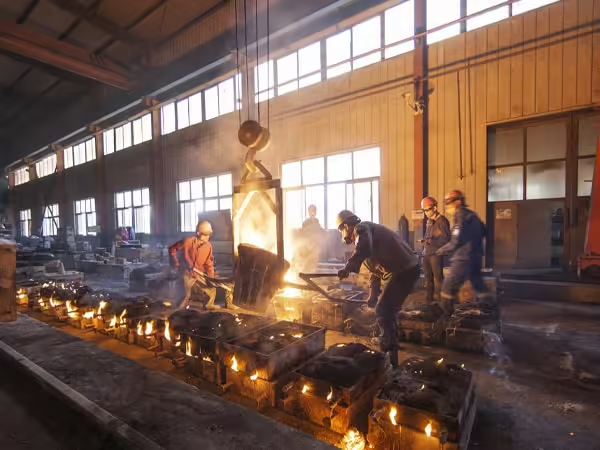
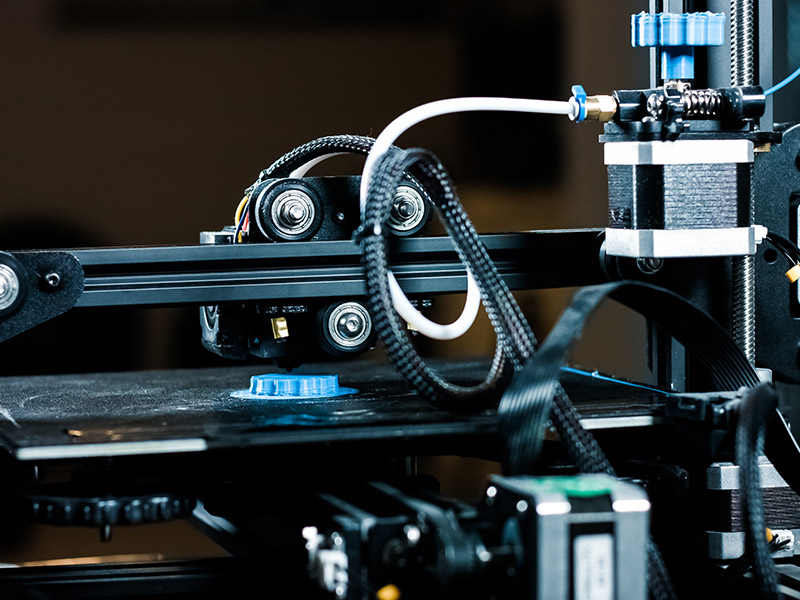
Manufacturing technology is evolving faster than ever before. Companies across aerospace, automotive, robotics, medical, and industrial sectors are under constant pressure to shorten development cycles, reduce production costs, improve product performance, and respond quickly to changing customer demands. In this environment, الطباعة ثلاثية الأبعاد has emerged as one of the most influential technologies reshaping modern manufacturing.
Unlike traditional subtractive manufacturing methods that remove material through cutting, drilling, or milling, additive manufacturing creates components layer by layer directly from digital models. This process allows engineers and manufacturers to produce highly complex geometries, lightweight structures, and customized products with remarkable precision.
The growing popularity of 3D Printing is driven by several factors:
- Faster prototyping and shorter time-to-market
- Reduced tooling and mold costs
- Greater design flexibility
- Lower material waste
- Improved customization capabilities
- Efficient low-volume production
- Enhanced supply chain flexibility
Today, many industrial manufacturers operate hundreds of advanced additive manufacturing systems covering mainstream technologies such as SLA, SLS, MJF, and SLM. These systems support metals, nylon, engineering plastics, resin materials, and composite materials, enabling manufacturers to provide flexible production solutions for industries worldwide.
At the same time, traditional manufacturing methods such as CNC machining, injection molding, forging, casting, and milling remain essential for mass production and large-scale industrial manufacturing. These processes continue to dominate industries requiring high-volume output, consistent repeatability, and lower per-unit costs.
The debate surrounding 3D Printing vs Traditional Methods is no longer about replacing one technology with another. Instead, businesses are exploring how both manufacturing approaches can complement each other to maximize efficiency, reduce costs, and improve innovation.
This article provides a comprehensive comparison between additive manufacturing and conventional manufacturing methods, covering technologies, applications, costs, materials, industry trends, standards, sustainability, real-world case studies, and future developments.
أهم النقاط
- 3D Printing enables complex structures that are difficult or impossible with traditional manufacturing.
- Traditional manufacturing remains the preferred option for large-scale production.
- Additive manufacturing significantly reduces tooling requirements.
- Aerospace, automotive, robotics, and medical industries are rapidly adopting 3D Printing technologies.
- Rapid prototyping is one of the strongest advantages of additive manufacturing.
- Traditional methods often provide lower per-unit costs for mass production.
- Hybrid manufacturing strategies are becoming increasingly common.
What Is 3D Printing?
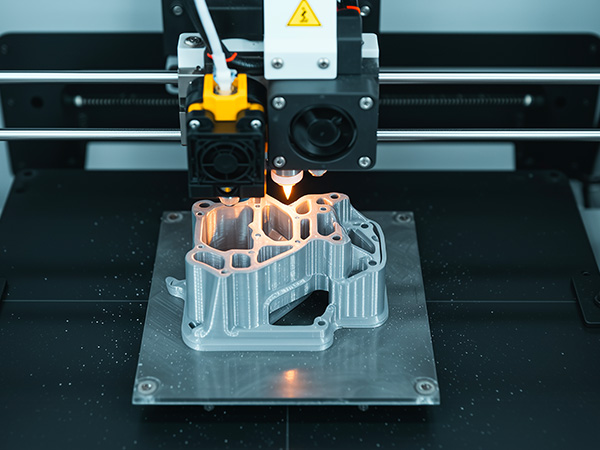
الطباعة ثلاثية الأبعاد is an additive manufacturing process where parts are built layer by layer using digital CAD models. The process transforms virtual designs into physical products through precise material deposition or fusion techniques.
The technology supports a broad range of materials including:
- Nylon
- الراتنج
- الفولاذ المقاوم للصدأ
- التيتانيوم
- سبائك الألومنيوم
- Ceramics
- Carbon fiber composites
- Engineering plastics
Unlike subtractive manufacturing, which removes material from solid blocks, additive manufacturing only uses material where necessary. This creates opportunities for lightweight design optimization and reduced waste.
Core Characteristics of 3D Printing
Layer-by-Layer Production
Objects are manufactured progressively in thin layers. This allows extremely precise control over geometry and internal structures.
حرية التصميم
Complex internal channels, lattice structures, hollow designs, and organic shapes can be created without specialized tooling.
Digital Manufacturing
Production begins directly from CAD files, reducing the need for molds and physical templates.
Rapid Customization
Designs can be modified digitally without changing hardware or tooling setups.
Material Efficiency
Minimal waste is generated because material is deposited only where needed.
Main Types of 3D Printing Technologies
Modern additive manufacturing facilities often operate multiple technologies to meet different production requirements.
تقنية الطباعة المجسمة SLA
SLA technology uses ultraviolet lasers to cure liquid resin into solid layers.
Key Advantages of SLA
- Exceptional surface finish
- دقة عالية الأبعاد
- Fine detail reproduction
- Fast prototype production
Common SLA Applications
- Medical models
- Dental aligners
- Consumer electronics prototypes
- Product concept validation
- Artistic models
Some industrial SLA systems now support build volumes exceeding 2100 × 1700 × 810 mm with lead times as short as 8 hours.
SLS Selective Laser Sintering Technology
SLS technology uses lasers to fuse powdered nylon materials into functional parts.
Advantages of SLS Printing
- Strong mechanical properties
- متانة ممتازة
- No support structures required
- Suitable for functional testing
Common SLS Applications
- Robotics housings
- دعامات السيارات
- Aerospace ducting systems
- Industrial prototypes
Modern SLS systems can produce parts with dimensions up to 420 × 420 × 450 mm.
MJF Multi Jet Fusion Technology
MJF technology is widely recognized for fast production speed and strong nylon parts.
Advantages of MJF Technology
- Consistent surface quality
- كفاءة إنتاج عالية
- Excellent isotropic strength
- Suitable for low-volume production
Common MJF Applications
- Customized enclosures
- Medical devices
- النماذج الوظيفية
- Industrial tooling
High-performance materials such as HP PA12 are commonly used in MJF manufacturing.
تقنية الصهر بالليزر الانتقائي SLM
SLM is one of the most important technologies in metal additive manufacturing.
Advantages of SLM
- Dense metal structures
- Lightweight optimization
- Reduced assembly complexity
- Excellent mechanical performance
Typical SLM Applications
- Rocket engine components
- Aerospace brackets
- Titanium medical implants
- High-performance automotive parts
Some SLM systems support extremely large build sizes exceeding 1258 × 1258 × 1600 mm.
What Are Traditional Manufacturing Methods?
Traditional manufacturing refers to conventional production processes that shape products through subtractive machining or forming operations.
The most common traditional manufacturing methods include:
| عملية التصنيع | Primary Materials | Main Advantage |
|---|---|---|
| تصنيع الآلات باستخدام الحاسب الآلي | Metals, plastics | دقة عالية |
| صب الحقن | Plastics | Low unit cost |
| Casting | Metals | Suitable for large parts |
| التشكيل | Steel, alloys | قوة فائقة |
| Milling | Metals, composites | Excellent surface control |
| Stamping | Sheet metal | High production speed |
These methods remain highly efficient for large-scale manufacturing where product designs remain stable over long production cycles.
3D Printing vs Traditional Methods: Major Differences
مرونة الإنتاج
3D Printing Offers Greater Flexibility
Additive manufacturing allows rapid design modifications without changing tooling.
Manufacturers can:
- Update CAD models instantly
- Produce customized products
- Manufacture multiple design variations simultaneously
- Reduce development timelines
This flexibility is especially important for startups, research teams, and industries with rapidly changing requirements.
Traditional Manufacturing Prioritizes Stability
Traditional production systems are optimized for repeatability and high-volume output.
Once molds and tooling are finalized:
- Production speed becomes extremely high
- Unit costs decrease significantly
- Quality consistency improves
However, changing product designs often requires expensive tooling modifications.
Design Complexity
Additive Manufacturing Supports Complex Geometries
3D Printing enables:
- Internal cooling channels
- Lightweight lattice structures
- Topology optimization
- Organic geometries
- Consolidated assemblies
Many aerospace companies reduce component count by integrating multiple parts into single printed structures.
Traditional Manufacturing Has Geometric Limitations
Complex shapes may require:
- Multiple machining operations
- Specialized cutting tools
- Complex mold systems
- Additional assembly processes
This increases manufacturing time and cost.
نفايات المواد
3D Printing Reduces Waste
Additive manufacturing only deposits material where necessary.
For expensive materials such as titanium:
- Waste reduction can exceed 50%
- Material efficiency improves profitability
- Sustainability goals become easier to achieve
Traditional Manufacturing Produces More Scrap
CNC machining removes large portions of raw material during production.
In some aerospace applications:
- Up to 80% of titanium blocks may become scrap during machining
Tooling Requirements
Minimal Tooling in الطباعة ثلاثية الأبعاد
Most additive manufacturing technologies do not require:
- Molds
- Dies
- Fixtures
- Specialized cutting tools
This significantly reduces startup costs.
Traditional Manufacturing Depends on Tooling
Injection molding and casting often require:
- Expensive mold fabrication
- Long preparation cycles
- High upfront investment
Tooling costs may range from several thousand to hundreds of thousands of dollars.
سرعة الإنتاج
Faster Prototyping with 3D Printing
Rapid prototyping allows companies to:
- Validate designs quickly
- Accelerate product development
- Reduce engineering delays
Some prototypes can be completed within 24 hours.
Faster Mass Production with Traditional Methods
Injection molding systems can produce:
- Thousands of parts daily
- Highly consistent components
- Extremely low per-unit costs
Traditional manufacturing remains unmatched for large production volumes.
Industry Applications of 3D Printing
صناعة الطيران والفضاء
The aerospace industry is one of the largest adopters of additive manufacturing.
Key Benefits in Aerospace
- Weight reduction
- Fuel efficiency improvement
- Reduced assembly complexity
- Faster spare part production
According to industry reports:
- Some 3D-printed aerospace parts reduce weight by up to 40%
Aerospace Case Studies
Rocket engine manufacturers now use SLM technology to consolidate dozens of components into single printed assemblies.
NASA and private aerospace companies increasingly use additive manufacturing for:
- Satellite tanks
- Rocket nozzles
- Heat exchangers
- Turbine components
صناعة السيارات
Automotive manufacturers use 3D Printing for:
- النماذج الأولية السريعة
- Lightweight structures
- Custom tooling
- Concept vehicles
- Replacement parts
Example Applications
Porsche uses additive manufacturing to repair discontinued cylinder heads for classic vehicles.
Manufacturers also produce:
- Tire molds
- Airflow ducts
- Interior components
- Functional testing parts
Medical Industry
Medical applications continue expanding rapidly.
Common Medical Uses
- Prosthetics
- Dental aligners
- Surgical guides
- Customized implants
- Anatomical models
Patient-specific manufacturing improves comfort, precision, and treatment effectiveness.
Robotics Industry
Robotics manufacturers use additive manufacturing for:
- Lightweight frames
- النماذج الوظيفية
- Waterproof housings
- Precision internal structures
Rapid iteration helps robotics developers accelerate testing cycles.
Consumer Product Industry
الطباعة ثلاثية الأبعاد supports:
- Product concept validation
- Small-batch production
- Personalized products
- Rapid market testing
This is particularly valuable for startups and e-commerce brands.
Surface Finishing and Post-Processing
Modern additive manufacturing includes advanced post-processing capabilities.
Common Surface Treatments
| معالجة السطح | Function |
|---|---|
| Painting | Improve appearance |
| Dyeing | Add color consistency |
| Fine Grinding | Smooth surfaces |
| Steam Polishing | Reduce layer visibility |
| Electroplating | Increase corrosion resistance |
| أكسدة | Improve durability |
| Silk Screen Printing | Add logos and markings |
| التلدين | Enhance strength |
These processes improve both aesthetics and functional performance.
Industry Standards for 3D Printing
Quality standards are becoming increasingly important in additive manufacturing.
Major International Standards
ISO/ASTM 52900
Defines terminology and classification standards for additive manufacturing.
ASTM F42
Covers material specifications and testing procedures.
ISO 13485
Applies to medical manufacturing quality management systems.
ISO 17296
Defines data processing and manufacturing quality standards.
Compliance with these standards improves:
- Product reliability
- أمان
- International acceptance
- Regulatory approval
Cost Comparison Between 3D Printing and Traditional Manufacturing
| عامل التكلفة | الطباعة ثلاثية الأبعاد | Traditional Manufacturing |
|---|---|---|
| Initial Investment | أدنى | أعلى |
| Tooling Cost | الحد الأدنى | عالي |
| Prototype Cost | أدنى | أعلى |
| Mass Production Cost | أعلى | أدنى |
| Customization Cost | قليل | عالي |
| نفايات المواد | قليل | أعلى |
| Production Scalability | معتدل | ممتاز |
Sustainability and Environmental Impact
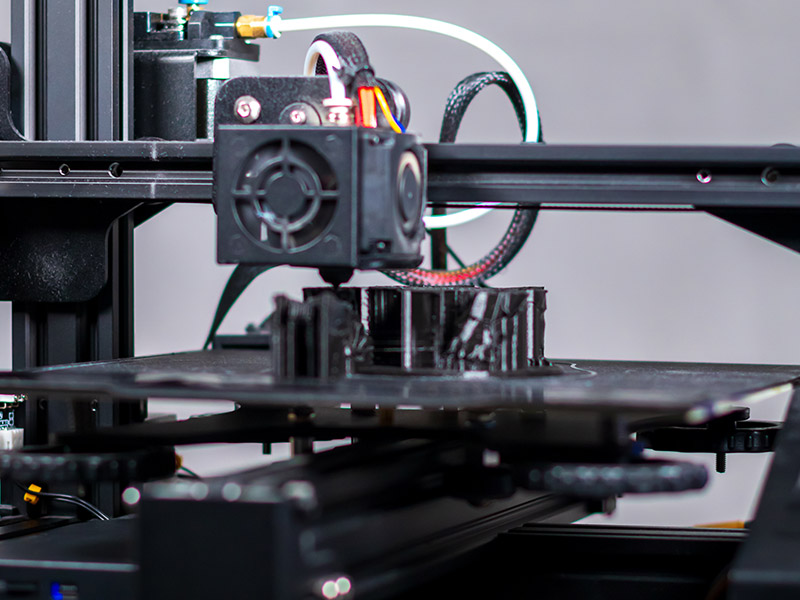
Reduced Material Waste
Additive manufacturing minimizes unnecessary raw material usage.
Localized Production
Distributed manufacturing reduces:
- Transportation emissions
- Inventory storage
- Global supply chain dependency
Inventory Reduction
On-demand manufacturing allows companies to:
- Produce only when needed
- Reduce warehouse costs
- Improve supply chain efficiency
Emerging Trends in 3D Printing
AI-Driven Design Optimization
Artificial intelligence helps engineers:
- Reduce weight
- Improve strength
- Optimize internal structures
Multi-Material Printing
Advanced systems now combine:
- Flexible materials
- Rigid materials
- Conductive materials
within a single print.
Large-Scale Additive Manufacturing
Industrial-scale printers are now used for:
- Aerospace structures
- Construction components
- Large automotive parts
Digital Inventory Systems
Companies increasingly store digital CAD files instead of physical spare parts inventories.
خاتمة
The comparison between 3D Printing vs Traditional Methods demonstrates that both technologies play essential roles in modern manufacturing. Traditional manufacturing remains highly effective for mass production and standardized components, while additive manufacturing provides unmatched flexibility, rapid iteration, and complex design capability.
As technology continues advancing, more industries are adopting hybrid manufacturing strategies that combine additive and conventional processes. Companies that understand the strengths and limitations of both approaches can improve production efficiency, accelerate innovation, reduce operational costs, and remain competitive in an increasingly digital manufacturing landscape.
With ongoing developments in AI optimization, metal printing, multi-material systems, and industrial-scale additive manufacturing, the future of الطباعة ثلاثية الأبعاد is expected to become even more influential across global industries.
الأسئلة الشائعة
Is 3D Printing better than traditional manufacturing?
It depends on the application. Additive manufacturing excels in customization, rapid prototyping, and complex geometries, while traditional manufacturing is more efficient for large-scale production.
Is 3D Printing suitable for industrial production?
Yes. Modern additive manufacturing technologies are widely used in aerospace, automotive, medical, and robotics industries.
What materials are used in 3D Printing?
تشمل المواد الشائعة ما يلي:
- Nylon
- الراتنج
- الفولاذ المقاوم للصدأ
- التيتانيوم
- الألومنيوم
- Ceramics
- Composite materials
Is metal 3D Printing durable?
Yes. Technologies such as SLM produce dense metal components suitable for demanding engineering applications.
How fast is 3D Printing?
Production speed depends on technology, part size, and complexity. Some systems can deliver prototypes within 8 to 24 hours.
Why is 3D Printing important for modern manufacturing?
It improves flexibility, accelerates development, reduces waste, and supports customized production.
يستطيع الطباعة ثلاثية الأبعاد reduce production costs?
For low-volume production and prototyping, additive manufacturing often reduces total production costs by eliminating tooling expenses.
فئات المنتجات
- أجزاء الصمامات
- أجزاء مضخة المياه
- أجزاء صندوق المحمل
- أجزاء الصب بالقالب
- منتجات مضخات الفولاذ المقاوم للصدأ
- منتجات مضخات الحديد الزهر
- قطع غيار الصمامات لاستخدام السيارات
- قطع غيار السيارات
- أجزاء الصمامات للاستخدام المدني
- قطع غيار مضخة التفريغ KF

لنبدأ مشروعك القادم!
ابدأ مشروعك مع Leierwo
1. أرسل استفسارك
2. حساب التكلفة
3. بدء الإنتاج
4. ترتيب التسليم
الأسئلة الشائعة
نعم، لدينا خبرة واسعة في التجارة الدولية ويمكننا مساعدة العملاء في التخليص الجمركي للتصدير وترتيبات الشحن. نحن نقدم شروطًا تجارية مختلفة مثل FOB و CIF و DDP لتلبية الاحتياجات اللوجستية المختلفة، ونقبل طرق الدفع الدولية المختلفة، بما في ذلك T/T (التحويل البرقي) والتحويل البرقي وخطاب الاعتماد (L/C). يمكن مناقشة شروط الدفع مع فريق المبيعات لدينا.
من خلال الشراكة مع Leierwo، يمكنك الاستمتاع بأسعار تنافسية وجودة فائقة مقارنةً بالموردين الآخرين. بالإضافة إلى ذلك، نقدم حلاً شاملاً لتسليم الأجزاء الجاهزة، بما في ذلك التصنيع باستخدام الحاسب الآلي والمعالجة السطحية، مما يضمن عملية إنتاج سلسة.
لدينا معدات صب متقدمة وأنظمة صارمة لمراقبة الجودة. قدرتنا الإنتاجية الشهرية كبيرة، ويمكننا تصنيع المنتجات بناءً على الرسومات أو العينات المقدمة من العملاء. نحن نقبل كلاً من الطلبات التجريبية الصغيرة والإنتاج على نطاق واسع.
تتوافق منتجاتنا مع المعايير الدولية مثل ASTM و AISI و DIN و JIS. ويمكننا تقديم تقارير اختبار المواد والشهادات ذات الصلة لضمان توافق جودة المنتج مع متطلبات العملاء.
نحن نتبع بدقة نظام إدارة الجودة ISO 9001 ونجري عمليات فحص متعددة في جميع مراحل عملية الإنتاج، بما في ذلك التحليل الطيفي، واختبار الأشعة السينية، والاختبار بالموجات فوق الصوتية، وقياسات الأبعاد. تضمن تدابير مراقبة الجودة هذه أن مصبوباتنا تلبي أعلى المعايير.
يعتمد موك لدينا على نوع المنتج ومدى تعقيده، ومع ذلك، نحن مرنون ومنفتحون لمناقشة احتياجاتك الخاصة.
تتراوح مهلة الإنتاج القياسية لدينا من 4 إلى 6 أسابيع، حسب كمية الطلب وتعقيد المنتج. نسعى جاهدين لتقصير أوقات التسليم لتلبية طلبات العملاء.
نعم، يمكننا تقديم عينات لفحص الجودة. يمكن التفاوض بشأن تكاليف العينات ورسوم الشحن، ويمكن استرداد رسوم العينات عند تقديم طلب رسمي.
 Arabic
  English
  Spanish
  Malay
Malay  German