
Top Casting Materials for Industrial Manufacturing in 2026
¡Me encanta tenerte aquí! Antes de profundizar en el contenido, me encantaría que me acompañaras en mis redes sociales. Es donde comparto información adicional, conecto con nuestra increíble comunidad y te mantengo al tanto de las últimas noticias. Así es como puedes mantenerte conectado:
📘 Facebook: Shanghai Leierwo Industria Comercio Co., Ltd.
¡Ahora, emprendamos este viaje juntos! Espero que el contenido aquí te resulte no solo revelador, sino también inspirador y valioso. ¡Comencemos!
Tabla de contenido
Seleccionar lo correcto Materiales de fundición is one of the most important decisions during product development. Whether manufacturing pump components, valve bodies, automotive parts, marine equipment, or industrial machinery, the material directly affects strength, service life, machining efficiency, and overall production costs.
En Leierwo, precision casting projects begin with material engineering. As an ISO/IATF-certified manufacturer specializing in investment casting, sand casting, CNC machining, and rapid manufacturing, the company helps customers worldwide optimize alloy selection according to application requirements, production volume, and budget.
Por qué Materiales de fundición Matter More Than Ever in 2026
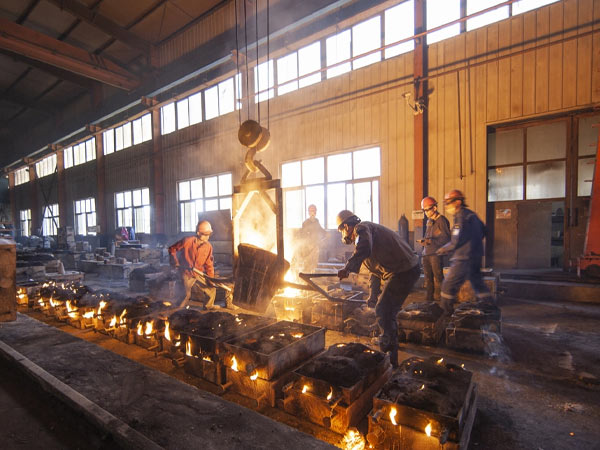
Industrial manufacturing is evolving rapidly.
Manufacturers are no longer choosing materials solely based on cost. Today’s engineers evaluate complete lifecycle performance, including:
- Resistencia mecánica
- Resistencia a la corrosión
- Weight reduction
- Maquinabilidad
- Sostenibilidad
- Heat resistance
- Fatigue performance
- Reciclabilidad
With electric vehicles, renewable energy equipment, intelligent manufacturing, and automation expanding globally, choosing suitable Materiales de fundición has become a competitive advantage rather than simply a purchasing decision.
What Are Casting Materials?
Definition of Casting Materials
Casting Materials are metals or alloys that can be melted, poured into molds, solidified, and finished into functional components. Different materials exhibit different mechanical and chemical properties, making them suitable for various industries.
Instead of searching for one “best” alloy, engineers focus on selecting the most appropriate material for specific operating conditions.
Why Material Selection Comes First
Material selection influences nearly every stage of manufacturing.
It determines:
- Casting process compatibility
- Mold design
- Heat treatment requirements
- Machining allowance
- Acabado superficial
- Product lifespan
- Total manufacturing cost
A poor material choice can increase production costs while reducing product reliability.
Common Types of Casting Materials
Acero inoxidable
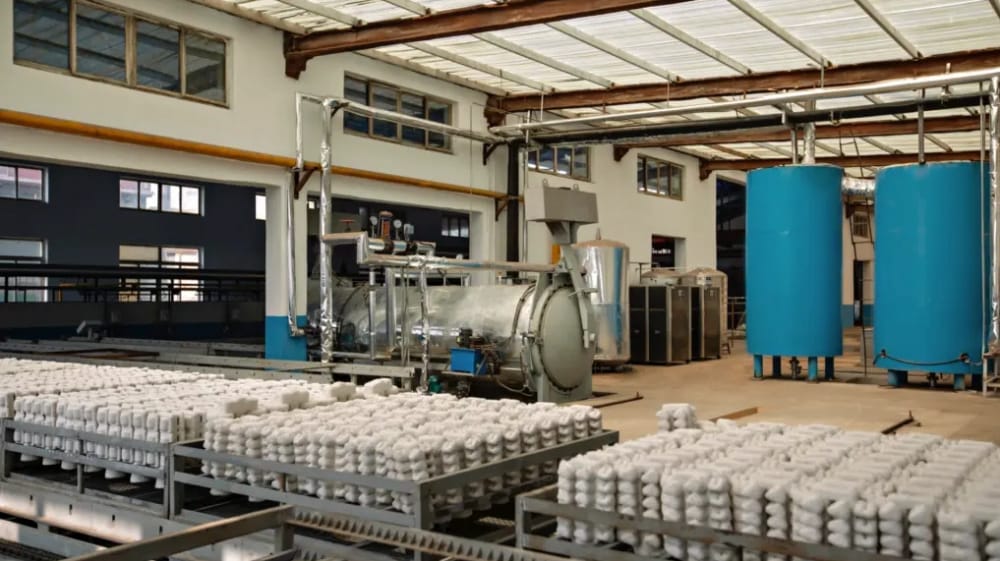
Stainless steel remains one of the most popular choices for precision investment casting.
It offers excellent corrosion resistance, attractive surface quality, and high mechanical strength, making it ideal for harsh environments.
Typical applications include:
- Food processing equipment
- Marine hardware
- dispositivos médicos
- Componentes de válvula
- Pump impellers
Acero carbono
Carbon steel provides outstanding strength at a relatively low material cost.
Compared with stainless steel, it offers higher toughness but requires protective coatings in corrosive environments.
Common applications include:
- Construction machinery
- Mining equipment
- Agricultural machinery
- Heavy industrial components
Acero aleado
Alloy steels incorporate chromium, nickel, molybdenum, manganese, or vanadium to improve specific performance characteristics.
These materials are widely used where wear resistance and fatigue strength are critical.
Typical industries include:
- Petróleo y gas
- Railway
- Heavy equipment
- Aerospace support components
Hierro dúctil
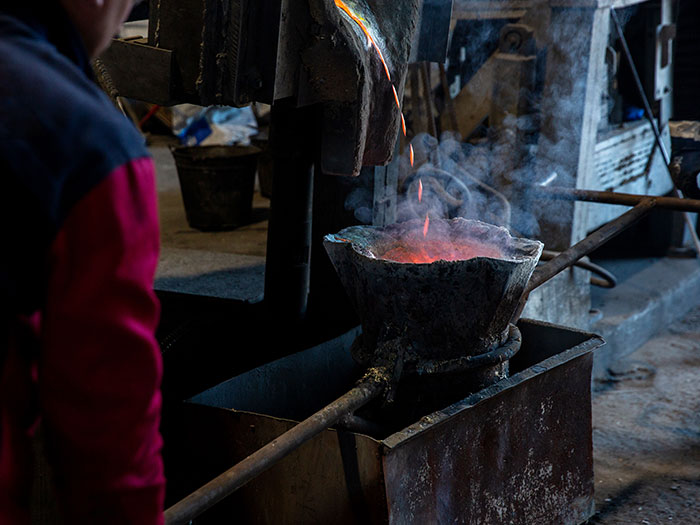
Ductile iron combines high strength with excellent vibration damping.
Compared with gray iron, it has significantly better impact resistance while maintaining excellent castability.
Common products include:
- Cuerpos de válvula
- Pipe fittings
- Carcasas de engranajes
- Pump casings
Hierro gris
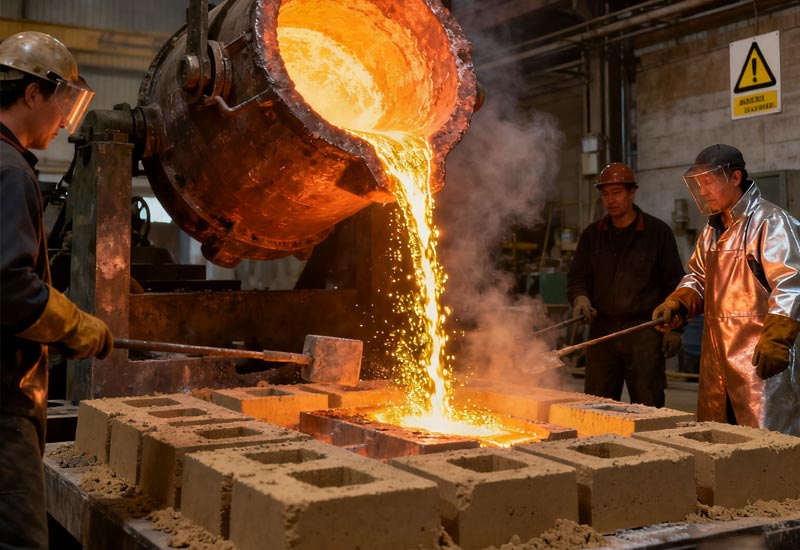
Gray iron remains one of the most economical casting alloys.
Its outstanding machinability and vibration absorption make it popular in industrial machinery despite lower tensile strength.
Aleaciones de aluminio
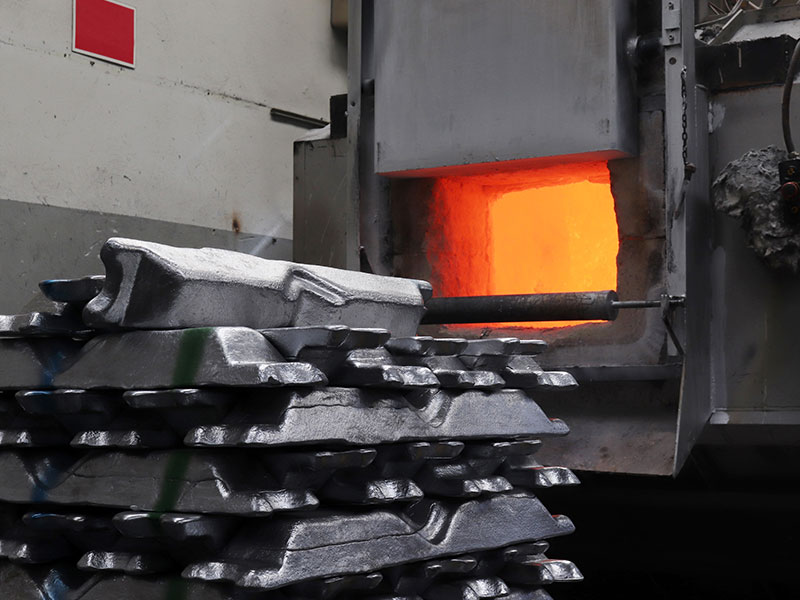
Aluminum alloys continue to dominate lightweight manufacturing.
Their low density, corrosion resistance, and thermal conductivity make them ideal for modern transportation industries.
Aplicaciones incluyen:
- EV components
- Automotive brackets
- Aerospace housings
- Heat exchangers
Bronze and Brass
Copper-based alloys offer excellent corrosion resistance and low friction.
They remain preferred materials for marine applications and bearing systems.
Typical products include:
- Marine propellers
- Rodamientos
- Bushings
- Decorative architectural hardware
Casting Materials Comparison Table
| Material | Fortaleza | Resistencia a la corrosión | Peso | Maquinabilidad | Typical Industries |
|---|---|---|---|---|---|
| Acero inoxidable | Excelente | Excelente | Pesado | Bien | Medical, Food, Marine |
| Acero carbono | Muy alto | Moderado | Pesado | Excelente | Construcción |
| Acero aleado | Pendiente | Bien | Pesado | Moderado | Mining, Energy |
| Aleación de aluminio | Medio | Excelente | Lightweight | Excelente | Automotive, Aerospace |
| Hierro dúctil | Alto | Moderado | Pesado | Bien | Pumps, Valves |
| Hierro gris | Medio | Bajo | Pesado | Excelente | Machinery |
| Bronce | Medio | Excelente | Pesado | Bien | Marina |
| Latón | Medio | Excelente | Medio | Excelente | Plumbing |
Cómo Different Casting Processes Affect Material Selection
Materiales de fundición de inversión
Investment casting excels in producing complex geometries with tight tolerances.
Recommended materials include:
- Acero inoxidable 304
- Acero inoxidable 316
- 17-4PH Stainless Steel
- Acero carbono
- Acero aleado
- Nickel-based alloys
Leierwo specializes in precision investment casting for complex industrial components requiring high dimensional accuracy and smooth surface finishes.
Materiales de fundición en arena
Sand casting supports much larger components while maintaining lower tooling costs.
Popular materials include:
- Hierro dúctil
- Hierro gris
- Acero carbono
- Acero inoxidable
- Aluminio
This process is widely selected for pump housings, machine frames, and structural components.
How to Select the Right Casting Materials
Elegir lo correcto Materiales de fundición requires balancing mechanical performance, production efficiency, operating environment, and total lifecycle cost. Rather than selecting the strongest alloy available, engineers typically evaluate the application from multiple perspectives.
Operating Environment
The service environment is often the first factor to consider.
Components exposed to seawater, chemicals, or acidic conditions require excellent corrosion resistance, while high-temperature applications demand materials that maintain mechanical properties under thermal stress.
Typical considerations include:
- Medios corrosivos
- Operating temperature
- Pressure conditions
- Outdoor exposure
- Humidity
- Abrasion and wear
Mechanical Requirements
Every casting component has unique structural demands.
Before choosing a material, engineers should clearly define the expected mechanical performance.
Resistencia a la tracción
Higher tensile strength allows components to withstand greater external loads without permanent deformation.
Industries such as mining, heavy machinery, and construction commonly prioritize high-strength alloy steels.
Dureza
Hardness determines resistance to wear and surface damage.
Applications involving friction or abrasive materials often require hardened alloy steel or specialized wear-resistant castings.
Toughness
Some components experience repeated impacts instead of constant loading.
High toughness helps prevent cracking and brittle failure during long-term operation.
Machining Requirements
Not every casting leaves the foundry as a finished product.
Many precision components require secondary CNC machining.
Materials with excellent machinability help manufacturers:
- Reduce machining time
- Extend tool life
- Improve dimensional accuracy
- Lower production costs
Gray iron, carbon steel, and aluminum alloys are generally easier to machine than high-alloy stainless steels.
Consideraciones de costos
The lowest-priced material is not always the most economical choice.
Manufacturers should evaluate total ownership costs, including:
- Raw material price
- Casting yield
- Machining cost
- Tratamiento térmico
- Acabado superficial
- Mantenimiento
- Vida útil esperada
A premium alloy may significantly reduce maintenance expenses over many years of operation.
Casting Materials by Industry
Different industries prioritize different material properties. Understanding these priorities helps engineers make informed decisions.
Industria automotriz
Automotive manufacturers increasingly focus on lightweight construction without sacrificing strength.
Common materials include:
- Aleaciones de aluminio
- hierro dúctil
- High-strength steel
- Acero inoxidable
Typical products include:
- Componentes de suspensión
- Turbocharger housings
- Brake system parts
- Engine brackets
- Differential housings
Oil & Gas Industry
Oil and gas equipment operates in highly demanding environments involving pressure, corrosion, and elevated temperatures.
Preferred materials include:
- Acero inoxidable dúplex
- acero inoxidable 316
- Acero aleado
- Heat-resistant stainless alloys
Aplicaciones incluyen:
- Cuerpos de válvula
- Pump casings
- Flanges
- Pipe fittings
- Pressure control equipment
Industria Marina
Saltwater corrosion is one of the biggest challenges in marine engineering.
Common Materiales de fundición include:
- Marine-grade stainless steel
- Bronce
- Latón
- Acero inoxidable dúplex
Typical components include:
- Propellers
- Marine pumps
- Deck hardware
- Valve systems
Food Processing Industry
Food-grade manufacturing requires hygienic materials with excellent corrosion resistance.
Recommended materials include:
- Acero inoxidable 304
- Acero inoxidable 316
These alloys provide smooth surfaces that are easy to clean while complying with strict sanitary standards.
Mining Equipment
Mining machinery operates under severe wear conditions.
Common materials include:
- High manganese steel
- Chromium alloy steel
- Wear-resistant cast steel
Typical products include:
- Crusher liners
- Bucket teeth
- Wear plates
- Excavator components
Maquinaria Agrícola
Agricultural equipment requires durability while maintaining reasonable production costs.
Popular choices include:
- Acero carbono
- hierro dúctil
- Acero aleado
These materials offer excellent strength for tractors, harvesters, and irrigation equipment.
Investment Casting vs Sand Casting Material Selection
Choosing the appropriate casting process is just as important as selecting the material itself.
| Comparación | Fundición de inversión | Fundición en arena |
|---|---|---|
| Acabado de la superficie | Excelente | Moderado |
| Precisión dimensional | Muy alto | Medio |
| Geometría compleja | Excelente | Bien |
| Volumen de producción | Small to Medium | Medium to Large |
| Costo de herramientas | Moderado | Más bajo |
| Material Utilization | Alto | Medio |
| Machining Required | Mínimo | More Extensive |
| Best Materials | Stainless Steel, Alloy Steel, Carbon Steel | Iron, Steel, Aluminum |
For high-precision industrial components with complex geometries, investment casting generally provides greater value by reducing machining and material waste.
Material Properties Comparison
Selecting among different Materiales de fundición becomes easier when comparing their core characteristics.
Resistencia a la corrosión
Materials with superior corrosion resistance help extend service life in aggressive environments.
Excelente
- Acero inoxidable 316
- Acero inoxidable dúplex
- Bronce
Bien
- Acero inoxidable 304
- Aleación de aluminio
Moderado
- Carbon Steel (with coating)
Resistencia al desgaste
Wear resistance is essential for moving parts and abrasive applications.
Best-performing materials include:
- Acero aleado
- High Chromium Iron
- Manganese Steel
Resistencia al calor
High-temperature environments require specialized alloys.
Recommended materials include:
- Heat-resistant stainless steel
- Nickel-based alloys
- Chromium-molybdenum alloy steel
These materials are commonly used in power generation, furnaces, and petrochemical processing.
Emerging Trends in Casting Materials for 2026
Industrial manufacturing continues to evolve, driven by sustainability goals, digital manufacturing, and demand for higher-performance components.
Ingeniería ligera
Manufacturers are replacing heavier cast iron components with aluminum and advanced steel alloys wherever possible.
The benefits include:
- Lower transportation costs
- Improved energy efficiency
- Reduced fuel consumption
- Easier assembly
High-Performance Alloys
Modern industries increasingly require materials capable of performing under extreme conditions.
Ejemplos incluyen:
- Duplex stainless steels
- Superalloys
- Nickel-based alloys
- High-strength low-alloy steels
These advanced materials offer longer service life and reduced maintenance requirements.
Sustainable Material Selection
Environmental responsibility is becoming a major purchasing factor.
Many manufacturers now prioritize:
- Recycled metal content
- Energy-efficient melting processes
- Reduced material waste
- Longer product lifecycle
- Lower carbon emissions
Investment casting supports sustainability by minimizing excess material and reducing post-processing compared with many conventional manufacturing methods.
Digital Material Engineering
Artificial intelligence, simulation software, and digital twin technologies are helping engineers optimize material selection before production begins.
Benefits include:
- Faster product development
- Reduced prototyping costs
- Improved casting yield
- Better quality consistency
- Lower manufacturing risks
As Industry 4.0 adoption grows, data-driven material selection will become a standard practice across precision casting manufacturers.
How Leierwo Helps Customers Choose the Right Casting Materials
Seleccionar lo correcto Materiales de fundición is not simply about choosing an alloy from a catalog. It requires balancing design requirements, manufacturing methods, production volume, machining needs, and long-term operating conditions.
En Leierwo, every project begins with an engineering review to ensure the selected material delivers the best combination of performance, manufacturability, and cost efficiency.
Material Consultation
Experienced engineers evaluate customer drawings, technical specifications, and application environments before recommending suitable materials.
The evaluation typically includes:
- Product function
- Working temperature
- Pressure requirements
- Corrosion exposure
- Mechanical load
- Surface finish expectations
- Production quantity
This collaborative approach helps reduce redesign costs and shortens development cycles.
Process Matching
Different materials perform best with different casting processes.
Leierwo recommends manufacturing routes based on component complexity and production objectives.
Fundición de inversión
Ideal for:
- Complex geometries
- Thin-wall components
- Tolerancias estrictas
- High-quality surface finishes
- Small to medium production volumes
Common materials include:
- Acero inoxidable
- Acero carbono
- Acero aleado
- Heat-resistant steel
Fundición en arena
Adecuado para:
- Large components
- Heavy-duty machinery
- Cost-sensitive projects
- Medium to large production runs
Typical materials include:
- hierro dúctil
- Hierro gris
- Acero carbono
- Aluminum alloy
Mecanizado CNC de precisión
Many cast components require secondary machining to achieve precise tolerances.
Leierwo combines casting with CNC machining to provide complete manufacturing solutions, reducing supplier management and improving quality consistency.
Quality Control Throughout Production
Material quality is maintained throughout every production stage.
Inspection procedures commonly include:
- Raw material verification
- Chemical composition analysis
- Mechanical property testing
- Inspección dimensional
- Surface defect inspection
- Ensayos no destructivos (END)
- Final quality inspection before shipment
These quality controls help ensure each casting meets customer specifications and international standards.
Common Mistakes When Choosing Casting Materials
Even experienced buyers can make material selection mistakes that increase manufacturing costs or reduce product performance.
Choosing Only by Price
A lower-cost material may appear attractive initially, but frequent maintenance, premature failure, and shorter service life often increase the total ownership cost.
Instead, evaluate long-term value rather than purchase price alone.
Ignoring the Operating Environment
Components exposed to chemicals, seawater, or high temperatures require specialized alloys.
Using standard carbon steel in corrosive environments may lead to rapid deterioration and costly replacements.
Over-Specifying Materials
Some projects use expensive high-performance alloys even though standard engineering materials can fully satisfy performance requirements.
Selecting materials based on actual engineering needs helps optimize project budgets.
Neglecting Machining Costs
Certain alloys are significantly more difficult to machine.
Although they may provide superior strength, they can increase tooling costs and production time if machining requirements are not considered during the design phase.
Failing to Consider Casting Process Compatibility
Not every material performs equally well in every casting process.
Working with an experienced foundry helps ensure the selected alloy is compatible with the chosen manufacturing method.
Quick Material Selection Guide
The following recommendations provide a practical starting point for common industrial applications.
| If You Need… | Recommended Casting Materials |
|---|---|
| Excelente resistencia a la corrosión | 316 Stainless Steel, Duplex Stainless Steel |
| High structural strength | Carbon Steel, Alloy Steel |
| Lightweight components | Aleación de aluminio |
| Excellent wear resistance | Alloy Steel, High Chromium Iron |
| Aplicaciones marinas | Bronze, Duplex Stainless Steel |
| Food-grade equipment | 304 Stainless Steel, 316 Stainless Steel |
| Cost-effective large castings | Ductile Iron, Gray Iron |
| High-temperature service | Heat-Resistant Stainless Steel, Nickel Alloys |
This guide should always be combined with engineering analysis to ensure the most suitable material is selected for the specific application.
Conclusión
As industrial manufacturing continues to advance in 2026, selecting the right Materiales de fundición has become a strategic decision that influences product quality, production efficiency, lifecycle costs, and overall business competitiveness.
Whether your project requires the corrosion resistance of stainless steel, the strength of alloy steel, the lightweight advantages of aluminum, or the cost-effectiveness of ductile iron, understanding the characteristics of each material is essential for achieving optimal results.
Partnering with an experienced casting manufacturer can make this process significantly easier. With expertise in investment casting, sand casting, precision machining, and customized OEM manufacturing, Leierwo helps global customers identify the most suitable material and production process for every application.
From prototype development to high-volume production, the right material selection lays the foundation for reliable, high-performance industrial components. If you’re planning your next casting project, consulting with an experienced engineering team early in the design stage can help reduce costs, improve manufacturability, and ensure long-term product success.
PREGUNTAS FRECUENTES
What are the best Materiales de fundición for industrial manufacturing?
There is no single best material for every application. Stainless steel, carbon steel, alloy steel, ductile iron, aluminum alloy, and bronze are among the most widely used options, with each offering unique advantages depending on operating conditions, mechanical requirements, and budget.
Which casting material offers the highest corrosion resistance?
For most industrial environments, 316 stainless steel and duplex stainless steel provide outstanding corrosion resistance. Bronze also performs exceptionally well in marine applications due to its resistance to saltwater corrosion.
Is aluminum better than steel for casting?
It depends on the application.
Aluminum offers lightweight construction, excellent corrosion resistance, and good thermal conductivity, making it ideal for automotive and aerospace components. Steel provides significantly higher strength and is better suited for heavy-duty industrial equipment.
What is the difference between investment casting and sand casting materials?
Many alloys can be used in both processes, but investment casting is generally preferred for stainless steel, alloy steel, and precision components requiring tight tolerances. Sand casting is often selected for larger iron and steel castings where dimensional accuracy is less critical.
How do I choose the right Casting Materials for my project?
Start by evaluating:
- Operating environment
- Required mechanical properties
- Corrosion exposure
- Rango de temperatura
- Component size
- Production volume
- Budget
- Secondary machining requirements
Working with an experienced casting manufacturer like Leierwo can simplify this process and help avoid costly design revisions.
Can recycled metals be used for industrial castings?
Yes. Many foundries incorporate recycled metals into their production processes while maintaining strict quality control standards. Proper material verification and chemical composition testing ensure that recycled content does not compromise product performance.
Categorías de productos
- Piezas de válvulas
- Piezas de la bomba de agua
- Piezas de la caja de cojinetes
- Piezas de fundición a presión
- Productos para bombas de acero inoxidable
- Productos para bombas de hierro fundido
- Piezas de válvulas para automóviles
- Recambios para automóviles
- Piezas de válvulas para uso civil
- Piezas de bomba de vacío KF

¡Comencemos tu próximo proyecto!
Inicie su proyecto con Leierwo
1. Envíe su consulta
2. Cálculo de costes
3. Inicio de la producción
4. Organizar la entrega
PREGUNTAS FRECUENTES
Sí, tenemos una amplia experiencia en el comercio internacional y podemos ayudar a los clientes con el despacho de aduanas de exportación y los arreglos de envío. Aceptamos varios métodos de pago internacionales, incluyendo T/T (transferencia telegráfica), transferencia bancaria y carta de crédito (L/C). Las condiciones de pago se pueden discutir con nuestro equipo de ventas.
Al asociarse con Leierwo, podrá disfrutar de precios competitivos y una calidad superior a la de otros proveedores. Además, ofrecemos una solución integral para entregar piezas acabadas, incluido el mecanizado CNC y el tratamiento de superficies, lo que garantiza un proceso de producción sin fisuras.
Contamos con avanzados equipos de fundición y estrictos sistemas de control de calidad. Nuestra capacidad de producción mensual es considerable y podemos fabricar productos a partir de dibujos o muestras proporcionados por el cliente. Aceptamos tanto pequeños pedidos de prueba como producciones a gran escala.
Nuestros productos cumplen normas internacionales como ASTM, AISI, DIN y JIS. Podemos proporcionar informes de pruebas de materiales y certificaciones pertinentes para garantizar que la calidad del producto cumple los requisitos del cliente.
Seguimos estrictamente el sistema de gestión de calidad ISO 9001 y realizamos múltiples inspecciones a lo largo del proceso de producción, incluidos análisis espectrográficos, pruebas de rayos X, pruebas ultrasónicas y mediciones dimensionales. Estas medidas de control de calidad garantizan que nuestras piezas de fundición cumplen las normas más estrictas.
Sin embargo, somos flexibles y estamos abiertos a discutir sus necesidades específicas.
Nuestro plazo de producción estándar es de 4 a 6 semanas, en función de la cantidad del pedido y la complejidad del producto. Nos esforzamos por acortar los plazos de entrega para satisfacer las demandas de los clientes.
Sí, podemos proporcionar muestras para la inspección de calidad. Los costes de las muestras y los gastos de envío pueden negociarse, y los gastos de las muestras pueden reembolsarse al realizar un pedido formal.
 Spanish
  English
  Arabic
  Malay
Malay  German