
Sand Casting Services Process: Complete Industrial Guide
¡Bienvenido a mi blog!
¡Me encanta tenerte aquí! Antes de profundizar en el contenido, me encantaría que me acompañaras en mis redes sociales. Es donde comparto información adicional, conecto con nuestra increíble comunidad y te mantengo al tanto de las últimas noticias. Así es como puedes mantenerte conectado:
📘 Facebook: Shanghai Leierwo Industria Comercio Co., Ltd.
¡Ahora, emprendamos este viaje juntos! Espero que el contenido aquí te resulte no solo revelador, sino también inspirador y valioso. ¡Comencemos!
Tabla de contenido
Introducción
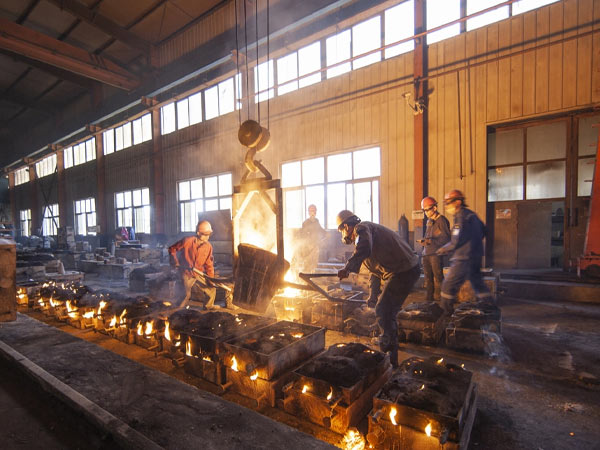
Sand casting remains one of the oldest yet most widely used metal forming technologies in global manufacturing. According to industry reports from the American Foundry Society (AFS), over 60% of metal castings worldwide are produced through sand casting services, especially in heavy machinery, automotive components, and industrial equipment.
Despite the rise of precision casting methods like investment casting and die casting, sand casting continues to dominate due to its low tooling cost, scalability, and material versatility.
This guide provides a complete breakdown of the servicios de fundición en arena process, supported by industrial standards, real-world applications, technical data, and procurement insights.
Key Takeaways of This Guide
- Full breakdown of the industrial sand casting services process
- Technical explanation of materials, equipment, and standards
- Comparison with alternative casting technologies
- Cost structure and production efficiency analysis
- Real industrial application cases and global trends
- FAQ based on real buyer search intent
Servicios de fundición en arena Overview (Industrial Definition)
What Is Sand Casting in Modern Manufacturing?
Sand casting services refer to a metal forming process where molten metal is poured into a sand-based mold cavity to create a final part after solidification.
This method is widely adopted in:
- Automotive engine production
- Pump and valve manufacturing
- Mining and construction machinery
- Railway and marine components
Why Sand Casting Still Dominates
Even with modern CNC machining and 3D printing integration, sand casting remains essential due to:
- Low initial tooling investment
- Ability to cast parts from 0.5 kg to over 20 tons
- Compatibility with ferrous and non-ferrous metals
- Flexible production volumes
Sand Casting Services Process (Full Industrial Workflow)
Step 1: Engineering Design & Pattern Creation
The process begins with CAD design and pattern development.
Pattern Tolerances
Typical industrial tolerances:
- Aluminum castings: ±0.5 mm to ±1.5 mm
- Iron castings: ±1 mm to ±3 mm
Patterns are typically made from:
- Wood (prototype stage)
- Aluminum (medium durability)
- Resin or plastic (high precision production)
Step 2: Mold Preparation Using Green Sand or Resin Sand
Sand Types Used in Industry
| Sand Type | Aplicación | Strength Level | Costo |
|---|---|---|---|
| Green Sand | Mass production | Medio | Bajo |
| Resin Sand | Alta precisión | Alto | Medio |
| Shell Sand | Fine detail casting | Muy alto | Alto |
Green sand remains the most widely used due to cost efficiency and recyclability.
Step 3: Core Making for Internal Geometry
Cores define hollow sections inside cast parts.
Core Materials
- Oil-bonded sand cores
- Resin-bonded cores
- CO₂ hardened sodium silicate cores
Core strength can reach up to 6–12 MPa compressive resistance, depending on binder system.
Step 4: Melting and Alloy Control
Common Melting Temperatures
| Metal | Melting Point |
|---|---|
| Hierro gris | 1150–1200°C |
| Acero carbono | 1450–1520°C |
| Aleación de aluminio | 660–750°C |
Precise temperature control is critical for:
- Reducing porosity
- Improving mechanical strength
- Ensuring uniform grain structure
Step 5: Pouring Process Control
Pouring must be controlled to avoid turbulence.
Industry Standards
- Pouring speed: 2–5 kg/sec (small castings)
- Ladle temperature drop: <50°C
- Filling time control: <30 seconds for precision parts
Step 6: Cooling and Solidification Behavior
Cooling rate directly impacts material strength.
- Rapid cooling → finer grain structure
- Slow cooling → improved ductility
Typical cooling time:
- Small parts: 30 minutes – 2 hours
- Large castings: 12 – 48 hours
Step 7: Shakeout, Cleaning, and Finishing
Post-processing includes:
- Sand removal
- Granallado
- Grinding and machining
- Heat treatment (optional)
Surface roughness after casting:
- Ra 6.3 – Ra 25 μm (typical range)
Servicios de fundición en arena vs Other Manufacturing Methods
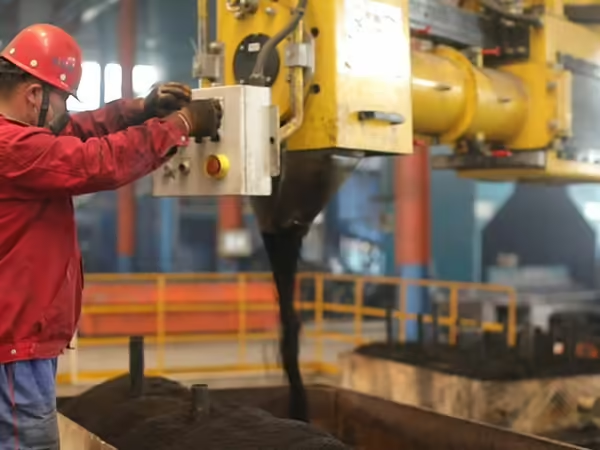
Technical Comparison
| Tecnología | Precisión | Costo | Production Scale | Mejor caso de uso |
|---|---|---|---|---|
| Fundición en arena | Medio | Bajo | High flexibility | Heavy parts |
| Fundición a presión | Alto | Alto | Mass production | Small precision parts |
| Fundición de inversión | Muy alto | Muy alto | Medio | Complex components |
| Mecanizado CNC | Muy alto | Alto | Medio bajo-bajo | Final finishing |
Sand casting remains the most cost-efficient solution for large structural components.
Industrial Standards in Sand Casting Services
Key International Standards
- ISO 8062: Dimensional tolerances for castings
- ASTM A48: Gray iron castings specification
- ASTM A27: Carbon steel castings standard
- DIN 1691: Foundry sand quality requirements
Compliance ensures:
- Mechanical stability
- Dimensional accuracy
- Repeatable production quality
Real Industry Case Studies
Case Study 1: Automotive Engine Block Production
A European OEM reduced production cost by 32% by switching from machining from billet to sand casting engine blocks.
Results:
- Material waste reduced by 45%
- Production time reduced by 28%
- Annual cost savings: $2.3 million
Case Study 2: Pump Housing Manufacturing
A water treatment equipment manufacturer used sand casting services to produce corrosion-resistant pump housings.
Outcome:
- Improved service life from 5 years to 9 years
- Reduced leakage defects by 70%
- Achieved ISO 9001 quality compliance
Market Trends & Industry News (2024–2025)
According to Global Foundry Market Report 2025:
- Global sand casting market expected to grow at 4.8% CAGR
- Asia-Pacific accounts for over 52% of production capacity
- Automation in foundries increases efficiency by up to 35%
Key trend:
Digital simulation tools (like MAGMASOFT and ProCAST) are now widely used to reduce defect rates before production.
Cost Structure of Sand Casting Services
Main Cost Drivers
| Factor | Impact Level |
|---|---|
| Material type | Alto |
| Mold complexity | Alto |
| Production volume | Medio |
| Postprocesamiento | Medio |
| Energy consumption | Medio |
Typical cost breakdown:
- Material: 40–55%
- Labor: 20–30%
- Energy: 10–15%
- Finishing: 10–20%
Conceptos avanzados en Servicios de fundición en arena
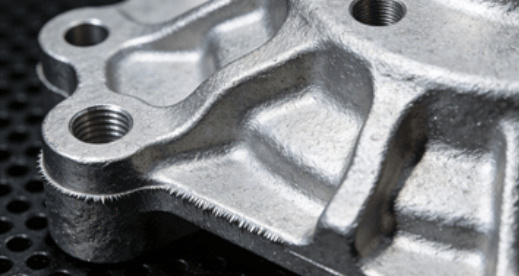
Simulation Technology
Modern foundries use simulation software to predict:
- Metal flow behavior
- Solidification defects
- Shrinkage and porosity
Defect reduction rate: up to 60% improvement when simulation is applied.
Automation in Foundries
Robotic systems are now used for:
- Mold handling
- Pouring control
- Sand recycling
Automation improves:
- Seguridad
- Consistency
- Output efficiency
Sand Casting Sustainability & Recycling
Sand used in molds can be recycled up to 90–95% efficiency depending on system design.
Environmental benefits:
- Reduced landfill waste
- Lower raw sand consumption
- Energy-efficient reclaim systems
PREGUNTAS FRECUENTES
Qué utilizan las industrias servicios de fundición en arena the most?
Automotive, construction machinery, energy equipment, and marine industries are the largest users.
Is sand casting suitable for precision parts?
Yes, but typically within medium tolerance ranges (±0.5 mm to ±3 mm).
What is the lifespan of sand molds?
Most molds are single-use, but sand itself is highly recyclable.
How does sand casting compare to 3D printing?
3D printing is faster for prototyping, but sand casting is more cost-effective for large-scale production.
What is the biggest limitation of sand casting?
Lower surface finish quality compared to die casting or investment casting.
Conclusión final
El servicios de fundición en arena process continues to be a cornerstone of global industrial manufacturing. Its unmatched flexibility, low tooling cost, and ability to produce large and complex metal components make it indispensable across multiple industries.
With the integration of simulation technology, automation, and improved material science, sand casting is evolving into a highly efficient and data-driven manufacturing process suitable for modern industrial demands.
Categorías de productos
- Piezas de válvulas
- Piezas de la bomba de agua
- Piezas de la caja de cojinetes
- Piezas de fundición a presión
- Productos para bombas de acero inoxidable
- Productos para bombas de hierro fundido
- Piezas de válvulas para automóviles
- Recambios para automóviles
- Piezas de válvulas para uso civil
- Piezas de bomba de vacío KF

¡Comencemos tu próximo proyecto!
Inicie su proyecto con Leierwo
1. Envíe su consulta
2. Cálculo de costes
3. Inicio de la producción
4. Organizar la entrega
PREGUNTAS FRECUENTES
Sí, tenemos una amplia experiencia en el comercio internacional y podemos ayudar a los clientes con el despacho de aduanas de exportación y los arreglos de envío. Aceptamos varios métodos de pago internacionales, incluyendo T/T (transferencia telegráfica), transferencia bancaria y carta de crédito (L/C). Las condiciones de pago se pueden discutir con nuestro equipo de ventas.
Al asociarse con Leierwo, podrá disfrutar de precios competitivos y una calidad superior a la de otros proveedores. Además, ofrecemos una solución integral para entregar piezas acabadas, incluido el mecanizado CNC y el tratamiento de superficies, lo que garantiza un proceso de producción sin fisuras.
Contamos con avanzados equipos de fundición y estrictos sistemas de control de calidad. Nuestra capacidad de producción mensual es considerable y podemos fabricar productos a partir de dibujos o muestras proporcionados por el cliente. Aceptamos tanto pequeños pedidos de prueba como producciones a gran escala.
Nuestros productos cumplen normas internacionales como ASTM, AISI, DIN y JIS. Podemos proporcionar informes de pruebas de materiales y certificaciones pertinentes para garantizar que la calidad del producto cumple los requisitos del cliente.
Seguimos estrictamente el sistema de gestión de calidad ISO 9001 y realizamos múltiples inspecciones a lo largo del proceso de producción, incluidos análisis espectrográficos, pruebas de rayos X, pruebas ultrasónicas y mediciones dimensionales. Estas medidas de control de calidad garantizan que nuestras piezas de fundición cumplen las normas más estrictas.
Sin embargo, somos flexibles y estamos abiertos a discutir sus necesidades específicas.
Nuestro plazo de producción estándar es de 4 a 6 semanas, en función de la cantidad del pedido y la complejidad del producto. Nos esforzamos por acortar los plazos de entrega para satisfacer las demandas de los clientes.
Sí, podemos proporcionar muestras para la inspección de calidad. Los costes de las muestras y los gastos de envío pueden negociarse, y los gastos de las muestras pueden reembolsarse al realizar un pedido formal.
 Spanish
  English
  Arabic
  Malay
Malay  German