
Cómo inspeccionar la calidad de las piezas fundidas de bombas: una guía profesional completa
¡Bienvenido a mi blog!
¡Me encanta tenerte aquí! Antes de profundizar en el contenido, me encantaría que me acompañaras en mis redes sociales. Es donde comparto información adicional, conecto con nuestra increíble comunidad y te mantengo al tanto de las últimas noticias. Así es como puedes mantenerte conectado:
📘 Facebook: Shanghai Leierwo Industria Comercio Co., Ltd.
¡Ahora, emprendamos este viaje juntos! Espero que el contenido aquí te resulte no solo revelador, sino también inspirador y valioso. ¡Comencemos!
Tabla de contenido
In modern industrial operations, pump castings serve as the backbone of critical equipment, from chemical processing plants to water treatment facilities and high-pressure hydraulic systems. Any defect in pump castings can result in catastrophic failures, unplanned downtime, and substantial financial losses. With global demand for high-performance pumps increasing—valued at over $100 billion in 2025 according to Grand View Research—ensuring casting quality has never been more essential.
This guide provides a complete, professional approach to inspecting pump castings, offering engineers, manufacturers, and buyers a step-by-step framework to guarantee reliability, durability, and compliance.
Key topics covered:
- Introduction to pump castings and their critical role
- Visual inspection and dimensional verification
- Non-destructive testing (NDT) methods
- Material and microstructure analysis
- Defect identification and prevention strategies
- Case studies from industrial and chemical plants
- Comparative analysis: casting inspection methods
- Lifecycle management and preventive maintenance
- Sustainability and cost-effectiveness
- FAQs and practical tips for buyers and engineers
Step 1: Understanding Pump Castings and Their Industrial Significance
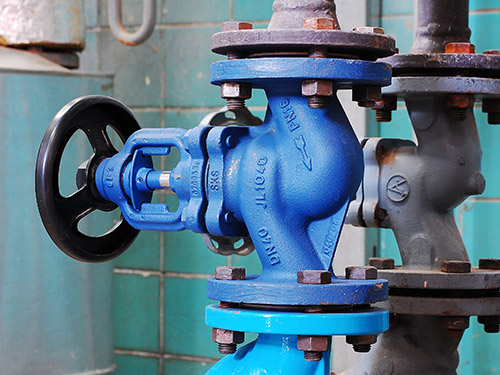
What Are Pump Castings?
Pump castings are metal components manufactured through casting processes to form pump housings, impellers, volutes, and other critical parts. Their function is to withstand high pressure, thermal fluctuations, and corrosive fluids. The integrity of these components is crucial because any defect could compromise pump performance or safety.
Key materials used:
- Fier fundit: Affordable, widely used for water and general industrial pumps.
- Acero inoxidable: Resistant to corrosion, ideal for chemical and food-processing pumps.
- Bronze and Copper Alloys: Effective for marine applications and pumps handling seawater.
- High-Performance Alloys (Inconel, Duplex Stainless, Super Duplex): Essential for oil, gas, and high-temperature applications.
Perspectiva de la industria: According to the International Pump Manufacturers Association (IPMA), over 70% of pump failures in industrial applications are traced to material defects or improper casting inspection.
Step 2: Visual Inspection of Pump Castings
Surface Quality Evaluation
Visual inspection remains the first line of defense in casting quality control:
- Examine for cracks, porosity, and surface irregularities.
- Check fillets, edges, and weld joints for proper finishing.
- Look for signs of sand inclusions, cold shuts, or surface oxidation.
Ejemplo de caso: A chemical plant in Germany implemented a standardized visual inspection protocol and reduced assembly rework by 28% within the first year.
Dimensional and Geometric Verification
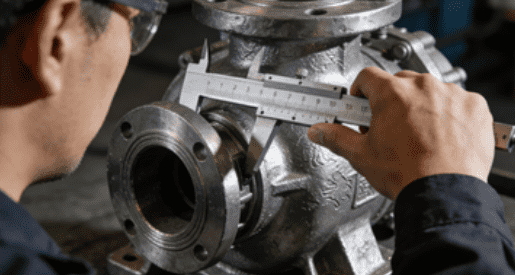
- Use calipers, micrometers, and laser scanning for wall thickness, diameters, and mounting hole positions.
- Compare results with CAD models or original design specifications.
- Tolerances typically range from ±0.1 mm for high-precision parts to ±0.5 mm for general industrial components.
Tip: For critical hydraulic pump impellers, a variation greater than 0.2 mm can reduce efficiency by up to 10%.
Step 3: Non-Destructive Testing (NDT) Techniques
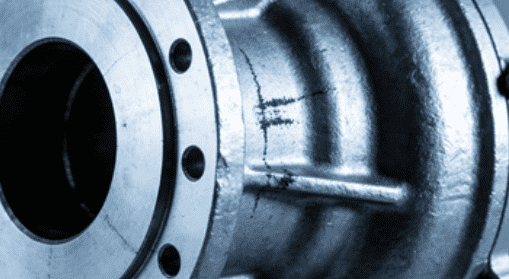
Radiographic Testing (X-Ray)
- Detects internal voids, cracks, and inclusions.
- Essential for high-pressure and high-temperature applications.
- Can be performed on batch or 100% critical parts.
Perspectiva de datos: Aerospace-grade pumps subjected to radiography showed 99.5% defect detection accuracy, minimizing field failures.
Ultrasonic Testing (UT)
- High-frequency waves detect internal defects.
- Adecuado para thick-walled castings.
- Can map defect depth and location accurately.
Magnetic Particle and Dye Penetrant Inspection
- Magnetic Particle: Detects surface and near-surface defects in ferromagnetic metals.
- Dye Penetrant: Reveals cracks in stainless steel and non-ferrous metals.
| NDT Method | Detects | Ventajas | Limitaciones |
|---|---|---|---|
| Radiographic | Internal porosity, cracks | Accurate, deep inspection | Costly, requires radiation safety |
| Ultrasonic | Internal flaws | Penetrates thick parts | Skilled operator required |
| Magnetic Particle | Surface & near-surface | Fast for ferromagnetic metals | Cannot inspect non-ferrous metals |
| Dye Penetrant | Grietas superficiales | Low cost, simple | Only surface defects |
Step 4: Material and Microstructure Analysis
Chemical Composition Verification
- Use spectroscopy or X-ray fluorescence (XRF) to confirm alloy composition.
- Prevents corrosion, erosion, or premature wear due to off-spec material.
Microstructure Examination
- Metallography can detect shrinkage cavities, segregation, improper grain structures, and porosity.
- Ensures structural integrity in high-pressure pump volutes and impellers.
Estudio de caso: A stainless steel pump manufacturer reported 30% higher corrosion resistance after implementing microstructure inspection and heat treatment for all pump castings.
Step 5: Identifying Common Defects in Fundición de bombas
Common Issues:
- Porosidad: Caused by trapped gas during casting.
- Grietas: Resulting from thermal stress or improper cooling.
- Inclusions: Non-metallic particles reducing material strength.
- Shrinkage: Cavities from uneven solidification.
Preventive Measures:
- Proper gating and riser design.
- Controlled pouring and mold temperature.
- Post-casting heat treatment and surface finishing.
Ejemplo: A chemical plant in the Netherlands implemented automated gating systems and reduced shrinkage defects by 40%.
Step 6: Lifecycle Management and Maintenance
Frecuencia de inspección
- Critical pumps: Annual NDT and dimensional checks.
- Standard pumps: Visual inspections monthly, maintenance quarterly.
Predictive Maintenance
- Track wear patterns and corrosion rates.
- Replace or repair castings before failure occurs.
- Combine initial inspection results with operational monitoring.
Estudio de caso: A water treatment facility extended pump lifespan by 20% by integrating initial casting inspection and predictive maintenance using vibration and pressure monitoring.
Step 7: Comparative Analysis of Inspection Methods
Visual vs. NDT:
- Visual inspection is quick, cost-effective, but cannot detect internal defects.
- NDT methods like X-ray and UT detect internal issues but require trained personnel and equipment.
In-House vs. Third-Party Testing:
- In-house: Fast, cost-efficient, good for routine checks.
- Third-party: Certified, ensures compliance for critical applications, slightly higher cost.
Conclusión clave: Combining visual inspection, NDT, and microstructure analysis ensures comprehensive quality assurance.
Step 8: Cost and Efficiency Considerations
- High-quality inspections increase upfront costs but reduce long-term maintenance and downtime.
- Investment in automated inspection equipment (laser scanning, robotic NDT) improves repeatability and throughput.
| Tipo de inspección | Cost Range | Ventajas | Recommended Use |
|---|---|---|---|
| Visual | $0–$50 per part | Fast, low cost | Routine checks |
| Dimensional | $50–$200 per part | Accurate | Critical dimensions |
| END | $200–$1,000 per part | Internal defect detection | High-pressure or safety-critical pumps |
| Material Analysis | $100–$500 per part | Alloy verification | All high-performance pumps |
Step 9: Sustainability and Compliance
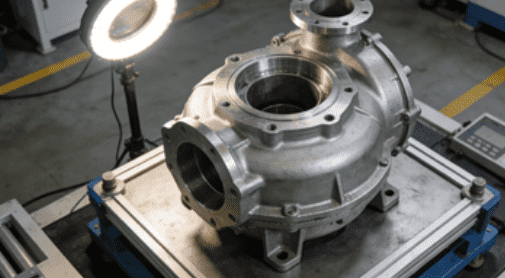
- Recycling scrap castings: Reduces waste and carbon footprint.
- Energy-efficient furnaces and kilns: Minimize emissions during casting.
- Compliance: ISO 9001 and API standards often require documented inspection procedures for pump castings.
Ejemplo: A pump foundry in Spain reduced carbon footprint by 35% using reusable molds, recycled metal, and automated inspection processes.
Conclusión
Inspecting pump castings es vital for operational safety, efficiency, and longevity. A robust inspection process combines:
- Inspección visual
- Dimensional verification
- NDT methods
- Material and microstructure analysis
Case Evidence: Real-world data shows plants that integrate comprehensive casting inspection reduce failures by up to 40%, lower maintenance costs, and extend equipment life.
With proper inspection, quality assurance, and maintenance planning, pump castings can reliably perform under condiciones extremas in industrial, chemical, water, and energy applications.
PREGUNTAS FRECUENTES
Q1: How do I know if a pump casting is safe for high-pressure applications?
A: Ensure it passes visual inspection, dimensional verification, and NDT testing for cracks or porosity.
Q2: Which NDT method is best for large stainless steel pump casings?
A: Ultrasonic testing is effective for thick sections; radiography can supplement critical areas.
Q3: Can minor surface imperfections affect pump performance?
A: Cosmetic defects are generally acceptable; structural defects like cracks or internal voids are critical.
Q4: How often should pump castings be inspected during operation?
A: Critical applications: annually or semi-annually; less critical pumps: visual monthly, full inspection yearly.
Q5: Should I use in-house or third-party inspection?
A: For standard pumps, in-house may suffice; safety-critical or high-value applications benefit from certified third-party inspection.
Categorías de productos
- Piezas de válvulas
- Piezas de la bomba de agua
- Piezas de la caja de cojinetes
- Piezas de fundición a presión
- Productos para bombas de acero inoxidable
- Productos para bombas de hierro fundido
- Piezas de válvulas para automóviles
- Recambios para automóviles
- Piezas de válvulas para uso civil
- Piezas de bomba de vacío KF

 Spanish
  English
  Arabic
  Malay
Malay  German