
Stainless Steel Investment Casting: Grade Selection for Pump and Valve Parts
¡Me encanta tenerte aquí! Antes de profundizar en el contenido, me encantaría que me acompañaras en mis redes sociales. Es donde comparto información adicional, conecto con nuestra increíble comunidad y te mantengo al tanto de las últimas noticias. Así es como puedes mantenerte conectado:
📘 Facebook: Shanghai Leierwo Industria Comercio Co., Ltd.
¡Ahora, emprendamos este viaje juntos! Espero que el contenido aquí te resulte no solo revelador, sino también inspirador y valioso. ¡Comencemos!
Tabla de contenido
Stainless steel investment casting gives engineers and OEM buyers considerable freedom when designing complex, corrosion-resistant metal components. However, the success of a casting project depends on more than selecting stainless steel as the general material.
Different stainless steel grades offer different levels of corrosion resistance, strength, hardness, weldability, machinability and heat resistance. A grade that performs well in clean water may not be suitable for seawater, acidic chemicals, high-pressure valves or abrasive industrial fluids.
Buyers therefore need to evaluate the operating environment before selecting the alloy. This guide compares the main material options used in stainless steel investment casting and explains how to choose a suitable grade for pump, valve and general industrial components.
Conclusiones clave
- Stainless steel is a family of alloys rather than one universal material.
- 304-type stainless steel is suitable for many general industrial applications.
- 316 and 316L-type grades provide better resistance in many chloride and chemical environments.
- Duplex stainless steel combines high strength with strong resistance to localized corrosion.
- Precipitation-hardening stainless steel is selected when higher mechanical strength is required.
- Martensitic stainless steel may be appropriate for wear-resistant and heat-treated components.
- Material selection should be based on the fluid, temperature, pressure, load, surface condition and inspection requirements.
- The casting supplier should review both the alloy and component design before tooling begins.
Qué es Fundición de inversión de acero inoxidable?
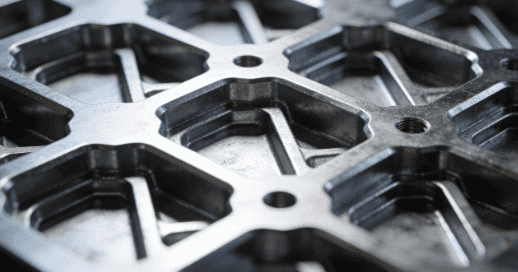
Stainless steel investment casting is a lost-wax manufacturing process used to produce detailed stainless steel components. A wax pattern is created in the shape of the required part, assembled onto a runner system and coated with several layers of ceramic material.
After the ceramic shell becomes sufficiently strong, the wax is removed. Molten stainless steel is poured into the remaining cavity, cooled and separated from the ceramic shell.
The process is commonly used when a component requires:
- Geometría compleja
- Curved internal passages
- Detailed external features
- Relatively smooth surfaces
- Repeatable production
- Reduced machining
- Multiple features in one casting
- Materiales resistentes a la corrosión
Leierwo provides investment casting services for stainless steel, carbon steel, alloy steel and other metal components. The process can be combined with heat treatment, CNC machining, dimensional inspection and surface finishing.
Why Is Stainless Steel Suitable for Investment Casting?
Stainless steel can provide a useful combination of corrosion resistance, mechanical strength, temperature resistance and long service life.
Investment casting makes it possible to use these properties in components that would otherwise require extensive machining, welding or assembly. It is particularly useful for impellers, valve bodies, housings, brackets, levers, couplings and fluid-control components.
Stainless Steel Casting Is Not One Material
The phrase “stainless steel casting” does not define a complete material specification. Buyers must identify the required alloy family, grade, heat-treatment condition and applicable standard.
A quotation that only states “stainless steel” may leave important technical decisions unresolved.
Main Stainless Steel Families Used in Investment Casting
Stainless steels are generally divided into families according to their metallurgical structure. The major categories include austenitic, ferritic, martensitic, duplex and precipitation-hardening stainless steels.
El worldstainless grade overview provides additional information about stainless steel categories and the characteristics associated with different alloy families.
Austenitic Stainless Steel
Austenitic stainless steel is widely used for corrosion-resistant investment castings. Common examples include 304, 304L, 316 and 316L-type materials.
These alloys are frequently selected for:
- Carcasas de bombas
- Pump impellers
- Cuerpos de válvula
- Food-processing parts
- Chemical equipment
- Marine hardware
- Pipe fittings
- General industrial components
Austenitic grades usually provide good corrosion resistance and ductility. However, the correct grade still depends on the chemical environment, chloride concentration, temperature and mechanical requirements.
Acero inoxidable dúplex
Duplex stainless steel contains a mixed austenitic and ferritic structure. It is often selected when a project requires greater strength and improved resistance to stress-corrosion cracking or localized corrosion.
Typical applications include:
- Seawater pumps
- Desalination equipment
- Offshore components
- Chemical-processing valves
- High-pressure fluid components
- Equipos de petróleo y gas
Duplex stainless steel requires careful process control during melting, pouring and heat treatment. An incorrect thermal cycle can affect the desired phase balance and final performance.
Martensitic Stainless Steel
Martensitic stainless steel can be heat treated to achieve higher hardness and strength than many standard austenitic grades.
It may be used for:
- Wear-resistant valve components
- Mechanical levers
- Turbine parts
- High-strength hardware
- Components requiring hardened surfaces
Its general corrosion resistance is usually lower than that of common 304 or 316-type austenitic stainless steels, so application conditions must be reviewed carefully.
Precipitation-Hardening Stainless Steel
Precipitation-hardening stainless steel is selected when a component requires corrosion resistance together with high mechanical strength.
Grades in this family may be suitable for:
- Aerospace components
- High-load mechanical parts
- Componentes de válvula
- Medical equipment
- Industrial locking parts
- Precision linkages
The final mechanical properties depend strongly on the heat-treatment condition. The drawing and purchase specification should therefore identify both the alloy and the required condition.
Stainless Steel Investment Casting Grade Comparison
The following table provides a practical starting point for material selection. Final selection should always be confirmed against the actual service environment and relevant specification.
| Stainless steel group | Main advantages | Main considerations | Common casting applications |
|---|---|---|---|
| 304/304L type | General corrosion resistance, formability and broad availability | Limited performance in some chloride-rich environments | Food equipment, water systems, housings and general machinery |
| 316/316L type | Improved resistance in many chemical and chloride environments | Higher material cost than 304-type grades | Chemical pumps, marine parts, valve bodies and pharmaceutical equipment |
| Duplex 2205 type | High strength and strong localized-corrosion resistance | Requires controlled heat treatment and process management | Seawater pumps, offshore valves and desalination equipment |
| Martensitic type | Heat treatable, good hardness and wear resistance | Lower general corrosion resistance than many austenitic grades | Turbine parts, wear components and mechanical hardware |
| 17-4 PH type | High strength with useful corrosion resistance | Properties depend on heat-treatment condition | High-load valve parts, aerospace and precision mechanical components |
| High-alloy stainless steel | Designed for severe corrosion or high-temperature service | Higher raw-material and processing cost | Severe chemical, energy and offshore applications |
304 vs 316 Stainless Steel Investment Casting
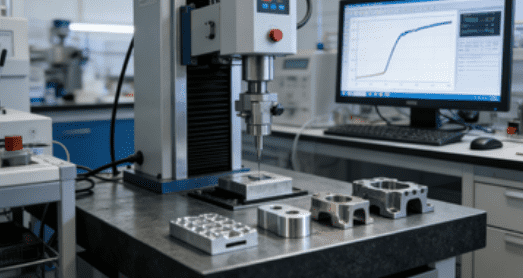
The comparison between 304 and 316 is one of the most common material questions in industrial casting projects.
Both are austenitic stainless steels, but they should not be treated as interchangeable in every operating environment.
When Is 304-Type Stainless Steel Suitable?
304-type stainless steel is a practical option for many general-purpose components. It may be suitable when the part is exposed to clean water, food-processing conditions, mild chemicals or normal industrial atmospheres.
Common examples include:
- General water pump components
- Food-processing equipment
- Machinery housings
- Handles and brackets
- Non-marine pipe fittings
- Light-duty valve components
Its broad availability can also make it a cost-effective starting point for applications that do not require stronger chloride resistance.
When Should Buyers Consider 316 or 316L?
316-type stainless steel contains molybdenum, which generally improves resistance in many chloride-containing and chemical environments.
It is commonly considered for:
- Chemical pump bodies
- Chemical pump impellers
- Marine components
- Pharmaceutical equipment
- Process valves
- Coastal installations
- Equipment exposed to cleaning chemicals
Leierwo’s stainless steel casting capabilities cover multiple stainless steel grades and casting processes for industrial parts.
Is 316 Always Better Than 304?
Not necessarily.
316 usually costs more, and its additional corrosion resistance may not provide meaningful value in a mild operating environment. Selecting 316 for every stainless steel part can increase project cost without solving a specific engineering problem.
Buyers should compare:
- Fluid composition
- Chloride level
- Cleaning chemicals
- Working temperature
- Exposure duration
- Required service life
- Maintenance conditions
- Total project cost
The correct material is the grade that meets the operating requirement with an appropriate safety margin—not automatically the most expensive alloy.
What Is the Role of Low-Carbon Grades?
Low-carbon versions such as 304L and 316L are frequently considered when welding or specific corrosion concerns are involved.
However, a casting specification should not be selected only by matching the name of a wrought grade. The buyer and foundry should confirm the appropriate cast material designation, chemical composition, mechanical properties and heat-treatment requirements.
When Should Duplex Stainless Steel Be Selected?
Duplex stainless steel may be preferred when a component operates under a combination of high mechanical load and aggressive corrosion conditions.
Its higher strength can sometimes allow engineers to reduce section thickness, but thinner sections should only be adopted after casting feasibility, pressure requirements and structural calculations have been reviewed.
Common Duplex Applications
Duplex stainless steel is often considered for:
- Seawater pump impellers
- Desalination pump bodies
- Offshore valve bodies
- Oil and gas flow-control parts
- Chemical-processing equipment
- High-pressure piping components
- Components exposed to chlorides
Duplex Does Not Eliminate the Need for Process Control
Material chemistry alone does not guarantee performance.
Casting temperature, shell design, solidification rate, solution treatment and cooling conditions can affect the final microstructure. Buyers should confirm that the supplier can manage the alloy through the complete process rather than simply purchasing duplex raw material.
When Is 17-4 PH Stainless Steel Appropriate?
A precipitation-hardening grade may be more suitable than 304 or 316 when strength is a primary design requirement.
17-4 PH-type material is commonly considered for precision components that must resist mechanical loading while retaining useful corrosion resistance.
Potential Applications
- High-load valve parts
- Mechanical linkages
- Aerospace brackets
- Locking components
- Precision levers
- High-strength industrial hardware
- Pump or valve components under cyclic loading
Heat-Treatment Condition Must Be Defined
The final properties of precipitation-hardening stainless steel depend on the selected heat-treatment condition.
An RFQ should therefore identify:
- Required material specification
- Heat-treatment condition
- Hardness range
- Tensile or yield requirements
- Impact requirements
- Critical dimensions after heat treatment
- Whether machining occurs before or after aging
Without this information, two suppliers may quote technically different products under the same general alloy name.
Stainless Steel Investment Casting for Pump Components
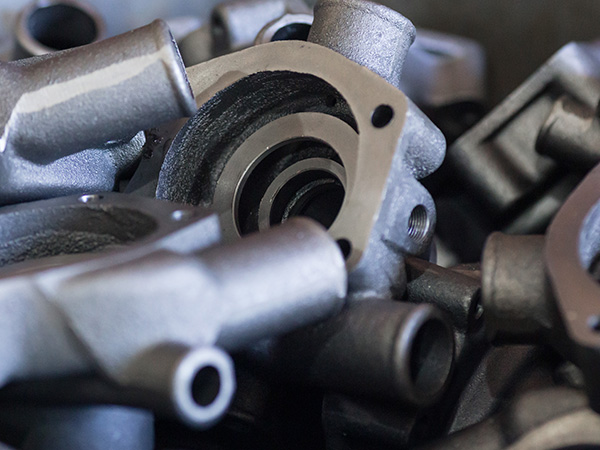
Pump components must resist a combination of hydraulic loads, corrosion, erosion, vibration and dimensional requirements.
The most appropriate material depends on both the pumped fluid and the role of the component.
Pump Impellers
An impeller contains curved blades and flow passages that directly influence hydraulic performance. Investment casting can reproduce complex blade profiles while reducing the amount of material that must be removed through CNC machining.
Material selection should consider:
- Fluid chemistry
- Solid-particle content
- Cavitation risk
- Rotational speed
- Balancing requirements
- Operating temperature
- Required surface finish
A 304-type material may be suitable for relatively mild water service, while a 316-type or duplex material may be considered for more corrosive environments.
Leierwo’s stainless steel pump impeller illustrates how casting and machining can be combined for industrial pump components.
Pump Bodies and Casings
Pump casings must withstand system pressure and maintain accurate interfaces with covers, seals, bearings and pipelines.
Complex internal flow channels can be cast close to the final shape, while critical sealing faces and connection surfaces are subsequently machined.
For chemical-service applications, buyers can also review the chemical pump body product page.
Why Pump Parts Still Require Machining
Investment casting reduces machining but does not eliminate it.
The following areas commonly require CNC finishing:
- Shaft bores
- Bearing locations
- Seal faces
- Flange faces
- Threaded holes
- Mating diameters
- Precision mounting surfaces
- Dynamic balancing correction areas
More information about related industrial applications is available on the pump manufacturing page.
Stainless Steel Investment Casting for Valve Components
Valve castings may be exposed to internal pressure, corrosive media, repeated opening cycles and temperature changes.
A material suitable for a low-pressure water valve may not be appropriate for an offshore, chemical or high-temperature valve.
Valve Bodies
Valve bodies must provide structural strength and maintain accurate sealing and connection geometry.
Important design considerations include:
- Internal pressure
- Fluid composition
- Wall-thickness transitions
- Flange design
- Seat location
- Machining allowance
- Leakage acceptance
- Non-destructive testing
- Pressure-testing requirements
Austenitic stainless steel is widely used for corrosion-resistant valve bodies, while duplex or high-alloy materials may be considered for more demanding conditions.
Leierwo’s safety valve body is one example of a cast valve component requiring controlled geometry and subsequent machining.
Valve Discs, Stems and Internal Components
Different parts within one valve may use different materials.
The body may prioritize pressure resistance and corrosion performance, while a disc, stem or seat component may require hardness, wear resistance or anti-galling properties.
Buyers should not assume that one stainless steel grade is automatically suitable for every component in the assembly.
For a broader overview of casting solutions for valves, visit the fabricación de válvulas page.
Stainless Steel Investment Casting Standards
Applicable standards depend on the industry, alloy, component and customer requirements.
The current ISO 16468:2025 specifies general technical requirements for steel, nickel-alloy and cobalt-alloy castings produced through the investment casting process.
For corrosion-resistant stainless steel castings, buyers may also need to review relevant ASTM specifications.
ASTM A743/A743M
ASTM A743/A743M covers corrosion-resistant iron-chromium and iron-chromium-nickel alloy castings for general applications.
The purchase specification should identify the required grade and any supplementary testing or inspection requirements.
ASTM A744/A744M
ASTM A744/A744M addresses corrosion-resistant stainless steel castings intended for particularly severe service.
The applicable standard should be confirmed by the buyer’s engineering team rather than selected solely by the foundry.
Standards Do Not Replace the Drawing
A standard provides a technical framework, but the component drawing must still define project-specific requirements.
The drawing or purchase order should identify:
- Material grade
- Tratamiento térmico
- Dimensional tolerances
- Machining allowance
- Surface finish
- Inspection method
- Acceptance criteria
- Pressure test
- Required documentation
- Repair restrictions
Design Considerations for Stainless Steel Investment Casting Parts
Good casting performance begins during design review.
Maintain Consistent Wall Thickness
Large changes in wall thickness can create uneven cooling and increase the risk of shrinkage, distortion or hot spots.
Transitions should be gradual where possible.
Use Fillets at Internal Corners
Sharp internal corners concentrate stress and may interfere with smooth metal flow.
Appropriate radii can improve castability and reduce local stress concentration.
Identify Critical Dimensions
Not every dimension needs machining-level tolerance.
The drawing should separate:
- General casting dimensions
- Functional dimensions
- Sealing dimensions
- Machined dimensions
- Reference dimensions
- Inspection dimensions
This helps the supplier focus process control and inspection resources where they matter most.
Include Practical Machining Allowance
Insufficient machining allowance can leave casting skin, distortion or surface variation on a functional area.
Excessive allowance increases material use, machining time and tool wear. The supplier should review allowance according to part size, geometry, alloy and datum structure.
Consider Distortion Before Tooling
Long arms, thin walls, open frames and asymmetric designs may distort during cooling or heat treatment.
Possible solutions include:
- Design modification
- Temporary support structures
- Tooling compensation
- Controlled straightening
- Revised heat-treatment fixtures
- Strategic machining sequence
Surface Treatment and Passivation
Surface treatment can improve cleanliness, appearance and corrosion performance, but it cannot correct an unsuitable base alloy.
Common post-casting treatments include:
- Granallado
- Sandblasting
- Pickling
- Passivation
- Mechanical polishing
- Electropolishing
- Chemical cleaning
- Application-specific coating
Why Carbon-Steel Contamination Matters
Stainless steel surfaces should be protected from contamination during grinding, blasting, handling and storage.
Tools or blasting media previously used on carbon steel may transfer iron particles to the stainless steel surface. These particles can later produce visible rust spots even when the underlying casting material is correct.
Buyers should ask how the supplier separates stainless steel finishing operations from carbon steel processing.
Common Defects in Stainless Steel Investment Casting
Casting quality is influenced by component design, wax quality, shell preparation, melting, pouring, solidification and post-processing.
Shrinkage Porosity
Shrinkage may form when an isolated heavy section cannot receive enough liquid metal during solidification.
Potential preventive actions include:
- Adjusting the gating system
- Changing section transitions
- Improving feeding
- Modifying pouring conditions
- Using solidification simulation
Gas Porosity
Gas can enter or develop within the molten metal and become trapped during solidification.
Control measures may include melt treatment, cleaner pouring practice and improved shell preparation.
Inclusiones
Ceramic fragments, oxides, slag or other non-metallic material can become trapped inside the casting.
Process cleanliness, shell integrity and controlled pouring are important preventive factors.
Defectos superficiales
Surface pits, rough areas, shell cracks, positive metal and grinding marks can affect visual quality or functionality.
Acceptance criteria should distinguish between cosmetic surfaces, machined surfaces and pressure-critical areas.
Distortion
Distortion may occur during wax handling, shell building, cooling, heat treatment or straightening.
Critical geometry should be evaluated throughout sample development rather than inspected only after mass production.
Quality Inspection for Stainless Steel Castings
The inspection plan should reflect the risk of the component.
A decorative bracket and a pressure-containing valve body should not automatically receive the same inspection level.
Typical Inspection Methods
- Inspección visual
- Inspección dimensional
- Coordinate measuring machine inspection
- Chemical composition analysis
- Hardness testing
- Mechanical property testing
- Dye penetrant inspection
- Radiographic inspection
- Ultrasonic inspection
- Pruebas de presión
- Leakage testing
- Surface roughness measurement
Material Verification
A material certificate should confirm the specified chemical composition and, where required, mechanical properties and heat-treatment condition.
For critical applications, buyers may also request positive material identification or third-party verification.
First Article Inspection
Before mass production, the buyer should approve initial samples.
A first article package may include:
- Marked drawing
- Dimensional report
- Material certificate
- Heat-treatment record
- Hardness result
- Non-destructive test report
- Surface-treatment record
- Sample photographs
- Functional or pressure-test report
How to Compare Stainless Steel Investment Casting Suppliers
Supplier comparison should go beyond the quoted unit price.
Engineering Review Capability
A reliable supplier should review wall thickness, shrinkage risk, gating, distortion, machining allowance and inspection access before mold production.
Material and Heat-Treatment Control
Ask how the supplier manages:
- Raw-material identification
- Alloy verification
- Furnace records
- Heat numbers
- Heat-treatment batches
- Material traceability
- Test certificates
Stainless Steel Production Separation
Confirm whether stainless steel melting, grinding, blasting and storage are separated from carbon steel operations where necessary.
This helps reduce contamination risk.
Machining Capability
Pump and valve components frequently require both casting and machining.
Using one supplier for both operations can reduce datum-transfer errors, logistics time and responsibility disputes, provided that the supplier has appropriate equipment and inspection capability.
Inspection and Documentation
The supplier should be able to provide the inspection records required by the project.
More documentation is not automatically better. The objective is to define the records necessary to confirm material, dimensions and component performance.
Information to Include in an RFQ
A complete RFQ helps the supplier select the correct material and production route.
Include:
- 2D engineering drawing
- 3D CAD model
- Stainless steel grade
- Applicable material standard
- Heat-treatment condition
- Estimated annual quantity
- Batch quantity
- Critical dimensions
- General tolerance
- Machining requirements
- Surface-finish requirements
- Surface treatment
- Pressure or leakage test
- Non-destructive testing
- Required certificates
- Packaging requirements
- Delivery destination
Questions the Buyer Should Answer
Before requesting a quotation, clarify:
- What fluid contacts the casting?
- Does the fluid contain chlorides?
- What is the operating temperature?
- What is the maximum pressure?
- Is the component exposed continuously or intermittently?
- Does the part require welding?
- Are there rotating or wear surfaces?
- Which dimensions affect sealing or assembly?
- Is material traceability required?
- Is third-party inspection required?
PREGUNTAS FRECUENTES
What is the best stainless steel for investment casting?
There is no single best grade for every component. The correct selection depends on corrosion conditions, temperature, pressure, mechanical load, wear, machining and project cost.
Is 316 stainless steel always better than 304 for castings?
No. A 316-type grade generally provides better performance in many chloride-containing environments, but 304-type stainless steel may be more economical and fully suitable for mild service.
Can stainless steel investment castings be CNC machined?
Yes. Sealing surfaces, shaft bores, bearing positions, threads, flange faces and other functional areas are commonly machined after casting.
Which stainless steel is suitable for seawater pump parts?
Duplex or higher-alloy stainless steels are often considered for seawater service. However, temperature, chloride concentration, flow conditions, crevice geometry and required service life must all be evaluated.
Can 17-4 PH stainless steel be investment cast?
Precipitation-hardening stainless steel can be investment cast for high-strength components. The required heat-treatment condition and mechanical properties must be specified.
Is passivation required after stainless steel casting?
Passivation may be specified to improve surface cleanliness and support corrosion performance. The need depends on the alloy, finishing process, application and customer specification.
What tolerances can stainless steel investment casting achieve?
Tolerance depends on component size, geometry, alloy, tooling, shell process and heat treatment. Critical dimensions may still require CNC machining.
What causes rust spots on a stainless steel casting?
Possible causes include surface contamination, embedded carbon-steel particles, unsuitable cleaning, an incorrect alloy, an inappropriate heat treatment or an operating environment beyond the grade’s capability.
How should I request a quotation?
Provide a 2D drawing, 3D file, material grade, quantity, tolerance, machining, heat treatment, surface finish, inspection requirements and delivery destination.
How do I verify the stainless steel grade?
Review the material certificate and chemical analysis. Critical projects may also require positive material identification, mechanical testing or independent inspection.
Conclusión
Stainless steel investment casting is an effective process for producing complex, corrosion-resistant pump, valve and industrial components. However, successful performance depends on selecting the correct stainless steel family and controlling the complete production process.
304-type material may be suitable for general industrial service, while 316-type stainless steel may provide additional value in many chemical or chloride environments. Duplex stainless steel can offer greater strength and localized-corrosion resistance, while precipitation-hardening and martensitic grades address more specialized mechanical requirements.
The final selection should consider fluid chemistry, temperature, pressure, mechanical load, wear, heat treatment, machining and inspection requirements.
For a more accurate process and material evaluation, submit your drawings, operating conditions and required quantities through Leierwo’s investment casting service page. A complete technical review before tooling can reduce development risk, control cost and improve the consistency of the finished stainless steel components.
Categorías de productos
- Piezas de válvulas
- Piezas de la bomba de agua
- Piezas de la caja de cojinetes
- Piezas de fundición a presión
- Productos para bombas de acero inoxidable
- Productos para bombas de hierro fundido
- Piezas de válvulas para automóviles
- Recambios para automóviles
- Piezas de válvulas para uso civil
- Piezas de bomba de vacío KF

¡Comencemos tu próximo proyecto!
Inicie su proyecto con Leierwo
1. Envíe su consulta
2. Cálculo de costes
3. Inicio de la producción
4. Organizar la entrega
PREGUNTAS FRECUENTES
Sí, tenemos una amplia experiencia en el comercio internacional y podemos ayudar a los clientes con el despacho de aduanas de exportación y los arreglos de envío. Aceptamos varios métodos de pago internacionales, incluyendo T/T (transferencia telegráfica), transferencia bancaria y carta de crédito (L/C). Las condiciones de pago se pueden discutir con nuestro equipo de ventas.
Al asociarse con Leierwo, podrá disfrutar de precios competitivos y una calidad superior a la de otros proveedores. Además, ofrecemos una solución integral para entregar piezas acabadas, incluido el mecanizado CNC y el tratamiento de superficies, lo que garantiza un proceso de producción sin fisuras.
Contamos con avanzados equipos de fundición y estrictos sistemas de control de calidad. Nuestra capacidad de producción mensual es considerable y podemos fabricar productos a partir de dibujos o muestras proporcionados por el cliente. Aceptamos tanto pequeños pedidos de prueba como producciones a gran escala.
Nuestros productos cumplen normas internacionales como ASTM, AISI, DIN y JIS. Podemos proporcionar informes de pruebas de materiales y certificaciones pertinentes para garantizar que la calidad del producto cumple los requisitos del cliente.
Seguimos estrictamente el sistema de gestión de calidad ISO 9001 y realizamos múltiples inspecciones a lo largo del proceso de producción, incluidos análisis espectrográficos, pruebas de rayos X, pruebas ultrasónicas y mediciones dimensionales. Estas medidas de control de calidad garantizan que nuestras piezas de fundición cumplen las normas más estrictas.
Sin embargo, somos flexibles y estamos abiertos a discutir sus necesidades específicas.
Nuestro plazo de producción estándar es de 4 a 6 semanas, en función de la cantidad del pedido y la complejidad del producto. Nos esforzamos por acortar los plazos de entrega para satisfacer las demandas de los clientes.
Sí, podemos proporcionar muestras para la inspección de calidad. Los costes de las muestras y los gastos de envío pueden negociarse, y los gastos de las muestras pueden reembolsarse al realizar un pedido formal.
 Spanish
  English
  Arabic
  Malay
Malay  German