
fundición a la cera perdida OEM para piezas de alta precisión
¡Bienvenido a mi blog!
¡Me encanta tenerte aquí! Antes de profundizar en el contenido, me encantaría que me acompañaras en mis redes sociales. Es donde comparto información adicional, conecto con nuestra increíble comunidad y te mantengo al tanto de las últimas noticias. Así es como puedes mantenerte conectado:
📘 Facebook: Shanghai Leierwo Industria Comercio Co., Ltd.
¡Ahora, emprendamos este viaje juntos! Espero que el contenido aquí te resulte no solo revelador, sino también inspirador y valioso. ¡Comencemos!
Tabla de contenido
Puntos clave del blog
- Introducción a Fundición de inversiones OEM y su papel fundamental en la fabricación moderna
- Ventajas de las piezas de alta precisión en todas las industrias
- Selección de materiales, propiedades mecánicas y métricas de rendimiento
- Consideraciones de diseño avanzadas e integración CAD/CAM
- Control de calidad, inspección y ensayos no destructivos
- Defectos comunes, resolución de problemas y estrategias de prevención
- Técnicas de posprocesamiento y estándares de acabado
- Comparación con fundición en arena, fundición a presión y fabricación aditiva
- Estudios de casos del mundo real en los sectores aeroespacial, automotriz, médico y energético
- Costo, eficiencia de producción y escalabilidad
- Cumplimiento regulatorio, certificaciones y estándares de la industria
- Elegir el socio de fundición de inversiones OEM adecuado
- Preguntas frecuentes (FAQ)
Introducción
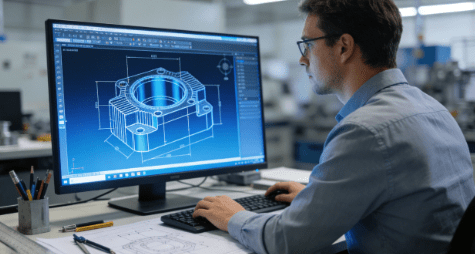
En industrias como la aeroespacial, automotriz, de dispositivos médicos y de energía, la precisión y la confiabilidad no son negociables. Incluso un pequeño error dimensional o defecto del material puede provocar fallas en los componentes, retrasos en la producción o riesgos para la seguridad.
Fundición de inversiones OEM proporciona una solución que equilibra precisión, rendimiento del material y escalabilidad. Al trabajar con un proveedor OEM, los fabricantes obtienen acceso a experiencia en diseño de patrones de cera, creación de carcasas cerámicas y manipulación de metales fundidos, produciendo piezas que cumplan tolerancias extremadamente estrictas sin dejar de ser rentables.
Beneficii cheie include:
- Produciendo piezas con geometrías complejas imposible con los métodos tradicionales
- Reducir los requisitos posteriores al mecanizado mediante la captura de funciones con forma cercana a la red
- Apoyando una amplia gama de materiales, incluido el acero inoxidable, las aleaciones de cobalto y cromo, el titanio, el aluminio y los metales especiales
- Ofreciendo una calidad constante para ambos prototipo y producción en masa
Las estadísticas de la industria lo demuestran OEM Investment Casting representa más de 50% de producción de componentes de alta precisión en los campos aeroespacial y médico, con tasas de defectos tan bajas como 0,2% cuando se siguen los protocolos de inspección adecuados.
¿qué es la fundición a la cera perdida OEM?
Definición y Proceso
Fundición de inversiones OEM es un proceso en el que un proveedor fabrica componentes metálicos directamente a partir de las especificaciones del cliente. El proceso implica:
- Creando un patrón de cera de la parte
- Revestiéndolo con material cerámico para formar un molde
- Quitar la cera mediante fusión
- Torrencial metal fundido en la carcasa de cerámica
- Rompiendo el molde y terminando la pieza
Este método lo permite replicación exacta de diseños detallados y garantiza una alta precisión.
Aplicaciones de la fundición a la cera perdida OEM de alta precisión
- Aeroespacial: palas de turbina, soportes de motor, componentes del tren de aterrizaje
- Automotor: válvulas de motor, engranajes, componentes de transmisión
- Médico: implantes, instrumentos quirúrgicos, prótesis
- Energía y Petroquímica: bombas, válvulas, carcasas de turbinas
Ventajas sobre otros métodos
- Tolerancia dimensional: ±0,1-0,2 mm para piezas pequeñas
- Acabado superficial: Ra 0,8-1,6 µm
- Admite la creación de prototipos en lotes pequeños y la producción a gran escala
- Amplia compatibilidad de materiales
Materiales para fundición a la cera perdida OEM de alta precisión
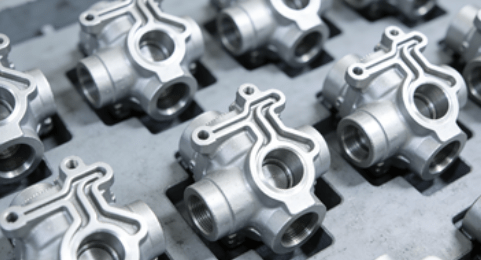
Acero inoxidable 316L
- Excelente resistencia a la corrosión y biocompatibilidad
- Resistencia a la tracción: 485 MPa
- Aplicaciones: instrumentos quirúrgicos, implantes médicos, componentes de calidad alimentaria
Aleaciones de cobalto-cromo
- Alta resistencia al desgaste y al calor
- Resistencia a la tracción: 655 MPa
- Aplicaciones: implantes ortopédicos, componentes aeroespaciales
Aleaciones de titanio
- Ligero y resistente, resistente a la corrosión
- Resistencia a la tracción: 550 MPa
- Aplicaciones: implantes, aeroespacial, electrónica
Aleaciones especiales (Hastelloy, Monel, Inconel)
- Resistente a temperaturas extremas y corrosión química
- Resistencia a la tracción: 690-780 MPa
- Aplicaciones: válvulas de alta temperatura, equipos energéticos
Tabla de propiedades del material
| Material | Resistencia a la tracción (MPa) | Resistencia a la corrosión | Aplicaciones comunes |
|---|---|---|---|
| Acero inoxidable 316L | 485 | Excelente | Instrumentos quirúrgicos, alimentos, maquinaria |
| Aleación Cobalto-Cromo | 655 | Excelente | Implantes aeroespaciales |
| Aleación de titanio | 550 | Superior | Aeroespacial, implantes |
| Hastelloy/Monel/Inconel | 690-780 | Superior | Piezas químicas de alta temperatura |
Consideraciones de diseño avanzado para piezas de alta precisión
Integración CAD/CAM
moderno Fundición de inversiones OEM depende en gran medida de diseño asistido por ordenador (CAD) y fabricación asistida por ordenador (CAM). Acest permite:
- Reproducción precisa de las especificaciones del cliente
- Simulación del flujo de fundición para evitar defectos
- Optimización del diseño de compuertas y contrahuellas para un relleno metálico uniforme
Análisis de tolerancia y ajuste
- Crítico para dispositivos médicos y aeroespaciales
- Garantiza que las piezas se ensamblen perfectamente sin mecanizado adicional
- Admite tolerancias tan estrictas como ±0,05 mm en algunas aplicaciones de alta gama
Optimización de topología
- Reduce el uso de material manteniendo la resistencia
- Especialmente valioso en el sector aeroespacial para componentes sensibles al peso
Control de Calidad e Inspección para Fundición de Inversiones OEM
Precisión dimensional
- Verificado con calibradores, CMM y escáneres láser
- Garantiza tolerancias estrictas para piezas críticas
Acabado de la superficie
- Las superficies lisas reducen la contaminación, mejoran el montaje y reducen la fricción
- Ra estándar: 0,8-1,6 µm; el electropulido puede mejorarlo aún más
Pruebas de propiedades mecánicas
- Pruebas de resistencia a la tracción, dureza, fatiga
- Confirma durabilidad y rendimiento a largo plazo
Ensayos no destructivos (END)
- Exploración por rayos X/CT para detectar defectos internos
- Pruebas ultrasónicas para microfisuras
- Pruebas de tinte penetrante para detectar defectos en la superficie
Tabla de prevención de defectos
| Defecto | Causa | Prevención |
|---|---|---|
| Porosidad | Gas atrapado | Fundición al vacío, desgasificación |
| Error | Solidificación prematura | Puerta optimizada, vertido correcto |
| Oxidación | Exposición al aire | Gas inerte o fundición al vacío |
| Grietas superficiales | Estrés térmico | Enfriamiento controlado, temperatura uniforme del molde |
Técnicas de posprocesamiento
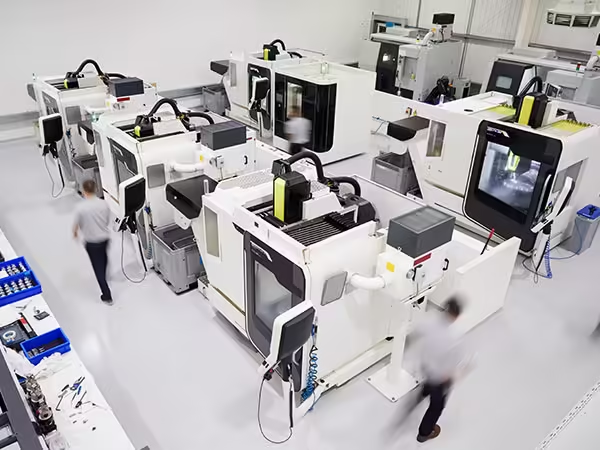
Tratamiento térmico
- Mejora las propiedades mecánicas
- Alivio de tensiones y endurecimiento para componentes críticos
Acabado de superficies
- Pulir y desbarbar elimina las rebabas y mejora la estética
- La pasivación o electropulido mejora la resistencia a la corrosión
Verificación de montaje
- Garantiza que las piezas fundidas encajen perfectamente en los ensamblajes finales
- Especialmente crítico para instrumentos quirúrgicos y componentes aeroespaciales
Comparación con otros métodos de fundición
| Característica | Fundición de inversiones OEM | Fundición en arena | Fundición a presión | Fabricación aditiva |
|---|---|---|---|---|
| Tolerancia | ±0,1-0,2 mm | ±0,5-1 mm | ±0,2-0,5 mm | ±0,1 mm |
| Acabado de la superficie | Ra 0,8-1,6 µm | Ra 3-6 µm | Ra 1--3 µm | Ra 1--2 µm |
| Capacidad de geometría compleja | Alto | Limitado | Medio | Muy alto |
| Opciones de material | Ancho | Limitado | Limitado | Medio |
| Se requiere posprocesamiento | Mínimo | Extenso | Moderado | Moderado |
Conocimiento: Fundición de inversiones OEM es superior para piezas complejas de alta precisión donde la elección y la tolerancia del material importan. La fabricación aditiva puede competir en la creación de prototipos, pero puede no igualar el rendimiento del material para componentes de calidad de producción.
Estudios de casos del mundo real
Soportes para turbinas aeroespaciales
- Tolerancia alcanzada de ±0,1 mm
- Tiempo de mecanizado reducido en 25%
- Sobrevivió a pruebas de alto estrés con una carga cíclica de hasta 5500 N
Válvulas de motor automotriz
- Fundiciones de aleación de cobalto
- Pasó pruebas de desgaste y ciclos térmicos
- Escalabilidad de producción: 1.000-10.000 unidades/mes
Instrumentos Médico Quirúrgicos
- Acero inoxidable 316L
- Acabado superficial Ra 0,8 µm, reduciendo el pospulido en 30%
- Cumplimiento normativo de la norma ISO 13485
Carcasas de válvulas del sector energético
- Fundiciones Hastelloy
- Componentes resistentes a altas temperaturas y químicos
- Ciclo de vida proyectado a 15 años en ambientes petroquímicos
Eficiencia de costos y escalabilidad de la producción
- Es posible que se realice una fundición a la cera perdida OEM de alta precisión mayor costo unitario que la fundición en arena ($150-$500 para piezas pequeñas), pero reduce los costos de posprocesamiento por 20-40%
- Admite prototipos de bajo volumen y producción de gran volumen
- La reutilización eficiente de herramientas y patrones de cera reduce el tiempo de comercialización
Cumplimiento Normativo y Certificaciones
- ISO 9001 para la gestión de la calidad
- ISO 13485 para la producción de dispositivos médicos
- Normas ASTM y AMS para componentes aeroespaciales
- Cumplimiento de RoHS y REACH para la seguridad ambiental
Beneficios del cumplimiento:
- Reducción del riesgo de retiradas y fallas
- Aceptación más fácil por parte de los OEM globales
- Garantiza la trazabilidad y la preparación para la auditoría
Elegir el socio de fundición de inversiones OEM adecuado
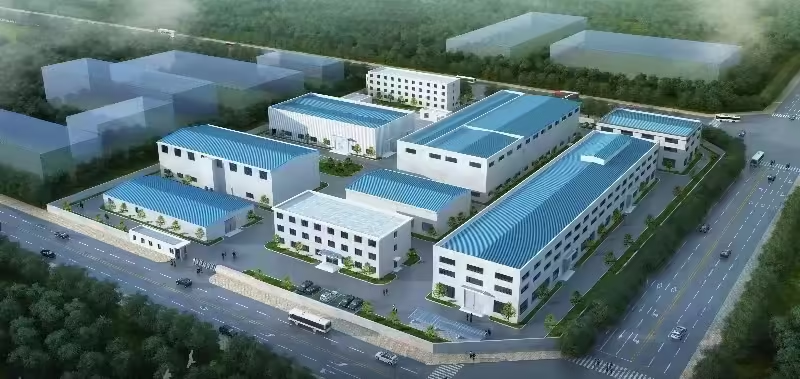
Al seleccionar un socio:
- Evaluar la experiencia con componentes de alta precisión
- Consultar capacidades materiales y certificaciones
- Revisar los procesos de inspección y END
- Considere la capacidad de producción y la flexibilidad
- Examine estudios de casos anteriores y referencias de clientes
La asociación con un proveedor OEM confiable garantiza calidad constante, precisión y entrega oportuna, fundamental para industrias con tolerancia cero a los errores.
PREGUNTAS FRECUENTES
¿Qué hace? Fundición de inversiones OEM ¿ideal para piezas de alta precisión?
Proporciona tolerancias estrictas, excelente acabado superficial y admite geometrías complejas que no se pueden lograr con otros métodos.
¿qué industrias dependen más de la fundición a la cera perdida OEM?
Aeroespacial, automoción, dispositivos médicos, energía y electrónica.
¿Cómo se garantiza la calidad?
Mediante comprobaciones dimensionales, pruebas mecánicas y pruebas no destructivas (rayos X, tomografía computarizada, ultrasonidos).
¿Puede la producción en lotes pequeños mantener la precisión?
Sí, el proceso admite tanto prototipos como producción a gran escala con una calidad constante.
¿qué materiales son más adecuados para la fundición a la cera perdida OEM?
Acero inoxidable 316L, aleaciones de cobalto-cromo, aleaciones de titanio y aleaciones especiales de alto rendimiento.
Categorías de productos
- Piezas de válvulas
- Piezas de la bomba de agua
- Piezas de la caja de cojinetes
- Piezas de fundición a presión
- Productos para bombas de acero inoxidable
- Productos para bombas de hierro fundido
- Piezas de válvulas para automóviles
- Recambios para automóviles
- Piezas de válvulas para uso civil
- Piezas de bomba de vacío KF

¡Comencemos tu próximo proyecto!
Inicie su proyecto con Leierwo
1. Envíe su consulta
2. Cálculo de costes
3. Inicio de la producción
4. Organizar la entrega
PREGUNTAS FRECUENTES
Sí, tenemos una amplia experiencia en el comercio internacional y podemos ayudar a los clientes con el despacho de aduanas de exportación y los arreglos de envío. Aceptamos varios métodos de pago internacionales, incluyendo T/T (transferencia telegráfica), transferencia bancaria y carta de crédito (L/C). Las condiciones de pago se pueden discutir con nuestro equipo de ventas.
Al asociarse con Leierwo, podrá disfrutar de precios competitivos y una calidad superior a la de otros proveedores. Además, ofrecemos una solución integral para entregar piezas acabadas, incluido el mecanizado CNC y el tratamiento de superficies, lo que garantiza un proceso de producción sin fisuras.
Contamos con avanzados equipos de fundición y estrictos sistemas de control de calidad. Nuestra capacidad de producción mensual es considerable y podemos fabricar productos a partir de dibujos o muestras proporcionados por el cliente. Aceptamos tanto pequeños pedidos de prueba como producciones a gran escala.
Nuestros productos cumplen normas internacionales como ASTM, AISI, DIN y JIS. Podemos proporcionar informes de pruebas de materiales y certificaciones pertinentes para garantizar que la calidad del producto cumple los requisitos del cliente.
Seguimos estrictamente el sistema de gestión de calidad ISO 9001 y realizamos múltiples inspecciones a lo largo del proceso de producción, incluidos análisis espectrográficos, pruebas de rayos X, pruebas ultrasónicas y mediciones dimensionales. Estas medidas de control de calidad garantizan que nuestras piezas de fundición cumplen las normas más estrictas.
Sin embargo, somos flexibles y estamos abiertos a discutir sus necesidades específicas.
Nuestro plazo de producción estándar es de 4 a 6 semanas, en función de la cantidad del pedido y la complejidad del producto. Nos esforzamos por acortar los plazos de entrega para satisfacer las demandas de los clientes.
Sí, podemos proporcionar muestras para la inspección de calidad. Los costes de las muestras y los gastos de envío pueden negociarse, y los gastos de las muestras pueden reembolsarse al realizar un pedido formal.
 Spanish
  English
  Arabic
  Malay
Malay  German