
5 mejoras en moldes de fundición que ofrecen grandes beneficios
¡Bienvenido a mi blog!
¡Me encanta tenerte aquí! Antes de profundizar en el contenido, me encantaría que me acompañaras en mis redes sociales. Es donde comparto información adicional, conecto con nuestra increíble comunidad y te mantengo al tanto de las últimas noticias. Así es como puedes mantenerte conectado:
📘 Facebook: Shanghai Leierwo Industria Comercio Co., Ltd.
¡Ahora, emprendamos este viaje juntos! Espero que el contenido aquí te resulte no solo revelador, sino también inspirador y valioso. ¡Comencemos!
Tabla de contenido
Introducción
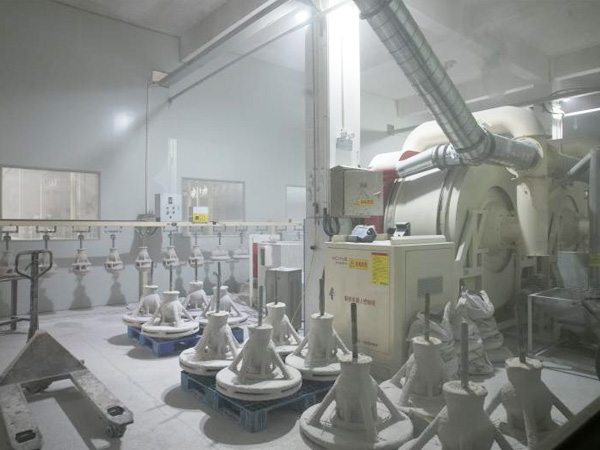
Casting molds are the backbone of modern manufacturing, allowing industries to produce complex parts with high precision and repeatability. From automotive components and aerospace structures to industrial machinery and consumer goods, the efficiency and quality of the casting process often depend on the design and enhancement of the casting mold itself. A well-optimized mold not only improves dimensional accuracy but also reduces defects, accelerates production, and minimizes material waste.
The process of casting involves pouring molten metal or other materials into a mold cavity, where it solidifies to form the desired shape. Any inefficiency in mold design can lead to common problems such as porosity, misruns, warping, and excessive surface roughness. According to a study by the International Foundry Technology Journal, implementing mold enhancements can increase casting yield by up to 25% while simultaneously reducing scrap rates and post-processing time. This underscores the necessity of adopting strategic improvements in casting mold design and maintenance.
This article provides an in-depth look at five key casting mold enhancements that deliver substantial gains in efficiency, quality, and cost-effectiveness. We will explore material improvements, cooling strategies, surface treatments, mold design optimization, and automation integration, providing both practical examples and industry insights.
Material Innovations for Molde de fundición Performance
The choice of materials for casting molds plays a decisive role in determining the durability, thermal stability, and overall quality of cast parts. Traditional steel and aluminum molds often face limitations in high-volume or high-temperature production environments. These limitations can result in premature wear, distortion, and frequent replacements, ultimately increasing downtime and operational costs. Modern material innovations aim to extend mold lifespan, enhance heat transfer, improve thermal stability, and minimize maintenance requirements, ensuring consistent casting quality and efficiency.
High-Temperature Alloy Mold Materials
High-temperature alloys, such as H13 tool steel, chromium-molybdenum steels, and nickel-based superalloys, are designed to resist thermal fatigue, cracking, and surface wear. These materials are particularly suitable for molds used in die casting and investment casting processes, where molten metal temperatures often exceed 1200°C.
Benefits of High-Temperature Alloys:
- Significantly extended mold life, with H13 steel molds lasting over 50,000 cycles before resurfacing.
- Enhanced resistance to thermal fatigue, preventing micro-cracks that could compromise precision.
- Improved dimensional stability, ensuring high consistency in complex casting geometries.
Industry data demonstrates that conventional carbon steel molds may require replacement after 15,000–20,000 cycles, highlighting the advantage of high-performance alloys in large-scale production.
Composite and Coated Mold Surfaces
Beyond base materials, surface treatments and composite coatings provide critical protection for casting molds. Ceramic coatings, nitrided layers, and other composite treatments increase wear resistance and reduce adhesion of molten metals. These enhancements not only extend mold lifespan but also improve the surface quality of cast parts, reducing the need for costly post-machining operations.
Advantages of Composite Coatings:
- Reduced sticking of molten metals, particularly in aluminum die casting, where surface defects can drop by 30–40%.
- Improved surface finish and reduced turbulence during metal flow, leading to higher first-pass yields.
- Lower operational costs due to extended maintenance intervals and fewer rejected parts.
Thermal Conductive Inserts
For molds with thick or complex sections, integrating copper or aluminum inserts can improve localized heat transfer. These inserts allow rapid removal of heat from critical areas, preventing hot spots, accelerating solidification, and reducing residual stresses in cast components. Optimized thermal conductivity can shorten cycle times by 10–15%, enhancing productivity in high-volume operations.
Key Benefits of Thermal Inserts:
- Prevent localized overheating and reduce warping or shrinkage defects.
- Accelerate cooling, enabling shorter cycle times and higher throughput.
- Maintain dimensional accuracy in precision parts, essential for automotive or aerospace applications.
Advanced Cooling Techniques in Casting Mold Design

Efficient heat management is a cornerstone of casting mold performance. Without proper cooling, molten metal can solidify unevenly, leading to warping, shrinkage, or internal voids. Modern molds use a combination of innovative cooling strategies to maintain uniform temperature distribution and consistent casting quality.
Conformal Cooling Channels
Conformal cooling channels are designed to follow the geometry of the mold cavity, unlike traditional straight-line cooling paths. By matching the contours of the part, these channels provide uniform heat extraction, reducing internal stresses and minimizing distortion. Additive manufacturing, such as 3D printing, has enabled the creation of highly intricate conformal channels in steel and aluminum molds, ensuring optimized cooling even in complex shapes.
Micro-Channel Cooling Systems
Micro-channel cooling uses small-diameter channels strategically placed near critical mold regions. This system allows rapid heat dissipation without adding significant weight or compromising structural strength. In automotive and high-precision component casting, micro-channel systems have been reported to reduce cycle times by up to 20% while enhancing dimensional stability.
Integrated Heat Exchangers
For high-temperature or large-scale industrial applications, embedding heat exchangers within the mold provides continuous cooling and precise temperature control. This approach is particularly effective in preventing cracks, porosity, and internal voids in large castings. Reports indicate that molds with integrated heat exchangers can reduce internal voids by 15% and improve first-pass yield by 12%.
Benefits of Advanced Cooling Techniques:
- Uniform solidification and minimized residual stresses.
- Reduced cycle times and improved throughput.
- Higher first-pass yield and reduced scrap rates.
Mold Surface Treatments and Lubrication
Optimizing the mold surface is essential for easy release, reduced wear, and improved casting quality. Modern surface treatment strategies combine mechanical finishing, chemical coatings, and automated lubrication systems to maximize mold performance.
Polishing and Texturing
Polishing high-wear zones reduces surface roughness, prevents localized corrosion, and minimizes micro-cracks. Controlled texturing can also improve metal flow, reduce turbulence, and promote uniform filling of complex cavities.
Key Impacts:
- Enhanced surface quality of cast components.
- Prolonged mold lifespan due to reduced wear.
- Improved consistency across high-volume production runs.
Mold Release Coatings
Mold release coatings, including PTFE-based or ceramic-based layers, reduce adhesion between the molten metal and mold surface. This facilitates smoother ejection and minimizes defects such as fins, tears, or surface blemishes. Production studies indicate that consistent use of release coatings can reduce scrap rates by 20–25%.
Lubrication Systems
Automated lubrication systems within molds allow continuous application of release agents during casting cycles. This is particularly beneficial for non-ferrous metals like aluminum and copper alloys, where sticking is a frequent issue. Proper lubrication:
- Prevents sticking and thermal wear.
- Ensures smooth ejection of intricate parts.
- Reduces downtime due to manual mold maintenance.
Example: Advantages of Surface Treatments and Lubrication
- Reduction in maintenance intervals by 15–20%.
- Increased mold lifespan by up to 30%.
- Higher production yield and lower operational costs.
Structural and Geometrical Enhancements
Optimizing the physical design of casting molds is critical for accuracy, reproducibility, and operational efficiency.
Optimized Gating and Risers
Proper placement and sizing of gates and risers ensure consistent metal flow, prevent turbulence, and avoid defects like cold shuts and misruns. Simulation tools such as Computational Fluid Dynamics (CFD) allow engineers to predict flow behavior, optimizing mold geometry for high-quality castings.
Modular Mold Systems
Modular molds allow for flexible configuration, easy replacement of worn sections, and quick adaptation to different product designs. This reduces downtime for maintenance and improves overall production flexibility.
Reinforced Mold Structures
Using ribbing, thicker sections, or external support frames increases mold rigidity. This minimizes deflection under thermal and mechanical loads, ensuring dimensional accuracy of high-precision parts.
Automation and Smart Mold Integration
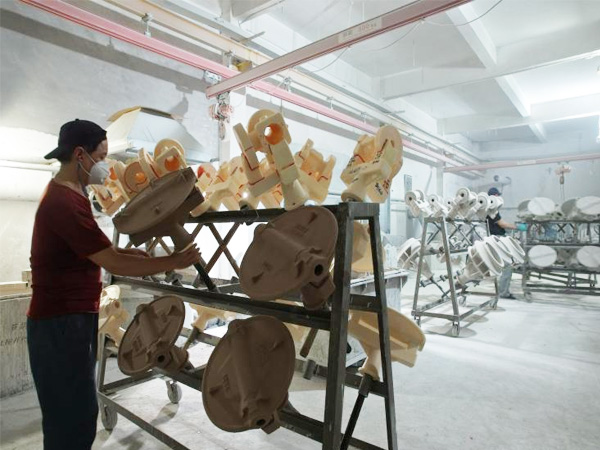
Modern casting operations benefit greatly from integrating automation and smart monitoring systems into molds.
Robotic Mold Handling
Automated handling reduces human error during mold setup, pouring, and ejection, providing consistent performance and lowering the risk of damage.
Embedded Sensors
Sensors embedded in the mold monitor temperature, pressure, and flow in real time. Alerts for deviations allow operators to make immediate adjustments, reducing scrap and improving yield.
Data-Driven Predictive Maintenance
Data from smart molds can feed predictive maintenance algorithms, identifying wear or thermal fatigue before failures occur. This reduces unplanned downtime and prolongs mold life.
Comparison of Casting Mold Enhancements and Their Benefits
| Enhancement Type | Impact on Casting Mold | Impact on Casting Quality | Operational Advantage | Cost Effectiveness |
|---|---|---|---|---|
| Material Innovations | High-temperature alloys, composite coatings, inserts | Higher thermal stability, longer lifespan | Improved durability, lower defect rate | Moderate to High |
| Advanced Cooling | Conformal channels, micro-channels, heat exchangers | Uniform solidification, reduced warping | Reduced cycle time, better dimensional accuracy | Alto |
| Tratamientos de superficies | Polishing, coatings, lubrication | Reduced wear, easy release | Better surface finish, fewer defects | Moderado |
| Structural Enhancements | Optimized gating, modularity, reinforcement | Improved rigidity, fewer misruns | Higher precision, flexible operations | Moderado |
| Automation | Smart sensors, robotics, predictive maintenance | Real-time monitoring, consistent handling | Reduced downtime, higher yield | Alto |
Conclusión
Enhancing casting molds is a multi-faceted strategy that impacts production efficiency, part quality, and overall cost-effectiveness. By integrating innovations in materials, advanced cooling, surface treatments, structural optimization, and automation, manufacturers can achieve significant gains across all casting processes. These improvements not only reduce defects, minimize scrap, and extend mold life but also facilitate high-volume production with consistent results.
Industry case studies demonstrate that manufacturers adopting these five enhancements have realized up to 25–35% improvement in yield and efficiency, while cutting post-processing requirements and reducing operational costs. As casting technology continues to evolve, the adoption of smart molds, advanced simulations, and innovative materials will become essential for competitive manufacturing operations.
PREGUNTAS FRECUENTES
Q1: What is the most cost-effective enhancement for casting molds?
A1: Material innovation, such as using high-temperature alloys or coated surfaces, often provides the greatest balance of longevity and performance with moderate investment.
Q2: Can conformal cooling be applied to any casting mold?
A2: Conformal cooling is most effective in molds with complex geometries and thick sections. Additive manufacturing has enabled wider adoption across diverse mold designs.
Q3: How often should casting molds be inspected after enhancements?
A3: Regular inspections are recommended after every 500–1000 cycles, depending on material and operational conditions, to ensure optimal performance and identify wear.
Q4: Do automation and sensors significantly increase mold costs?
A4: While initial investment is higher, automation and embedded sensors reduce downtime, improve yield, and extend mold lifespan, providing long-term ROI.
Q5: What role do coatings play in casting mold performance?
A5: Coatings reduce wear, improve metal flow, facilitate demolding, and enhance the surface finish of castings, decreasing scrap and post-processing requirements.
Categorías de productos
- Piezas de válvulas
- Piezas de la bomba de agua
- Piezas de la caja de cojinetes
- Piezas de fundición a presión
- Productos para bombas de acero inoxidable
- Productos para bombas de hierro fundido
- Piezas de válvulas para automóviles
- Recambios para automóviles
- Piezas de válvulas para uso civil
- Piezas de bomba de vacío KF

¡Comencemos tu próximo proyecto!
Inicie su proyecto con Leierwo
1. Envíe su consulta
2. Cálculo de costes
3. Inicio de la producción
4. Organizar la entrega
PREGUNTAS FRECUENTES
Sí, tenemos una amplia experiencia en el comercio internacional y podemos ayudar a los clientes con el despacho de aduanas de exportación y los arreglos de envío. Aceptamos varios métodos de pago internacionales, incluyendo T/T (transferencia telegráfica), transferencia bancaria y carta de crédito (L/C). Las condiciones de pago se pueden discutir con nuestro equipo de ventas.
Al asociarse con Leierwo, podrá disfrutar de precios competitivos y una calidad superior a la de otros proveedores. Además, ofrecemos una solución integral para entregar piezas acabadas, incluido el mecanizado CNC y el tratamiento de superficies, lo que garantiza un proceso de producción sin fisuras.
Contamos con avanzados equipos de fundición y estrictos sistemas de control de calidad. Nuestra capacidad de producción mensual es considerable y podemos fabricar productos a partir de dibujos o muestras proporcionados por el cliente. Aceptamos tanto pequeños pedidos de prueba como producciones a gran escala.
Nuestros productos cumplen normas internacionales como ASTM, AISI, DIN y JIS. Podemos proporcionar informes de pruebas de materiales y certificaciones pertinentes para garantizar que la calidad del producto cumple los requisitos del cliente.
Seguimos estrictamente el sistema de gestión de calidad ISO 9001 y realizamos múltiples inspecciones a lo largo del proceso de producción, incluidos análisis espectrográficos, pruebas de rayos X, pruebas ultrasónicas y mediciones dimensionales. Estas medidas de control de calidad garantizan que nuestras piezas de fundición cumplen las normas más estrictas.
Sin embargo, somos flexibles y estamos abiertos a discutir sus necesidades específicas.
Nuestro plazo de producción estándar es de 4 a 6 semanas, en función de la cantidad del pedido y la complejidad del producto. Nos esforzamos por acortar los plazos de entrega para satisfacer las demandas de los clientes.
Sí, podemos proporcionar muestras para la inspección de calidad. Los costes de las muestras y los gastos de envío pueden negociarse, y los gastos de las muestras pueden reembolsarse al realizar un pedido formal.
 Spanish
  English
  Arabic
  Malay
Malay  German