
7 Critical the Sand Cast Factors for Perfect Results
¡Bienvenido a mi blog!
¡Me encanta tenerte aquí! Antes de profundizar en el contenido, me encantaría que me acompañaras en mis redes sociales. Es donde comparto información adicional, conecto con nuestra increíble comunidad y te mantengo al tanto de las últimas noticias. Así es como puedes mantenerte conectado:
📘 Facebook: Shanghai Leierwo Industria Comercio Co., Ltd.
¡Ahora, emprendamos este viaje juntos! Espero que el contenido aquí te resulte no solo revelador, sino también inspirador y valioso. ¡Comencemos!
Tabla de contenido
Conclusiones clave:
- Understand the properties of sand used in the sand cast process
- Optimize mold design to reduce defects and improve accuracy
- Control temperature for proper metal flow and solidification
- Use effective venting and gating systems to prevent porosity
- Ensure proper core placement for complex geometries
- Select metals suitable for the sand cast and application requirements
- Apply post-casting finishing and heat treatment for durability
Introducción
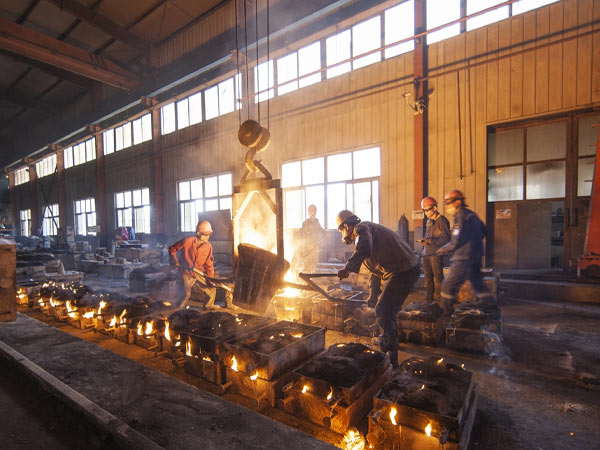
The Sand Cast process is a versatile and widely used method for producing metal components of various shapes and sizes. Unlike other casting methods, the Sand Cast technique allows for low-cost production of small to medium batches, making it suitable for both industrial and artisanal applications. Achieving perfect results requires attention to several critical factors, from the type of sand used to post-casting finishing processes. Understanding these factors ensures high-quality components with minimal defects.
The Sand Cast process involves creating a mold from sand, into which molten metal is poured. After the metal solidifies, the mold is broken, and the casting is extracted. This seemingly simple process relies on precision and careful control over multiple variables.
Sand Material Selection in the Sand Cast
Importance of Sand Type
The sand used in the Sand Cast process directly affects mold strength, permeability, and surface finish. Silica sand is most common due to its high melting point, but alternatives like olivine and zircon sands provide greater thermal stability for higher temperature metals.
Grain Size and Binding Agents
Fine sand grains improve surface finish but reduce permeability, potentially trapping gases during casting. Coarser grains enhance gas escape but may lead to rougher surfaces. Bonding agents, such as clay or chemical binders, improve mold cohesion and maintain shape during pouring.
Perspectiva conceptual
Selecting the right sand is a balance between achieving a smooth surface and allowing gases to escape. Modern foundries often test sand blends for optimal results based on metal type and casting size.
Mold Design Factors for the Sand Cast
Geometrical Considerations
Mold design is essential for controlling metal flow and minimizing defects. Simple molds reduce casting errors, while complex geometries require careful planning of gating systems and supports.
Comparison: Simple vs. Complex Molds
| Mold Type | Ease of Production | Risk of Defects | Aplicaciones |
|---|---|---|---|
| Simple Mold | Alto | Bajo | Standard parts, prototypes |
| Complex Mold | Moderado | Moderado | Intricate industrial parts |
| Multi-Cavity Mold | Bajo | Alto | Mass production of identical components |
Proper mold design balances accuracy, efficiency, and defect reduction, directly influencing the quality of the Sand Cast component.
Temperature Control in the Sand Cast Process
Metal Pouring Temperature
The temperature at which metal is poured into the Sand Cast mold determines the flow, solidification, and final properties of the casting. Excessively hot metal can oxidize or cause blowholes, while cold metal may lead to incomplete filling or cold shuts.
Real-World Insight
Foundries monitor temperature using thermocouples and infrared sensors. Studies show consistent temperature control reduces shrinkage and improves dimensional accuracy by up to 20%.
Venting and Gating Systems for the Sand Cast
Preventing Air Entrapment
Vents in the mold allow air and gases to escape during metal pouring. Without proper venting, porosity and blowholes occur, reducing mechanical strength and surface quality.
Gating Design Tips
Gating systems should ensure smooth, laminar metal flow. Tapered runners, well-placed risers, and multiple inlets prevent turbulence, minimize cold shuts, and improve casting integrity.
Perspectiva conceptual
A well-designed gating and venting system reduces defects and ensures a consistent Sand Cast product suitable for demanding applications.
Core Design in the Sand Cast
Creating Hollow Sections
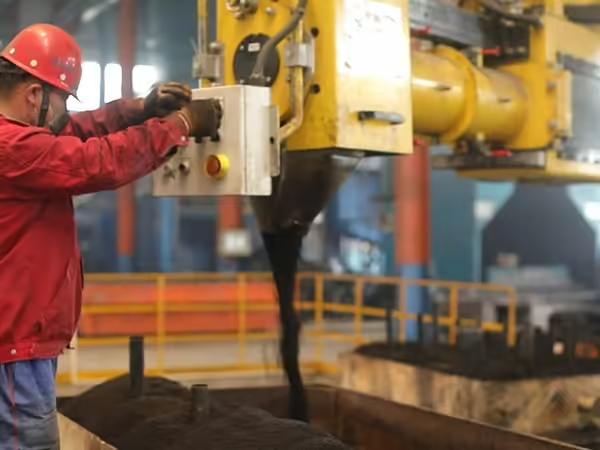
Cores are inserted into molds to form cavities or complex internal geometries. Proper alignment and support prevent movement during pouring, which could otherwise lead to dimensional inaccuracies.
Consideraciones materiales
Core sands must maintain shape yet be collapsible for easy removal. Chemically-bonded cores offer high precision and are ideal for detailed or intricate components.
Case Example
A foundry producing complex pump housings reported a 30% reduction in dimensional errors after switching to chemically-bonded cores for their Sand Cast process.
Metal Selection for Optimal Sand Cast Results
Choosing the Right Alloy
The type of metal used in the Sand Cast process affects strength, corrosion resistance, and suitability for the intended application. Common metals include aluminum, bronze, cast iron, and stainless steel.
Comparison Table: Metal Properties in Sand Cast
| Alloy Type | Fortaleza | Resistencia a la corrosión | Aplicaciones ideales |
|---|---|---|---|
| Aluminio | Medio | Moderado | Automotive, machinery |
| Bronce | Alto | Alto | Marine, decorative parts |
| Hierro fundido | Muy alto | Bajo | Pipes, engine blocks |
| Acero inoxidable | Alto | Muy alto | Medical, food equipment |
Selecting the proper alloy ensures the Sand Cast components meet functional requirements and durability expectations.
Post-Casting Finishing in the Sand Cast Proceso
Cleaning and Heat Treatment
After casting, Sand Cast parts may require heat treatment to relieve internal stresses or enhance hardness. Cleaning processes remove residual sand and surface imperfections.
Surface Enhancement Options
- Grinding or machining for dimensional accuracy
- Sandblasting for a smooth surface
- Coating or plating for corrosion resistance
Proper post-casting treatment ensures long-lasting, high-quality components suitable for industrial, commercial, or artistic applications.
Conclusión
The Sand Cast process is highly versatile but requires careful control of multiple factors to achieve perfect results. From sand selection and mold design to temperature, venting, core placement, metal choice, and post-casting finishing, each step affects the quality, precision, and reliability of the final part. Mastery of these seven critical factors allows foundries to reduce defects, optimize production, and produce Sand Cast components that meet demanding specifications.
PREGUNTAS FRECUENTES
Q1: What is the most common mistake in the Sand Cast process?
A: Improper venting and gating design often leads to air entrapment and porosity in castings.
Q2: Can high-temperature alloys be used in the Sand Cast process?
A: Yes, but heat-resistant sand like zircon or olivine is recommended to withstand high temperatures.
Q3: How does core design affect Sand Cast quality?
A: Poorly supported cores can shift during pouring, causing dimensional inaccuracies or defects.
Q4: Which metals are best suited for Sand Cast?
A: Aluminum, bronze, cast iron, and stainless steel are most common depending on strength, corrosion resistance, and application requirements.
Q5: How can surface roughness be reduced in Sand Cast parts?
A: Using finer sand, proper mold compaction, and post-casting finishing like grinding or sandblasting improves surface quality.
Q6: Is the Sand Cast process cost-effective for small batch production?
A: Yes, it provides an economical solution for medium-size parts without requiring expensive tooling.
Categorías de productos
- Piezas de válvulas
- Piezas de la bomba de agua
- Piezas de la caja de cojinetes
- Piezas de fundición a presión
- Productos para bombas de acero inoxidable
- Productos para bombas de hierro fundido
- Piezas de válvulas para automóviles
- Recambios para automóviles
- Piezas de válvulas para uso civil
- Piezas de bomba de vacío KF

¡Comencemos tu próximo proyecto!
Inicie su proyecto con Leierwo
1. Envíe su consulta
2. Cálculo de costes
3. Inicio de la producción
4. Organizar la entrega
PREGUNTAS FRECUENTES
Sí, tenemos una amplia experiencia en el comercio internacional y podemos ayudar a los clientes con el despacho de aduanas de exportación y los arreglos de envío. Aceptamos varios métodos de pago internacionales, incluyendo T/T (transferencia telegráfica), transferencia bancaria y carta de crédito (L/C). Las condiciones de pago se pueden discutir con nuestro equipo de ventas.
Al asociarse con Leierwo, podrá disfrutar de precios competitivos y una calidad superior a la de otros proveedores. Además, ofrecemos una solución integral para entregar piezas acabadas, incluido el mecanizado CNC y el tratamiento de superficies, lo que garantiza un proceso de producción sin fisuras.
Contamos con avanzados equipos de fundición y estrictos sistemas de control de calidad. Nuestra capacidad de producción mensual es considerable y podemos fabricar productos a partir de dibujos o muestras proporcionados por el cliente. Aceptamos tanto pequeños pedidos de prueba como producciones a gran escala.
Nuestros productos cumplen normas internacionales como ASTM, AISI, DIN y JIS. Podemos proporcionar informes de pruebas de materiales y certificaciones pertinentes para garantizar que la calidad del producto cumple los requisitos del cliente.
Seguimos estrictamente el sistema de gestión de calidad ISO 9001 y realizamos múltiples inspecciones a lo largo del proceso de producción, incluidos análisis espectrográficos, pruebas de rayos X, pruebas ultrasónicas y mediciones dimensionales. Estas medidas de control de calidad garantizan que nuestras piezas de fundición cumplen las normas más estrictas.
Sin embargo, somos flexibles y estamos abiertos a discutir sus necesidades específicas.
Nuestro plazo de producción estándar es de 4 a 6 semanas, en función de la cantidad del pedido y la complejidad del producto. Nos esforzamos por acortar los plazos de entrega para satisfacer las demandas de los clientes.
Sí, podemos proporcionar muestras para la inspección de calidad. Los costes de las muestras y los gastos de envío pueden negociarse, y los gastos de las muestras pueden reembolsarse al realizar un pedido formal.
 Spanish
  English
  Arabic
  Malay
Malay  German