
Lista de verificación de calidad de piezas fundidas de hierro dúctil: una guía práctica para compradores
¡Bienvenido a mi blog!
¡Me encanta tenerte aquí! Antes de profundizar en el contenido, me encantaría que me acompañaras en mis redes sociales. Es donde comparto información adicional, conecto con nuestra increíble comunidad y te mantengo al tanto de las últimas noticias. Así es como puedes mantenerte conectado:
📘 Facebook: Shanghai Leierwo Industria Comercio Co., Ltd.
¡Ahora, emprendamos este viaje juntos! Espero que el contenido aquí te resulte no solo revelador, sino también inspirador y valioso. ¡Comencemos!
Tabla de contenido
Puntos clave
- Comprender los indicadores esenciales de calidad de piezas fundidas de hierro dúctil
- Aprenda a inspeccionar materias primas, microestructura, propiedades mecánicas y dimensiones
- Compare las piezas fundidas de hierro dúctil con el hierro gris y el acero para guiar las decisiones de compra
- Identificar defectos de fundición comunes y métodos de prevención
- Aprenda técnicas reales de inspección de fábricas y estándares de prueba
- Obtenga una lista de verificación de calidad completa para adquisiciones y control de calidad
- Comprender cómo evaluar proveedores en función de certificaciones, procesos y trazabilidad
Introducción
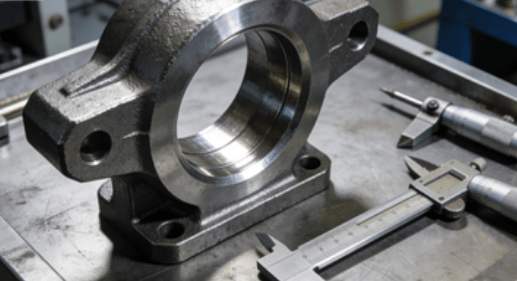
Imagine que su fábrica recibe un lote de piezas fundidas de hierro dúctil para cuerpos de válvulas, carcasas de bombas o piezas de automóviles. A primera vista todo parece normal. Pero después de algunas semanas en servicio, varias piezas fallan debido a grietas, porosidad interna o baja resistencia a la tracción. El costo no es sólo las piezas de repuesto, sino también el tiempo de inactividad, la mano de obra y la pérdida de reputación.
Este escenario ocurre con frecuencia porque los compradores a menudo dependen únicamente del precio o la apariencia. En realidad, las piezas fundidas de hierro dúctil dependen en gran medida de la estructura metalúrgica, el tratamiento térmico y el control del proceso. Una sólida lista de verificación de calidad es la diferencia entre una cadena de suministro confiable y un riesgo de producción constante.
Esta guía está diseñada para gerentes de adquisiciones, ingenieros y profesionales de la calidad. Proporciona una lista de verificación completa y pasos prácticos para evaluar piezas fundidas de hierro dúctil. Aprenderá qué comprobar, cómo verificarlo y cómo evitar errores comunes.
¿qué son las piezas fundidas de hierro dúctil
Definición y Concepto Básico
Fundiciones de hierro dúctil son aleaciones de hierro que contienen nódulos esféricos de grafito. La forma del grafito cambia de escama a nodular mediante un tratamiento de nodulización. Este cambio mejora significativamente la resistencia y la ductilidad.
Por qué se utilizan ampliamente las piezas fundidas de hierro dúctil
Las piezas fundidas de hierro dúctil se utilizan ampliamente porque ofrecen:
- Alta resistencia a la tracción y resistencia al impacto
- Buen rendimiento ante la fatiga
- Excelente maquinabilidad
- Rentabilidad en comparación con el acero
La característica metalúrgica clave
La característica clave son los nódulos de grafito. Si los nódulos no son uniformes o irregulares, la pieza fundida perderá ductilidad y se volverá quebradiza. Por eso es fundamental la inspección de microestructuras.
Por qué la calidad importa en las piezas fundidas de hierro dúctil
Fiabilidad y seguridad
Fundiciones de hierro dúctil se utilizan a menudo en sistemas de presión, componentes estructurales y piezas móviles. La falla puede causar:
- Apagado de equipos
- Incidentes de seguridad
- Pérdida económica significativa
Control de Costos y Desempeño a L
Las piezas fundidas de mala calidad conducen a:
- Altas tasas de chatarra
- Reelaboración y mecanizado de residuos
- Vida útil corta
- Mayor frecuencia de mantenimiento
Demanda de mercado y desempeño del producto
En las aplicaciones industriales modernas, los clientes exigen un rendimiento estable y una larga vida útil. Las piezas fundidas de hierro dúctil con una calidad inestable no pueden cumplir estos requisitos.
Lista de verificación de calidad de piezas fundidas de hierro dúctil
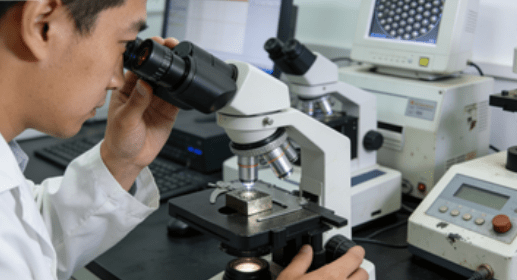
Comprobación de composición de materiales y productos químicos
Qué verificar
La composición química determina el rendimiento final. Los elementos clave incluyen:
- Carbono
- Silicio
- Manganeso
- Magnesio
- Azufre
- Fósforo
Rangos aceptables
Rangos de composición típicos para piezas fundidas de hierro dúctil:
- Carbono 3,2 a 3,8
- Silicio 1,8 a 3,0
- Manganeso 0,1 a 0,6
- Magnesio 0,03 a 0,05
- Azufre inferior a 0,03
- Fósforo inferior a 0,05
Por qué esto importa
Si el magnesio es insuficiente, el grafito se formará en forma de escamas y la pieza fundida se volverá quebradiza. Si el azufre es demasiado alto, los nódulos no se pueden formar correctamente.
Inspección de microestructuras
Nódulos y matriz de grafito
La inspección de microestructuras debe incluir:
- Recuento de nódulos por milímetro cuadrado
- Forma y tamaño del nódulo
- Estructura matricial como ferrita, perlita o martensita
Cómo se ve la alta calidad
Las piezas fundidas de hierro dúctil de alta calidad lo demuestran:
- Nódulos uniformes
- El número de nódulos suele ser superior a 30 por milímetro cuadrado
- Contenido mínimo de carburo
Efectos del tratamiento térmico
El tratamiento térmico como la normalización mejora la tenacidad y la estabilidad. Un tratamiento térmico adecuado será:
- Refinar el tamaño del grano
- Reducir el estrés residual
- Mejorar la ductilidad
Verificación de Propiedades Mecánicas
Resistencia a la tracción y alargamiento
Propiedades mecánicas comunes de las piezas fundidas de hierro dúctil:
- Resistencia a la tracción de 400 a 700 MPa
- Alargamiento del 10 al 25 por ciento
- Dureza 170 a 300 HB
Por qué esto importa
Las propiedades mecánicas indican que la fundición puede soportar cargas y tensiones del mundo real. Un alargamiento bajo significa que la pieza fundida es quebradiza y puede agrietarse bajo impacto.
Inspección dimensional y superficial
Precisión dimensional
Utilice herramientas como:
- Calibrador
- Micrómetros
- Máquina de medición de coordenadas CMM
- Escaneo láser
Calidad de la superficie
Verificar por:
- Sin grietas
- Sin agujeros de arena
- Superficie lisa
- Marcas de mecanizado correctas
Tolerancia dimensional
La tolerancia típica depende del tamaño y la complejidad de la fundición. Los estándares comunes son:
- ISO 8062 para tolerancias dimensionales
- Estándares GB para tolerancias de fundición
End de ensayos no destructivos
Métodos comunes de END
- Pruebas de partículas magnéticas
- Pruebas ultrasónicas
- Pruebas de colorante penetrante
- Inspección de rayos X
Cuándo utilizar END
Se requiere END para componentes críticos como:
- Cuerpos de válvula
- Carcasas de bombas
- Accesorios para tuberías de presión
- Piezas para rodamientos de carga de automóviles
Lo que revela el END
NDT poate detecta:
- Porosidad interna
- Grietas
- Inclusiones
- Cierres fríos
Comparación Fundición de hierro dúctil vs Hierro Gris vs Acero
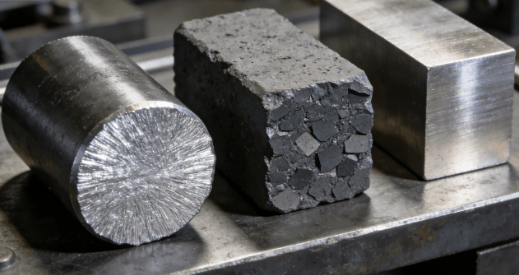
Comparación de fuerza y dureza
Las piezas fundidas de hierro dúctil proporcionan un rendimiento equilibrado entre hierro gris y acero.
| Material | Fortaleza | Ductilidad | Costo | Mejor para |
|---|---|---|---|---|
| Fundiciones de hierro dúctil | Alto | Alto | Medio | Válvulas, engranajes, carcasas |
| Hierro gris | Medio | Bajo | Bajo | Carcasas básicas |
| Acero | Muy alto | Medio | Alto | Componentes de alta resistencia |
Por qué los compradores eligen piezas fundidas de hierro dúctil
- Mejor tenacidad que el hierro gris
- Más rentable que el acero
- Excelente maquinabilidad
- Alta resistencia a la fatiga
Defectos comunes y cómo identificarlos
Porosidad
La porosidad es causada por el gas atrapado en la pieza fundida o la contracción. Reduce la resistencia y provoca fugas en las piezas de presión.
Cierres Fríos e Inclusiones
Los cierres en frío ocurren cuando el metal fundido no se fusiona correctamente. Las inclusiones son impurezas no metálicas. Ambos reducen la resistencia y pueden causar grietas.
Grietas y deformaciones
A menudo se producen grietas durante el enfriamiento o el mecanizado. La deformación indica una distribución desigual de la tensión o un tratamiento térmico deficiente.
Cómo prevenir defectos
- Asegúrese de que la temperatura correcta de la fusión
- Utilice un sistema de puerta adecuado
- Controla la permeabilidad del molde
- Utilice un proceso adecuado de inoculación y nodulización
- Realizar correctamente el tratamiento térmico
Lista de verificación de inspección de fábrica real
Horno de Fusión y Tratamiento de Metales
- Verificar tipo de horno y control de temperatura
- Verificar el proceso de nodulización e inoculación
- Inspeccionar la fuente de materia prima y la trazabilidad
Proceso de Moldeo y Fundición
- Verifique la calidad de la arena y la precisión del moldeo
- Verifique el tiempo de curado del molde
- Inspeccione el diseño de compuertas y contrahuellas
Instalación de tratamiento térmico
- Confirmar temperatura y tiempo del tratamiento térmico
- Verifique el método y el equipo de enfriamiento
- Verificar control y registros de temperatura
Laboratorio de Inspección de Calidad
- Consultar disponibilidad del espectrómetro
- Verificar la máquina de ensayo de tracción
- Confirmar microscopio metalográfico
- Consultar equipos de END
Estándares industriales y requisitos de calidad
Normas comunes utilizadas en piezas fundidas de hierro dúctil
- Norma ISO 1083 de plancha dúctil
- norma de fundición de hierro dúctil ASTM A536
- GB 1348 estándar de hierro dúctil
- norma de fundición de hierro dúctil EN 1563
Requisitos de calidad típicos para componentes críticos
Para componentes a presión y maquinaria pesada, los requisitos de calidad suelen incluir:
- Resistencia a la tracción superior a 500 MPa
- Alargamiento superior al 12 por ciento
- Inspección de END para todas las piezas
- Estricto control dimensional
Opiniones de expertos y conocimientos de la industria
Vista de experto en metalurgia
Un metalúrgico senior de una empresa líder en fundición dijo:
“La morfología del grafito determina la calidad de la fundición del hierro dúctil. Incluso con una composición correcta, una mala nodulización provocará fallas en el grafito escamoso y frágiles”
Vista de experto en ingeniería
Un ingeniero mecánico que trabaja en la fabricación de bombas dijo:
“Las pruebas de materiales y la inspección de microestructuras deben realizarse antes de la producción en masa. Muchas fallas son causadas por una microestructura inconsistente y un tratamiento térmico deficiente”
Vista del Gerente de Calidad
Un gerente de calidad en la fabricación de válvulas dijo:
“La trazabilidad y la documentación son esenciales. Si el proveedor no puede proporcionar el informe de tratamiento térmico y el informe de END, no se debe aceptar la fundición”
Cómo elegir un proveedor confiable
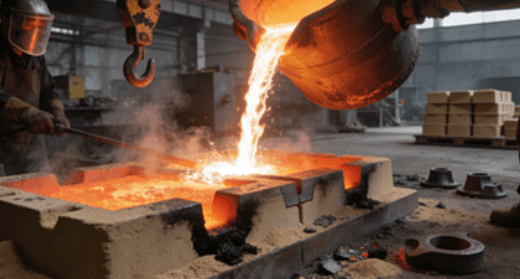
Lista de verificación de evaluación de proveedores
- Capacidad de producción y producción estable
- Equipo técnico y gestión de calidad
- Equipos de prueba y sistema de inspección
- Capacidad para proporcionar documentación completa
- Certificaciones ISO e industriales
Preguntas clave para proveedores
- ¿cómo se controla el proceso de nodulización
- ¿cuál es su tasa de defectos y tasa de desechos
- ¿tiene capacidad de END
- ¿Puede proporcionar pruebas de muestra
- ¿Cuál es su proceso de tratamiento térmico
Lista de verificación práctica del comprador
Antes de la compra
- Verificar certificado material
- Confirmar composición química
- Consultar propiedades mecánicas
- Revisar el informe de microestructura
- Confirmar tolerancia dimensional
Después de recibir bienes
- Realizar pruebas de muestra
- Realizar inspección visual
- Comprobar el acabado de la superficie
- Verificar los resultados de los END
- Consultar protección de embalaje y transporte
Aplicación práctica y control de costes
Cómo la calidad impacta el costo
Alta calidad piezas fundidas de hierro dúctil puede costar más inicialmente pero reducir:
- Costo de reelaboración
- Costo de chatarra
- Costo de falla
- Costo de mantenimiento
Rendimiento a largo plazo
Una fundición de hierro dúctil de alta calidad puede durar de 10 a 20 años en muchas aplicaciones, como válvulas de agua, carcasas de bombas y piezas estructurales.
Tablas comparativas adicionales
Comparación del rendimiento del material
| Propiedad | Fundición de hierro dúctil | Hierro gris | Acero |
|---|---|---|---|
| Resistencia a la tracción | Alto | Medio | Muy alto |
| Ductilidad | Alto | Bajo | Medio |
| Resistencia a la fatiga | Alto | Bajo | Alto |
| Costo | Medio | Bajo | Alto |
| Maquinabilidad | Bien | Bien | Medio |
Tabla de prioridades de inspección
| Tipo de inspección | Prioridad | Por qué |
|---|---|---|
| Composición química | Alto | Determina las propiedades finales |
| Microestructura | Alto | Determina la ductilidad y la resistencia |
| Prueba mecánica | Alto | Confirma el rendimiento |
| END | Medio a alto | Las piezas críticas necesitan una inspección interna |
| Control dimensional | Alto | Garantiza ajuste y funcionamiento |
Conclusión
Fundiciones de hierro dúctil la calidad está determinada por múltiples factores, incluida la composición, la microestructura, las propiedades mecánicas y el control del proceso de fabricación. Para los compradores, una lista de verificación completa es esencial para garantizar la confiabilidad y el rendimiento a largo plazo.
Siguiendo esta guía, puedes:
- Reducir los defectos y el riesgo de fallas
- Mejorar la estabilidad de la producción
- Controlar de forma rentable
- Garantizar un rendimiento seguro y confiable
Si quieres, también puedo ayudarte:
- Cree una lista de verificación de evaluación de proveedores personalizada
- Escriba una plantilla de auditoría de fábrica
- Recomendar estándares de inspección basados en su aplicación
Simplemente dígame su solicitud y requisitos y adaptaré la guía a sus necesidades.
PREGUNTAS FRECUENTES
¿cuál es el factor más importante en la calidad de las piezas fundidas de hierro dúctil
El factor más importante es la microestructura, especialmente los nódulos de grafito y la distribución de la matriz. Determina directamente la resistencia y ductilidad.
¿Cómo puedo asegurarme de que la fundición cumpla con los requisitos mecánicos
Solicite prueba de tracción, prueba de dureza e informe de microestructura. Compare los resultados con sus estándares de diseño.
¿por qué es importante el END para las piezas fundidas de hierro dúc
El END detecta defectos internos como porosidad, grietas e inclusiones que no se pueden ver visualmente. Para las piezas a presión, el END es obligatorio.
Cómo elegir entre piezas fundidas de hierro dúctil y acero
Elija piezas fundidas de hierro dúctil si necesita alta tenacidad, buena resistencia a la fatiga y rentabilidad. Elija acero para aplicaciones de resistencia extrema y alta temperatura.
¿cuánto duran las piezas fundidas de hierro dúc
En condiciones normales, alta calidad piezas fundidas de hierro dúctil puede durar de 10 a 20 años. En ambientes hostiles, se requiere un recubrimiento y mantenimiento adecuados.
Categorías de productos
- Piezas de válvulas
- Piezas de la bomba de agua
- Piezas de la caja de cojinetes
- Piezas de fundición a presión
- Productos para bombas de acero inoxidable
- Productos para bombas de hierro fundido
- Piezas de válvulas para automóviles
- Recambios para automóviles
- Piezas de válvulas para uso civil
- Piezas de bomba de vacío KF

¡Comencemos tu próximo proyecto!
Inicie su proyecto con Leierwo
1. Envíe su consulta
2. Cálculo de costes
3. Inicio de la producción
4. Organizar la entrega
PREGUNTAS FRECUENTES
Sí, tenemos una amplia experiencia en el comercio internacional y podemos ayudar a los clientes con el despacho de aduanas de exportación y los arreglos de envío. Aceptamos varios métodos de pago internacionales, incluyendo T/T (transferencia telegráfica), transferencia bancaria y carta de crédito (L/C). Las condiciones de pago se pueden discutir con nuestro equipo de ventas.
Al asociarse con Leierwo, podrá disfrutar de precios competitivos y una calidad superior a la de otros proveedores. Además, ofrecemos una solución integral para entregar piezas acabadas, incluido el mecanizado CNC y el tratamiento de superficies, lo que garantiza un proceso de producción sin fisuras.
Contamos con avanzados equipos de fundición y estrictos sistemas de control de calidad. Nuestra capacidad de producción mensual es considerable y podemos fabricar productos a partir de dibujos o muestras proporcionados por el cliente. Aceptamos tanto pequeños pedidos de prueba como producciones a gran escala.
Nuestros productos cumplen normas internacionales como ASTM, AISI, DIN y JIS. Podemos proporcionar informes de pruebas de materiales y certificaciones pertinentes para garantizar que la calidad del producto cumple los requisitos del cliente.
Seguimos estrictamente el sistema de gestión de calidad ISO 9001 y realizamos múltiples inspecciones a lo largo del proceso de producción, incluidos análisis espectrográficos, pruebas de rayos X, pruebas ultrasónicas y mediciones dimensionales. Estas medidas de control de calidad garantizan que nuestras piezas de fundición cumplen las normas más estrictas.
Sin embargo, somos flexibles y estamos abiertos a discutir sus necesidades específicas.
Nuestro plazo de producción estándar es de 4 a 6 semanas, en función de la cantidad del pedido y la complejidad del producto. Nos esforzamos por acortar los plazos de entrega para satisfacer las demandas de los clientes.
Sí, podemos proporcionar muestras para la inspección de calidad. Los costes de las muestras y los gastos de envío pueden negociarse, y los gastos de las muestras pueden reembolsarse al realizar un pedido formal.
 Spanish
  English
  Arabic
  Malay
Malay  German