
Normas de seguridad de válvulas para componentes fundidos: una guía orientada al comprador para la confiabilidad industrial
¡Bienvenido a mi blog!
¡Me encanta tenerte aquí! Antes de profundizar en el contenido, me encantaría que me acompañaras en mis redes sociales. Es donde comparto información adicional, conecto con nuestra increíble comunidad y te mantengo al tanto de las últimas noticias. Así es como puedes mantenerte conectado:
📘 Facebook: Shanghai Leierwo Industria Comercio Co., Ltd.
¡Ahora, emprendamos este viaje juntos! Espero que el contenido aquí te resulte no solo revelador, sino también inspirador y valioso. ¡Comencemos!
Tabla de contenido
Conclusiones clave de este artículo
- Descripción general completa de seguridad de las válvulas en aplicaciones industriales
- Cómo elegir los materiales adecuados para las piezas fundidas de válvulas
- Comparación de métodos de fundición e impacto en la seguridad
- Comprender los estándares de seguridad internacionales y regionales
- Mejores prácticas para mantenimiento, seguimiento y gestión de riesgos
- Estudios de casos del mundo real que demuestran la importancia de la seguridad de las válvulas
- Lineamientos para la evaluación de adquisiciones y costo-beneficio
Introducción
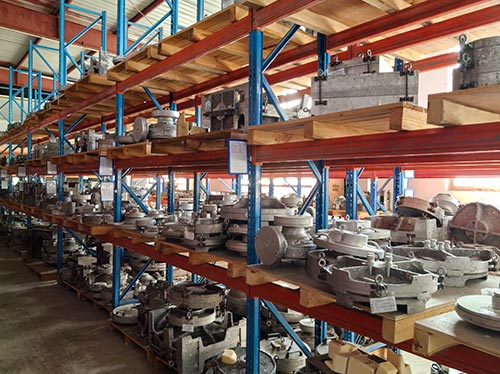
En los procesos industriales, las válvulas son los puntos de control críticos que regulan el flujo, la presión y la seguridad de los fluidos. Según la Sociedad Internacional de Automatización (ISA), las fallas de válvulas representan aproximadamente 25% de todos los incidentes de equipos de proceso a nivel mundial, lo que genera tiempo de inactividad, peligros ambientales y posibles incidentes de seguridad.
Seguridad de las válvulas comienza en la etapa de diseño y fabricación. Los componentes fundidos, incluidos cuerpos de válvulas, cubiertas y elementos de sellado, deben soportar condiciones extremas: alta temperatura, alta presión y fluidos corrosivos. Los materiales mal seleccionados o los procesos de fundición deficientes pueden comprometer la seguridad, provocando fugas, fallas estructurales o accidentes catastróficos.
En esta guía completa, proporcionamos un enfoque centrado en las adquisiciones, combinando conocimientos técnicos, datos del mundo real y recomendaciones de expertos para ayudar a los compradores industriales a garantizar la seguridad de las válvulas y la confiabilidad operativa.
Puntos clave cubiertos
- Estrategias de selección de materiales para un rendimiento seguro de las válvulas
- Métodos de fundición: inversión, arena y enfoques híbridos
- Cumplimiento de los estándares globales de seguridad de válvulas
- Estrategias avanzadas de seguimiento y mantenimiento predictivo
- Análisis costo-beneficio de las decisiones de adquisiciones
- Estudios de casos del mundo real de incidentes de seguridad valvular
Los materiales importan: elección de componentes fundidos seguros
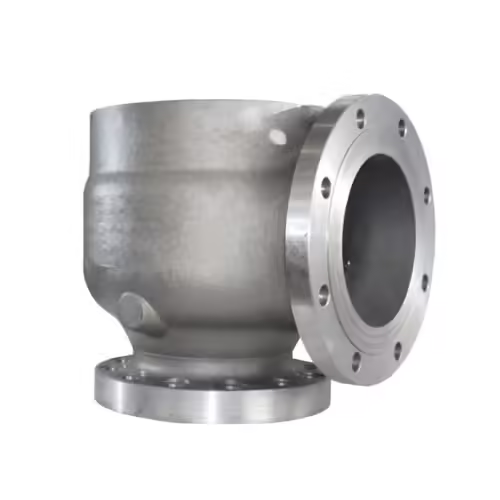
Acero inoxidable para resistencia a la corrosión y la temperatura
El acero inoxidable es la opción más común para válvulas de alto rendimiento.
Aleaciones populares:
- 316/316L: Resistente al cloruro, ideal para las industrias marina, química y petrolera
- 304/304L: Rentable, resistencia a la corrosión moderada
- 17-4PH: Acero endurecido por precipitación con alta resistencia y resistencia a la corrosión
- 410: Acero inoxidable martensítico, apto para válvulas de vapor de alta temperatura
Perspectiva de la industria:
Según la revista Valve World, las válvulas fabricadas en acero inoxidable 316L han mostrado una vida útil 30% más larga en entornos con alto contenido de cloruro en comparación con 304L. Esto reduce directamente el tiempo de inactividad y los costos de mantenimiento, aumentando la seguridad operativa.
Fundiciones de acero al carbono para aplicaciones generales
El acero al carbono se utiliza ampliamente para sistemas de presión media a baja.
Grados comunes:
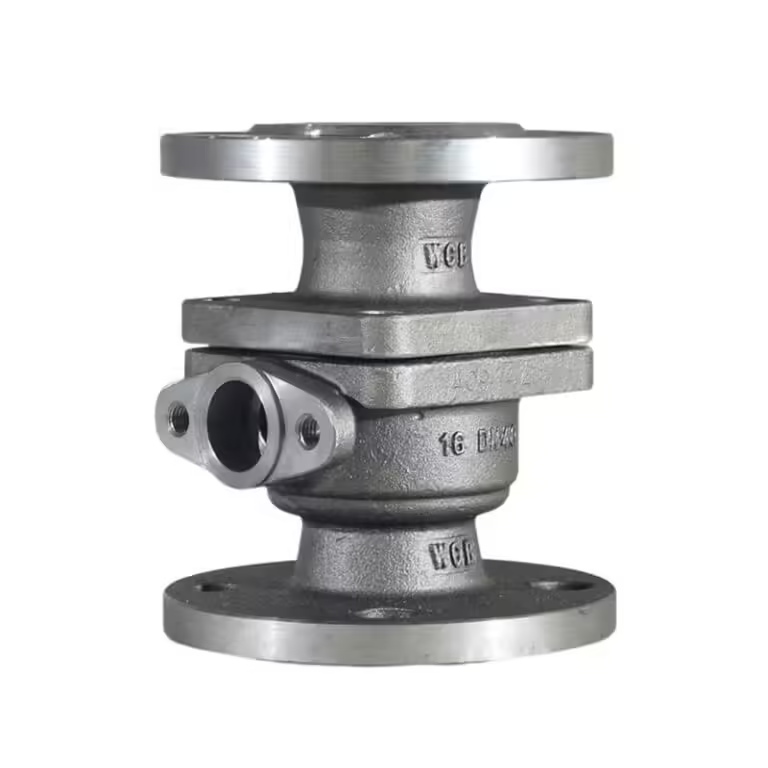
- WCB: Norma para válvulas de uso general a temperatura ambiente
- 4130: Opción de alta resistencia para presión y temperatura media-alta
Comparación:
| Propiedad | Acero inoxidable 304 | Acero al carbono WCB |
|---|---|---|
| Resistencia a la corrosión | Alto | Moderado |
| Resistencia a altas temperaturas | Medio | Alto |
| Costo | Más alto | Más bajo |
| Frecuencia de mantenimiento | Bajo | Moderado |
Aleaciones especiales para condiciones extremas
Las aleaciones especiales proporcionan una resistencia excepcional a la tensión, la temperatura y la corrosión.
Ejemplos:
- Acero inoxidable dúplex 2205: Alta resistencia al agrietamiento por corrosión bajo tensión
- Aleaciones de cobalto (Co6, Co12): Ideal para válvulas en aplicaciones de erosión a alta temperatura
Opinión de expertos:
Dr. Michael Hart, ingeniero de materiales en Instituto de Investigación de Válvulas Industriales, notas: “La selección de la aleación adecuada puede mejorar la vida útil de la válvula hasta en 50% en operaciones químicas de alta temperatura, mejorando directamente la seguridad de la válvula y la confiabilidad operativa”
Métodos de fundición y su impacto Seguridad de la válvula
Fundición de inversión
Se prefiere la fundición a la cera perdida para válvulas complejas de alta presión.
Beneficios:
- Tolerancia de precisión (≤ Ra1,6μm)
- Cavidades internas complejas
- Porosidad y defectos reducidos
Aplicación:
Lo mejor para válvulas de aleación y acero inoxidable que funcionan a alta presión en las industrias química, petroquímica y energética.
Fundición en arena
La fundición en arena es eficaz para válvulas grandes y de forma simple.
Ventajas:
- Rentable para la producción en masa
- Adecuado para agua a baja presión y sistemas municipales
- La precisión moderada garantiza la seguridad para aplicaciones no críticas
Compensación:
Si bien la fundición en arena es segura para sistemas de baja presión, se prefiere la fundición a la cera perdida para válvulas de alta presión y alta precisión seguridad de las válvulas es crítico.
Post-fundición de mecanizado CNC
El mecanizado CNC garantiza que las superficies críticas cumplan con tolerancias estrictas.
Impacto en la seguridad:
- Planitud y perpendicularidad ≤0,02mm/m
- Garantiza un montaje sin fugas
- Soporta sellado hermético en sistemas de alta presión
Estudio de caso:
Una planta química modernizó válvulas de fundición de arena de 50 WCB con asientos mecanizados por CNC, reduciendo los incidentes de fugas de 6 por año a cero, lo que demuestra mejoras de seguridad tangibles.
Normas y cumplimiento de seguridad de válvulas
Estándares internacionales y regionales
- API 600 / API 602: Válvulas de compuerta y globo
- ISO 10434 / ISO 5208: Pruebas de presión, tasas de fuga
- ASME B16.34: Construcción de válvulas y clasificaciones de presión
Importancia:
El cumplimiento garantiza que los componentes fundidos cumplan con los requisitos de presión, temperatura y resistencia a la corrosión del diseño. El incumplimiento puede dar lugar a un funcionamiento inseguro o a sanciones reglamentarias.
Métodos de prueba
- Pruebas hidrostáticas: Confirma los índices de presión
- Inspección de rayos X/ultrasónicos: Detecta defectos internos de fundición
- Verificare dimensională: Garantiza tolerancias estrictas y un montaje adecuado
Práctica industrial:
Fabricantes líderes de válvulas, incluidos Leierwo, informe que más de 95% de fallas de válvulas en plantas industriales se deben a pruebas insuficientes o mala selección de materiales. El cumplimiento adecuado de las normas mitiga estos riesgos.
Instalación, Operación y Mantenimiento para la Seguridad de Válvulas
Instalación adecuada
- Torque según especificaciones del fabricante
- Verificación de alineación de bridas
- Comprobaciones de compatibilidad de juntas
De ce contează:
Una instalación incorrecta puede comprometer el sellado y provocar fugas o fallas catastróficas, lo que reduce la seguridad general de la válvula.
Mantenimiento de rutina
- Lubricación de componentes móviles
- Inspección de focas y tallos
- Monitoreo de corrosión o desgaste
Beneficio:
El mantenimiento proactivo aumenta la vida útil, garantiza la seguridad y minimiza el tiempo de inactividad no planificado.
Monitoreo inteligente
- Sensores habilitados para IoT para presión, temperatura y flujo
- Mantenimiento predictivo mediante análisis
- Alarmas automatizadas para condiciones anormales
Tendencia:
Las plantas modernas integran sensores inteligentes, lo que reduce los incidentes relacionados con válvulas hasta en 40% según Informe de seguridad de válvulas industriales 2024.
Estrategias de adquisiciones para Seguridad de la válvula
Compensación entre costo y seguridad
Es fundamental equilibrar los costos iniciales y la seguridad operativa a largo plazo.
| Consideración | Opción de bajo costo | Opción de alta seguridad |
|---|---|---|
| Material | Acero al carbono WCB | Acero inoxidable 316L |
| Método de fundición | Fundición en arena | Fundición de inversión |
| Requisito de mantenimiento | Alto | Bajo |
| Esperanza de vida | 5-10 ani | 15-25 ani |
| Margen de seguridad | Moderado | Alto |
Seleccionar proveedores
- Evaluar la experiencia en fabricación
- Verificar certificados de cumplimiento (ISO, API, ASME)
- Consulta soporte postventa para mantenimiento y formación
Estudios de casos del mundo real
Estudio de caso 1: Falla de válvula de planta petroquímica
- Problema: La válvula de fundición en arena WCB de baja ley falló bajo una presión de vapor de 25 bar
- Impacto: Tiempo de inactividad de producción 48 horas, pérdidas de $250k
- Solución: Reemplazada por válvula fundida de inversión de acero inoxidable de 316L; sin incidentes en 5 años
Estudio de caso 2: Mejora del suministro de agua municipal
- Problema: Corrosión en válvulas de fundición de bajo costo
- Solución: Válvulas dúplex de acero inoxidable 2205 instaladas; seguridad y vida útil mejoradas
- ROI: Reducción de los costos de mantenimiento en 35% en 10 años
Conclusión
Asegurando seguridad de las válvulas comienza con la cuidadosa selección de materiales, métodos de fundición de precisión y cumplimiento de estándares internacionales. La incorporación de monitoreo predictivo, mantenimiento inteligente y estrategias de adquisición informadas ayuda a las industrias a minimizar el riesgo, reducir los costos operativos y mantener el cumplimiento normativo.
Comida para llevar para compradores:
Invertir en componentes fundidos de alta calidad y soluciones de monitoreo modernas no es opcional: es una decisión estratégica que salvaguarda las operaciones industriales, el personal y el cumplimiento ambiental.
PREGUNTAS FRECUENTES
Qué factores influyen más seguridad de las válvulas?
Selección de materiales, método de fundición y cumplimiento de estándares internacionales.
¿Con qué frecuencia se deben inspeccionar las válvulas de fundición industriales?
Sistemas críticos: trimestrales; no crítico: semestralmente.
¿Se puede monitorear la seguridad de las válvulas de forma
Sí, los sensores de IoT pueden rastrear la presión, la temperatura y el flujo en tiempo real.
¿es siempre más segura la fundición a la cera perdida que la fundición
Para válvulas complejas de alta presión, sí. Para válvulas simples de baja presión, la fundición en arena es suficiente.
Cómo calcular el ROI en seguridad de las válvulas ¿inversiones?
Tenga en cuenta los costos de reemplazo, el tiempo de inactividad, el mantenimiento, la mitigación de riesgos de seguridad y el cumplimiento normativo.
¿pueden las aleaciones especiales prevenir fallas prematuras de
Sí, ofrecen resistencia a la erosión, la corrosión y el desgaste a altas temperaturas.
¿son necesarias las superficies mecanizadas por CNC seguridad de las válvulas?
Esencial para superficies de sellado precisas y funcionamiento sin fugas.
¿Qué normas internacionales deberían priorizarse?
API, ISO, ASME son clave; También se deben considerar los requisitos regulatorios locales.
Categorías de productos
- Piezas de válvulas
- Piezas de la bomba de agua
- Piezas de la caja de cojinetes
- Piezas de fundición a presión
- Productos para bombas de acero inoxidable
- Productos para bombas de hierro fundido
- Piezas de válvulas para automóviles
- Recambios para automóviles
- Piezas de válvulas para uso civil
- Piezas de bomba de vacío KF

¡Comencemos tu próximo proyecto!
Inicie su proyecto con Leierwo
1. Envíe su consulta
2. Cálculo de costes
3. Inicio de la producción
4. Organizar la entrega
PREGUNTAS FRECUENTES
Sí, tenemos una amplia experiencia en el comercio internacional y podemos ayudar a los clientes con el despacho de aduanas de exportación y los arreglos de envío. Aceptamos varios métodos de pago internacionales, incluyendo T/T (transferencia telegráfica), transferencia bancaria y carta de crédito (L/C). Las condiciones de pago se pueden discutir con nuestro equipo de ventas.
Al asociarse con Leierwo, podrá disfrutar de precios competitivos y una calidad superior a la de otros proveedores. Además, ofrecemos una solución integral para entregar piezas acabadas, incluido el mecanizado CNC y el tratamiento de superficies, lo que garantiza un proceso de producción sin fisuras.
Contamos con avanzados equipos de fundición y estrictos sistemas de control de calidad. Nuestra capacidad de producción mensual es considerable y podemos fabricar productos a partir de dibujos o muestras proporcionados por el cliente. Aceptamos tanto pequeños pedidos de prueba como producciones a gran escala.
Nuestros productos cumplen normas internacionales como ASTM, AISI, DIN y JIS. Podemos proporcionar informes de pruebas de materiales y certificaciones pertinentes para garantizar que la calidad del producto cumple los requisitos del cliente.
Seguimos estrictamente el sistema de gestión de calidad ISO 9001 y realizamos múltiples inspecciones a lo largo del proceso de producción, incluidos análisis espectrográficos, pruebas de rayos X, pruebas ultrasónicas y mediciones dimensionales. Estas medidas de control de calidad garantizan que nuestras piezas de fundición cumplen las normas más estrictas.
Sin embargo, somos flexibles y estamos abiertos a discutir sus necesidades específicas.
Nuestro plazo de producción estándar es de 4 a 6 semanas, en función de la cantidad del pedido y la complejidad del producto. Nos esforzamos por acortar los plazos de entrega para satisfacer las demandas de los clientes.
Sí, podemos proporcionar muestras para la inspección de calidad. Los costes de las muestras y los gastos de envío pueden negociarse, y los gastos de las muestras pueden reembolsarse al realizar un pedido formal.
 Spanish
  English
  Arabic
  Malay
Malay  German