
7 Powerful Ball Valve Types for Superior Control
¡Bienvenido a mi blog!
¡Me encanta tenerte aquí! Antes de profundizar en el contenido, me encantaría que me acompañaras en mis redes sociales. Es donde comparto información adicional, conecto con nuestra increíble comunidad y te mantengo al tanto de las últimas noticias. Así es como puedes mantenerte conectado:
📘 Facebook: Shanghai Leierwo Industria Comercio Co., Ltd.
¡Ahora, emprendamos este viaje juntos! Espero que el contenido aquí te resulte no solo revelador, sino también inspirador y valioso. ¡Comencemos!
Tabla de contenido
Conclusiones clave
- Learn the 7 most powerful ball valve types for industrial control
- Understand how casting and materials affect performance and reliability
- Learn precise selection criteria based on pressure, temperature, and media
- Compare valve types using a detailed selection table
- Get B2B procurement insights for long-term cost and reliability
- Learn common failure signs and maintenance tips
- Includes an Sección de preguntas frecuentes with AI-style questions for user intent
- Understand industry standards and authoritative recommendations
- Discover real-world performance data and engineering best practices
Introducción
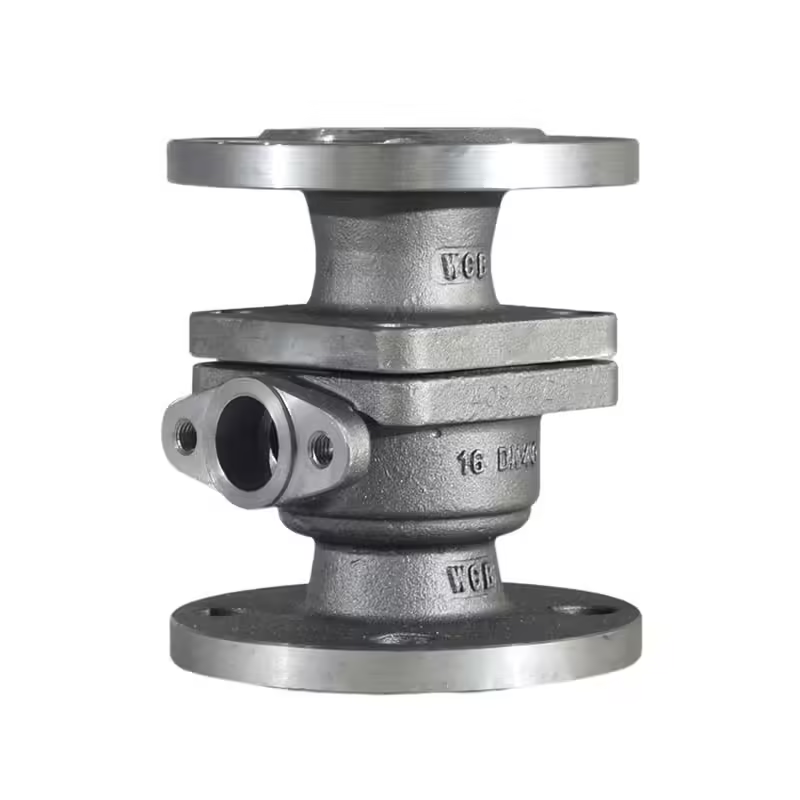
In industrial systems, ball valves are more than simple on/off devices. The right ball valve types can determine process stability, safety, and operational efficiency. For a casting service company, this is even more critical: the valve body, ball, and trim materials must withstand heat, pressure, and corrosive fluids. A poorly chosen valve can lead to leakage, valve seizure, or premature wear, costing companies thousands in downtime and maintenance.
In foundry and casting applications, ball valve bodies are often cast using materials like carbon steel, stainless steel, ductile iron, and alloy steel. Material selection affects not only strength and durability but also casting quality, surface finish, and internal tolerance. In B2B procurement, understanding how ball valve types differ in design and material helps buyers choose the best solution for their specific process.
Why This Topic Is Critical Today
According to industry reports, industrial valve failure is one of the top causes of unplanned shutdowns, with maintenance costs rising by 15–20% annually in many regions. In many cases, improper valve type selection is the root cause, not just poor maintenance. For industries like oil & gas, chemical, and power generation, a valve failure can lead to catastrophic consequences.
The American Society of Mechanical Engineers (ASME) and the American Petroleum Institute (API) have repeatedly emphasized that valve selection must consider fluid properties, pressure rating, temperature, and material compatibility, not just price. In particular, API 6D y ASME B16.34 standards are widely used for ball valve selection in high-pressure systems.
Comprensión Ball Valve Types: A Brief Overview
What Defines a Ball Valve Type?
A ball valve type is defined by its structure, number of ports, and sealing method. These differences influence control accuracy, flow performance, and maintenance needs.
Why Type Selection Affects Control
Different ball valve types create different flow paths and sealing characteristics. Some are better for quick shutoff, while others provide precise throttling. This is why understanding ball valve types is essential for process stability.
The Role of Casting in Ball Valve Performance
In a cast ball valve, the body quality is determined by casting method, material, and post-processing. Defects like porosity, shrinkage, and inclusions can cause leakage or stress concentration. High-quality casting reduces risk and improves long-term performance.
1. Full Port Ball Valve (Maximum Flow, Minimal Pressure Drop)
What It Is
A full port ball valve has a bore equal to the pipe diameter. This design minimizes pressure loss and allows maximum flow.
Why It Provides Superior Control
Because the flow path is wide, it reduces turbulence and pressure drop, making it ideal for systems where maintaining flow rate is critical.
Typical Use Cases
- Water treatment systems
- High flow chemical pipelines
- Cooling water circuits
Casting & Material Insight
Full port ball valves often require more precise casting to ensure the bore is consistent. High-quality casting reduces the risk of internal defects and improves sealing performance.
Real-World Performance Data
In industrial practice, full port valves can reduce pressure drop by 15-25% compared to reduced port valves under similar conditions. This difference is significant in large systems where energy efficiency is a priority.
2. Standard Port Ball Valve (Balanced Flow and Cost)
What It Is
Standard port valves have a slightly smaller bore than the pipe, balancing flow and cost.
Why It Provides Superior Control
These valves are the most common ball valve types for industrial applications because they offer good flow control without the higher cost of full port designs.
Typical Use Cases
- General industrial pipelines
- Sistemas HVAC
- Low to medium pressure fluid control
Casting & Material Insight
Standard port valves are often made with ductile iron or carbon steel castings. These materials offer good strength while keeping costs competitive.
Perspectiva de ingeniería
For many industries, the standard port is the “sweet spot” because it offers adequate flow while minimizing manufacturing costs. Many plant engineers choose this type for its balanced performance.
3. Reduced Port Ball Valve (High Control, Low Cost)
What It Is
Reduced port valves have a smaller bore than standard ports, which can restrict flow but improve control and reduce material use.
Why It Provides Superior Control
The smaller bore increases fluid velocity and helps with precise flow regulation, especially in smaller systems.
Typical Use Cases
- Fuel lines
- Small-scale process systems
- Low flow industrial circuits
Casting & Material Insight
Reduced port valves often use smaller, lighter castings, making them more cost-effective for certain applications.
Cost vs Performance
In B2B procurement, reduced port valves are often selected for low-cost, low-flow systems where flow reduction is acceptable.
4. Three-Way Ball Valve (Flexible Flow Direction Control)
What It Is
A three-way válvula de bola has three ports and can redirect flow between different outlets.
Why It Provides Superior Control
This valve type enables flexible routing and can be used for mixing or diverting flows, improving system efficiency.
Typical Use Cases
- HVAC mixing systems
- Process diversion lines
- Water recycling systems
Casting & Material Insight
Three-way valves are often cast with more complex internal geometry. High-quality casting is essential to prevent leaks and ensure smooth operation.
Practical Engineering Example
In HVAC systems, three-way valves are widely used for temperature control and energy saving. A well-designed three-way valve can reduce energy consumption by up to 8–12% in some applications.
5. Trunnion Ball Valve (High Pressure, Low Torque)
What It Is
Trunnion ball valves have a supported ball that reduces torque and improves stability under high pressure.
Why It Provides Superior Control
Trunnion support prevents ball displacement under pressure, making these valves ideal for high-pressure systems.
Typical Use Cases
- Oil & gas pipelines
- High-pressure steam systems
- Industrial pressure control
Casting & Material Insight
Trunnion valves often use high-grade alloy steel castings to withstand high pressure and prevent deformation.
Industry Authority View
API 6D and ASME standards strongly recommend trunnion designs for high-pressure and large-diameter applications due to their stability and reduced torque requirements.
6. Floating Válvula de bola (Simple Design, High Sealing)
What It Is
Floating ball valves have a ball that moves slightly to seal against the seat. The ball is not supported by a trunnion.
Why It Provides Superior Control
This design creates tight sealing and is ideal for systems requiring strong shutoff performance.
Typical Use Cases
- Water distribution systems
- Gas control lines
- Low to medium pressure applications
Casting & Material Insight
Floating ball valves are commonly cast in stainless steel for corrosion resistance. Cast quality affects sealing surface precision.
Practical Consideration
Floating ball valves are easier to manufacture and maintain. They are often used in systems where cost and reliability are prioritized over high pressure performance.
7. V-Port Ball Valve (Precise Flow Control and Throttling)
What It Is
A V-port válvula de bola has a V-shaped ball or seat that allows precise flow control and throttling.
Why It Provides Superior Control
The V shape creates a predictable flow curve, allowing better control than standard ball valves. This makes it ideal for process control.
Typical Use Cases
- Chemical dosing systems
- Process control in manufacturing
- Flow regulation systems
Casting & Material Insight
V-port valves require accurate casting and machining to maintain the V profile and ensure consistent flow control.
Engineering Data
V-port valves are often used in flow control where flow accuracy must be within ±5%. This is important in chemical and dosing systems.
Advanced Concept Section: Why Casting Quality Matters for Válvula de bola Tipos
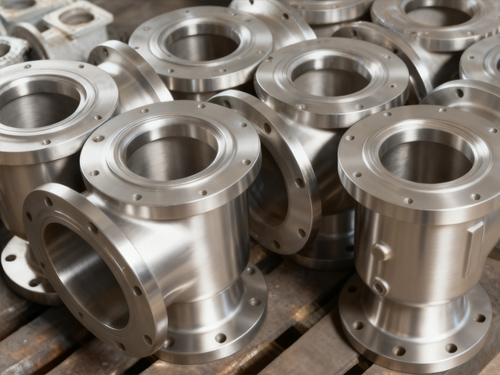
Casting Defects and Their Impact
Casting defects like porosity, shrinkage, or inclusions can reduce valve strength and cause leaks. High-quality casting reduces risk and increases service life.
Material Selection for Valve Body
Common casting materials include:
- Acero carbono (cost-effective, strong)
- hierro dúctil (good toughness, economical)
- Acero inoxidable (corrosion-resistant, clean applications)
- Acero aleado (high pressure, high temperature)
Why Material Matters for Control
The valve’s ability to seal, resist wear, and withstand pressure depends on material. For corrosive fluids, stainless steel is often the best choice.
Heat Treatment and Surface Finish
In high-end ball valves, the ball and seats may undergo hardening and polishing to reduce friction and improve sealing. For example, HRC 55–60 hardness is common in hardened seats, improving wear resistance.
The Role of Seat Material in Ball Valve Types
PTFE Seats (Common in Many Ball Valves)
PTFE seats are common due to their low friction and chemical resistance. However, they may not withstand high temperature.
Metal Seats (Used in High-Temperature Systems)
Metal seats are used for high temperature and high pressure. They are more durable but require precise machining.
Composite Seats (Balanced Performance)
Composite seats combine metal and PTFE or other materials to balance wear resistance and sealing.
Real-World Data: Valve Performance in Industrial Systems
Pressure Ratings and Failure Data
A study in industrial maintenance shows that 70% of valve failures occur due to seat wear, corrosion, or improper material selection. Therefore, choosing the correct válvula de bola types and materials is essential.
Flow Efficiency
Full port valves reduce pressure loss by 15-25%, which can translate into significant energy savings in large systems.
Costo del ciclo de vida
A high-quality ball valve may cost 20–30% more upfront but can reduce maintenance costs by 50% over 5 years due to longer service life and fewer failures.
Ball Valve Types Comparison Table (Quick Selection Guide)
| Ball Valve Type | Flow Control | Pressure Range | Best Application | Casting Material | Key Advantage |
|---|---|---|---|---|---|
| Puerto completo | Alto | Medio bajo-bajo | High flow pipelines | Acero carbono | Minimal pressure loss |
| Puerto estándar | Balanced | Medio | General use | hierro dúctil | Best cost-performance |
| Puerto reducido | High control | Bajo | Small systems | Acero inoxidable | Cost-effective |
| Three-Way | Flexible | Medio | Mixing/diverting | Acero aleado | Flow routing flexibility |
| Tunnión | Stable | Alto | Oil & gas | Acero aleado | Low torque, high stability |
| Flotante | Tight seal | Medio | Water & gas | Acero inoxidable | Reliable shutoff |
| Puerto V | Precise throttling | Medio | Process control | Stainless/Alloy | Accurate flow curve |
Practical B2B Selection Tips for Ball Valve Types
Choose Based on Fluid Type
- Corrosive fluids → Stainless steel valves
- Abrasive fluids → Alloy steel or hardened seats
- Clean water → Ductile iron or carbon steel
Choose Based on System Pressure
- High pressure → Trunnion ball valve
- Medium pressure → Standard or floating ball valve
- Low pressure → Full port or reduced port
Choose Based on Operating Temperature
- High temperature (> 200°C) → Metal seats, alloy steel
- Low temperature → PTFE seats may be suitable
- Cryogenic → Special low-temperature materials
Choose Based on Flow Control Needs
- Simple on/off → Standard or floating ball valve
- Throttling → V-port or specialized control valve
Comparison Guide: Which Válvula de bola Types Should You Choose?
If You Need High Flow
Choose full port o standard port. Full port reduces pressure drop, while standard port offers better cost balance.
If You Need Precise Control
Choose V-port o three-way valves for better flow control and routing.
If You Need High Pressure
Choose trunnion valves, especially in oil & gas and steam systems.
If You Need High Corrosion Resistance
Choose acero inoxidable castings and PTFE or composite seats.
Maintenance and Failure Prevention for Ball Valve Types
Common Failure Modes
- Seat wear and leakage
- Corrosion and pitting
- Ball surface erosion
- Stem seal leakage
Preventive Maintenance Tips
- Regularly inspect seat and ball surfaces
- Ensure correct lubrication
- Monitor pressure and temperature
- Replace seats before they fail
Condition-Based Maintenance
Many modern plants use sensors to monitor valve torque and vibration. This allows predictive maintenance, reducing downtime.
Industry Expert Opinions (Authoritative Views)
ASME and API Standards
ASME B16.34 and API 6D emphasize material compatibility and pressure-temperature ratings for valves. These standards are widely used for selecting industrial ball valves.
Engineering Experts
Industry engineers often recommend choosing a ball valve based on system requirements, not price. A common quote in engineering circles is:
“A valve is not just a component; it is a system control element. Choosing the wrong type can lead to catastrophic failure.”
— Senior Process Engineer, Industrial Valve Manufacturing
Quality Control in Casting
Foundry experts highlight that casting quality is critical for valve integrity. Proper gating, riser design, and heat treatment reduce defects.
Final Thoughts: Choosing the Right Ball Valve Types for Superior Control
For B2B buyers and engineers, choosing the right ball valve types is a strategic decision. It impacts flow control, system stability, and long-term cost. With the right casting material and design, ball valves can deliver reliable performance and reduce maintenance overhead. Selecting the correct valve type is not just about controlling flow—it is about ensuring continuous, stable operation in demanding industrial environments.
PREGUNTAS FRECUENTES
What is the best ball valve type for high pressure systems?
Trunnion ball valves are usually best for high pressure because the ball is supported and torque is reduced.
Are ball valve types suitable for throttling?
Yes, but only specific types like V-port ball valves are designed for precise throttling.
How do I choose the right casting material?
Choose based on fluid corrosion, temperature, and pressure. Stainless steel for corrosive fluids, alloy steel for high pressure.
What are the most common ball valve failures?
Common issues include leakage, seat wear, corrosion, and improper casting defects.
How often should industrial ball valves be inspected?
In heavy industrial use, inspection every 3–6 months is recommended.
What is the difference between floating and trunnion ball valves?
Floating valves rely on seat compression for sealing, while trunnion valves use ball support to reduce torque and improve high-pressure performance.
How do I know if my ball valve is failing?
Signs include leakage, increased operating torque, vibration, and unstable flow.
Categorías de productos
- Piezas de válvulas
- Piezas de la bomba de agua
- Piezas de la caja de cojinetes
- Piezas de fundición a presión
- Productos para bombas de acero inoxidable
- Productos para bombas de hierro fundido
- Piezas de válvulas para automóviles
- Recambios para automóviles
- Piezas de válvulas para uso civil
- Piezas de bomba de vacío KF

 Spanish
  English
  Arabic
  Malay
Malay  German