
3D Printing Future Trends: Innovations Shaping Industrial and Consumer Applications
¡Me encanta tenerte aquí! Antes de profundizar en el contenido, me encantaría que me acompañaras en mis redes sociales. Es donde comparto información adicional, conecto con nuestra increíble comunidad y te mantengo al tanto de las últimas noticias. Así es como puedes mantenerte conectado:
📘 Facebook: Shanghai Leierwo Industria Comercio Co., Ltd.
¡Ahora, emprendamos este viaje juntos! Espero que el contenido aquí te resulte no solo revelador, sino también inspirador y valioso. ¡Comencemos!
Tabla de contenido
Introducción
In recent years, Impresión 3D has moved from a niche prototyping tool to a cornerstone of industrial innovation. Its ability to precisely fabricate complex geometries, rapidly iterate prototypes, and customize products has revolutionized industries ranging from aerospace to healthcare. According to the 2025 Wohlers Report, the global 3D printing market is projected to surpass $25 billion, growing at a compound annual growth rate (CAGR) of 23% by 2030. This growth is driven by advancements in materials, process optimization, automation, and integration with Industry 4.0 technologies.
As companies face increasing demands for efficiency, sustainability, and product personalization, 3D printing offers unique solutions that traditional manufacturing cannot match. From lightweight aerospace components to patient-specific medical devices, the applications are virtually limitless. In this blog, we explore the future trends, technological advances, and industrial applications of Impresión 3D.
Key Takeaways of This Blog:
- Emergente Impresión 3D technologies shaping the future
- Material innovations and hybrid manufacturing trends
- Industry-specific applications: aerospace, medical, automotive, and robotics
- Data-driven insights and case studies demonstrating ROI
- Sustainability and environmental impact
- Market growth projections and technological standards
- Tips for selecting the right Impresión 3D process for your project
Core 3D Printing Technologies Shaping the Future
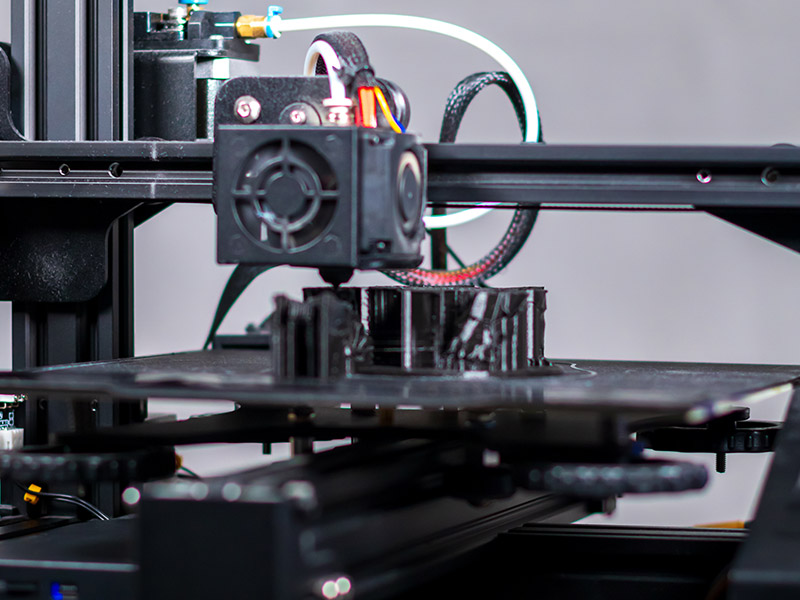
Multi Jet Fusion (MJF) Technology
MJF uses a powder-based system with thermal inkjet heads to selectively fuse layers of material. It excels in producing high-strength, detailed parts with consistent mechanical properties.
Key Specifications:
- Machines: 23 industrial units
- Materials: Nylon, HP PA12, TPU
- Max Build Size: 332 x 189 x 274 mm
- Lead Time: 24 hours
Aplicaciones: Automotive functional prototypes, production jigs, and lightweight mechanical components. MJF reduces post-processing needs while maintaining precise tolerances.
Selective Laser Melting (SLM)
SLM enables full-metal Impresión 3D with excellent structural integrity, widely used in aerospace and medical devices.
Specifications:
- Max Print Volume: 1258 x 1258 x 1600 mm
- Materials: Titanium alloys, stainless steel, aluminum
- Advantages: Lightweight, durable, heat-resistant components
Estudio de caso: Airbus successfully produced titanium brackets for A350 aircraft using SLM, reducing weight by 30% and assembly time by 20%.
Stereolithography (SLA)
SLA employs UV lasers to cure photopolymer resin, producing highly precise parts with smooth surfaces.
Specifications:
- Machines: Over 150
- Materials: PRO resin, flexible resin, high-temp resin
- Max Build Volume: 2100 x 1700 x 810 mm
- Lead Time: 8 hours
Aplicaciones: Dental aligners, high-fidelity prototypes, industrial molds, and intricate art pieces requiring high resolution.
Selective Laser Sintering (SLS)
SLS uses a laser to sinter polymer powder into solid structures. It produces durable and functional components without support structures.
Specifications:
- Machines: 80
- Materials: Nylon 12, carbon-fiber reinforced nylon, glass-filled polyamide
- Max Build Size: 420 x 420 x 450 mm
- Lead Time: 72 hours
Industry Use: Aerospace ducting systems, automotive production tools, and custom robotics parts.
Material Advancements Driving 3D Printing Adoption
Plastics and Polymers
moderno Impresión 3D plastics include high-performance nylons, PETG, ABS, and TPU. These materials are increasingly engineered for durability, chemical resistance, and flexibility. Polymers like PA12 and TPU offer excellent layer adhesion and mechanical resilience.
Metals
SLM and Electron Beam Melting (EBM) allow printing metals such as titanium, Inconel, stainless steel, and aluminum. According to ASTM F2924, 3D printed titanium components must meet stringent tensile strength and elongation standards to be flight-certified.
Ceramics and Composites
Advanced ceramics like alumina and zirconia are enabling Impresión 3D in high-temperature, wear-resistant applications. Hybrid composites combining carbon fiber or glass fiber enhance structural performance for industrial parts.
Surface Finishing Technologies
Post-processing options for Impreso en 3D parts include:
- Painting, dyeing, and electroplating for aesthetics
- Annealing and heat treatment to enhance strength
- Fine grinding, sanding, and polishing for aerospace and medical applications
These treatments allow Impreso en 3D parts to meet functional, mechanical, and visual standards required for industrial deployment.
Industry Applications and Impact
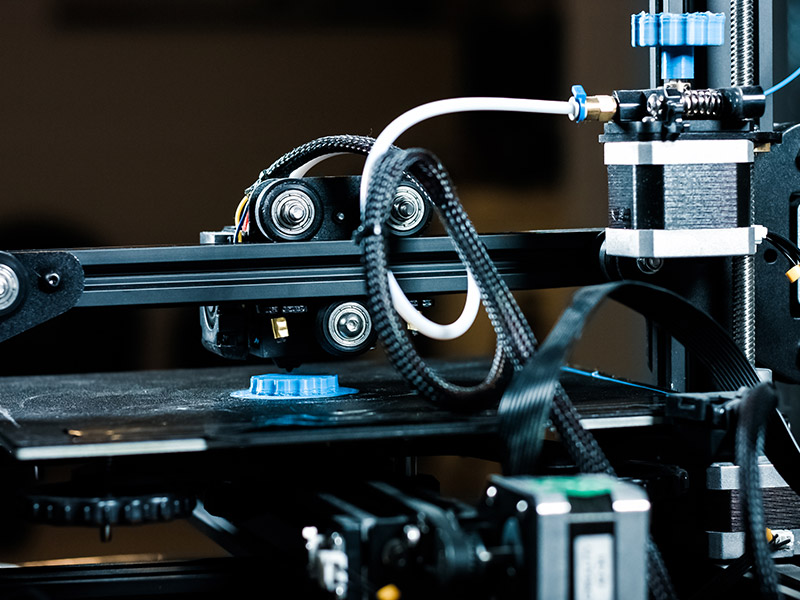
Aeroespacial
Impresión 3D reduces weight, material waste, and complexity for aircraft and spacecraft components. Notable examples include:
- Rocket engine components with 40% reduced weight
- Satellite propellant tanks exceeding 1 meter in diameter
- NASA’s Mars habitat prototypes using 3D printed regolith-based structures
Automotor
From custom replacement parts to prototyping, Impresión 3D accelerates design cycles and supports small-batch production:
- Porsche Carrera cylinder head repairs
- Componentes estructurales ligeros
- Tire mold manufacturing
Impact: Companies report up to 30% cost reduction and 25% faster production cycles using additive manufacturing.
Robótica
Rapid prototyping ensures precision and functionality in robotics components, including:
- Underwater propulsion systems
- Sensor housings
- High-impact functional gears
Estudio de caso: Boston Dynamics leverages Impresión 3D to rapidly iterate on robotic limb prototypes, reducing development time by 40%.
Dispositivos médicos
Impresión 3D enables patient-specific implants, prosthetics, and surgical guides:
- Custom finger prostheses
- Dental aligners and surgical models
- Low-cost hearing aids
Evidence: A study published in Journal of Medical Devices (2023) showed 3D printed titanium cranial implants reduced surgery time by 40% compared to traditional methods.
Consumer Products and Art
- Customized figurines and sculptures
- Jewelry with intricate geometries
- Functional drone housings and brackets
Market Insight: Shapeways reports that over 35% of consumer 3D printing orders involve unique, one-off designs reflecting the growing personalization trend.
Comparing 3D Printing Technologies for Industrial Use
| Tecnología | Materiales | Fortaleza | Velocidad | Acabado de la superficie | Mejor caso de uso |
|---|---|---|---|---|---|
| MJF | Nylon, TPU | Medio | Alto | Liso | Functional prototypes, small batch production |
| SLA | Resina | Bajo Medio | Muy alto | Excelente | Dental, prototypes, fine art |
| SLS | Nylon, Composite | Alto | Medio | Moderado | Aerospace, automotive, robotics |
| SLM | Titanium, Steel | Muy alto | Medio | Moderado | Aeroespacial, implantes médicos |
Analiza: Choosing the right technology depends on material, production volume, and functional requirements. Hybrid approaches combining MJF for polymers and SLM for metals are becoming common in industrial applications.
Emerging Trends in Impresión 3D
Mass Customization and Small-Batch Production
Impresión 3D enables highly personalized production without expensive tooling. Adidas now produces 100% customized midsoles using 3D printing, reducing waste and inventory.
Fabricación híbrida
Combining additive and subtractive techniques allows:
- Metal 3D printed parts followed by CNC finishing
- Complex assemblies meeting tight tolerances
AI and IoT Integration
Smart Impresión 3D systems:
- Use AI to optimize print paths and energy usage
- Predict failures via real-time sensor monitoring
- Reduce material wastage by up to 15%
Sustainability and Circular Economy
- Use of recycled powders and filaments
- Energy-efficient printing processes
- Reduction of industrial carbon footprint
White Paper Insight: A 2024 MIT study demonstrated that using recycled materials in SLS reduces CO2 emissions by 25% per part.
Standards and Guidelines in 3D Printing
- ASTM F42: Standard for additive manufacturing terminology and process classifications
- ISO/ASTM 52900: Defines types of additive manufacturing processes and materials
- ASTM F2924: Specifies mechanical testing for titanium 3D printed parts
- ISO 13485: Quality management for medical device production using Impresión 3D
News Reference: The 2025 Wohlers Report emphasizes that ISO compliance is critical for industrial adoption, particularly in aerospace and healthcare sectors.
Challenges and Solutions
control de calidad
Challenge: Inconsistent layer adhesion or porosity
Solución: Automated in-situ monitoring, post-processing heat treatment, and non-destructive testing.
Costos de materiales
Challenge: Metal powders are expensive
Solución: Use of recycled powders, hybrid additive/subtractive methods, and selective production strategies reduce costs by 20–30%.
Scaling Production
Challenge: High-volume production limitations
Solución: Networked printers and continuous print systems enable industrial-scale output.
Full-Process Services: From Prototype to Mass Production
- Rapid Prototyping: Turn ideas into functional prototypes within hours or days instead of weeks.
- Production Scaling: Flexible production capacity supports projects from 1 unit to more than 100,000 units.
- Engineering Verification: Functional testing and structural optimization improve manufacturability before mass production.
- Surface Treatment Services: Painting, electroplating, polishing, annealing, dyeing, and oxidation improve appearance and performance.
- Supply Chain Integration: Digital workflows connect design, production, and logistics for faster delivery cycles.
Modern industrial suppliers increasingly provide integrated “design-to-production” ecosystems. This allows customers to accelerate product launches while reducing development risks and tooling investment.
How 3D Printing Supports Industry 4.0
Smart Manufacturing Integration
Industry 4.0 focuses on automation, real-time data exchange, and intelligent manufacturing systems.
3D printing naturally aligns with these goals because it relies on digital files, automated machine operation, and cloud-based workflows.
Manufacturers can connect printers to MES (Manufacturing Execution Systems) and ERP systems to monitor production efficiency, energy consumption, and material usage in real time.
Digital Inventory and On-Demand Manufacturing
Traditional manufacturing often requires large inventories of spare parts.
With 3D printing, companies can store digital files instead of physical inventory.
This concept, known as “digital warehousing,” reduces storage costs and allows on-demand production of replacement components.
Predictive Maintenance Through AI
AI-powered monitoring systems analyze:
- Temperature variations
- Layer consistency
- Print speed stability
- Powder distribution accuracy
These systems can predict printing failures before defects occur, reducing scrap rates and machine downtime.
Economic Impact of Impresión 3D
Cost Reduction in Product Development
According to Deloitte manufacturing research, companies using industrial 3D printing reduce prototype development costs by approximately 30–50%.
Traditional tooling methods require molds and machining operations, while additive manufacturing removes many upfront tooling expenses.
Faster Time to Market
Rapid prototyping enables engineers to test and revise designs quickly.
Many companies report reducing product development cycles by 25% or more.
Reduced Material Waste
Unlike subtractive manufacturing, which removes material through cutting or machining, 3D printing only uses material where needed.
In aerospace applications, material savings can exceed 70% compared to CNC machining of titanium components.
Environmental Benefits of 3D Printing
Lower Carbon Emissions
Localized production reduces transportation requirements and supply chain complexity.
This decreases carbon emissions associated with logistics and warehousing.
Sustainable Material Usage
Many modern systems support recycled powders and bio-based materials.
Some polymer systems can reuse unused powder from previous print jobs, significantly reducing waste.
Energy Efficiency Improvements
Although some metal printing systems consume high energy, new-generation printers are becoming more energy efficient through optimized laser control and automated thermal management.
The Future of Metal 3D Printing
Aerospace Expansion
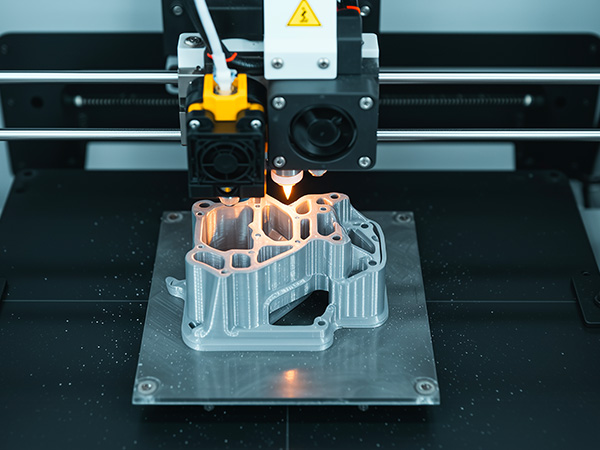
Metal 3D printing continues to grow rapidly in aerospace manufacturing due to its ability to reduce weight while maintaining structural strength.
GE Aviation successfully consolidated 20 separate fuel nozzle components into a single 3D printed metal part, improving reliability and reducing weight.
Medical Implant Manufacturing
Titanium implants produced through additive manufacturing allow porous structures that encourage bone growth and improve patient recovery.
Industrial Tooling
Metal 3D printing is increasingly used for:
- Injection mold inserts
- Heat exchangers
- High-performance cutting tools
- Conformal cooling channels
These applications improve thermal efficiency and production speed.
The Rise of Large-Scale 3D Printing
Construction and Architecture
Large-format 3D printing is transforming the construction industry.
Entire concrete structures can now be printed layer by layer using robotic deposition systems.
Infrastructure Applications
Governments and engineering firms are exploring 3D printing for:
- Bridge components
- Modular housing
- Disaster relief shelters
- Marine infrastructure
Industrial Furniture and Interior Design
Large-scale systems also support customized furniture production and architectural decoration with complex geometries.
Consumer Trends in 3D Printing
Personalized Products
Consumers increasingly demand products tailored to their preferences.
3D printing allows:
- Custom footwear
- Personalized phone accessories
- Custom jewelry
- Tailored ergonomic products
Home and Desktop 3D Printing
Desktop printers continue to become more affordable and user-friendly.
Educational institutions and hobbyists are major drivers of this segment.
Creator Economy and Digital Design
Online marketplaces allow designers to sell digital 3D models globally.
This creates new revenue opportunities for artists, engineers, and independent creators.
Challenges Facing the Future of 3D Printing
Production Speed Limitations
While additive manufacturing excels at flexibility, it is still slower than traditional high-volume injection molding for mass production.
Manufacturers continue developing high-speed systems to address this limitation.
Material Qualification Standards
Industrial sectors such as aerospace and healthcare require strict certification and testing protocols.
Ensuring consistent material properties across production batches remains a challenge.
Intellectual Property Protection
As digital manufacturing expands, protecting design files from unauthorized duplication becomes increasingly important.
Blockchain-based file security systems are emerging as a possible solution.
Research and White Paper Insights
Wohlers Report Findings
The Wohlers Report remains one of the most influential sources in additive manufacturing research.
Recent findings indicate:
- Metal 3D printing demand increased over 28% year-over-year
- Aerospace remains the fastest-growing industrial sector
- Medical applications continue expanding globally
- Automation integration significantly improves production scalability
MIT Additive Manufacturing Research
Research from MIT highlights that AI-assisted print optimization reduces defect rates by approximately 35%.
McKinsey Manufacturing Analysis
McKinsey reports predict that digital manufacturing and 3D printing could create more localized supply chains, reducing global logistics dependency.
Key Advantages of Modern 3D Printing Services
| Advantage | Impacto industrial |
|---|---|
| Prototipado rápido | Faster product validation |
| Lightweight Structures | Reduced fuel and material costs |
| Geometría compleja | Designs impossible with traditional methods |
| Digital Inventory | Reduced storage requirements |
| Custom Production | Personalized manufacturing at scale |
| Reduced Waste | Improved sustainability |
| Faster Iteration | Shorter innovation cycles |
Choosing the Right 3D Printing Technology
When to Choose SLA
SLA is ideal for:
- High-detail prototypes
- Transparent components
- Medical and dental models
- Fine artistic structures
When to Choose SLS
SLS is suitable for:
- Prototipos funcionales
- Durable nylon parts
- Aerospace ducting
- Robotics components
When to Choose MJF
MJF works best for:
- Small-batch manufacturing
- High-speed production
- Consistent mechanical properties
- Industrial nylon parts
When to Choose SLM
SLM is recommended for:
- Metal aerospace parts
- implantes médicos
- High-strength industrial components
- Lightweight structural systems
Conclusión
Impresión 3D is no longer limited to rapid prototyping or experimental applications. It has evolved into a powerful industrial manufacturing solution capable of transforming global production systems.
Its ability to produce complex geometries, reduce waste, accelerate development cycles, and enable mass customization makes it one of the most important technologies shaping the future of manufacturing.
As AI, automation, advanced materials, and smart factories continue evolving, 3D printing will play an even greater role in aerospace, healthcare, automotive, robotics, construction, and consumer markets.
Companies that adopt advanced additive manufacturing strategies today will be better positioned to reduce costs, improve innovation speed, strengthen supply chain resilience, and meet the growing demand for customized, sustainable products.
The future of manufacturing is becoming more digital, flexible, intelligent, and decentralized — and 3D printing is at the center of that transformation.
PREGUNTAS FRECUENTES
Will Impresión 3D become mainstream manufacturing?
Yes. While traditional manufacturing will remain important, 3D printing is expected to become a standard solution for customized, complex, and low-volume production.
Is 3D printing suitable for large-scale production?
Modern high-speed and automated systems are increasingly supporting industrial-scale manufacturing, especially for specialized components.
Which industries will benefit most from future 3D printing growth?
Aerospace, automotive, healthcare, robotics, electronics, and consumer customization sectors are expected to see the strongest growth.
Can 3D printing reduce supply chain risks?
Yes. Localized production and digital inventory reduce dependency on long-distance logistics and large spare-part inventories.
What is the biggest future trend in 3D printing?
AI-driven automation, advanced materials, hybrid manufacturing, and sustainable production are considered the most important future trends.
Are 3D printed metal parts reliable?
Yes. Properly certified metal parts can meet or exceed the performance of traditionally manufactured components in aerospace and medical applications.
How does 3D printing support sustainability goals?
It reduces waste, supports recycled materials, minimizes transportation requirements, and improves resource efficiency.
Categorías de productos
- Piezas de válvulas
- Piezas de la bomba de agua
- Piezas de la caja de cojinetes
- Piezas de fundición a presión
- Productos para bombas de acero inoxidable
- Productos para bombas de hierro fundido
- Piezas de válvulas para automóviles
- Recambios para automóviles
- Piezas de válvulas para uso civil
- Piezas de bomba de vacío KF

¡Comencemos tu próximo proyecto!
Inicie su proyecto con Leierwo
1. Envíe su consulta
2. Cálculo de costes
3. Inicio de la producción
4. Organizar la entrega
PREGUNTAS FRECUENTES
Sí, tenemos una amplia experiencia en el comercio internacional y podemos ayudar a los clientes con el despacho de aduanas de exportación y los arreglos de envío. Aceptamos varios métodos de pago internacionales, incluyendo T/T (transferencia telegráfica), transferencia bancaria y carta de crédito (L/C). Las condiciones de pago se pueden discutir con nuestro equipo de ventas.
Al asociarse con Leierwo, podrá disfrutar de precios competitivos y una calidad superior a la de otros proveedores. Además, ofrecemos una solución integral para entregar piezas acabadas, incluido el mecanizado CNC y el tratamiento de superficies, lo que garantiza un proceso de producción sin fisuras.
Contamos con avanzados equipos de fundición y estrictos sistemas de control de calidad. Nuestra capacidad de producción mensual es considerable y podemos fabricar productos a partir de dibujos o muestras proporcionados por el cliente. Aceptamos tanto pequeños pedidos de prueba como producciones a gran escala.
Nuestros productos cumplen normas internacionales como ASTM, AISI, DIN y JIS. Podemos proporcionar informes de pruebas de materiales y certificaciones pertinentes para garantizar que la calidad del producto cumple los requisitos del cliente.
Seguimos estrictamente el sistema de gestión de calidad ISO 9001 y realizamos múltiples inspecciones a lo largo del proceso de producción, incluidos análisis espectrográficos, pruebas de rayos X, pruebas ultrasónicas y mediciones dimensionales. Estas medidas de control de calidad garantizan que nuestras piezas de fundición cumplen las normas más estrictas.
Sin embargo, somos flexibles y estamos abiertos a discutir sus necesidades específicas.
Nuestro plazo de producción estándar es de 4 a 6 semanas, en función de la cantidad del pedido y la complejidad del producto. Nos esforzamos por acortar los plazos de entrega para satisfacer las demandas de los clientes.
Sí, podemos proporcionar muestras para la inspección de calidad. Los costes de las muestras y los gastos de envío pueden negociarse, y los gastos de las muestras pueden reembolsarse al realizar un pedido formal.
 Spanish
  English
  Arabic
  Malay
Malay  German