
Cast vs Forged Impeller: Comprehensive Technical Guide for Industrial Pump Selection and Performance Optimization
Ich freue mich sehr, dass du hier bist! Bevor wir uns in die Inhalte vertiefen, würde ich mich freuen, wenn du mir auf meinen Social-Media-Plattformen folgst. Dort teile ich zusätzliche Einblicke, vernetze mich mit unserer großartigen Community und halte dich über die neuesten Nachrichten auf dem Laufenden. So bleibst du in Verbindung:
📘 Facebook: Shanghai Leierwo Industriehandel Co., Ltd.
Lassen Sie uns gemeinsam auf diese Reise gehen! Ich hoffe, Sie finden die Inhalte hier nicht nur aufschlussreich, sondern auch inspirierend und wertvoll. Los geht‘s!
Inhaltsverzeichnis
Einführung
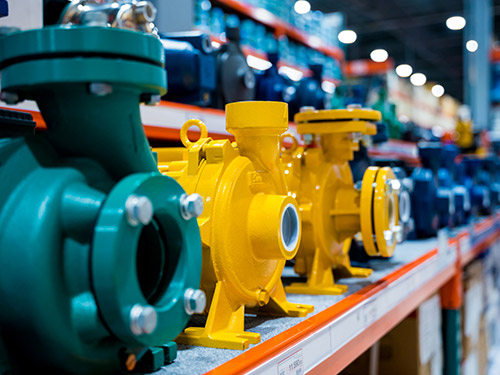
In modern fluid machinery systems, efficiency, reliability, and lifecycle cost have become the core decision factors for engineers and procurement teams. The choice between different impeller manufacturing methods directly impacts pump performance, maintenance cycles, and long-term operational stability.
- Industrial pumps account for a significant portion of global energy consumption in manufacturing systems
- Impeller failure is one of the top mechanical downtime causes in centrifugal pump systems
- Material structure differences can affect service life by 30%–200% depending on application conditions
- International standards such as ISO and ASTM increasingly define stricter requirements for hydraulic components
- Procurement decisions now emphasize total lifecycle cost instead of only initial purchase price
Within this context, understanding the differences between forged and cast manufacturing becomes essential for selecting the right component for industrial pumping systems.
Understanding Impeller Manufacturing Fundamentals
Cast Impeller Manufacturing Principles
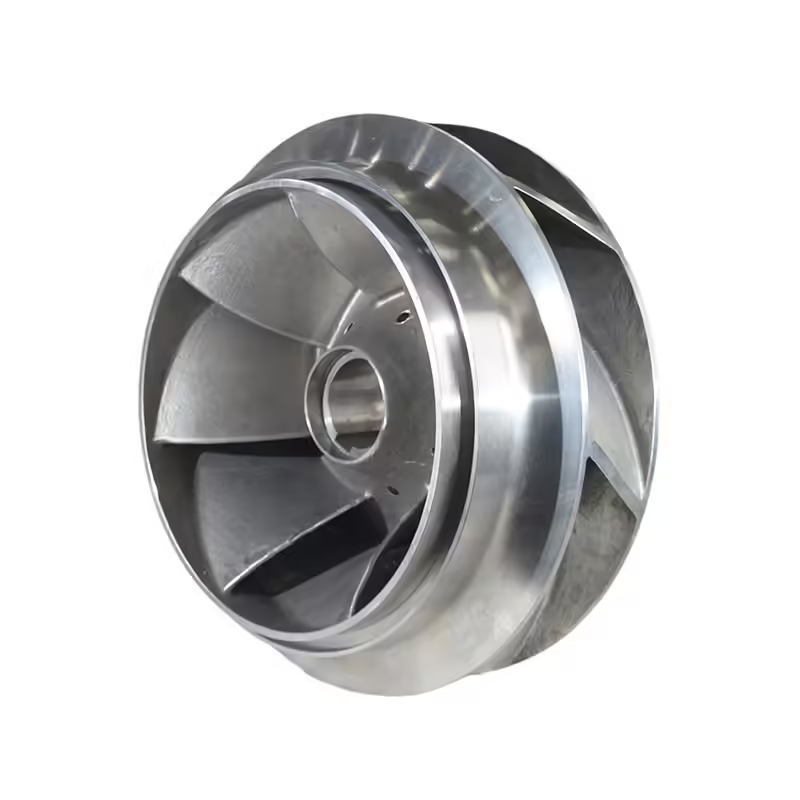
A cast impeller is produced through molten metal pouring into precision molds, followed by controlled cooling and solidification. This process enables complex hydraulic geometries at relatively low production cost.
Industrial Casting Standards
Most industrial-grade cast components follow standards such as:
- ASTM A743 / A744 for stainless steel castings
- ISO 8062 for dimensional tolerances in cast components
- DIN EN 12516 for pressure-rated cast parts
These standards ensure structural reliability, dimensional accuracy, and material consistency.
Microstructure Characteristics
Casting solidification often leads to:
- Dendritic grain structures
- Potential micro-porosity
- Slightly heterogeneous density distribution
These characteristics influence fatigue resistance and cavitation performance under high-speed operation.
Forged Impeller Manufacturing Principles
Forged components are produced through mechanical deformation of heated metal billets under extreme pressure. This aligns grain flow with stress direction, significantly improving mechanical properties.
Forging Process Stages
- Heating billet to 1,100°C–1,250°C (for steel alloys)
- Applying hydraulic or mechanical press force
- Multi-stage die shaping for precision geometry
- Controlled cooling and heat treatment
Structural Advantages
- Grain refinement increases tensile strength
- Eliminates internal voids and shrinkage defects
- Improves fatigue resistance under cyclic loads
Cast Impeller vs Forged Impeller: Engineering Performance Analysis
Hydraulic Efficiency Comparison
Hydraulic efficiency is influenced by surface finish, geometry precision, and internal structure.
- Cast designs allow more complex flow channel optimization
- Forged impellers often require secondary machining for final shape accuracy
- Efficiency difference typically ranges between 1%–5% depending on pump class
In high-efficiency pump systems (API 610 class), even a 2% efficiency difference can translate into significant annual energy savings.
Mechanical Strength and Stress Behavior
Stress Distribution in Cast Components
A cast impeller may experience uneven stress distribution due to:
- Internal porosity zones
- Grain boundary inconsistencies
- Cooling gradient effects
Stress Distribution in Forged Components
Forged impellers show:
- Continuous grain flow alignment
- Higher yield strength (typically 20%–40% improvement)
- Better resistance to cyclic fatigue failure
Cavitation Resistance Behavior
Cavitation is a critical failure mode in centrifugal pump systems.
- Cast impeller: moderate resistance, dependent on alloy quality
- Forged impeller: higher resistance due to dense structure
According to hydraulic engineering studies published in pump reliability white papers, cavitation damage rate in forged structures can be reduced by up to 35% under identical NPSH conditions.
Material Selection in Cast Impeller Manufacturing
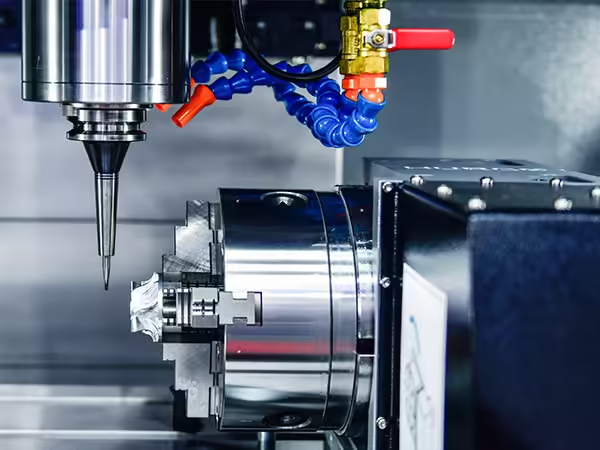
Stainless Steel Grades
Zu den gängigen Materialien gehören:
- ASTM A351 CF8 / CF8M
- 304 and 316 stainless steel equivalents
These materials are widely used in chemical processing and seawater systems.
Cast Iron Applications
- EN-GJL-250 and EN-GJS-400 grades
- Used in low-to-medium pressure water systems
- Cost-effective but lower corrosion resistance
Bronze and Alloy Systems
- Excellent seawater corrosion resistance
- Common in marine and offshore pumping systems
- Higher material cost but long service life
Engineering Standards and Industry Compliance
ISO 5199 Pump Standard
Defines requirements for chemical process pumps, including impeller design tolerances and mechanical integrity.
API 610 Standard
Widely used in oil and gas industries:
- High reliability requirements
- Strict vibration and thermal stability limits
- Preferred use of forged or high-grade cast components
ASTM Material Certification
Ensures:
- Chemical composition verification
- Mechanical property testing
- Non-destructive testing (NDT) requirements
Industrial Application Scenarios
Water Treatment Systems
A cast impeller is commonly used in:
- Municipal water supply pumps
- Wastewater treatment plants
- Filtration circulation systems
Its cost efficiency and adequate durability make it ideal for continuous but moderate-load environments.
Petrochemische Industrie
Forged impellers dominate due to:
- High-pressure fluid handling
- Corrosive chemical exposure
- Continuous 24/7 operation requirements
Power Generation Systems
In boiler feed pumps:
- Forged impellers are preferred
- Require extremely high fatigue resistance
- Operate under high temperature and pressure cycles
Marine Engineering Applications
Both types are used depending on system design:
- Cast: ballast and cooling water systems
- Forged: propulsion and high-load circulation pumps
Lifecycle Cost Analysis (LCC Model)
Cost Structure Breakdown
| Kostenfaktor | Cast Impeller | Forged Impeller |
|---|---|---|
| Initial Purchase | Niedrig | Hoch |
| Wartungshäufigkeit | Medium | Niedrig |
| Energy Efficiency Impact | Mäßig | High efficiency |
| Replacement Cycle | Kürzer | Länger |
| Total Lifecycle Cost | Balanced | Optimized long-term |
Lifecycle cost models used in industrial procurement often show that forged systems become more economical after 3–5 years of continuous operation.
Case Studies from Industrial Applications
Case Study 1: Municipal Water Pump Upgrade
A European water treatment facility replaced standard cast impellers with high-grade forged alternatives.
Results after 18 months:
- 12% reduction in energy consumption
- 28% decrease in maintenance downtime
- Extended service interval from 14 months to 26 months
Case Study 2: Chemical Plant Corrosion Issue
A chemical processing plant using cast impellers experienced frequent corrosion failures in acidic media.
Lösung:
- Switch to CF8M stainless steel forged impellers
- Implement surface polishing and coating
Outcome:
- Failure rate reduced by 40%
- Maintenance cost reduced significantly
Case Study 3: Offshore Platform Pump Reliability
Offshore seawater cooling system:
- Original cast impellers showed cavitation wear within 9 months
- Replaced with forged bronze alloy impellers
Ergebnis:
- Service life extended to 24+ months
- Improved operational stability under variable load
Key Failure Modes in Cast Impeller Systems
Kavitationsschäden
Occurs when vapor bubbles collapse near blade surfaces, causing erosion.
Corrosion Degradation
Common in seawater and chemical environments, especially with poor alloy selection.
Fatigue Cracking
Repeated stress cycles cause micro-crack propagation in cast structures.
Engineering Design Optimization Trends
CFD-Based Hydraulic Optimization
Modern impeller design uses computational fluid dynamics (CFD) to:
- Optimize blade curvature
- Reduce turbulence loss
- Improve flow efficiency by up to 8%
Additive Fertigungsintegration
Hybrid approaches combine:
- Casting for base structure
- CNC finishing for precision
- Emerging 3D printed prototypes for testing
Smart Pump Monitoring Systems
Industry 4.0 systems now monitor:
- Vibration patterns
- Pressure fluctuations
- Impeller wear prediction
This improves maintenance planning for both cast and forged systems.
Extended Comparison Summary
Structural Reliability
Forged > Cast
Kosteneffizienz
Cast > Forged
High-Pressure Suitability
Forged > Cast
Designflexibilität
Cast > Forged
Lifecycle Performance
Forged > Cast
Advanced Selection Guidelines
When to Choose Cast Impeller
- Budget-sensitive industrial projects
- Medium-pressure fluid systems
- Applications requiring complex geometry
- Non-critical duty cycles
When to Choose Forged Impeller
- High-pressure industrial systems
- Continuous 24/7 operations
- Corrosive or abrasive environments
- Critical infrastructure systems
Häufig gestellte Fragen
Is a cast impeller reliable for long-term industrial use?
Yes, when properly selected and maintained, a cast impeller performs reliably in moderate-duty applications such as municipal water systems and HVAC circulation.
What is the biggest advantage of forged impellers?
The main advantage is superior mechanical strength due to grain structure alignment, improving fatigue resistance and operational stability.
How does cavitation affect impeller lifespan?
Cavitation significantly reduces lifespan by eroding blade surfaces. Material density and surface finish directly influence resistance.
Which industries prefer cast impellers the most?
Water treatment, building HVAC systems, and general manufacturing industries commonly use cast designs due to cost efficiency.
Can cast impellers be upgraded for better performance?
Yes, through material upgrades, surface coating, and precision machining, performance can be significantly improved.
Abschluss
Selecting between cast and forged impeller technologies is ultimately a balance between cost efficiency, mechanical strength, and application intensity. A cast impeller remains a practical solution for general industrial systems with stable operating conditions, while forged alternatives dominate high-performance environments requiring maximum reliability and extended lifecycle stability.
For engineering teams, the most effective strategy is not choosing one universally, but matching impeller type to operational conditions, lifecycle expectations, and system criticality.
Produktkategorien
- Ventilteile
- Wasserpumpenteile
- Lagergehäuseteile
- Druckgussteile
- Pumpenprodukte aus Edelstahl
- Pumpenprodukte aus Gusseisen
- Ventilteile für den Automobilgebrauch
- Autoteile
- Ventilteile für den zivilen Gebrauch
- Vakuumpumpenteile KF

Lassen Sie uns Ihr nächstes Projekt starten!
Starten Sie Ihr Projekt mit Leierwo
1. Senden Sie Ihre Anfrage
2. Kostenkalkulation
3. Produktion starten
4. Lieferung vereinbaren
Häufig gestellte Fragen
Ja, wir verfügen über umfassende Erfahrung im internationalen Handel und unterstützen unsere Kunden gerne bei der Exportzollabfertigung und Versandabwicklung. Wir bieten verschiedene Handelsbedingungen wie FOB, CIF und DDP an, um unterschiedlichen Logistikanforderungen gerecht zu werden. Wir akzeptieren verschiedene internationale Zahlungsmethoden, darunter T/T (Telegraphic Transfer), elektronische Überweisung und Akkreditiv (L/C). Die Zahlungsbedingungen können Sie mit unserem Vertriebsteam besprechen.
Durch die Partnerschaft mit Leierwo profitieren Sie von wettbewerbsfähigen Preisen und überlegener Qualität im Vergleich zu anderen Anbietern. Darüber hinaus bieten wir eine Komplettlösung für die Lieferung fertiger Teile, einschließlich CNC-Bearbeitung und Oberflächenbehandlung, und gewährleisten so einen reibungslosen Produktionsprozess.
Wir verfügen über moderne Gussanlagen und strenge Qualitätskontrollsysteme. Unsere monatliche Produktionskapazität ist beträchtlich und wir können Produkte nach Kundenzeichnungen oder Mustern fertigen. Wir akzeptieren sowohl kleine Probeaufträge als auch Großserienproduktionen.
Unsere Produkte entsprechen internationalen Normen wie ASTM, AISI, DIN und JIS. Wir stellen Materialprüfberichte und entsprechende Zertifizierungen bereit, um sicherzustellen, dass die Produktqualität den Kundenanforderungen entspricht.
Wir befolgen strikt das Qualitätsmanagementsystem ISO 9001 und führen während des gesamten Produktionsprozesses zahlreiche Prüfungen durch, darunter spektrografische Analysen, Röntgenprüfungen, Ultraschallprüfungen und Maßmessungen. Diese Qualitätskontrollmaßnahmen garantieren, dass unsere Gussteile den höchsten Standards entsprechen.
Unsere Mindestbestellmenge hängt von der Art und Komplexität des Produkts ab. Wir sind jedoch flexibel und offen für die Besprechung Ihrer spezifischen Anforderungen.
Unsere Standardproduktionszeit beträgt 4–6 Wochen, abhängig von Bestellmenge und Produktkomplexität. Wir sind bestrebt, die Lieferzeiten zu verkürzen, um den Kundenanforderungen gerecht zu werden.
Ja, wir können Muster zur Qualitätsprüfung bereitstellen. Musterkosten und Versandkosten können ausgehandelt werden. Die Mustergebühren können bei einer formellen Bestellung erstattet werden.
 German
  English
  Spanish
  Arabic
  Malay
Malay