
Cast vs Forged Impeller: Comprehensive Technical Guide for Industrial Pump Selection and Performance Optimization
I’m thrilled to have you here! Before we dive into the content, I’d love for you to join me on my social media platforms. It’s where I share extra insights, connect with our amazing community, and keep you updated on the latest news. Here’s how you can stay connected:
📘 Facebook: Shanghai Leierwo Industry Trade Co., Ltd.
Now, let’s embark on this journey together! I hope you find the content here not only insightful but also inspiring and valuable. Let’s get started!
Table of Contents
Introduction
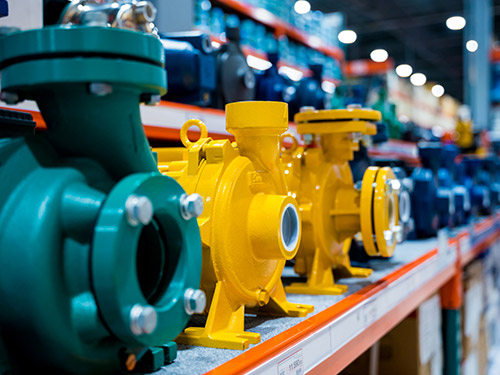
In modern fluid machinery systems, efficiency, reliability, and lifecycle cost have become the core decision factors for engineers and procurement teams. The choice between different impeller manufacturing methods directly impacts pump performance, maintenance cycles, and long-term operational stability.
- Industrial pumps account for a significant portion of global energy consumption in manufacturing systems
- Impeller failure is one of the top mechanical downtime causes in centrifugal pump systems
- Material structure differences can affect service life by 30%–200% depending on application conditions
- International standards such as ISO and ASTM increasingly define stricter requirements for hydraulic components
- Procurement decisions now emphasize total lifecycle cost instead of only initial purchase price
Within this context, understanding the differences between forged and cast manufacturing becomes essential for selecting the right component for industrial pumping systems.
Understanding Impeller Manufacturing Fundamentals
Cast Impeller Manufacturing Principles
A cast impeller is produced through molten metal pouring into precision molds, followed by controlled cooling and solidification. This process enables complex hydraulic geometries at relatively low production cost.
Industrial Casting Standards
Most industrial-grade cast components follow standards such as:
- ASTM A743 / A744 for stainless steel castings
- ISO 8062 for dimensional tolerances in cast components
- DIN EN 12516 for pressure-rated cast parts
These standards ensure structural reliability, dimensional accuracy, and material consistency.
Microstructure Characteristics
Casting solidification often leads to:
- Dendritic grain structures
- Potential micro-porosity
- Slightly heterogeneous density distribution
These characteristics influence fatigue resistance and cavitation performance under high-speed operation.
Forged Impeller Manufacturing Principles
Forged components are produced through mechanical deformation of heated metal billets under extreme pressure. This aligns grain flow with stress direction, significantly improving mechanical properties.
Forging Process Stages
- Heating billet to 1,100°C–1,250°C (for steel alloys)
- Applying hydraulic or mechanical press force
- Multi-stage die shaping for precision geometry
- Controlled cooling and heat treatment
Structural Advantages
- Grain refinement increases tensile strength
- Eliminates internal voids and shrinkage defects
- Improves fatigue resistance under cyclic loads
Cast Impeller vs Forged Impeller: Engineering Performance Analysis
Hydraulic Efficiency Comparison
Hydraulic efficiency is influenced by surface finish, geometry precision, and internal structure.
- Cast designs allow more complex flow channel optimization
- Forged impellers often require secondary machining for final shape accuracy
- Efficiency difference typically ranges between 1%–5% depending on pump class
In high-efficiency pump systems (API 610 class), even a 2% efficiency difference can translate into significant annual energy savings.
Mechanical Strength and Stress Behavior
Stress Distribution in Cast Components
A cast impeller may experience uneven stress distribution due to:
- Internal porosity zones
- Grain boundary inconsistencies
- Cooling gradient effects
Stress Distribution in Forged Components
Forged impellers show:
- Continuous grain flow alignment
- Higher yield strength (typically 20%–40% improvement)
- Better resistance to cyclic fatigue failure
Cavitation Resistance Behavior
Cavitation is a critical failure mode in centrifugal pump systems.
- Cast impeller: moderate resistance, dependent on alloy quality
- Forged impeller: higher resistance due to dense structure
According to hydraulic engineering studies published in pump reliability white papers, cavitation damage rate in forged structures can be reduced by up to 35% under identical NPSH conditions.
Material Selection in Cast Impeller Manufacturing
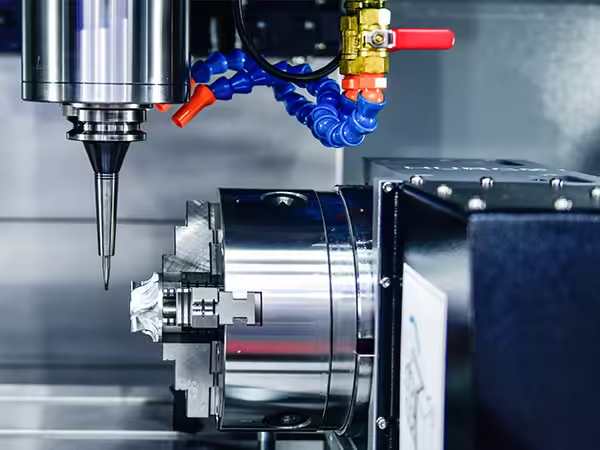
Stainless Steel Grades
Common materials include:
- ASTM A351 CF8 / CF8M
- 304 and 316 stainless steel equivalents
These materials are widely used in chemical processing and seawater systems.
Cast Iron Applications
- EN-GJL-250 and EN-GJS-400 grades
- Used in low-to-medium pressure water systems
- Cost-effective but lower corrosion resistance
Bronze and Alloy Systems
- Excellent seawater corrosion resistance
- Common in marine and offshore pumping systems
- Higher material cost but long service life
Engineering Standards and Industry Compliance
ISO 5199 Pump Standard
Defines requirements for chemical process pumps, including impeller design tolerances and mechanical integrity.
API 610 Standard
Widely used in oil and gas industries:
- High reliability requirements
- Strict vibration and thermal stability limits
- Preferred use of forged or high-grade cast components
ASTM Material Certification
Ensures:
- Chemical composition verification
- Mechanical property testing
- Non-destructive testing (NDT) requirements
Industrial Application Scenarios
Water Treatment Systems
A cast impeller is commonly used in:
- Municipal water supply pumps
- Wastewater treatment plants
- Filtration circulation systems
Its cost efficiency and adequate durability make it ideal for continuous but moderate-load environments.
Petrochemical Industry
Forged impellers dominate due to:
- High-pressure fluid handling
- Corrosive chemical exposure
- Continuous 24/7 operation requirements
Power Generation Systems
In boiler feed pumps:
- Forged impellers are preferred
- Require extremely high fatigue resistance
- Operate under high temperature and pressure cycles
Marine Engineering Applications
Both types are used depending on system design:
- Cast: ballast and cooling water systems
- Forged: propulsion and high-load circulation pumps
Lifecycle Cost Analysis (LCC Model)
Cost Structure Breakdown
| Cost Factor | Cast Impeller | Forged Impeller |
|---|---|---|
| Initial Purchase | Low | High |
| Maintenance Frequency | Medium | Low |
| Energy Efficiency Impact | Moderate | High efficiency |
| Replacement Cycle | Shorter | Longer |
| Total Lifecycle Cost | Balanced | Optimized long-term |
Lifecycle cost models used in industrial procurement often show that forged systems become more economical after 3–5 years of continuous operation.
Case Studies from Industrial Applications
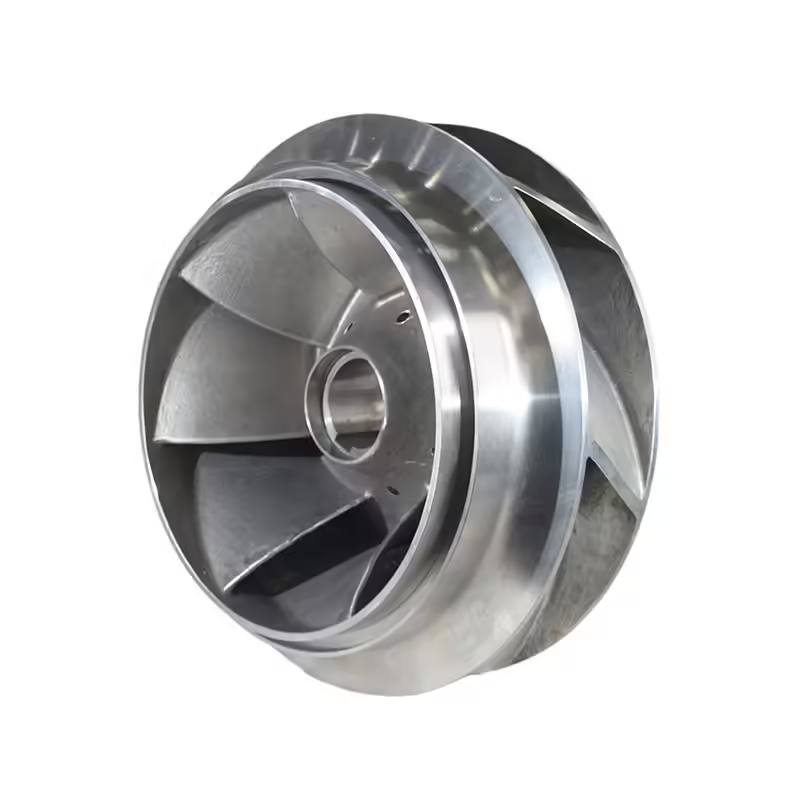
Case Study 1: Municipal Water Pump Upgrade
A European water treatment facility replaced standard cast impellers with high-grade forged alternatives.
Results after 18 months:
- 12% reduction in energy consumption
- 28% decrease in maintenance downtime
- Extended service interval from 14 months to 26 months
Case Study 2: Chemical Plant Corrosion Issue
A chemical processing plant using cast impellers experienced frequent corrosion failures in acidic media.
Solution:
- Switch to CF8M stainless steel forged impellers
- Implement surface polishing and coating
Outcome:
- Failure rate reduced by 40%
- Maintenance cost reduced significantly
Case Study 3: Offshore Platform Pump Reliability
Offshore seawater cooling system:
- Original cast impellers showed cavitation wear within 9 months
- Replaced with forged bronze alloy impellers
Result:
- Service life extended to 24+ months
- Improved operational stability under variable load
Key Failure Modes in Cast Impeller Systems
Cavitation Damage
Occurs when vapor bubbles collapse near blade surfaces, causing erosion.
Corrosion Degradation
Common in seawater and chemical environments, especially with poor alloy selection.
Fatigue Cracking
Repeated stress cycles cause micro-crack propagation in cast structures.
Engineering Design Optimization Trends
CFD-Based Hydraulic Optimization
Modern impeller design uses computational fluid dynamics (CFD) to:
- Optimize blade curvature
- Reduce turbulence loss
- Improve flow efficiency by up to 8%
Additive Manufacturing Integration
Hybrid approaches combine:
- Casting for base structure
- CNC finishing for precision
- Emerging 3D printed prototypes for testing
Smart Pump Monitoring Systems
Industry 4.0 systems now monitor:
- Vibration patterns
- Pressure fluctuations
- Impeller wear prediction
This improves maintenance planning for both cast and forged systems.
Extended Comparison Summary
Structural Reliability
Forged > Cast
Cost Efficiency
Cast > Forged
High-Pressure Suitability
Forged > Cast
Design Flexibility
Cast > Forged
Lifecycle Performance
Forged > Cast
Advanced Selection Guidelines
When to Choose Cast Impeller
- Budget-sensitive industrial projects
- Medium-pressure fluid systems
- Applications requiring complex geometry
- Non-critical duty cycles
When to Choose Forged Impeller
- High-pressure industrial systems
- Continuous 24/7 operations
- Corrosive or abrasive environments
- Critical infrastructure systems
FAQ
Is a cast impeller reliable for long-term industrial use?
Yes, when properly selected and maintained, a cast impeller performs reliably in moderate-duty applications such as municipal water systems and HVAC circulation.
What is the biggest advantage of forged impellers?
The main advantage is superior mechanical strength due to grain structure alignment, improving fatigue resistance and operational stability.
How does cavitation affect impeller lifespan?
Cavitation significantly reduces lifespan by eroding blade surfaces. Material density and surface finish directly influence resistance.
Which industries prefer cast impellers the most?
Water treatment, building HVAC systems, and general manufacturing industries commonly use cast designs due to cost efficiency.
Can cast impellers be upgraded for better performance?
Yes, through material upgrades, surface coating, and precision machining, performance can be significantly improved.
Conclusion
Selecting between cast and forged impeller technologies is ultimately a balance between cost efficiency, mechanical strength, and application intensity. A cast impeller remains a practical solution for general industrial systems with stable operating conditions, while forged alternatives dominate high-performance environments requiring maximum reliability and extended lifecycle stability.
For engineering teams, the most effective strategy is not choosing one universally, but matching impeller type to operational conditions, lifecycle expectations, and system criticality.
Product Categories
- Valve Parts
- Water Pump Parts
- Bearing Box Parts
- Die Casting Parts
- Stainless Steel Pump Products
- Cast Iron Pump Products
- Valve Parts For Automobile Use
- Auto Parts
- Valve Parts For Civil Use
- Vacuum Pump Parts KF

Let’s start your next project!
Start Your Project with Leierwo
1. Submit Your Inquiry
2. Cost Calculation
3. Start Production
4. Arrange Delivery
FAQ
Yes, we have extensive experience in international trade and can assist customers with export customs clearance and shipping arrangements. We offer various trade terms such as FOB, CIF, and DDP to accommodate different logistics needs.We accept various international payment methods, including T/T (Telegraphic Transfer), wire transfer, and Letter of Credit (L/C). Payment terms can be discussed with our sales team.
By partnering with Leierwo, you can enjoy competitive pricing and superior quality compared to other suppliers. Additionally, we offer a one-stop solution to deliver finished parts, including CNC machining and surface treatment, ensuring a seamless production process.
We have advanced casting equipment and strict quality control systems. Our monthly production capacity is substantial, and we can manufacture products based on customer-provided drawings or samples. We accept both small trial orders and large-scale production.
Our products comply with international standards such as ASTM, AISI, DIN, and JIS. We can provide material test reports and relevant certifications to ensure product quality meets customer requirements.
We strictly follow the ISO 9001 quality management system and conduct multiple inspections throughout the production process, including spectrographic analysis, X-ray testing, ultrasonic testing, and dimensional measurements. These quality control measures guarantee that our castings meet the highest standards.
Our MOQ depends on the product type and complexity, However, we are flexible and open to discussing your specific needs.
Our standard production lead time is 4-6 weeks, depending on order quantity and product complexity. We strive to shorten delivery times to meet customer demands.
Yes, we can provide samples for quality inspection. Sample costs and shipping fees can be negotiated, and sample fees may be refunded upon placing a formal order.
 English
  Spanish
  Arabic
  Malay
Malay  German