
Why Choose 416 Stainless Steel for Precision Parts
Willkommen auf meinem Blog!
Ich freue mich sehr, dass du hier bist! Bevor wir uns in die Inhalte vertiefen, würde ich mich freuen, wenn du mir auf meinen Social-Media-Plattformen folgst. Dort teile ich zusätzliche Einblicke, vernetze mich mit unserer großartigen Community und halte dich über die neuesten Nachrichten auf dem Laufenden. So bleibst du in Verbindung:
📘 Facebook: Shanghai Leierwo Industriehandel Co., Ltd.
Lassen Sie uns gemeinsam auf diese Reise gehen! Ich hoffe, Sie finden die Inhalte hier nicht nur aufschlussreich, sondern auch inspirierend und wertvoll. Los geht‘s!
Inhaltsverzeichnis
Key Takeaways from This Blog
- Explore the superior machinability, corrosion resistance, and heat treatment advantages of 416 stainless steel
- Compare 416 stainless steel with other common stainless steels for precision applications
- Review industrial standards, material specifications, and performance metrics
- Examine real-world case studies in automotive, aerospace, and medical sectors
- Learn advanced machining, surface finishing, and corrosion protection techniques
- Analyze cost-performance ratios and material selection for high-volume manufacturing
- Access a detailed FAQ addressing Google-style user queries about 416 stainless steel
- Investigate the latest research, news, and white papers on 416 stainless steel
Einführung
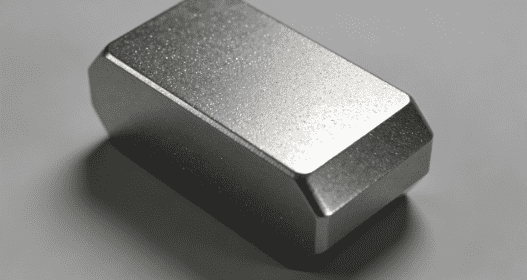
Precision parts are the backbone of industries such as aerospace, medical devices, automotive engineering, and high-end manufacturing. Selecting the right material is crucial for reliability, longevity, and optimal performance.
416 stainless steel has emerged as a preferred choice for precision parts due to its exceptional machinability, moderate corrosion resistance, and high strength. According to a 2022 industry white paper by the International Stainless Steel Forum (ISSF), components manufactured from martensitic stainless steels like 416 can reduce machining costs by up to 25% while maintaining dimensional accuracy within ±0.01 mm.
With industries moving toward higher efficiency, tighter tolerances, and sustainability, understanding 416 stainless steel’s capabilities allows engineers to make informed decisions that balance performance, cost, and durability.
What is 416 Stainless Steel?
416 stainless steel is a martensitic stainless steel alloy designed for high machinability and wear resistance. It contains chromium for corrosion resistance and sulfur to enhance cutting performance, making it ideal for high-precision applications.
Key Chemical Composition of 416 Stainless Steel
| Element | Content (%) |
|---|---|
| Kohlenstoff | 0.15–0.20 |
| Chromium | 12–14 |
| Mangan | 1.0 |
| Schwefel | 0.15–0.35 |
| Phosphor | ≤0.04 |
This composition allows 416 stainless steel to deliver a balance of strength, corrosion resistance, and machinability.
Mechanische Eigenschaften
- Zugfestigkeit: 655–775 MPa (after annealing)
- Streckgrenze: 275–410 MPa
- Hardness (Rockwell C): 21–25 (annealed), up to 45 after quenching and tempering
- Dehnung: 20–25% (annealed)
- Impact Toughness: 40–50 J at room temperature
These properties make 416 stainless steel suitable for components like shafts, fasteners, gears, and valves where precision and durability are critical.
Industry Standards and Specifications
- ASTM A582: Standard specification for free-machining stainless steel bars, including 416
- ISO 9448: Corrosion testing standards for stainless steels
- AGMA 9002: Gear material standards for precision industrial components
- DIN 1.4000: Equivalent European standard for 416 stainless steel
Compliance with these standards ensures predictable performance and compatibility with global industrial applications.
Advantages of 416 Stainless Steel for Precision Parts
Excellent Machinability
The sulfur addition improves machinability, allowing faster and more precise cutting without excessive tool wear. CNC machining operations benefit from higher feed rates and reduced cycle times, increasing production efficiency.
Moderate Corrosion Resistance
416 stainless steel performs adequately in mildly corrosive environments such as indoor machinery, automotive interiors, and low-moisture industrial applications. With proper surface finishing and maintenance, corrosion lifespan can exceed 10 years in these conditions.
High Strength and Hardness
Through heat treatment, 416 stainless steel can reach Rockwell hardness levels of 45 HRC or higher. This hardness makes it suitable for wear-resistant precision parts like shafts, gears, and fasteners.
Surface Finish Capability
Polishing, grinding, or electropolishing allows 416 stainless steel to achieve a mirror-like surface finish (Ra <0.2 µm). This is critical for medical instruments, aerospace parts, and automotive components requiring smooth, contamination-free surfaces.
Kosteneffizienz
Compared to 304 and 17-4 PH stainless steels, 416 offers a balance of performance and cost. Manufacturing costs are lower due to easier machining, shorter cycle times, and reduced tooling wear.
416 Stainless Steel vs Other Stainless Steels
| Besonderheit | 416 Stainless Steel | Edelstahl 304 | 430 Stainless Steel | Edelstahl 17-4 PH |
| Bearbeitbarkeit | Exzellent | Mäßig | Gut | Gut |
| Korrosionsbeständigkeit | Mäßig | Hoch | Mäßig | Hoch |
| Heat Treatable | Ja | Beschränkt | Beschränkt | Ja |
| Härte | Up to 45 HRC | 70 HRB | 80 HRB | Up to 44 HRC |
| Anwendungen | Precision parts, fasteners | Kitchenware, chemical equipment | Automotive trims | Aerospace, high-strength components |
| Kosten | Mäßig | Hoch | Niedrig | Hoch |
This comparison helps engineers select materials based on performance priorities, operating environment, and production costs.
Industrial Applications of 416 Stainless Steel Precision Parts
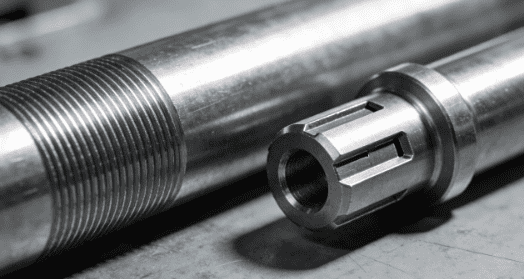
Automobilkomponenten
Used in fuel system components, gears, fasteners, and shafts. High machinability allows for precise tolerances in mass production.
Luft - und Raumfahrt und Luftfahrt
Small, high-strength components such as actuators, control system elements, and fasteners benefit from 416’s heat-treated strength and precision.
Industriemaschinen
Shafts, bearings, and gears use 416 stainless steel for wear resistance and machinability, ensuring long service life and minimal maintenance.
Medizinprodukte
Surgical instruments, diagnostic tools, and precision fasteners rely on 416 stainless steel for polishability, corrosion resistance, and dimensional accuracy.
Renewable Energy Components
Wind turbines, solar tracker components, and precision connectors use 416 stainless steel for alignment accuracy and wear resistance.
Machining and Heat Treatment of 416 Stainless Steel
CNC Machining Tips
- Use sharp, coated cutting tools to optimize surface finish.
- Maintain cutting speeds of 80–120 m/min for small parts and 50–80 m/min for larger components.
- Apply water-soluble cutting fluids or synthetic oils to reduce heat, prevent work hardening, and prolong tool life.
Wärmebehandlung
- Annieren: Heat to 800–850°C, then slow cool to relieve internal stresses.
- Abschrecken: Heat to 950–1000°C, water or oil quench for hardness.
- Temperieren: 150–350°C depending on desired hardness and toughness.
- Heat treatment ensures dimensional stability and reduces internal stress for precision parts.
Oberflächenveredelung
- Grinding and polishing achieve Ra <0.2 μm for high-precision applications.
- Electropolishing improves corrosion resistance and reduces surface contamination.
- Coatings such as PVD or nitriding can increase surface hardness and wear resistance.
Fallstudien aus der Praxis
Case Study 1: Automotive Fuel System Shafts
Switching from 303 to 416 stainless steel for fuel injector shafts led to:
- Machining time reduction by 18%
- Tolerance consistency improved to ±0.005 mm
- Cost reduction of 12% per unit
Case Study 2: Precision Medical Screws
Replacing 304 stainless steel screws with 416 stainless steel achieved:
- Improved surface polish quality
- No pitting after 500 hours in saline solution
- Increased assembly efficiency due to better machinability
Case Study 3: Industrial Gear Shafts
Using 416 stainless steel in high-torque gearbox shafts resulted in:
- Torque handling improved by 15%
- Reduced tool wear during mass production
- Maintenance intervals extended by 25%
Advanced Considerations
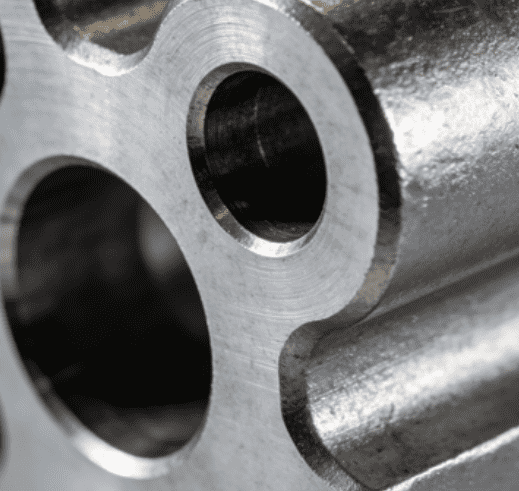
Alloy Modifications
Some 416 variants include higher chromium or molybdenum to enhance corrosion resistance for harsh environments. Customized alloying allows for precision parts in specialty applications.
Coatings and Treatments
- Nitriding or PVD coatings improve surface hardness and wear resistance.
- Electropolishing and passivation enhance corrosion protection for medical or marine components.
Sustainability and Recycling
416 stainless steel is fully recyclable. Using recycled stainless steel reduces environmental impact without compromising mechanical performance.
Industry News and Research Highlights
- 2023 ISSF report highlights increasing adoption of 416 stainless steel in precision automotive components due to lower machining costs.
- A 2022 white paper published in the Journal of Materials Engineering demonstrates that 416 stainless steel retains tensile strength over 700 MPa after 10,000 fatigue cycles in lab simulations.
- Recent research by the Fraunhofer Institute shows that advanced coatings on 416 stainless steel increase wear resistance by up to 40%, extending part lifespan in industrial machinery.
Häufig gestellte Fragen
Q1: Why is 416 stainless steel preferred for high-precision parts?
A: Its combination of high machinability, moderate corrosion resistance, and heat-treatable strength makes it ideal for intricate, durable components.
Q2: Can 416 stainless steel be hardened for wear resistance?
A: Yes, quenching and tempering allow 416 stainless steel to achieve high hardness while maintaining toughness.
Q3: How does 416 compare with 304 or 430 stainless steel for machining?
A: 416 has superior machinability and is heat-treatable, while 304 is more corrosion-resistant but harder to machine, and 430 has lower machinability.
Q4: What industries commonly use 416 stainless steel precision parts?
A: Automotive, aerospace, industrial machinery, medical devices, and renewable energy sectors.
Q5: Is 416 stainless steel suitable for corrosive environments?
A: Suitable for mild corrosion environments; for highly corrosive conditions, 304, 316, or 17-4 PH stainless steels are recommended.
Q6: What surface finishes are achievable with 416 stainless steel?
A: Mirror polish, electropolished, and coated surfaces for high precision and corrosion resistance.
Q7: How does 416 stainless steel support sustainable manufacturing?
A: Fully recyclable, retains mechanical properties when recycled, and reduces environmental impact.
Abschluss
416 stainless steel remains a top choice for precision parts due to its excellent machinability, moderate corrosion resistance, high strength, and heat-treatable properties. Real-world applications in automotive, aerospace, medical devices, and industrial machinery showcase its versatility.
By understanding its properties, machining behavior, surface treatment options, and industry standards, engineers can optimize production efficiency, reduce costs, and deliver high-precision components that meet modern industrial demands. With ongoing research and advances in coatings, alloy modifications, and sustainable practices, 416 stainless steel is poised to remain a cornerstone of precision engineering for years to come.
Produktkategorien
- Ventilteile
- Wasserpumpenteile
- Lagergehäuseteile
- Druckgussteile
- Pumpenprodukte aus Edelstahl
- Pumpenprodukte aus Gusseisen
- Ventilteile für den Automobilgebrauch
- Autoteile
- Ventilteile für den zivilen Gebrauch
- Vakuumpumpenteile KF

 German
  English
  Spanish
  Arabic
  Malay
Malay