Pump Impeller Types: Translating Open and Closed Designs into RFQs
Inhaltsverzeichnis
For buyers reviewing pump impeller types, a useful specification connects the service, the approved drawing and the delivered component. This guide examines the purchasing question “Translating Open and Closed Designs into RFQs”. Use it to organize the supplier discussion before approving material, tooling or production.
Key purchasing decisions for pump impeller types
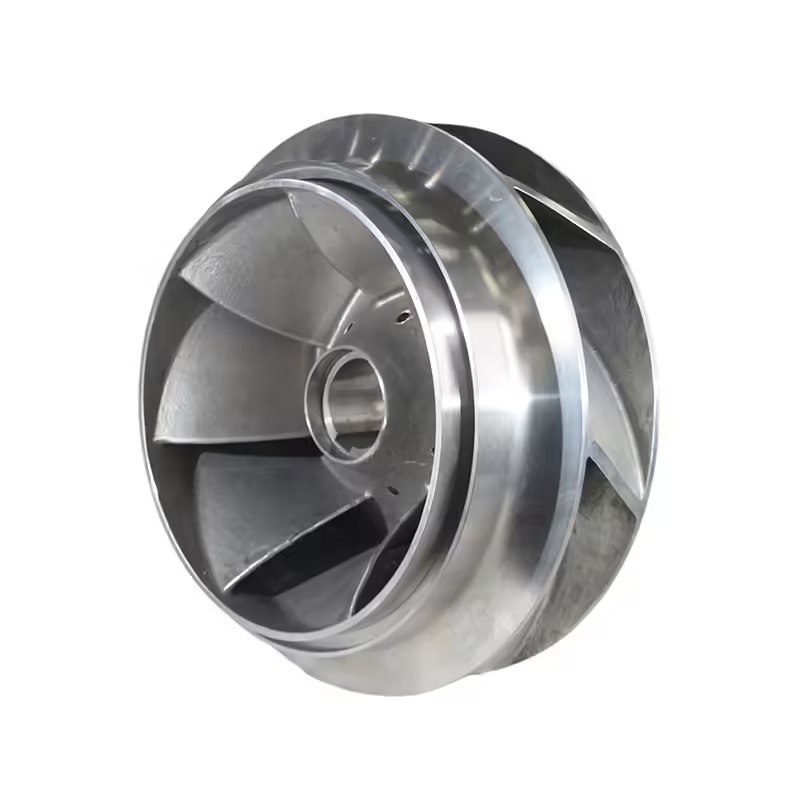
Pump impeller types differ in their shrouds and flow passages, which changes casting access, cleaning and inspection. Open, semi-open and enclosed designs should be quoted from their actual geometry. A type label is useful background but does not define hydraulic performance or manufacturing complexity.
Review the design and interfaces
Identify front and rear shrouds, passage openings and critical blade edges. Discuss core access and how internal residue will be removed. Define which surfaces are functional and which will be finish-machined.
Compare the purchasing options
Use this comparison when reviewing pump impeller types against a controlled drawing and purchase specification.
| Purchasing approach | Main implication | What to resolve |
|---|---|---|
| Open passage geometry | Easier visual access | Still requires controlled vane and fit dimensions |
| Enclosed passage geometry | Different core and cleaning demands | Plan internal verification |
Select the manufacturing route
Choose a manufacturing route around the approved rotor or housing geometry. Open features, enclosed passages and thick hubs create different casting and cleaning requirements. Preserve the hydraulic design while reviewing tooling, cores and final machining; any geometry change needs the equipment designer’s approval.
For a project involving pump impeller types, compare the complete delivered condition before choosing a production route.
Inspection requirements for pump impeller types
Choose dimensional and internal-access checks suitable for the design. A fully enclosed passage may need a different inspection approach from an exposed vane. Keep acceptance limits connected to the approved hydraulic drawing.
Apply the review to a practical case
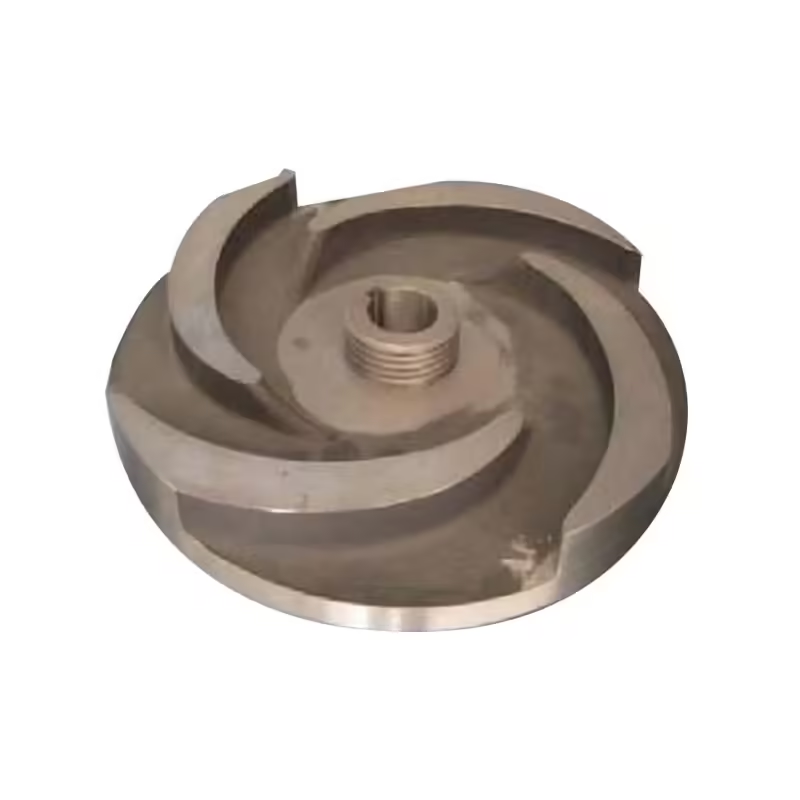
Two impellers with the same outer diameter may require very different manufacturing plans because one has accessible vanes and the other has enclosed channels. Review those features before comparing unit prices.
Define a complete quotation scope
Provide the approved component drawing, material, rotation where relevant, shaft or casing interfaces, operating fluid and quantities. State the machining and inspection scope, including the specified balance configuration for rotating parts. Keep complete pump performance validation assigned to the appropriate equipment-level plan.
When discussing pump impeller types, separate requirements already approved by engineering from options still awaiting review.
For background reading, see Hydraulic Institute pump principles and impeller reference. Use the applicable project specification and approved design for contractual requirements.
Discuss the component with Leierwo
Review Leierwo’s Pumpenherstellung Und Feinguss pages, then send the controlled drawing, material and quantity for a component-specific discussion. Ask the quotation to state the manufacturing scope, inspection evidence and any proposed alternatives.
A request concerning pump impeller types should lead to a part-specific quotation, with assumptions and deviations stated in writing.
Frequently asked questions
What is the main buying issue with pump impeller types?
Pump impeller types differ in their shrouds and flow passages, which changes casting access, cleaning and inspection. Open, semi-open and enclosed designs should be quoted from their actual geometry.
Which design details should be included?
Identify front and rear shrouds, passage openings and critical blade edges. Discuss core access and how internal residue will be removed.
What should inspection cover when evaluating pump impeller types?
Choose dimensional and internal-access checks suitable for the design. A fully enclosed passage may need a different inspection approach from an exposed vane.
How should the purchasing options be compared?
Compare “Open passage geometry” and “Enclosed passage geometry” against the same finished-part requirements. Key review points are “still requires controlled vane and fit dimensions” and “plan internal verification”, respectively.
What should an inquiry about pump impeller types include?
Send the pump and part identification, approved drawing, material, duty information, interfaces and final machining or balancing requirements.
Produktkategorien
- Ventilteile
- Wasserpumpenteile
- Lagergehäuseteile
- Druckgussteile
- Pumpenprodukte aus Edelstahl
- Pumpenprodukte aus Gusseisen
- Ventilteile für den Automobilgebrauch
- Autoteile
- Ventilteile für den zivilen Gebrauch
- Vakuumpumpenteile KF

Lassen Sie uns Ihr nächstes Projekt starten!
Starten Sie Ihr Projekt mit Leierwo
1. Senden Sie Ihre Anfrage
2. Kostenkalkulation
3. Produktion starten
4. Lieferung vereinbaren
Häufig gestellte Fragen
Ja, wir verfügen über umfassende Erfahrung im internationalen Handel und unterstützen unsere Kunden gerne bei der Exportzollabfertigung und Versandabwicklung. Wir bieten verschiedene Handelsbedingungen wie FOB, CIF und DDP an, um unterschiedlichen Logistikanforderungen gerecht zu werden. Wir akzeptieren verschiedene internationale Zahlungsmethoden, darunter T/T (Telegraphic Transfer), elektronische Überweisung und Akkreditiv (L/C). Die Zahlungsbedingungen können Sie mit unserem Vertriebsteam besprechen.
Durch die Partnerschaft mit Leierwo profitieren Sie von wettbewerbsfähigen Preisen und überlegener Qualität im Vergleich zu anderen Anbietern. Darüber hinaus bieten wir eine Komplettlösung für die Lieferung fertiger Teile, einschließlich CNC-Bearbeitung und Oberflächenbehandlung, und gewährleisten so einen reibungslosen Produktionsprozess.
Wir verfügen über moderne Gussanlagen und strenge Qualitätskontrollsysteme. Unsere monatliche Produktionskapazität ist beträchtlich und wir können Produkte nach Kundenzeichnungen oder Mustern fertigen. Wir akzeptieren sowohl kleine Probeaufträge als auch Großserienproduktionen.
Unsere Produkte entsprechen internationalen Normen wie ASTM, AISI, DIN und JIS. Wir stellen Materialprüfberichte und entsprechende Zertifizierungen bereit, um sicherzustellen, dass die Produktqualität den Kundenanforderungen entspricht.
Wir befolgen strikt das Qualitätsmanagementsystem ISO 9001 und führen während des gesamten Produktionsprozesses zahlreiche Prüfungen durch, darunter spektrografische Analysen, Röntgenprüfungen, Ultraschallprüfungen und Maßmessungen. Diese Qualitätskontrollmaßnahmen garantieren, dass unsere Gussteile den höchsten Standards entsprechen.
Unsere Mindestbestellmenge hängt von der Art und Komplexität des Produkts ab. Wir sind jedoch flexibel und offen für die Besprechung Ihrer spezifischen Anforderungen.
Unsere Standardproduktionszeit beträgt 4–6 Wochen, abhängig von Bestellmenge und Produktkomplexität. Wir sind bestrebt, die Lieferzeiten zu verkürzen, um den Kundenanforderungen gerecht zu werden.
Ja, wir können Muster zur Qualitätsprüfung bereitstellen. Musterkosten und Versandkosten können ausgehandelt werden. Die Mustergebühren können bei einer formellen Bestellung erstattet werden.
 German
 English
 Spanish
 Arabic
 Malay