
Metallmaterialien, die komplexe Designs freigeben
Willkommen auf meinem Blog!
Ich freue mich sehr, dass du hier bist! Bevor wir uns in die Inhalte vertiefen, würde ich mich freuen, wenn du mir auf meinen Social-Media-Plattformen folgst. Dort teile ich zusätzliche Einblicke, vernetze mich mit unserer großartigen Community und halte dich über die neuesten Nachrichten auf dem Laufenden. So bleibst du in Verbindung:
📘 Facebook: Shanghai Leierwo Industriehandel Co., Ltd.
Lassen Sie uns gemeinsam auf diese Reise gehen! Ich hoffe, Sie finden die Inhalte hier nicht nur aufschlussreich, sondern auch inspirierend und wertvoll. Los geht‘s!
Inhaltsverzeichnis
In the rapidly evolving field of additive manufacturing, metal materials have emerged as a cornerstone for producing complex, high-performance parts. From aerospace components to medical implants, the use of advanced metal powders enables engineers and designers to achieve geometries that were previously impossible with traditional manufacturing. This article explores the key properties, processing methods, applications, advantages, and considerations of metal materials in unlocking complex designs.
Einführung
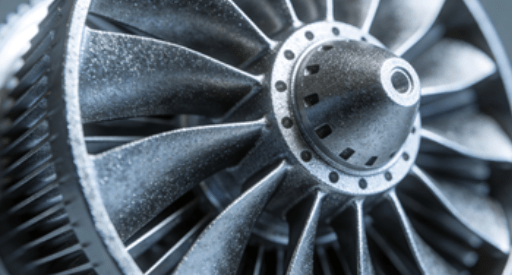
Metal materials, including stainless steel, titanium alloys, and aluminum powders, play a pivotal role in modern 3D printing. Additive manufacturing (AM) techniques, such as selective laser melting (SLM) and direct metal laser sintering (DMLS), allow these powders to be fused layer by layer, creating intricate structures with high dimensional accuracy. Unlike conventional casting or forging, metal 3D-Druck provides unprecedented design flexibility, enabling parts that reduce assembly requirements, optimize weight, and incorporate internal channels or lattice structures for enhanced performance.
Industries are increasingly adopting metal materials in 3D printing for applications that demand high strength, precision, and durability. For instance, aerospace engineers leverage titanium alloys to produce lightweight yet strong components, while medical device manufacturers utilize stainless steel and cobalt-chrome alloys for custom implants. Metal materials in additive manufacturing not only accelerate prototyping but also enable low-volume production of functional parts with complex geometries.
Understanding Metal Materials Properties
The performance of 3D-printed components depends heavily on the intrinsic properties of the selected metal materials. Understanding these characteristics helps manufacturers choose the optimal material for each application and achieve reliable results.
High Strength and Durability
Metal materials offer tensile strengths comparable to, or even exceeding, traditionally manufactured parts. For example, stainless steel prints can achieve tensile strengths exceeding 500 MPa, providing structural reliability for high-load applications. Titanium alloys, known for their exceptional strength-to-weight ratio, are particularly favored in aerospace and automotive applications.
Thermal and Chemical Resistance
Many metal materials used in additive manufacturing exhibit excellent resistance to heat and corrosion. Titanium alloys maintain mechanical stability at high temperatures, making them ideal for engine components, heat exchangers, and other thermally demanding applications. Stainless steel provides corrosion resistance for parts exposed to harsh environments, such as medical implants or marine equipment.
Density and Weight Considerations
Metal materials vary in density, which affects overall part weight and performance. Aluminum powders are lightweight and suitable for aerospace and automotive applications, while cobalt-chrome and titanium alloys provide higher strength at slightly increased weight. Selecting the right metal material ensures that the part meets both mechanical requirements and weight limitations.
Oberflächenveredelung und Nachbearbeitung
While metal 3D printing can produce highly detailed geometries, surface finish may require additional post-processing, such as machining, polishing, or heat treatment. The choice of metal material influences ease of finishing, with some alloys responding better to specific techniques.
Metal Materials in 3D-Druck Anwendungen
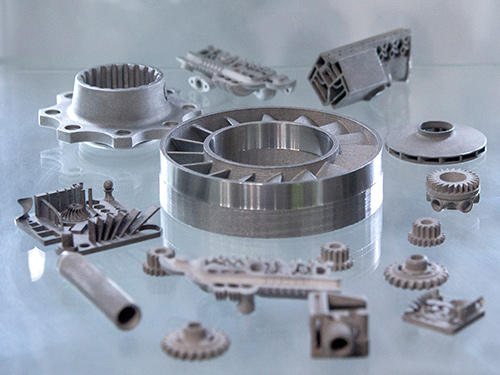
The versatility of metal materials enables their use across a wide range of industries. Common applications include aerospace, automotive, medical implants, tooling, and industrial components.
Luft- und Raumfahrtkomponenten
Titanium and aluminum alloys allow engineers to produce lightweight structures with internal lattices and optimized strength-to-weight ratios. Metal materials enable the creation of engine components, brackets, and structural parts that are both durable and weight-efficient.
Medical Implants
Stainless steel, titanium alloys, and cobalt-chrome are widely used for patient-specific implants, surgical guides, and prosthetic components. Metal 3D printing allows for precise replication of anatomical structures, improving fit, functionality, and patient outcomes.
Industrial Tooling
Metal materials facilitate rapid production of molds, dies, and jigs for manufacturing. Their high thermal and mechanical resistance makes them suitable for repeated use under demanding conditions.
Automotive and High-Performance Parts
Additive manufacturing with metal materials allows for lightweight, high-strength components in engines, suspension systems, and structural parts. Complex geometries, such as internal cooling channels or lattice reinforcements, can be integrated without additional assembly steps.
Custom Prototypes
Engineers leverage metal materials for functional prototypes that replicate final part properties. This approach reduces development cycles and ensures that design performance translates directly to production.
Comparison of Common Metal Materials for 3D-Druck
The following table highlights the key properties of popular metal materials used in additive manufacturing, illustrating their strengths and ideal applications:
| Material | Zugfestigkeit (MPa) | Density (g/cm³) | Thermal Resistance | Korrosionsbeständigkeit | Häufige Anwendungen |
|---|---|---|---|---|---|
| Edelstahl | 500–650 | 7.9 | Medium | Hoch | Medical implants, industrial parts |
| Titanlegierung | 800–1000 | 4.5 | Hoch | Hoch | Aerospace, automotive components |
| Aluminiumlegierung | 300–450 | 2.7 | Medium | Medium | Aerospace, lightweight automotive parts |
| Kobalt-Chrom | 600–900 | 8.3 | Hoch | Sehr hoch | Medical implants, high-wear components |
| Nickellegierung | 900–1200 | 8.2 | Sehr hoch | Hoch | Turbine blades, high-temp industrial parts |
Stainless Steel in 3D Printing
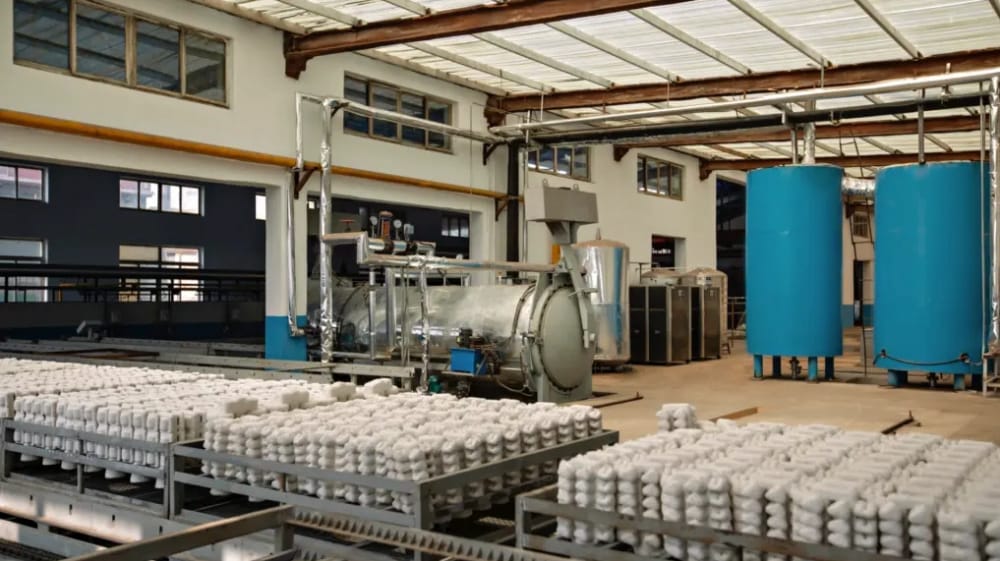
Edelstahl is widely used in additive manufacturing due to its balance of strength, corrosion resistance, and cost-effectiveness. It achieves tensile strengths of 500–650 MPa and is highly resistant to oxidation, making it suitable for medical implants, industrial components, and tooling. In 3D printing, stainless steel powders are typically processed via selective laser melting (SLM) to produce durable, complex geometries that meet industrial standards. Its medium thermal resistance allows moderate heat applications, though additional heat treatment may enhance performance.
Titanium Alloy in 3D Printing
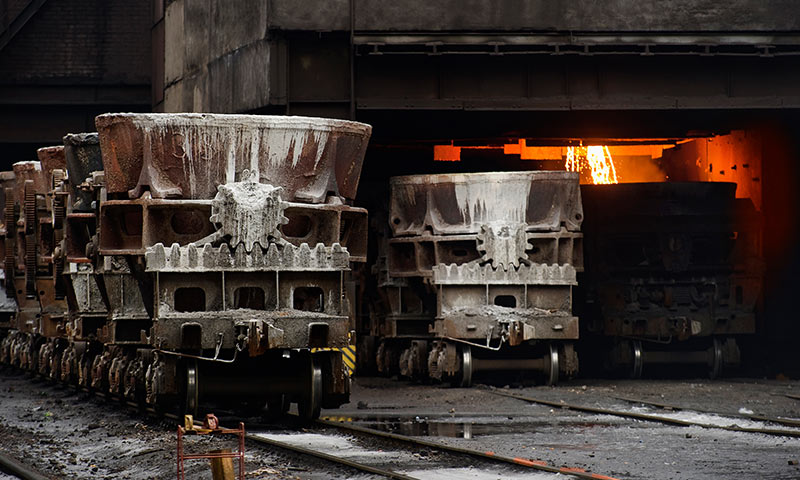
Titanium alloys are valued for their high strength-to-weight ratio and excellent corrosion resistance. With tensile strengths ranging from 800 to 1000 MPa and a low density of 4.5 g/cm³, they are ideal for aerospace and automotive components where weight savings are critical. In 3D printing, titanium alloy powders are used in SLM or direct metal laser sintering (DMLS), allowing the production of lightweight structural parts with high precision. Their high thermal resistance ensures stability under demanding operating conditions.
Aluminum Alloy in 3D Printing
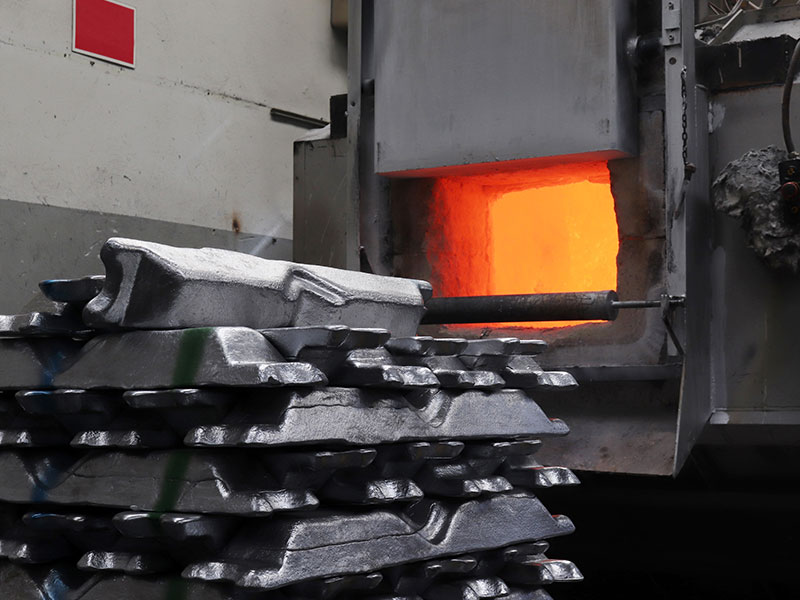
Aluminiumlegierungen offer lightweight solutions with moderate strength, typically ranging from 300 to 450 MPa. The low density of 2.7 g/cm³ makes them perfect for aerospace applications and automotive parts where minimizing weight is essential. Aluminum powders can be processed through selective laser melting to create complex components with optimized geometry. While their thermal and corrosion resistance is moderate, proper design and post-processing can expand their use in functional prototypes and end-use parts.
Cobalt-Chrome in 3D Printing
Cobalt-chrome alloys are known for their high wear resistance and durability. With tensile strengths between 600 and 900 MPa and very high corrosion resistance, these materials are widely used in medical implants, dental prosthetics, and high-wear industrial components. In additive manufacturing, cobalt-chrome powders allow precise 3D printing of intricate shapes that are difficult to achieve with traditional casting, while maintaining long-term stability in challenging environments.
Nickellegierung in 3D Printing
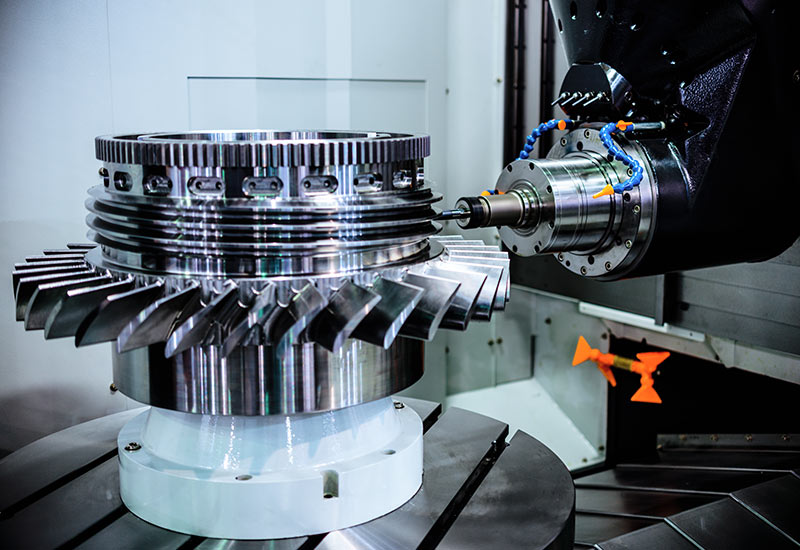
Nickel alloys are premium materials suitable for high-temperature and high-performance applications. They offer tensile strengths of 900–1200 MPa and excellent thermal resistance, making them ideal for turbine blades, aerospace engine components, and chemical processing equipment. In 3D printing, nickel alloy powders enable production of complex, heat-resistant parts with properties comparable to forged or cast components, providing design flexibility and reducing assembly requirements.
Advantages of Using Metal Materials in 3D-Druck
Metal materials offer numerous advantages in additive manufacturing. Here are key benefits:
Gestaltungsfreiheit
Metal materials allow engineers to create complex internal geometries and lattice structures that traditional manufacturing cannot achieve. This unlocks:
- Optimized weight: Lightweight designs without sacrificing strength.
- Integrated features: Functional elements combined into a single part.
- Aesthetic flexibility: Smooth curves, organic shapes, and intricate patterns.
High-Performance Parts
3D-printed metal components can match or exceed mechanical properties of cast or forged parts:
- Zugfestigkeit: Stainless steel parts exceeding 500 MPa.
- Haltbarkeit: Titanium alloys withstand high stress and fatigue.
- Thermische Stabilität: Cobalt-chrome and nickel alloys perform well under high temperatures.
Reduced Assembly
By combining multiple functions in one component, metal materials reduce:
- Labor costs: Fewer assembly steps required.
- Potential failure points: Less risk of mechanical or alignment issues.
- Material waste: Fewer separate parts mean less scrap.
Rapid Prototyping and Iteration
Metal materials enable fast development cycles:
- High-fidelity prototypes: Test functional and aesthetic features.
- Accelerated iteration: Quickly update designs without tooling delays.
- Functional testing: Parts can be tested under real-world conditions before production.
Anpassung
Metal materials allow on-demand production for:
- Patient-specific medical implants.
- Low-volume industrial components.
- Specialized aerospace parts.
Considerations When Using Metal Materials
While metal materials offer tremendous benefits, careful planning is essential. Key factors include:
Printer Compatibility and Process Parameters
Not all 3D printers support metal powders. Consider:
- SLM or DMLS systems: Required for laser-based melting.
- Environmental control: Temperature and oxygen levels affect part quality.
- Layer thickness and scanning speed: Fine-tuned for material type and geometry.
Powder Handling and Safety
Metal powders can be reactive. Safety precautions include:
- Protective equipment: Masks, gloves, and protective clothing.
- Controlled ventilation: Prevent inhalation of fine powders.
- Proper storage: Prevent contamination and degradation.
Anforderungen an die Nachbearbeitung
3D-printed metal parts often need:
- Wärmebehandlung: Stress relief and hardness optimization.
- Oberflächenveredelung: Machining, polishing, or coating.
- Inspektion: Dimensional verification and defect detection.
Cost and Material Availability
Metal powders are generally expensive. Strategies for efficiency:
- Design optimization: Reduce unnecessary volume.
- Powder recycling: Reuse unused powder where possible.
- Materialauswahl: Choose alloys suitable for your application and budget.
Umweltfaktoren
Metall 3D-Druck is sensitive to environmental conditions:
- Humidity control: Prevent oxidation and powder clumping.
- Temperature consistency: Avoid warping or layer delamination.
- Airborne contaminants: Keep printing area clean for smooth surfaces.
Abschluss
Metal materials have fundamentally transformed the possibilities of additive manufacturing. By enabling complex designs, high-strength components, and lightweight structures, they unlock innovation across aerospace, automotive, medical, and industrial applications. Selecting the right metal materials, understanding their properties, and optimizing printing parameters allows manufacturers to produce high-performance, cost-effective, and reliable parts.
Häufig gestellte Fragen
Q1: What are metal materials used for in 3D-Druck?
A1: Metal materials are used to produce high-strength, lightweight, and complex parts in aerospace, medical, automotive, and industrial applications.
Q2: How are metal materials processed in additive manufacturing?
A2: Techniques such as selective laser melting (SLM) and direct metal laser sintering (DMLS) fuse metal powders layer by layer to create complex geometries.
Q3: Can all 3D printers use metal materials?
A3: No, only specialized metal 3D printers are capable of processing powders safely and effectively, usually with laser-based systems.
Q4: Which metal materials are most common for 3D printing?
A4: Stainless steel, titanium alloys, aluminum alloys, cobalt-chrome, and nickel alloys are widely used depending on application requirements.
Q5: What post-processing is required for metal materials?
A5: Post-processing often includes stress relief, heat treatment, surface finishing, and inspection to ensure optimal mechanical performance and precision.
Produktkategorien
- Ventilteile
- Wasserpumpenteile
- Lagergehäuseteile
- Druckgussteile
- Pumpenprodukte aus Edelstahl
- Pumpenprodukte aus Gusseisen
- Ventilteile für den Automobilgebrauch
- Autoteile
- Ventilteile für den zivilen Gebrauch
- Vakuumpumpenteile KF

 German
  English
  Spanish
  Arabic
  Malay
Malay