
Wie die Ventilherstellung funktioniert: Erläuterung des Ventilkomponentengusses
Willkommen auf meinem Blog!
Ich freue mich sehr, dass du hier bist! Bevor wir uns in die Inhalte vertiefen, würde ich mich freuen, wenn du mir auf meinen Social-Media-Plattformen folgst. Dort teile ich zusätzliche Einblicke, vernetze mich mit unserer großartigen Community und halte dich über die neuesten Nachrichten auf dem Laufenden. So bleibst du in Verbindung:
📘 Facebook: Shanghai Leierwo Industriehandel Co., Ltd.
Lassen Sie uns gemeinsam auf diese Reise gehen! Ich hoffe, Sie finden die Inhalte hier nicht nur aufschlussreich, sondern auch inspirierend und wertvoll. Los geht‘s!
Schlüsselübergabe (Quick-Liste)
- Valve manufacturing begins with material selection and casting method decisions.
- Precision casting is the most critical step for high-performance valve components.
- Stainless steel is the dominant material due to corrosion resistance and durability.
- Investment casting offers high accuracy, while sand casting is cost-effective for large parts.
- CNC machining ensures tight tolerances for sealing surfaces and flanges.
- Quality control (defect detection, pressure testing) is essential to guarantee reliability.
- Custom production based on customer drawings ensures compatibility with specific operating conditions.
- Modern valve manufacturing integrates digital tools like 3D scanning, simulation, and Industry 4.0 monitoring.
Inhaltsverzeichnis
Einführung
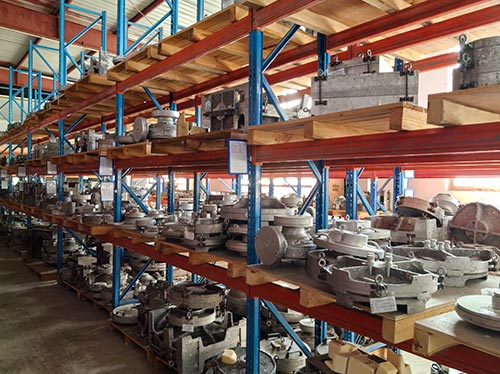
Every industrial system relies on valves to control the flow of liquids and gases. In oil and gas pipelines, power plants, chemical plants, and municipal water systems, valves are the silent heroes that maintain safety and operational stability. When a valve fails, it can lead to catastrophic leakage, equipment damage, and even environmental disasters.
Valve manufacturing is therefore not simply “making a part”—it is creating a high-precision safety device. At the core of this manufacturing process is the casting of valve components. This is where the valve’s structural integrity, pressure resistance, and sealing performance are determined.
Valve manufacturing is often underestimated, yet it is a high-precision engineering discipline that requires advanced materials, precise casting, meticulous machining, and rigorous testing. This article dives into the heart of valve manufacturing, with a special focus on valve component casting.
The Core Concept: Ventilherstellung vs Valve Component Casting
Valve manufacturing covers the entire lifecycle of a valve—from design and casting to machining, assembly, testing, and delivery. Valve component casting, however, is the foundation. Without high-quality castings, the valve will fail to meet performance requirements.
Ventilherstellung: das große Bild
Valve manufacturing includes:
- Engineering design
- Materialauswahl
- Casting method selection
- Bearbeitung
- Montage
- Testing and certification
- Delivery and after-sales support
Each step is interdependent. A flaw in casting cannot be corrected by machining alone. Therefore, casting is the most critical stage.
Ventilkomponentenguss: das kritische Fundament
Valve component casting is responsible for:
- Creating the valve body
- Producing valve covers
- Manufacturing internal parts such as seats and discs
- Ensuring structural strength and sealing integrity
The casting quality directly affects:
- Pressure resistance
- Sealing performance
- Haltbarkeit
- Korrosionsbeständigkeit
- Safety
Materialauswahl in Ventilherstellung
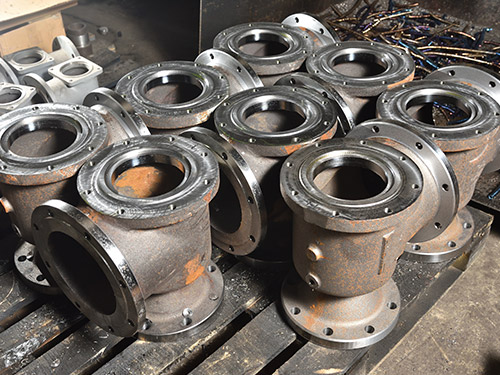
Warum Materialauswahl wichtig ist
Material selection determines whether a valve can withstand high pressure, high temperature, corrosion, and mechanical wear. In many industrial applications, the operating environment is extreme:
- Temperatures can exceed 500°C in steam systems
- Pressure can exceed 1000 bar in oil and gas pipelines
- Corrosive media like hydrochloric acid, sulfuric acid, and seawater are common
- Cavitation and erosion can rapidly degrade valve components
Valve manufacturing requires materials that can withstand these conditions while maintaining dimensional stability and mechanical strength.
Übliche Materialien für die Ventilherstellung
Valve components are typically made from:
Edelstahlserie
- 304 / 304L: General corrosion resistance, cost-effective
- 316 / 316L: Excellent chloride corrosion resistance, ideal for marine and chemical industries
- 410: Martensitic stainless steel, good for high-temperature steam valves
- 17-4PH: High strength and corrosion resistance, used for high-performance valves
Carbon Steel Series
- WCB: Widely used for general valves at room temperature
- 4130: High strength for high-pressure valve bodies
Specialty Alloy Series
- 2205 Duplex-Edelstahl: Excellent stress corrosion resistance
- Cobalt Alloys (Co6, Co12): Used in high-temperature wear conditions, especially for sealing surfaces
Warum Edelstahl bevorzugt wird
Stainless steel is often the preferred choice because:
- It offers high corrosion resistance
- It maintains strength at elevated temperatures
- It has good machinability
- It provides a long service life under harsh conditions
Industry experts frequently recommend stainless steel for valves used in chemical and marine environments due to its balanced performance and cost.
Schritt-für-Schritt-Ventilherstellung
Entwurf und Engineering
Valve manufacturing begins with engineering drawings and design validation. Engineers must consider:
- Pressure rating (e.g., ANSI 150, 300, 600, 900, 1500)
- Temperature limits
- Fluid compatibility
- Flow rate and leakage requirements
- Structural stability under load
Concept: Valve Design Standards
Valve design must comply with standards such as API, ANSI, ISO, and customer specifications. These standards define dimensions, pressure ratings, and safety requirements.
Auswahl der Gießmethode
The casting method directly affects valve performance. Choosing the right method is crucial.
Feinguss (Precision Casting)
Investment casting is often used for:
- Medium to high-pressure valves
- Komplexe innere Strukturen
- Components requiring high precision and smooth surfaces
Investment casting advantages:
- Hohe Präzision
- Low surface roughness (can reach Ra 1.6 µm or better)
- Reduced defects like pores and shrinkage
- Lower leakage risk
Investment casting is especially suitable for stainless steel and alloy valves under high pressure.
Sandguss
Sand casting is used for:
- Low-pressure valves
- Large valves with simple shapes
- High-volume production where cost is critical
Sand casting advantages:
- Low cost
- High production efficiency
- Suitable for large valve bodies
However, sand casting typically has:
- Lower precision
- Rougher surface
- Higher defect probability
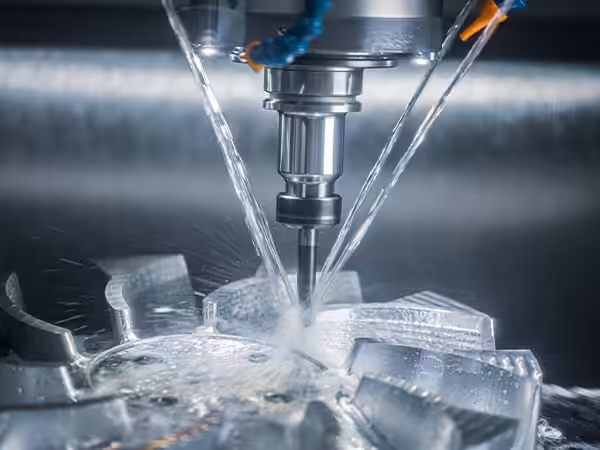
CNC-Bearbeitung
After casting, critical surfaces need machining:
- Valve flange surfaces
- Stem shafts
- Sealing seats
- Threaded areas
CNC machining ensures tight tolerances, often reaching flatness and perpendicularity within 0.02 mm/m.
Qualitätskontrolle für Ventilguss
Warum Qualitätskontrolle wichtig ist
Casting defects such as pores, cracks, and shrinkage can cause:
- Leakage
- Structural failure
- Reduced pressure resistance
- Shortened service life
In valve manufacturing, quality control is mandatory.
Gängige Inspektionsmethoden
- Röntgenuntersuchung: Detects internal defects
- Ultraschallprüfung: Detects internal cracks
- Pressure testing: Simulates real operating conditions
- Dimensional inspection: Ensures precision
Industry experts emphasize that rigorous inspection is essential to prevent failures and reduce after-sales costs.
Vergleich: Investmentguss vs. Sandguss
Feinguss im Vergleich zum Sandguss in der Ventilherstellung
Here is a direct comparison:
| Gießverfahren | Genauigkeit | Oberflächenbeschaffenheit | Kosten | am besten für |
|---|---|---|---|---|
| Feinguss | Hoch | Glatt | Höher | Complex valve bodies, high pressure |
| Sandguss | Mäßig | Rauh | Untere | Large, simple valve bodies |
| CNC Machining After Casting | Höchste | Glatt | Additional cost | Tight tolerance surfaces |
Konzept: Auswahl der richtigen Gussmethode
For high-performance valves, investment casting is typically the best choice. For large, low-cost valves, sand casting is more practical.
CNC-Bearbeitung in der Ventilherstellung
Warum CNC-Bearbeitung erforderlich ist
Even high-precision casting cannot achieve the tightest tolerances required for:
- Sealing surfaces
- Flange surfaces
- Threaded interfaces
CNC machining ensures accurate dimensions and improves sealing performance.
Konzept: kritische Bereiche für die CNC-Bearbeitung
- Valve flange surfaces
- Stem shafts
- Sealing seats
- Threaded areas
Machining is essential for leak-free assembly and long-term reliability.
Dichtungsleistung bei der Ventilherstellung
Abdichtung ist das Herzstück der Ventilherstellung
The sealing performance determines whether a valve can control fluid flow without leakage. Valve sealing relies on:
- Materialauswahl
- Casting precision
- Machining accuracy
- Assembly quality
Konzept: Dichtsitzintegrität
Sealing seats must be smooth and accurate. Investment casting plus CNC machining ensures:
- enge Toleranzen
- Low surface roughness
- Stable sealing performance
Leistungsanforderungen in der Ventilherstellung
Hochdruck und hohe Temperatur
Valve manufacturing must meet high-pressure and high-temperature performance requirements. Components must resist:
- Thermal expansion
- Mechanical stress
- Fatigue
Korrosionsbeständigkeit
Corrosion resistance is essential for chemical and marine environments. Materials such as stainless steel and duplex stainless steel are often chosen.
Kavitationsbeständigkeit
Cavitation can cause severe erosion. Material selection and casting quality help reduce this risk.
Gemeinsame Ventilkomponenten durch Gießen
Ventilkörper
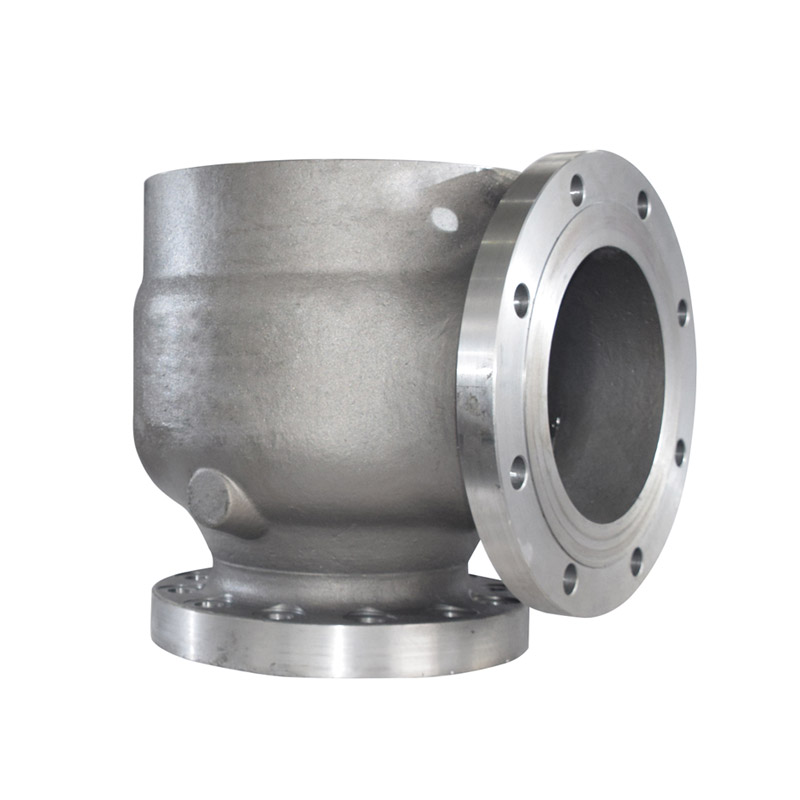
The valve body is the main structure that holds pressure and fluid. Casting must ensure:
- Structural integrity
- Smooth internal flow
- No leakage
Ventildeckel
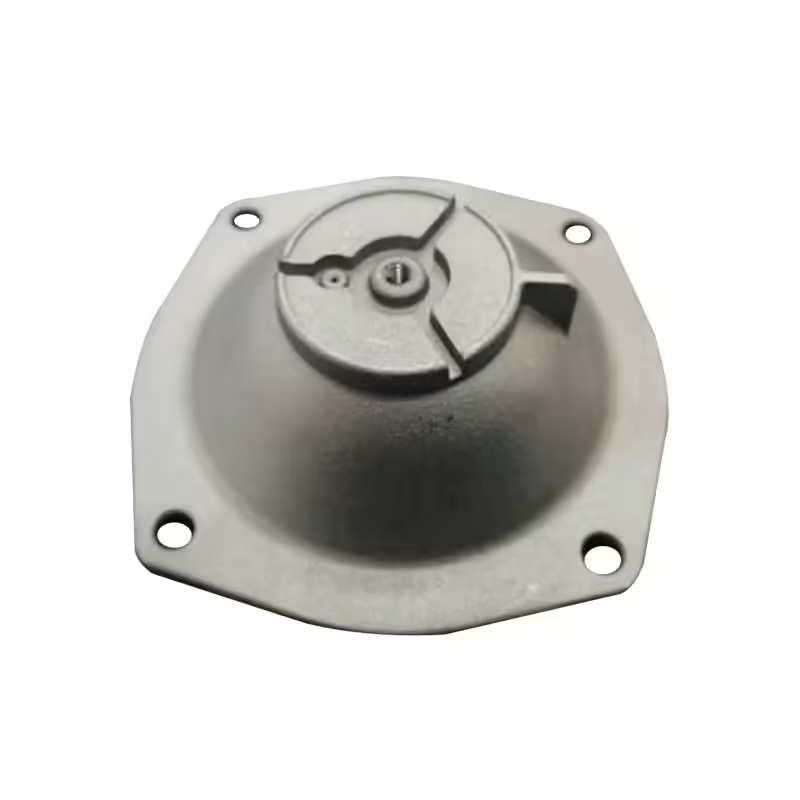
The cover seals the valve body. It must match the body precisely and withstand internal pressure.
Interne Komponenten
Components like the seat, disc, and trim are often cast or machined to meet strict tolerances.
Moderne Trends in der Ventilherstellung
Digitales Design und Simulation
Modern valve manufacturing uses digital tools:
- 3D CAD modeling
- Flow simulation
- Stress analysis
Simulation helps optimize:
- Material usage
- Stärke
- Fluid flow efficiency
- Manufacturing costs
3D-Scannen und Reverse Engineering
3D scanning is used to:
- Validate casting accuracy
- Compare casting to design
- Improve quality control
Industrie 4.0 und Smart Manufacturing
Smart manufacturing integrates:
- Real-time monitoring
- Data-driven quality control
- Automated production lines
This reduces defects and improves efficiency.
Real-World-Benchmarks (häufig zitierte Metriken)
Typische Leistungsverbesserungen nach der Gussoptimierung
Industry reports often show that:
- Casting defect rates can be reduced by 20–40% with improved process control
- Machining time can be reduced by 10–25% through better casting accuracy
- Pressure test pass rates can increase by 15–30% when casting quality improves
Efficiency Metrics in Ventilherstellung
Common efficiency indicators include:
- Yield rate (castings that meet standards)
- Machining time per part
- Pressure test pass rate
- Customer return rate
Experten-Einblicke (Industrie-anerkannte Prinzipien)
Expertenansicht: Gussqualität bestimmt Ventilsicherheit
Industry experts agree that casting quality is the primary factor in valve safety. A high-quality casting reduces:
- Leakage risk
- Structural failure
- Maintenance costs
Expert View: Material Selection is the First Decision
Experts emphasize that material selection must consider:
- Corrosion environment
- Temperature range
- Pressure rating
- Service life
Case-Style Examples (Generalized, Non-Company Specific)
Example: High-Pressure Valve Component Casting
In a high-pressure valve system, casting quality determines whether the valve can withstand:
- 600–1500 psi pressure
- High-temperature steam
- Corrosive media
When casting defects are reduced, the valve can maintain long-term performance without leakage.
Example: Marine Valve Component Casting
Marine valves require:
- High chloride corrosion resistance
- Long service life
- Stable sealing
Stainless steel 316/316L and duplex stainless steel are common choices.
The Most Common Valve Manufacturing Challenges
Challenge: Casting Defects
Common defects include:
- Pores
- Risse
- Schwindung
- Einschlüsse
Challenge: Material Selection Errors
Incorrect material selection can lead to:
- Corrosion
- Knacken
- Mechanical failure
Challenge: Machining Inaccuracy
If machining is not accurate, sealing surfaces can leak, leading to failure.
Comparison: Valve Manufacturing Methods by Application
| Anwendung | Recommended Casting Method | Material | Vernunft |
|---|---|---|---|
| High-pressure valves | Feinguss | Edelstahl | High precision and smooth surfaces |
| Large water valves | Sandguss | Kohlenstoffstahl | Cost-effective for large parts |
| Corrosive environment | Feinguss | Duplex stainless steel | High corrosion resistance |
| High temperature | Feinguss | 17-4PH / 410 | Heat resistance and strength |
Abschluss
Valve manufacturing is a highly specialized process where casting plays a decisive role. High-quality valve components require the right material, precise casting, accurate machining, and rigorous testing. For industries such as oil and gas, chemical, marine, and power generation, valve reliability is essential for safety and efficiency.
In the end, valve manufacturing is not merely about producing a part. It is about ensuring the safety and stability of entire systems. The better the casting process and quality control, the more reliable the valve will be.
Häufig gestellte Fragen
What is the most common material for valve manufacturing?
Stainless steel is the most common due to its corrosion resistance and high-temperature performance.
Why is casting important in valve manufacturing?
Casting creates the base structure and determines strength, sealing, and pressure resistance.
What is the difference between investment casting and sand casting?
Investment casting offers higher accuracy and smoother surfaces, while sand casting is cheaper and suitable for large, simple parts.
Can valve castings be customized?
Yes, valve casting is often customized based on customer drawings and specifications.
How long does valve manufacturing take?
Depending on complexity, casting plus machining and testing can take 3–5 weeks for custom components.
What is the most common failure mode in valve manufacturing?
Leakage due to casting defects or machining inaccuracies is the most common failure mode.
Produktkategorien
- Ventilteile
- Wasserpumpenteile
- Lagergehäuseteile
- Druckgussteile
- Pumpenprodukte aus Edelstahl
- Pumpenprodukte aus Gusseisen
- Ventilteile für den Automobilgebrauch
- Autoteile
- Ventilteile für den zivilen Gebrauch
- Vakuumpumpenteile KF

 German
  English
  Spanish
  Arabic
  Malay
Malay