
How to Source Reliable Industrial Pump Casting Manufacturer
Willkommen auf meinem Blog!
Ich freue mich sehr, dass du hier bist! Bevor wir uns in die Inhalte vertiefen, würde ich mich freuen, wenn du mir auf meinen Social-Media-Plattformen folgst. Dort teile ich zusätzliche Einblicke, vernetze mich mit unserer großartigen Community und halte dich über die neuesten Nachrichten auf dem Laufenden. So bleibst du in Verbindung:
📘 Facebook: Shanghai Leierwo Industriehandel Co., Ltd.
Lassen Sie uns gemeinsam auf diese Reise gehen! Ich hoffe, Sie finden die Inhalte hier nicht nur aufschlussreich, sondern auch inspirierend und wertvoll. Los geht‘s!
Inhaltsverzeichnis
Blog-Schlüsselpunkte
- Understanding what makes a pump casting manufacturer reliable
- Key factors to consider when sourcing industrial pump castings
- Material and production process comparisons
- How certifications and quality standards affect choice
- Practical tips to evaluate suppliers
- Cost considerations and ROI analysis
- Comparison between local and international manufacturers
- Common industry challenges and solutions
- Frequently Asked Questions about industrial pump casting manufacturers
Einführung
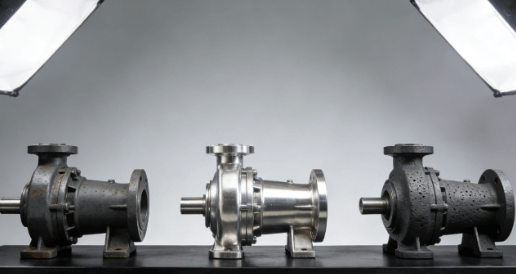
Auswahl der richtigen industrial pump casting manufacturer is one of the most critical decisions for any industrial operation that relies on pumps for efficiency and reliability. Pump castings are core components in sectors like water treatment, oil & gas, chemical processing, and power generation. A high-quality manufacturer ensures durability, minimizes maintenance costs, and improves operational uptime.
Recent industry surveys indicate that over 35% of pump failures in manufacturing plants are linked directly to substandard castings. This statistic alone highlights the importance of sourcing reliable manufacturers. In addition, with global supply chains becoming more complex, understanding the nuances of material quality, manufacturing processes, certifications, and supplier reliability is essential.
This blog will guide you through every step of sourcing a dependable industrial pump casting manufacturer, equipping you with insights that will save both time and money.
Understanding Industrial Pump Casting Manufacturers
What is an Industrial Pump Casting Manufacturer?
An industrial pump casting manufacturer specializes in producing precise pump components through casting processes such as sand casting, investment casting, or die casting. These manufacturers often supply parts for centrifugal pumps, diaphragm pumps, and submersible pumps. Their role is crucial because even minor dimensional inaccuracies or material defects can result in significant operational issues.
Why Reliability Matters
A reliable manufacturer ensures components meet exact specifications, reducing the risk of pump failure. Poorly manufactured castings can lead to downtime, repair costs, and in some industries, safety hazards. Choosing the right manufacturer enhances long-term equipment reliability and reduces total cost of ownership.
Material Selection for Pump Castings
Common Materials in Industrial Pump Castings
Industrial pump castings are commonly made from stainless steel, ductile iron, carbon steel, and sometimes bronze or special alloys. Each material has its unique properties affecting performance.
| Material | Korrosionsbeständigkeit | Haltbarkeit | Thermal Tolerance | Kosten |
|---|---|---|---|---|
| Edelstahl | Hoch | Sehr hoch | 800°C | Hoch |
| Sphäroguss | Medium | Hoch | 500°C | Medium |
| Kohlenstoffstahl | Niedrig | Medium | 450°C | Niedrig |
| Bronze | Medium | Medium | 400°C | Medium |
Choosing the right material depends on operating conditions, chemical exposure, temperature range, and budget. For example, pumps used in chemical processing typically require stainless steel due to its superior corrosion resistance, whereas water transfer pumps may perform well with ductile iron.
Production Process and Technology
Casting Techniques
- Sandguss – Traditional, versatile, suitable for large parts.
- Feinguss – Offers higher precision and smoother surface finish.
- Druckguss – Ideal for high-volume production with consistent quality.
Advanced Manufacturing Practices
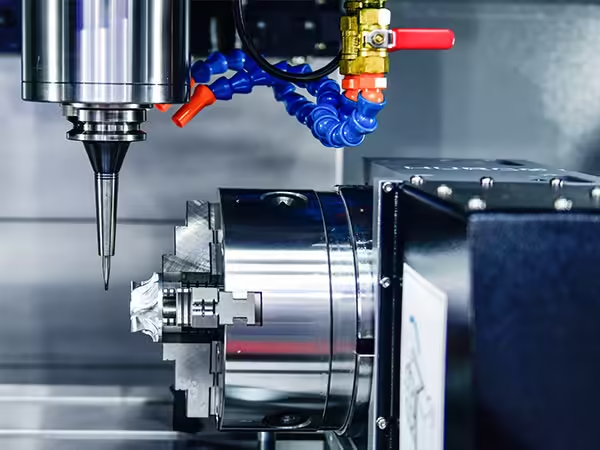
Modern manufacturers incorporate CNC machining, 3D scanning, and automated inspection systems to ensure high accuracy and repeatability. For example, CNC machining can achieve tolerances as tight as ±0.02 mm, which is critical for high-speed pump applications.
Certifications and Quality Standards
Wichtige Zertifizierungen, auf die Sie achten sollten
- ISO 9001: Ensures quality management system adherence
- API 610: For centrifugal pumps in the petroleum, petrochemical, and natural gas industries
- CE Marking: Compliance with EU safety standards
Having these certifications demonstrates a manufacturer’s commitment to quality, reducing risk in industrial operations.
Quality Control Measures
Manufacturers typically perform:
- Chemical composition testing (spectrometry)
- Mechanical property tests (tensile, hardness)
- Dimensional inspections using CMM machines
- Non-destructive testing (NDT) for cracks and porosity
These processes ensure castings are both durable and precise.
Comparing Local vs. International Manufacturers
Local Manufacturers
- Vorteile: Fast delivery, easier communication, better for urgent or small-scale orders
- Disadvantages: Limited material selection, higher per-unit cost for bulk orders
International Manufacturers
- Vorteile: Greater variety of materials, access to advanced technologies, lower costs for large volumes
- Disadvantages: Longer lead times, complex logistics, possible language barriers
Decision Tip: Use local suppliers for speed and small-scale operations. Use international suppliers for specialized materials, advanced technologies, or cost savings on large orders.
Cost Considerations and ROI
Evaluating Total Cost of Ownership
While initial cost is important, consider:
- Expected service life
- Maintenance frequency
- Downtime costs
- Replacement and shipping fees
A higher-quality casting may cost 20–30% more upfront but can reduce maintenance and replacement costs by up to 40% over 5 years.
Example ROI Analysis
| Scenario | Anfangskosten | Maintenance/Year | Downtime Cost/Year | 5-Year Total Cost |
|---|---|---|---|---|
| Low-Quality Castings | $5,000 | $1,500 | $2,000 | $17,500 |
| High-Quality Castings | $6,500 | $900 | $1,000 | $12,500 |
Investing in higher-quality pump castings can be cost-effective in the long run.
Common Industry Challenges
Lead Time Delays
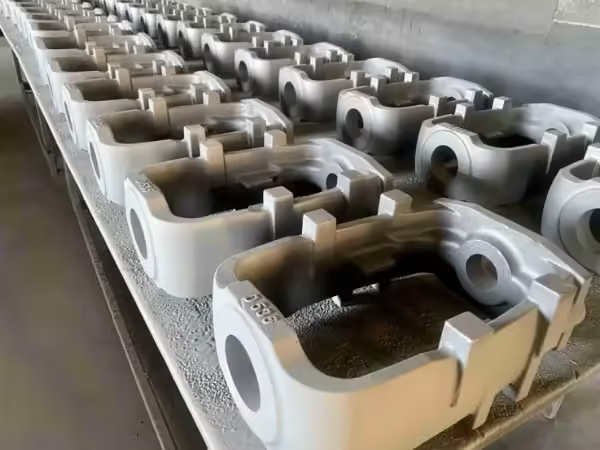
- Long production cycles and complex logistics can delay projects
- Solution: Maintain communication and schedule orders in advance
Materielle Inkonsistenzen
- Variability in chemical composition or casting defects
- Solution: Request material certificates, perform incoming inspections
Communication Barriers
- Misunderstandings with international suppliers
- Solution: Use clear specifications, standardized technical drawings, and video meetings
Practical Tips for Sourcing Reliable Manufacturers
Research and Supplier Vetting
- Evaluate online catalogs, technical datasheets, and customer testimonials
- Ask for references from other industrial clients
- Consider factory visits for production assessment
Request Samples and Test Reports
- Small sample orders allow testing before full-scale production
- Verify mechanical properties, dimensional accuracy, and surface finish
- Compare with international standards
Ensure Clear Communication
- Reliable suppliers provide detailed technical specifications
- Prompt response to inquiries and troubleshooting
- Strong post-sale support ensures smooth operations
Abschluss
Sourcing a reliable industrial pump casting manufacturer requires careful evaluation of material quality, manufacturing processes, certifications, cost considerations, and supplier reliability. By comparing local and international options, requesting samples, and checking references, industrial operations can secure high-quality castings that enhance pump performance, reduce maintenance costs, and improve operational efficiency.
Investing time and effort in selecting the right manufacturer is not just about purchasing castings—it’s about ensuring long-term reliability, safety, and cost-effectiveness for your operations.
Häufig gestellte Fragen
How do I know if a manufacturer is trustworthy?
Check certifications, request test reports, verify client references, and assess transparency in production processes.
What materials are most suitable for industrial pump castings?
Stainless steel, ductile iron, and carbon steel are common. The choice depends on corrosion, temperature, and mechanical requirements.
Local vs. international manufacturers—which is better?
Local manufacturers are better for fast delivery and urgent projects. International manufacturers offer wider options and better bulk pricing.
How long does it take to receive castings?
Lead times vary from 2–4 weeks for local suppliers to 8–16 weeks for international orders, depending on material, production volume, and logistics.
Can pump castings be customized?
Yes, most manufacturers allow customization of dimensions, alloys, and design to match specific industrial requirements.
What is the typical lifespan of industrial pump castings?
With proper material selection and maintenance, industrial pump castings can last 10–20 years, depending on operating conditions.
Produktkategorien
- Ventilteile
- Wasserpumpenteile
- Lagergehäuseteile
- Druckgussteile
- Pumpenprodukte aus Edelstahl
- Pumpenprodukte aus Gusseisen
- Ventilteile für den Automobilgebrauch
- Autoteile
- Ventilteile für den zivilen Gebrauch
- Vakuumpumpenteile KF

 German
  English
  Spanish
  Arabic
  Malay
Malay