
Sand Molds for Metal Casting for High-Quality Parts
Ich freue mich sehr, dass du hier bist! Bevor wir uns in die Inhalte vertiefen, würde ich mich freuen, wenn du mir auf meinen Social-Media-Plattformen folgst. Dort teile ich zusätzliche Einblicke, vernetze mich mit unserer großartigen Community und halte dich über die neuesten Nachrichten auf dem Laufenden. So bleibst du in Verbindung:
📘 Facebook: Shanghai Leierwo Industriehandel Co., Ltd.
Lassen Sie uns gemeinsam auf diese Reise gehen! Ich hoffe, Sie finden die Inhalte hier nicht nur aufschlussreich, sondern auch inspirierend und wertvoll. Los geht‘s!
Inhaltsverzeichnis
Wichtigste Erkenntnisse
- Learn what Sandformen für den Metallguss are and why they remain the most widely used molding method in modern foundries.
- Discover the different types of molding sand and how each affects casting quality.
- Understand how mold design influences dimensional accuracy, surface finish, and production efficiency.
- Compare green sand, resin sand, shell mold, and chemically bonded sand.
- Explore the complete sand casting process from pattern making to final inspection.
- Learn the key properties of molding sand that determine casting success.
- Review engineering considerations for selecting the right sand mold for different alloys.
- Compare advantages and limitations of sand molds with other casting processes.
Einführung
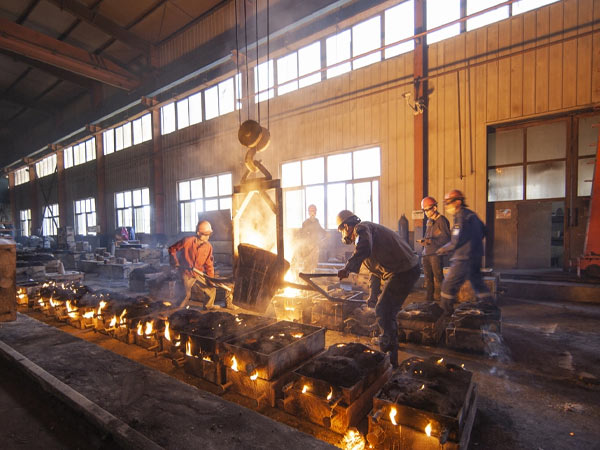
Metal casting has supported industrial manufacturing for thousands of years, yet it continues to evolve with modern engineering and automation. Whether producing automotive engine blocks, mining equipment, agricultural machinery, valve bodies, pump housings, or large industrial components, manufacturers still rely heavily on Sandformen für den Metallguss because of their flexibility, affordability, and ability to create complex geometries.
According to recent industry reports, sand casting accounts for nearly 70–75% of all metal castings produced worldwide, making it one of the most important manufacturing processes in today’s foundry industry. The process supports both small precision components weighing less than 100 grams and massive castings weighing several tons.
Choosing the appropriate molding material and mold design is one of the most critical decisions during production. A well-designed mold directly affects dimensional accuracy, mechanical strength, surface quality, production efficiency, and manufacturing cost.
This guide explains everything buyers, engineers, designers, and foundry professionals should know about selecting Sandformen für den Metallguss for high-quality parts.
What Are Sand Molds for Metal Casting?
Basic Definition
Sand molds for metal casting are molds created by compacting specially prepared molding sand around a pattern. After removing the pattern, molten metal is poured into the cavity, where it solidifies into the desired component.
Unlike permanent molds, sand molds are generally disposable and destroyed after the casting is removed. Although single-use, they provide exceptional flexibility for manufacturing parts of almost any size or complexity.
Why Sand Casting Remains Popular
Several factors explain why sand casting continues to dominate global manufacturing.
- Suitable for almost every castable alloy
- Excellent scalability
- Low tooling investment
- Flexible production volumes
- Easy modification of mold designs
- Capable of producing extremely large components
These advantages make sand casting the preferred solution for industries requiring custom or medium-volume production.
Main Components of a Sand Mold
Every mold consists of several important elements working together.
Mold Cavity
The cavity reproduces the exact external shape of the finished casting.
It determines the overall geometry and directly influences dimensional accuracy.
Core
A core forms internal holes, channels, and hollow sections.
Complex components such as pump housings or engine blocks often require multiple sand cores.
Gating System
The gating system guides molten metal into the mold.
A properly designed gating system minimizes turbulence, oxidation, and shrinkage defects.
Riser
A riser acts as a reservoir of molten metal.
During solidification, it compensates for metal shrinkage and reduces internal porosity.
Venting Channels
Vents allow gases generated during pouring to escape safely.
Without proper venting, gas defects such as blowholes and pinholes become more likely.
Why Sand Molds for Metal Casting Produce High-Quality Parts
Excellent Design Flexibility
One of the biggest strengths of sand molds is design freedom.
Manufacturers can easily create:
- Komplexe innere Hohlräume
- Thin walls
- Thick structural sections
- Irregular geometries
- Large industrial components
Unlike machining, sand casting can create these shapes in a single manufacturing step.
Suitable for Nearly Every Casting Alloy
Modern molding sand can accommodate almost every common casting material.
| Metall | Suitable |
|---|---|
| Grauguss | ✔ |
| Sphäroguss | ✔ |
| Kohlenstoffstahl | ✔ |
| Edelstahl | ✔ |
| Bronze | ✔ |
| Messing | ✔ |
| Aluminium | ✔ |
| Magnesium | ✔ |
| Nickel Alloys | ✔ |
This versatility explains why foundries serving multiple industries often rely on sand casting.
Kosteneffizienz
Compared with permanent mold casting or die casting, sand molds require much lower tooling investment.
Advantages include:
- Lower startup costs
- Affordable prototype production
- Easy design revisions
- Reduced tooling lead time
This makes sand casting especially attractive for custom manufacturing.
Types of Sand Molds for Metal Casting

Different molding systems offer different performance characteristics.
Selecting the correct type depends on production quantity, alloy, dimensional requirements, and budget.
Green Sand Molds
Green sand is the most widely used molding material worldwide.
It contains:
- Silica sand
- Bentonite clay
- Water
- Carbon additives
Vorteile
- Lowest manufacturing cost
- High production speed
- Easy reclamation
- Suitable for automated molding lines
Beschränkung
Surface finish is generally rougher than chemically bonded systems.
Resin Sand Molds
Resin-bonded sand uses synthetic binders instead of clay.
This significantly improves mold strength.
Advantages include:
- Better dimensional accuracy
- Improved surface finish
- Reduced mold deformation
- Better performance for large steel castings
Shell Molds
Shell molding uses resin-coated sand heated on a metal pattern.
Advantages include:
- Excellent precision
- Smooth surfaces
- Reduced machining allowance
- High repeatability
This process is widely used for automotive precision components.
Sodium Silicate Sand
Also called water glass sand.
It uses sodium silicate as the binder.
Vorteile:
- Environmentally friendly
- Hohe Festigkeit
- Low gas generation
Increasingly popular in modern environmentally conscious foundries.
Chemically Bonded Sand
Chemical hardening produces very rigid molds.
These systems perform well in:
- Large castings
- Schwere Stahlkomponenten
- Mining equipment
- Wind power components
Comparison of Common Sand Mold Types
| Typ | Stärke | Oberflächenbeschaffenheit | Kosten | Typical Production |
|---|---|---|---|---|
| Green Sand | Medium | Gerecht | Niedrig | High Volume |
| Resin Sand | Hoch | Sehr gut | Medium | Medium Volume |
| Shell Mold | Sehr hoch | Exzellent | Hoch | Precision Parts |
| Natriumsilikat | Hoch | Gut | Medium | Large Castings |
| Furan Resin | Sehr hoch | Exzellent | Höher | Heavy Industry |
Properties of High-Quality Molding Sand
Not all sand performs equally.
The engineering properties determine casting success.
Refractoriness
Refractoriness refers to the ability to withstand molten metal temperatures.
High-quality silica sand typically tolerates temperatures above 1,600°C, making it suitable for iron and steel casting.
Poor refractoriness can lead to sand fusion and surface defects.
Permeability
Permeability measures how easily gases escape through the mold.
Good permeability reduces:
- Blowholes
- Gasporosität
- Surface bubbles
However, excessive permeability may reduce mold strength.
Finding the proper balance is essential.
Stärke
Strength ensures the mold maintains its shape during pouring.
There are several types:
Green Strength
Strength before drying.
Critical for automated molding.
Dry Strength
Strength after moisture removal.
Important for large castings.
Hot Strength
Strength at elevated temperatures during metal pouring.
Poor hot strength often causes mold collapse.
Plasticity
Plasticity allows molding sand to flow around the pattern during compaction.
Good plasticity reproduces intricate details with higher dimensional accuracy.
Collapsibility
After solidification, the mold should collapse easily.
Proper collapsibility reduces:
- Hot tearing
- Residual stress
- Cleaning difficulty
Standard Composition of Green Sand
| Komponente | Typical Percentage |
|---|---|
| Silica Sand | 85–92% |
| Bentonite Clay | 6–10% |
| Water | 2–5% |
| Carbon Additives | 2–5% |
Maintaining these proportions helps achieve consistent molding quality.
Sand Grain Size and Casting Quality
Sand grain size directly affects the finished casting.
| Grain Size | Eigenschaften | Typische Anwendung |
|---|---|---|
| Fine | Smooth finish | Precision castings |
| Medium | Balanced properties | General machinery |
| Coarse | Better permeability | Heavy castings |
Selecting the appropriate grain size is one of the simplest ways to improve overall casting quality.
The Complete Sand Casting Process

Pattern Design
The process begins with designing a pattern that accounts for:
- Shrinkage allowance
- Machining allowance
- Draft angles
Accurate patterns form the foundation of high-quality castings.
Formenvorbereitung
Prepared molding sand is packed around the pattern using either manual or automated equipment.
Proper compaction ensures mold stability and dimensional consistency.
Core Assembly
If internal cavities are required, sand cores are positioned accurately inside the mold before closing.
Even minor core displacement can lead to dimensional errors or wall thickness variations.
Mold Closing
The cope and drag sections are aligned and securely assembled to prevent metal leakage during pouring.
Precision alignment is essential for maintaining casting geometry.
Metallgießen
Molten metal is poured through the gating system at a controlled temperature and flow rate.
The filling process must minimize turbulence to reduce oxidation and gas entrapment.
Cooling and Solidification in Sandformen für den Metallguss
Cooling and solidification are among the most important stages of the casting process. Even if a mold is accurately designed and the molten metal is poured correctly, improper cooling can result in shrinkage cavities, internal stresses, distortion, or cracks.
The cooling rate directly influences the final microstructure, mechanical properties, and dimensional stability of the casting.
Why Cooling Rate Matters
The solidification speed determines grain size and internal structure.
Generally speaking:
- Faster cooling produces finer grain structures.
- Slower cooling results in larger grains but lower residual stress.
- Uniform cooling minimizes distortion.
Proper mold design balances these factors according to the application requirements.
Factors Affecting Cooling Performance
Mold Material
Different molding sands transfer heat at different rates.
Silica sand provides moderate thermal conductivity and is suitable for most alloys, while specialty sands such as chromite and zircon offer improved heat resistance for demanding applications.
Casting Geometry
Thick sections cool more slowly than thin sections.
Large differences in wall thickness may lead to uneven solidification and shrinkage defects.
Pouring Temperature
Higher pouring temperatures increase fluidity but also extend solidification time.
Finding the correct pouring temperature is essential for balancing mold filling and casting quality.
Typical Pouring Temperature Reference
| Metal Alloy | Typical Pouring Temperature |
|---|---|
| Grauguss | 1,350–1,450°C |
| Sphäroguss | 1,380–1,500°C |
| Kohlenstoffstahl | 1,540–1,620°C |
| Edelstahl | 1,550–1,650°C |
| Aluminiumlegierung | 680–760°C |
| Bronze | 1,000–1,150°C |
| Messing | 930–1,050°C |
Actual temperatures vary depending on alloy composition and casting design.
Mold Design Principles for High-Quality Parts
A successful casting begins long before molten metal enters the mold. Proper mold engineering significantly reduces defects, machining costs, and production waste.
Pattern Design Considerations
Shrinkage Allowance
Most metals contract as they solidify.
Patterns are intentionally manufactured larger than the finished dimensions to compensate for this shrinkage.
Typical shrinkage allowances include:
| Material | Typical Shrinkage |
|---|---|
| Grauguss | 0.8–1.0% |
| Sphäroguss | 1.0–1.2% |
| Kohlenstoffstahl | 2.0–2.6% |
| Aluminiumlegierung | 1.1–1.3% |
| Bronze | 1.3–2.1% |
Selecting the proper allowance improves dimensional accuracy.
Draft Angle
Draft angles allow the pattern to be removed without damaging the mold cavity.
Typical values include:
- External surfaces: 1°–2°
- Internal cavities: 2°–3°
- Deep pockets: 3°–5°
Bearbeitungszulage
Castings requiring finish machining include additional material.
Typical allowances depend on casting size.
| Casting Size | Bearbeitungszulage |
|---|---|
| Klein | 1–3 mm |
| Medium | 3–6 mm |
| Groß | 6–12 mm |
Gating System Design in Sandformen für den Metallguss
The gating system controls how molten metal enters the mold cavity.
A well-designed system improves yield while reducing defects.
Sprue
The sprue carries molten metal from the pouring basin into the runner.
A tapered sprue minimizes air aspiration during pouring.
Runner
The runner distributes molten metal evenly throughout the mold.
Balanced runner systems improve filling consistency.
Gate
The gate is the final opening through which molten metal enters the casting cavity.
Gate size influences:
- Filling speed
- Turbulence
- Surface finish
- Oxidation
Riser Design
A riser acts as a liquid metal reservoir during solidification.
Without adequate risers, shrinkage cavities frequently occur.
Common riser types include:
- Open riser
- Blind riser
- Side riser
- Top riser
Chills
Chills accelerate local cooling.
They are used to:
- Promote directional solidification
- Reduce shrinkage
- Improve internal soundness
Chills may be metallic or sand-based depending on the application.
Sand Molds for Metal Casting vs Other Casting Processes
Choosing the right casting process depends on production volume, alloy, accuracy requirements, and cost.
Sandguss vs. Investmentguss
| Besonderheit | Sandguss | Feinguss |
|---|---|---|
| Oberflächenbeschaffenheit | Gut | Exzellent |
| Maßgenauigkeit | Mäßig | Sehr hoch |
| Werkzeugkosten | Niedrig | Hoch |
| Part Size | Very Large | Small to Medium |
| Produktionsvolumen | Flexible | Mittel bis hoch |
| Design Complexity | Hoch | Sehr hoch |
Investment casting excels in precision components, while sand casting remains more economical for larger parts.
Sand Casting vs Die Casting
| Besonderheit | Sandguss | Druckguss |
|---|---|---|
| Formtyp | Disposable | Permanent Steel Mold |
| Anfangskosten | Niedrig | Sehr hoch |
| Produktionsgeschwindigkeit | Medium | Sehr hoch |
| Suitable Alloys | Almost All | Mainly Aluminum, Zinc, Magnesium |
| Large Components | Exzellent | Beschränkt |
Die casting is ideal for high-volume production, whereas sand casting offers greater material flexibility.
Sand Casting vs Permanent Mold Casting
Permanent mold casting provides better surface finish and consistency but requires expensive metal molds.
Sand molds remain the preferred choice for:
- Large machinery
- Prototype development
- Low-volume production
- Heavy steel castings
Common Defects in Sand Molds for Metal Casting
Even experienced foundries occasionally encounter casting defects.
Understanding their causes helps improve production quality.
Gas Porosity
Beschreibung
Small rounded holes trapped inside the casting.
Common Causes
- Excessive moisture
- Poor venting
- Turbulent pouring
Verhinderung
- Improve mold permeability
- Control moisture content
- Optimize gating design
Shrinkage Cavities
Beschreibung
Internal voids formed during solidification.
Ursachen
- Inadequate risers
- Improper directional solidification
Verhinderung
- Larger risers
- Better feeding paths
- Use chills where necessary
Sandeinschluss
Beschreibung
Loose sand becomes trapped inside molten metal.
Ursachen
- Weak mold strength
- Schimmelerosion
- High pouring velocity
Verhinderung
- Increase mold hardness
- Improve binder quality
- Optimize gating system
kalt zuklappen
Beschreibung
Two streams of molten metal fail to fuse together.
Ursachen
- Low pouring temperature
- Slow filling
- Thin wall design
Verhinderung
- Increase pouring temperature
- Modify gate position
- Improve mold filling
Fehllauf
Beschreibung
Molten metal solidifies before filling the cavity.
Ursachen
- Insufficient temperature
- Poor gating
- Thin sections
Verhinderung
- Increase fluidity
- Enlarge gates
- Reduce flow resistance
Hot Tears
Beschreibung
Cracks formed during solidification.
Ursachen
- Restrained contraction
- Poor collapsibility
- Sharp corners
Verhinderung
- Improve mold collapsibility
- Add generous fillets
- Optimize feeding
International Standards for Sand Molds for Metal Casting

Modern foundries increasingly comply with international standards to improve consistency, quality, and customer confidence.
ISO 8062
Defines dimensional tolerances and machining allowances for castings.
Widely adopted by global foundries supplying industrial equipment.
ISO 9001
Quality management standard ensuring consistent manufacturing processes.
Many international buyers require ISO 9001 certification before supplier approval.
ASTM Standards
ASTM provides specifications covering:
- Molding materials
- Foundry sand
- Mechanical testing
- Chemical analysis
These standards improve consistency across international supply chains.
AFS Standards
The American Foundry Society publishes extensive technical guidance covering:
- Sand testing
- Binder systems
- Casting defects
- Process optimization
AFS recommendations are widely respected throughout the foundry industry.
DIN Standards
German DIN standards establish engineering requirements for cast components used in machinery, automotive, and industrial equipment.
Industries Using Sand Molds for Metal Casting
Sand casting supports nearly every manufacturing sector.
Automobilindustrie
Typical components include:
- Engine blocks
- Cylinder heads
- Brake drums
- Getriebegehäuse
- Exhaust manifolds
Landmaschinen
Heavy-duty agricultural equipment relies on cast components such as:
- Tractor housings
- Gearboxes
- Axle components
- Hydraulic pump bodies
Mining Equipment
Mining machinery often requires large, wear-resistant castings.
Beispiele sind:
- Crusher frames
- Getriebegehäuse
- Wear plates
- Excavator counterweights
Pumpen- und Ventilindustrie
Sand casting is widely used for:
- Pump casings
- Ventilkörper
- Impellers
- Pipe fittings
The process accommodates complex internal flow passages with excellent design flexibility.
Quality Control for Sand Molds for Metal Casting
Producing high-quality castings requires much more than selecting the right molding sand. Quality control should be integrated into every stage of production, from raw material inspection to final dimensional verification.
Modern foundries combine traditional craftsmanship with laboratory testing, statistical process control (SPC), and digital monitoring systems to maintain consistent casting quality.
Raw Material Inspection
Silica Sand Quality
Silica sand is the primary material used in most sand molds for metal casting. Before production begins, foundries evaluate several key characteristics to ensure consistent mold performance.
Typical inspection items include:
- SiO₂ purity
- Grain size distribution
- Clay content
- Moisture level
- Acid demand value (ADV)
- Loss on ignition (LOI)
Consistent raw materials reduce process variation and improve dimensional accuracy.
Binder Quality
The binder holds the sand particles together and determines mold strength.
Common binders include:
- Bentonite clay
- Phenolic resin
- Furan resin
- Sodium silicate
- Organic binders
- Inorganic binders
A stable binder system helps prevent mold breakage, erosion, and surface defects.
Laboratory Testing of Molding Sand
Professional foundries routinely test molding sand before production.
| Test Item | Zweck |
|---|---|
| Moisture Content | Maintain mold consistency |
| Green Compression Strength | Evaluate mold stability |
| Permeability | Allow gases to escape |
| Compactability | Measure molding performance |
| Grain Fineness Number (GFN) | Determine surface quality |
| Loss on Ignition | Assess binder residue |
| Clay Content | Evaluate bonding ability |
Routine laboratory testing significantly reduces production defects.
Green Compression Strength
Green strength measures the mold’s resistance to deformation before drying.
Typical values range from 70–180 kPa, depending on the molding process and casting size.
Higher values improve mold stability but may reduce permeability.
Permeability Testing
Gas generated during pouring must escape efficiently.
Low permeability often causes:
- Blowholes
- Gasporosität
- Surface bubbles
Foundries regularly measure permeability to ensure stable production.
Mold Hardness Inspection
Mold hardness directly affects dimensional stability.
Insufficient hardness may result in:
- Sand erosion
- Mold collapse
- Dimensional deviation
Excessive hardness may reduce collapsibility and increase hot tearing risk.
Factors Affecting Casting Quality
Producing defect-free castings requires balancing numerous process variables.
Sand Grain Shape
Grain shape influences mold strength and permeability.
Rounded Grains
Vorteile:
- Better flowability
- Higher permeability
- Easier compaction
Suitable for large castings.
Angular Grains
Vorteile:
- Higher mold strength
- Better detail reproduction
Often selected for precision components.
Grain Size Distribution
Proper grain distribution improves packing density.
Well-graded sand provides:
- Better surface finish
- Improved dimensional accuracy
- Reduced metal penetration
Moisture Control
Moisture content is one of the most critical variables.
Too much water may cause:
- Gas defects
- Expansion defects
- Lower permeability
Too little water reduces mold strength.
Typical green sand moisture ranges from 2.5% to 4.5%.
Mold Compaction
Proper compaction creates uniform mold density.
Benefits include:
- Stable dimensions
- Better surface finish
- Lower scrap rates
Modern automatic molding lines maintain highly consistent compaction pressure.
Sand Reclamation and Sustainability
Environmental responsibility has become a major focus in the global foundry industry.
Since millions of tons of molding sand are consumed annually, efficient reclamation systems significantly reduce both costs and environmental impact.
Mechanical Reclamation
Mechanical systems remove residual binders through friction and abrasion.
Advantages include:
- Low operating cost
- Suitable for large production volumes
- High recycling efficiency
Thermal Reclamation
Thermal systems heat used sand to remove organic binders.
Vorteile:
- Very clean reclaimed sand
- Suitable for resin systems
- Improved consistency
Although more expensive, thermal reclamation supports premium casting quality.
Wet Reclamation
Water-based cleaning removes clay and fine particles.
Typically used for specific molding systems.
Umweltvorteile
Modern reclamation systems help foundries:
- Reduce landfill waste
- Lower raw material consumption
- Reduce CO₂ emissions
- Improve production sustainability
Many advanced foundries now reclaim 80–95% of their molding sand.
Automation in Sand Molds for Metal Casting
Automation is transforming modern foundries.
Today’s production lines incorporate robotics, artificial intelligence, machine vision, and Industrial Internet of Things (IIoT) technologies.
Automatic Molding Machines
Compared with manual molding, automated systems provide:
- Higher productivity
- Better consistency
- Reduzierte Arbeitskosten
- Improved dimensional accuracy
Robotic Core Setting
Industrial robots precisely position sand cores inside molds.
Benefits include:
- Improved repeatability
- Reduced assembly errors
- Faster production
AI-Based Defect Detection
Machine vision systems inspect castings for:
- Oberflächenrisse
- Blowholes
- Flash
- Fehlläufe
- Schwindung
Artificial intelligence can identify defects faster than manual inspection.
Digital Process Monitoring
Modern foundries monitor:
- Pouring temperature
- Mold moisture
- Sand strength
- Cooling curves
- Production yield
Real-time monitoring improves process stability.
Sand Molds for Metal Casting Cost Analysis
Production cost depends on many variables.
Main Cost Components
| Cost Category | Typical Contribution |
|---|---|
| Raw Materials | 25 40% |
| Energie | 15–25% |
| sich abmühen | 15–30% |
| Ausrüstung | 10–20% |
| Bearbeitung | 10–25% |
| Inspektion | 3–8% |
Optimizing mold design often reduces overall manufacturing cost more effectively than simply selecting lower-cost materials.
Factors Influencing Cost
Casting Size
Larger castings require:
- More sand
- More molten metal
- Longer cooling time
Legierungstyp
Steel castings generally cost more than aluminum due to higher melting temperatures and longer production cycles.
Produktionsvolumen
Higher production volumes reduce unit costs by spreading tooling and setup expenses across more parts.
Komplexität
Components with thin walls, deep cavities, or multiple cores require additional labor and inspection.
How to Choose a Reliable Sand Mold Manufacturer
Selecting the right foundry partner is just as important as selecting the right molding process.
Manufacturing Experience
Look for suppliers with extensive experience in your industry.
Beispiele sind:
- Automobilindustrie
- Mining
- Construction machinery
- Agricultural equipment
- Oil & gas
- Stromerzeugung
Industry knowledge often translates into better process control.
Qualitätszertifizierungen
Reliable manufacturers commonly hold certifications such as:
- ISO 9001
- ISO 14001
- ISO 45001
- IATF 16949 (Automotive)
- PED (Pressure Equipment)
- CE Compliance
Engineering Capability
A capable supplier should provide:
- Mold flow simulation
- CAD/CAM support
- Pattern design
- Reverse engineering
- Process optimization
Testing Equipment
Professional foundries invest in advanced inspection systems, including:
- Coordinate Measuring Machines (CMM)
- Spectrometers
- Universal testing machines
- Hardness testers
- Röntgenuntersuchung
- Ultraschallprüfung
- Magnetic particle inspection
Global Market Trends
According to multiple industry analyses released between 2024 and 2025, global demand for metal castings continues to grow, driven by infrastructure investment, renewable energy, transportation, and industrial automation.
Several long-term trends are shaping the future of sand casting:
- Increased adoption of automated molding lines
- Higher use of reclaimed molding sand
- Greater demand for lightweight aluminum castings
- Digital quality control using AI and machine vision
- Expansion of simulation-driven mold design
- Growth in renewable energy components such as wind turbine hubs and gearbox housings
These trends highlight the ongoing importance of sand molds for metal casting in both traditional and emerging industries.
Häufig gestellte Fragen
What are sand molds for metal casting used for?
They are used to produce metal components with complex shapes by forming a cavity in compacted molding sand and pouring molten metal into it.
Which type of molding sand produces the best surface finish?
Resin-bonded sand and shell molding generally provide smoother surfaces than traditional green sand.
Can sand molds be reused?
The mold itself is usually destroyed after casting removal, but the sand can often be reclaimed and reused after proper treatment.
Which metals can be cast using sand molds?
Sand molds are suitable for gray iron, ductile iron, carbon steel, stainless steel, aluminum, brass, bronze, magnesium, and many specialty alloys.
How do I select the right molding sand?
The best choice depends on alloy type, casting size, dimensional accuracy, production volume, and surface finish requirements.
Are sand molds suitable for large industrial components?
Yes. Sand casting is one of the few manufacturing processes capable of producing castings weighing several tons while maintaining excellent design flexibility.
What causes defects in sand castings?
Common causes include improper mold design, poor sand quality, inadequate venting, incorrect pouring temperature, and insufficient feeding during solidification.
How can casting quality be improved?
Consistent raw materials, optimized gating systems, proper sand testing, automated process control, and thorough inspection all contribute to higher-quality castings.
Abschluss
Despite the development of many advanced manufacturing technologies, Sandformen für den Metallguss remain one of the most versatile, economical, and reliable solutions for producing high-quality metal components.
From small precision parts to massive industrial castings, sand molding offers exceptional flexibility, broad material compatibility, and cost-effective production. When combined with proper mold design, optimized gating systems, rigorous quality control, international manufacturing standards, and modern automation, it delivers consistent performance across a wide range of industries.
As digital foundries continue to adopt simulation software, AI-assisted inspection, robotic molding systems, and sustainable sand reclamation technologies, the future of Sandformen für den Metallguss will become even more efficient, environmentally responsible, and capable of meeting increasingly demanding engineering requirements.
Whether you are sourcing cast components, evaluating manufacturing processes, or selecting a long-term foundry partner, understanding the principles and best practices behind sand molding is essential for achieving reliable quality, improved productivity, and long-term manufacturing success.
Produktkategorien
- Ventilteile
- Wasserpumpenteile
- Lagergehäuseteile
- Druckgussteile
- Pumpenprodukte aus Edelstahl
- Pumpenprodukte aus Gusseisen
- Ventilteile für den Automobilgebrauch
- Autoteile
- Ventilteile für den zivilen Gebrauch
- Vakuumpumpenteile KF

Lassen Sie uns Ihr nächstes Projekt starten!
Starten Sie Ihr Projekt mit Leierwo
1. Senden Sie Ihre Anfrage
2. Kostenkalkulation
3. Produktion starten
4. Lieferung vereinbaren
Häufig gestellte Fragen
Ja, wir verfügen über umfassende Erfahrung im internationalen Handel und unterstützen unsere Kunden gerne bei der Exportzollabfertigung und Versandabwicklung. Wir bieten verschiedene Handelsbedingungen wie FOB, CIF und DDP an, um unterschiedlichen Logistikanforderungen gerecht zu werden. Wir akzeptieren verschiedene internationale Zahlungsmethoden, darunter T/T (Telegraphic Transfer), elektronische Überweisung und Akkreditiv (L/C). Die Zahlungsbedingungen können Sie mit unserem Vertriebsteam besprechen.
Durch die Partnerschaft mit Leierwo profitieren Sie von wettbewerbsfähigen Preisen und überlegener Qualität im Vergleich zu anderen Anbietern. Darüber hinaus bieten wir eine Komplettlösung für die Lieferung fertiger Teile, einschließlich CNC-Bearbeitung und Oberflächenbehandlung, und gewährleisten so einen reibungslosen Produktionsprozess.
Wir verfügen über moderne Gussanlagen und strenge Qualitätskontrollsysteme. Unsere monatliche Produktionskapazität ist beträchtlich und wir können Produkte nach Kundenzeichnungen oder Mustern fertigen. Wir akzeptieren sowohl kleine Probeaufträge als auch Großserienproduktionen.
Unsere Produkte entsprechen internationalen Normen wie ASTM, AISI, DIN und JIS. Wir stellen Materialprüfberichte und entsprechende Zertifizierungen bereit, um sicherzustellen, dass die Produktqualität den Kundenanforderungen entspricht.
Wir befolgen strikt das Qualitätsmanagementsystem ISO 9001 und führen während des gesamten Produktionsprozesses zahlreiche Prüfungen durch, darunter spektrografische Analysen, Röntgenprüfungen, Ultraschallprüfungen und Maßmessungen. Diese Qualitätskontrollmaßnahmen garantieren, dass unsere Gussteile den höchsten Standards entsprechen.
Unsere Mindestbestellmenge hängt von der Art und Komplexität des Produkts ab. Wir sind jedoch flexibel und offen für die Besprechung Ihrer spezifischen Anforderungen.
Unsere Standardproduktionszeit beträgt 4–6 Wochen, abhängig von Bestellmenge und Produktkomplexität. Wir sind bestrebt, die Lieferzeiten zu verkürzen, um den Kundenanforderungen gerecht zu werden.
Ja, wir können Muster zur Qualitätsprüfung bereitstellen. Musterkosten und Versandkosten können ausgehandelt werden. Die Mustergebühren können bei einer formellen Bestellung erstattet werden.
 German
  English
  Spanish
  Arabic
  Malay
Malay