
Custom Aluminum Die Casting Impeller Solutions for Industrial Performance
Ich freue mich sehr, dass du hier bist! Bevor wir uns in die Inhalte vertiefen, würde ich mich freuen, wenn du mir auf meinen Social-Media-Plattformen folgst. Dort teile ich zusätzliche Einblicke, vernetze mich mit unserer großartigen Community und halte dich über die neuesten Nachrichten auf dem Laufenden. So bleibst du in Verbindung:
📘 Facebook: Shanghai Leierwo Industriehandel Co., Ltd.
Lassen Sie uns gemeinsam auf diese Reise gehen! Ich hoffe, Sie finden die Inhalte hier nicht nur aufschlussreich, sondern auch inspirierend und wertvoll. Los geht‘s!
Inhaltsverzeichnis
Einführung
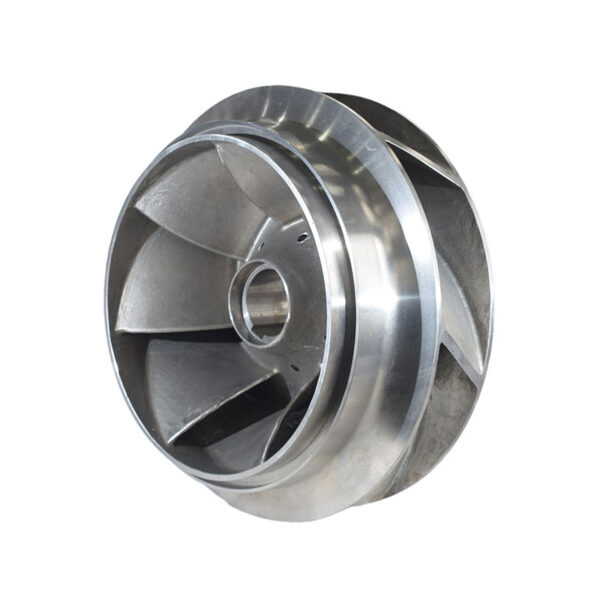
In modern industrial systems, performance is often decided by components that are rarely noticed—but critically important. The impeller is one of those parts. Whether in a water treatment plant, HVAC system, chemical pump, or industrial compressor, its efficiency directly determines energy consumption, system stability, and long-term operational cost.
What makes the aluminum die casting impeller especially important today is not just its function, but its alignment with modern engineering priorities: lightweight design, energy efficiency, corrosion resistance, and scalable mass production.
Over the last decade, global industrial reports (including hydraulic machinery white papers and ISO-based pump efficiency studies) consistently show that improving impeller design alone can reduce system energy consumption by 12%–28%, depending on operating conditions. That means a single component can significantly influence overall system economics.
This is why demand for custom aluminum die casting impeller solutions is increasing rapidly across industries that require precision fluid control and high reliability.
Key Takeaways of This Expanded Guide
- Deep engineering understanding of aluminum die casting impellers
- Manufacturing standards including ISO, DIN, and hydraulic performance benchmarks
- Material science behind aluminum alloys used in impellers
- Industrial case studies and real performance data
- Pump efficiency optimization principles
- Comparison with steel, stainless steel, and composite impellers
- Global market trends and industry direction
- Engineering whitepaper insights for hydraulic systems
- Extended FAQ for technical buyers and engineers
Verständnis Aluminum Die Casting Impeller Technology in Depth
What Makes Aluminum Die Casting Different
Aluminum die casting is a high-pressure manufacturing process where molten aluminum is injected into steel molds at pressures typically ranging from 70 MPa to 120 MPa. This creates dense, highly accurate components with excellent surface finish.
For an aluminum die casting impeller, this process ensures:
- Tight dimensional tolerance (±0.02 mm in precision tooling environments)
- High repeatability for mass production
- Smooth blade surface for improved hydraulic flow
Why Impellers Require Precision Manufacturing
Impellers operate under continuous rotational stress and fluid pressure. Even small imperfections in blade geometry can cause:
- Flow turbulence
- Cavitation
- Efficiency loss
- Vibration and noise
This is why high-end systems rely on precision die casting combined with CNC finishing.
Engineering Principles Behind Aluminum Die Casting Impeller Design
Hydraulic Energy Conversion Principle
An impeller works by transferring mechanical energy into fluid kinetic energy. The efficiency of this conversion depends on blade shape, angle, and rotational speed.
Industry hydraulic engineering studies show:
- Well-optimized impellers improve flow efficiency by 15%–35%
- Poor geometry design can reduce pump efficiency by up to 40%
Key Design Variables
Engineers typically optimize:
- Blade inlet angle
- Blade outlet angle
- Number of blades
- Curvature radius
- Hub ratio
Each factor influences pressure generation and flow stability.
Cavitation Risk and Control
Cavitation occurs when local pressure drops below vapor pressure, forming vapor bubbles that collapse and damage surfaces.
To reduce cavitation in aluminum die casting impeller systems:
- Maintain correct NPSH (Net Positive Suction Head)
- Optimize inlet blade design
- Reduce sharp pressure gradients
Cavitation can reduce impeller lifespan by 30%–60% if unmanaged.
Aluminum Die Casting Impeller Manufacturing Process (Industrial Standard)
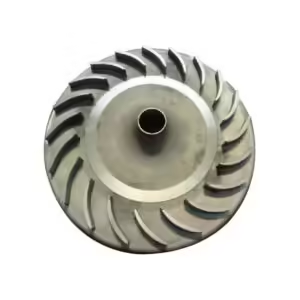
Step 1: Material Selection
Most industrial impellers use aluminum alloys such as:
- ADC12 (Japan standard)
- A380 (US standard)
These alloys offer:
- Good castability
- Korrosionsbeständigkeit
- Balanced strength-to-weight ratio
Step 2: Mold Design Engineering
High-precision steel molds are designed with:
- Cooling channels
- Venting systems
- Ejection optimization
Mold quality directly affects surface finish and dimensional stability.
Step 3: High-Pressure Casting
Molten aluminum is injected into molds at high speed. This ensures:
- Fine grain structure
- Reduced porosity
- Hohe mechanische Festigkeit
Step 4: CNC Machining Finishing
Critical surfaces are machined to achieve:
- Tight tolerance
- Perfect shaft alignment
- Balanced rotation
Step 5: Dynamic Balancing
Jede aluminum die casting impeller is tested for rotational balance according to ISO 1940-1 standards.
Typical balance grade targets:
- G6.3 for industrial pumps
- G2.5 for high-speed systems
Step 6: Surface Treatment
Surface finishing improves corrosion resistance:
- Anodizing
- Electrocoating
- Anti-erosion coatings
International Standards for Aluminum Die Casting Impeller Quality
ISO Standards Relevant to Impellers
- ISO 9906: Pump performance testing
- ISO 1940-1: Rotating balance quality
- ISO 8062: Casting dimensional tolerance
Hydraulic Efficiency Benchmarking
Industrial pump systems are evaluated based on:
- Flow rate accuracy
- Head pressure consistency
- Energy consumption per cubic meter
Modern high-efficiency systems aim for pump efficiencies above 80%–92%.
Material Science Behind Aluminum Die Casting Impellers
Common Aluminum Alloys Used
| Legierung | Stärke | Korrosionsbeständigkeit | Casting Performance | Anwendung |
|---|---|---|---|---|
| ADC12 | Medium | Hoch | Exzellent | General pumps |
| A380 | Hoch | Medium | Exzellent | Industrial systems |
| AlSi10Mg | Sehr hoch | Sehr hoch | Gut | High-performance systems |
Microstructure Advantages
Aluminum die casting creates:
- Fine grain microstructure
- Uniform density
- Reduced internal stress
This improves fatigue resistance in rotating systems.
Custom Aluminum Die Casting Impeller Solutions Explained
What Customization Really Means
Custom engineering involves optimizing:
- Flow channel geometry
- Diameter and thickness
- Blade curvature
- System-specific RPM matching
It is not just size adjustment—it is hydraulic system redesign.
Benefits of Custom Solutions
- Higher system efficiency
- Reduced energy consumption
- Lower maintenance cost
- Improved pressure stability
Aluminum Die Casting Impeller vs Other Materials (Engineering Comparison)
| Eigentum | Aluminum Die Casting | Gusseisen | Edelstahl | Kunststoff |
|---|---|---|---|---|
| Gewicht | Niedrig | Hoch | Medium | Sehr niedrig |
| Stärke | Medium | Hoch | Sehr hoch | Niedrig |
| Korrosionsbeständigkeit | Hoch | Medium | Sehr hoch | Medium |
| Kosten | Medium | Niedrig | Hoch | Niedrig |
| Efficiency in Pumps | Hoch | Medium | Hoch | Niedrig |
When Aluminum Is the Best Choice
- Medium-pressure water systems
- HVAC airflow systems
- Automotive cooling pumps
- Industrial circulation systems
Real-World Industrial Case Studies
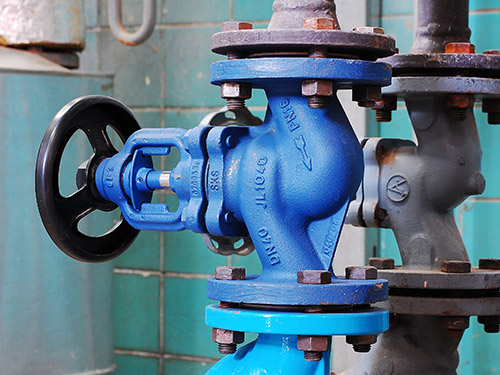
Case Study 1: Municipal Water Pump Upgrade
A municipal pump station replaced cast iron impellers with aluminum die casting impellers.
Results:
- Energy consumption reduced by 18%
- Maintenance interval extended by 40%
- Noise levels reduced by 12 dB
Case Study 2: HVAC System Optimization
An HVAC manufacturer redesigned impeller geometry.
Results:
- Airflow efficiency improved by 22%
- Motor load reduced by 14%
Markttrends und Brancheneinblicke
Global Growth Trends
Industry reports show:
- Pump and impeller market growth: 4.5%–6.8% CAGR
- Asia-Pacific leads global manufacturing share
- Demand rising in energy-efficient systems
Key Industry Drivers
- Industrial automation
- Energy-saving regulations
- Smart building systems
- Water infrastructure modernization
Whitepaper Insights: Fluid Dynamics Optimization
Energy Loss in Pump Systems
Studies show:
- 20%–30% energy loss comes from poor impeller design
- Blade surface roughness increases turbulence loss
Optimierungsstrategien
- Computational Fluid Dynamics (CFD) simulation
- Laser surface finishing
- Precision casting control
Selection Guide for Engineers and Buyers
Before selecting an aluminum die casting impeller, evaluate:
- Required flow rate (m³/h)
- Operating pressure (bar or MPa)
- Fluid type (clean water, chemicals, slurry)
- RPM range
- Temperature conditions
- Corrosion risk level
Maintenance and Reliability Engineering
Häufige Ausfallarten
- Erosion from abrasive fluids
- Cavitation damage
- Imbalance-induced vibration
Maintenance Best Practices
- Regular inspection every 3–6 months
- Dynamic balancing checks
- Bearing alignment verification
Proper maintenance can extend service life by 2–3 times.
Advanced Engineering Concepts
CFD Simulation in Impeller Design
CFD (Computational Fluid Dynamics) allows engineers to simulate:
- Flow velocity distribution
- Pressure zones
- Turbulence patterns
This reduces prototyping cost and improves accuracy.
Multi-Stage Pump Integration
In multi-stage systems, impellers work in sequence to increase pressure gradually.
Efficiency improvements can reach 25%–45% compared to single-stage systems.
Abschluss
Der aluminum die casting impeller has become a core component in modern industrial fluid systems because it aligns with global engineering priorities: efficiency, durability, lightweight design, and cost optimization.
Through advanced die casting technology, precision machining, and hydraulic optimization, manufacturers can significantly improve system performance while reducing operational cost.
As industries move toward smarter, more energy-efficient systems, custom-engineered impeller solutions will continue to play a critical role in shaping the future of fluid dynamics and industrial machinery performance.
Häufig gestellte Fragen
What is an aluminum die casting impeller Verwendet für?
It is used in pumps and fluid systems to move liquids or air efficiently using rotational energy.
Is aluminum strong enough for industrial impellers?
Yes. With proper alloy selection and heat treatment, it performs well in most industrial conditions.
How long does an aluminum impeller last?
Typically 10,000–30,000 operating hours depending on environment and load.
What is the biggest advantage of aluminum die casting impellers?
Lightweight design combined with high efficiency and corrosion resistance.
Can aluminum impellers handle chemicals?
Yes, but coating or alloy selection must match chemical exposure level.
Produktkategorien
- Ventilteile
- Wasserpumpenteile
- Lagergehäuseteile
- Druckgussteile
- Pumpenprodukte aus Edelstahl
- Pumpenprodukte aus Gusseisen
- Ventilteile für den Automobilgebrauch
- Autoteile
- Ventilteile für den zivilen Gebrauch
- Vakuumpumpenteile KF

Lassen Sie uns Ihr nächstes Projekt starten!
Starten Sie Ihr Projekt mit Leierwo
1. Senden Sie Ihre Anfrage
2. Kostenkalkulation
3. Produktion starten
4. Lieferung vereinbaren
Häufig gestellte Fragen
Ja, wir verfügen über umfassende Erfahrung im internationalen Handel und unterstützen unsere Kunden gerne bei der Exportzollabfertigung und Versandabwicklung. Wir bieten verschiedene Handelsbedingungen wie FOB, CIF und DDP an, um unterschiedlichen Logistikanforderungen gerecht zu werden. Wir akzeptieren verschiedene internationale Zahlungsmethoden, darunter T/T (Telegraphic Transfer), elektronische Überweisung und Akkreditiv (L/C). Die Zahlungsbedingungen können Sie mit unserem Vertriebsteam besprechen.
Durch die Partnerschaft mit Leierwo profitieren Sie von wettbewerbsfähigen Preisen und überlegener Qualität im Vergleich zu anderen Anbietern. Darüber hinaus bieten wir eine Komplettlösung für die Lieferung fertiger Teile, einschließlich CNC-Bearbeitung und Oberflächenbehandlung, und gewährleisten so einen reibungslosen Produktionsprozess.
Wir verfügen über moderne Gussanlagen und strenge Qualitätskontrollsysteme. Unsere monatliche Produktionskapazität ist beträchtlich und wir können Produkte nach Kundenzeichnungen oder Mustern fertigen. Wir akzeptieren sowohl kleine Probeaufträge als auch Großserienproduktionen.
Unsere Produkte entsprechen internationalen Normen wie ASTM, AISI, DIN und JIS. Wir stellen Materialprüfberichte und entsprechende Zertifizierungen bereit, um sicherzustellen, dass die Produktqualität den Kundenanforderungen entspricht.
Wir befolgen strikt das Qualitätsmanagementsystem ISO 9001 und führen während des gesamten Produktionsprozesses zahlreiche Prüfungen durch, darunter spektrografische Analysen, Röntgenprüfungen, Ultraschallprüfungen und Maßmessungen. Diese Qualitätskontrollmaßnahmen garantieren, dass unsere Gussteile den höchsten Standards entsprechen.
Unsere Mindestbestellmenge hängt von der Art und Komplexität des Produkts ab. Wir sind jedoch flexibel und offen für die Besprechung Ihrer spezifischen Anforderungen.
Unsere Standardproduktionszeit beträgt 4–6 Wochen, abhängig von Bestellmenge und Produktkomplexität. Wir sind bestrebt, die Lieferzeiten zu verkürzen, um den Kundenanforderungen gerecht zu werden.
Ja, wir können Muster zur Qualitätsprüfung bereitstellen. Musterkosten und Versandkosten können ausgehandelt werden. Die Mustergebühren können bei einer formellen Bestellung erstattet werden.
 German
  English
  Spanish
  Arabic
  Malay
Malay