
Cost Analysis: Is Hastelloy Casting Worth the Investment?
Ich freue mich sehr, dass du hier bist! Bevor wir uns in die Inhalte vertiefen, würde ich mich freuen, wenn du mir auf meinen Social-Media-Plattformen folgst. Dort teile ich zusätzliche Einblicke, vernetze mich mit unserer großartigen Community und halte dich über die neuesten Nachrichten auf dem Laufenden. So bleibst du in Verbindung:
📘 Facebook: Shanghai Leierwo Industriehandel Co., Ltd.
Lassen Sie uns gemeinsam auf diese Reise gehen! Ich hoffe, Sie finden die Inhalte hier nicht nur aufschlussreich, sondern auch inspirierend und wertvoll. Los geht‘s!
Inhaltsverzeichnis
Blog Overview – Key Takeaways
- Understanding what Hastelloy casting is and its unique properties
- Comparing Hastelloy casting with other common alloys
- Evaluating costs and benefits of investing in Hastelloy casting
- Applications and performance in different industries
- Longevity, maintenance, and ROI considerations
- Industry standards and technical certifications
- Case studies demonstrating real-world benefits
- FAQ addressing common purchasing and technical questions
Einführung
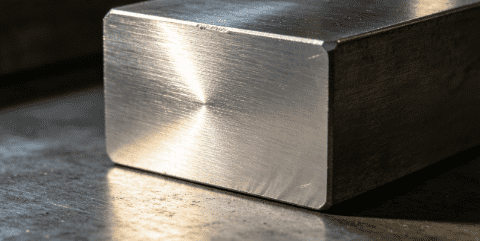
In today’s industrial landscape, selecting the right material for high-performance applications is critical. Hastelloy casting, a high-nickel alloy, has become synonymous with superior corrosion resistance and mechanical strength. From chemical plants handling aggressive acids to aerospace components exposed to extreme temperatures, Hastelloy casting is a material that promises reliability, longevity, and reduced operational costs.
Recent reports from the American Society for Metals (ASM) indicate that Hastelloy alloys reduce equipment failure by up to 40% compared to standard stainless steel in chemical processing environments. This has a direct impact on operational efficiency and long-term savings.
What is Hastelloy Casting?
Concept of Hastelloy Casting
Hastelloy casting is a high-performance nickel-based superalloy engineered for environments where corrosion, chemical exposure, and high temperatures pose serious challenges. It is a preferred choice in industries such as chemical processing, petrochemical, marine, aerospace, and pharmaceutical manufacturing. The material’s unique combination of nickel, molybdenum, and iron, sometimes with cobalt, gives it exceptional resistance to oxidizing and reducing acids, as well as other aggressive chemical environments.
Unlike standard stainless steels or carbon steels, Hastelloy casting maintains structural integrity under thermal cycling, pressure, and chemical attack, making it ideal for critical components such as:
- Chemical reactors handling strong acids
- Heat exchangers exposed to corrosive fluids
- Industrial piping in aggressive chemical environments
- Valves and pump components requiring long-term durability
Moreover, Hastelloy casting is compatible with a variety of fabrication processes, including investment casting, sand casting, and precision machining, allowing engineers to produce complex shapes for highly specialized applications.
Core Properties of Hastelloy Casting
Korrosionsbeständigkeit
Hastelloy casting demonstrates exceptional resistance to sulfuric acid, hydrochloric acid, phosphoric acid, and other strong oxidizing and reducing chemicals. This resistance minimizes:
- Lochkorrosion, which can cause small, localized holes on the metal surface
- Stress corrosion cracking, a common failure mode in stainless steels under high-stress chemical environments
- General chemical degradation, ensuring longer service life in harsh environments
This makes it particularly useful in chemical tanks, reactors, and pipelines where frequent maintenance or replacement would otherwise incur high costs.
Hochtemperaturstabilität
One of the standout features of Hastelloy casting is its ability to retain mechanical strength at temperatures above 1000°F (537°C). For comparison, many conventional stainless steels lose significant tensile strength at temperatures above 800°F (427°C). This high-temperature performance allows Hastelloy casting to be used in:
- High-temperature chemical processing
- Heat exchangers with thermal cycling
- Aerospace applications where materials are exposed to jet engine exhaust or other high-heat environments
Mechanische Festigkeit
Depending on the specific grade, Hastelloy casting exhibits tensile strength between 70,000 psi and 120,000 psi, with excellent fatigue resistance and toughness. Its combination of ductility and hardness makes it suitable for:
- Heavy industrial equipment
- Pressure vessels and pumps
- Components subject to mechanical stress or vibration
Additionally, Hastelloy casting’s mechanical properties are highly reliable over long-term operation, which reduces downtime and maintenance costs for critical industrial systems.
Common Grades
Hastelloy C-22
- Merkmale: Excellent resistance to oxidizing and reducing agents
- Anwendungen: Chemical processing, reactors, and piping
- Performance: Handles a wide range of acids and mixed chemical environments without significant degradation
Hastelloy C-276
- Merkmale: High resistance to strong oxidizers and acid mixtures
- Anwendungen: Tanks, piping, and heat exchangers for aggressive chemical processes
- Performance: Maintains integrity in environments where other alloys like stainless steel would fail due to corrosion
Hastelloy B-2
- Merkmale: Superior performance in hydrochloric acid and other highly corrosive environments
- Anwendungen: Chemical handling equipment and storage systems
- Performance: Resistant to pitting and stress corrosion cracking even in high-concentration acids
Hastelloy Casting vs Other Alloys
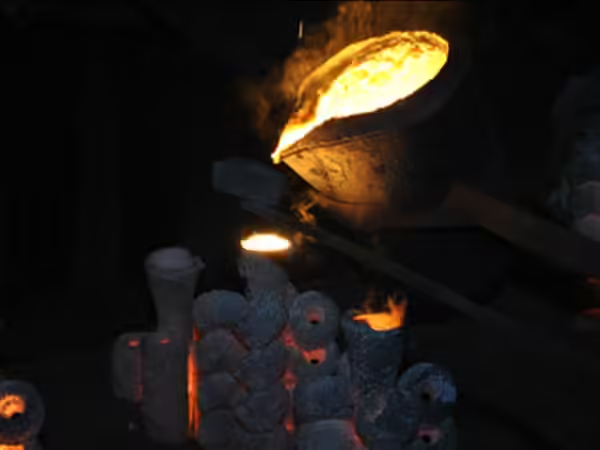
Comparing with Stainless Steel
While stainless steel is cost-effective, it is prone to chloride stress corrosion cracking in chemical applications. Hastelloy casting provides:
- 2–3x longer lifespan in corrosive environments
- Reduced downtime due to lower maintenance frequency
- Compliance with ASTM B574 and ASME B16.34 standards for high-performance alloys
Nickel Alloy vs Hastelloy Casting
Hastelloy contains higher nickel and molybdenum content, providing enhanced resistance to:
- Chlorides and oxidizing acids
- Extreme thermal cycling
- High-pressure environments
Table: Hastelloy Casting vs Alternatives
| Material | Korrosionsbeständigkeit | Hochtemperaturleistung | Kosten | Average Lifespan |
|---|---|---|---|---|
| Hastelloy C-22 | Exzellent | 1200°F | Hoch | 15–20 years |
| Hastelloy C-276 | Exzellent | 1100°F | Hoch | 12–18 years |
| Edelstahl 316L | Mäßig | 900°F | Medium | 7–10 years |
| Kohlenstoffstahl | Niedrig | 800°F | Niedrig | 5–8 years |
Cost Considerations of Hastelloy Casting
Initial Purchase Cost
The initial purchase cost of Hastelloy casting can range from $25–$50 per pound, significantly higher than stainless steel ($3–$5 per pound). However, considering long-term savings in maintenance, replacement, and operational efficiency, the total cost of ownership often favors Hastelloy casting.
Maintenance and Replacement Costs
- Reduced frequency of replacements: 1 major replacement every 15 years vs 7–10 years for stainless steel
- Lower downtime: Estimated 30–40% reduction in unscheduled maintenance, according to a 2022 Corrosion Management Whitepaper
Long-Term ROI
Investments in Hastelloy casting result in measurable ROI:
- Lower chemical waste due to fewer leaks and corrosion
- Reduced energy costs from minimal process disruptions
- Extended service life of critical equipment
Applications of Hastelloy Casting
Chemical Processing Equipment
Used in reactors, valves, piping, and heat exchangers. Resistant to:
- Sulfuric acid up to 98% concentration
- Hydrochloric acid and nitric acid in high-temperature processes
Luft- und Raumfahrtkomponenten
Hastelloy casting supports components exposed to:
- Temperatures above 1000°F
- Oxidative atmospheres in jet engines
- Mechanical stress in high-altitude conditions
Marine and Offshore Usage
- Resists seawater and brine corrosion
- Suitable for offshore oil rigs and desalination plants
- Complies with NACE MR0175/ISO 15156 for marine applications
Standards and Certifications
ASTM and ASME Standards
- ASTM B574: Standard specification for nickel-based corrosion-resistant alloys
- ASME B16.34: Valves – Flanged, Threaded, and Welding End
International Certifications
- ISO 9001:2015 for quality management
- NACE MR0175 for petroleum and offshore chemical environments
- Compliance with FDA and USP standards for process equipment in pharmaceutical industries
Fallstudien
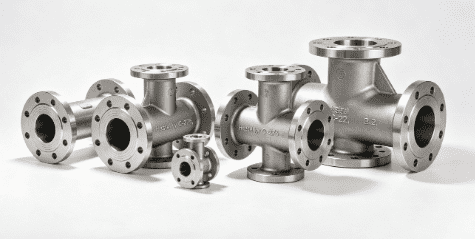
Case Study 1: Chemical Plant Upgrade
A European chemical plant replaced stainless steel reactors with Hastelloy C-276 casting. Results after 5 years:
- Maintenance costs reduced by 35%
- Downtime decreased by 25%
- Corrosion failures eliminated entirely
Case Study 2: Offshore Oil Rig
An offshore oil rig in the Gulf of Mexico installed Hastelloy B-2 piping:
- Survived 8 years in high-salinity seawater
- Reduced annual replacement budget by $150,000
- Enhanced safety and compliance with NACE MR0175
Conceptual Insights for Buyers
Why Durability Matters
Hastelloy casting ensures equipment longevity, minimizing downtime and operational interruptions.
Performance vs Cost
Even with a higher upfront investment, total life-cycle cost is often lower due to reduced maintenance, extended lifespan, and fewer replacements.
Selecting the Right Grade
Matching Hastelloy casting grades to specific chemical and temperature conditions optimizes performance and maximizes ROI.
Recent News and Industry Trends
- 2023 Nickel Alloy Market Report: Hastelloy casting demand expected to grow at 6.5% CAGR through 2030 due to chemical and pharmaceutical industry growth.
- ASME Update 2022: Hastelloy casting now recommended for high-temperature chemical storage in industrial codes.
- White Paper Reference: “Corrosion Resistance of Nickel-Based Alloys” by ASM, 2021 – demonstrates superior lifecycle performance of Hastelloy casting in chemical plants.
Abschluss
Investing in Hastelloy casting is a strategic move for industries that demand high-performance, corrosion-resistant, and long-lasting materials. By analyzing upfront costs versus long-term benefits, companies can achieve lower operational costs, improved safety, and extended equipment lifespan. With numerous applications, compliance with international standards, and proven case studies, Hastelloy casting is a reliable choice for industrial success.
Häufig gestellte Fragen
What industries benefit most from Hastelloy casting?
Chemical processing, oil & gas, aerospace, marine, and pharmaceutical industries.
Wie funktioniert das? Hastelloy casting compare to stainless steel in longevity?
Typically 50–100% longer in corrosive or high-temperature applications.
Is the high upfront cost justified?
Yes, long-term savings in maintenance, replacements, and operational reliability outweigh initial investment.
Can Hastelloy casting be machined easily?
Yes, though it requires specialized tools and techniques due to hardness. Modern CNC machining allows precision fabrication.
Are there real-world examples of ROI?
Yes, multiple case studies show up to 40% reduction in downtime and 35% lower maintenance costs over 5 years.
Produktkategorien
- Ventilteile
- Wasserpumpenteile
- Lagergehäuseteile
- Druckgussteile
- Pumpenprodukte aus Edelstahl
- Pumpenprodukte aus Gusseisen
- Ventilteile für den Automobilgebrauch
- Autoteile
- Ventilteile für den zivilen Gebrauch
- Vakuumpumpenteile KF

Lassen Sie uns Ihr nächstes Projekt starten!
Starten Sie Ihr Projekt mit Leierwo
1. Senden Sie Ihre Anfrage
2. Kostenkalkulation
3. Produktion starten
4. Lieferung vereinbaren
Häufig gestellte Fragen
Ja, wir verfügen über umfassende Erfahrung im internationalen Handel und unterstützen unsere Kunden gerne bei der Exportzollabfertigung und Versandabwicklung. Wir bieten verschiedene Handelsbedingungen wie FOB, CIF und DDP an, um unterschiedlichen Logistikanforderungen gerecht zu werden. Wir akzeptieren verschiedene internationale Zahlungsmethoden, darunter T/T (Telegraphic Transfer), elektronische Überweisung und Akkreditiv (L/C). Die Zahlungsbedingungen können Sie mit unserem Vertriebsteam besprechen.
Durch die Partnerschaft mit Leierwo profitieren Sie von wettbewerbsfähigen Preisen und überlegener Qualität im Vergleich zu anderen Anbietern. Darüber hinaus bieten wir eine Komplettlösung für die Lieferung fertiger Teile, einschließlich CNC-Bearbeitung und Oberflächenbehandlung, und gewährleisten so einen reibungslosen Produktionsprozess.
Wir verfügen über moderne Gussanlagen und strenge Qualitätskontrollsysteme. Unsere monatliche Produktionskapazität ist beträchtlich und wir können Produkte nach Kundenzeichnungen oder Mustern fertigen. Wir akzeptieren sowohl kleine Probeaufträge als auch Großserienproduktionen.
Unsere Produkte entsprechen internationalen Normen wie ASTM, AISI, DIN und JIS. Wir stellen Materialprüfberichte und entsprechende Zertifizierungen bereit, um sicherzustellen, dass die Produktqualität den Kundenanforderungen entspricht.
Wir befolgen strikt das Qualitätsmanagementsystem ISO 9001 und führen während des gesamten Produktionsprozesses zahlreiche Prüfungen durch, darunter spektrografische Analysen, Röntgenprüfungen, Ultraschallprüfungen und Maßmessungen. Diese Qualitätskontrollmaßnahmen garantieren, dass unsere Gussteile den höchsten Standards entsprechen.
Unsere Mindestbestellmenge hängt von der Art und Komplexität des Produkts ab. Wir sind jedoch flexibel und offen für die Besprechung Ihrer spezifischen Anforderungen.
Unsere Standardproduktionszeit beträgt 4–6 Wochen, abhängig von Bestellmenge und Produktkomplexität. Wir sind bestrebt, die Lieferzeiten zu verkürzen, um den Kundenanforderungen gerecht zu werden.
Ja, wir können Muster zur Qualitätsprüfung bereitstellen. Musterkosten und Versandkosten können ausgehandelt werden. Die Mustergebühren können bei einer formellen Bestellung erstattet werden.
 German
  English
  Spanish
  Arabic
  Malay
Malay