
6 Wesentliche Regeln für den Schweißprozess
Willkommen auf meinem Blog!
Ich freue mich sehr, dass du hier bist! Bevor wir uns in die Inhalte vertiefen, würde ich mich freuen, wenn du mir auf meinen Social-Media-Plattformen folgst. Dort teile ich zusätzliche Einblicke, vernetze mich mit unserer großartigen Community und halte dich über die neuesten Nachrichten auf dem Laufenden. So bleibst du in Verbindung:
📘 Facebook: Shanghai Leierwo Industriehandel Co., Ltd.
Lassen Sie uns gemeinsam auf diese Reise gehen! Ich hoffe, Sie finden die Inhalte hier nicht nur aufschlussreich, sondern auch inspirierend und wertvoll. Los geht‘s!
Inhaltsverzeichnis
Einführung
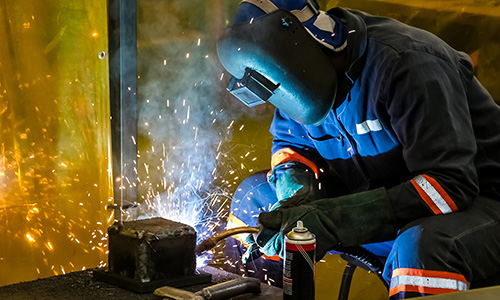
Der welding process plays a foundational role in modern manufacturing, construction, infrastructure, energy production, automotive fabrication, shipbuilding, and countless industrial applications. As one of the oldest and most widely used fabrication methods, the welding process allows engineers and technicians to permanently join metals, enabling the creation of reliable structures, precision components, and durable machinery. Whether applied manually or through advanced robotic automation, the welding process requires strict discipline, technical skill, and adherence to well-defined rules to ensure long-term performance.
As manufacturing standards continue to rise and global industries demand greater structural integrity, high production efficiency, and reduced material waste, the emphasis on following essential welding process rules has become stronger than ever. Poorly executed welding can lead to weak joints, deformation, porosity, cracking, contamination, distortion, and even catastrophic structural failure. On the other hand, a controlled and well-executed welding process can achieve exceptional strength, stability, aesthetic consistency, and operational safety.
This comprehensive guide explores six essential welding process rules that underpin successful welding operations across various environments. These rules address key elements such as preparation, environmental control, material compatibility, welding parameters, joint integrity, heat management, and quality inspection. Each section explains why the rule matters, how it affects the welding process, and what methods or tools technicians can use to meet high industrial standards. By mastering these core principles, welders and engineers can ensure that the welding process remains efficient, reliable, and fully aligned with both practical requirements and regulatory expectations.
Because the welding process involves intense heat, molten metal, chemical reactions, and complex metallurgical transformations, even small errors can significantly impact the final welded structure. Understanding the physics and metallurgy behind the welding process is essential for controlling quality and avoiding defects. Throughout this article, each rule will be accompanied by deeper insights that help welders recognize potential risks, optimize technique, and apply preventive strategies.
With the growing adoption of automation, robotics, and digital welding systems, the principles discussed here apply to both manual and automated versions of the welding process. Whether performed by a highly trained technician or a robotic arm using real-time sensors, the underlying rules remain the same. Mastery of these rules provides the foundation for long-lasting welds that meet the structural demands of modern engineering.
The following sections introduce the six essential rules that ensure the welding process achieves maximum reliability, efficiency, and structural quality. This in-depth discussion will help readers understand the importance of preparation, environmental control, parameter optimization, heat management, defect prevention, and systematic inspection.
Rule One: Comprehensive Preparation Before Starting the Welding process
Preparation is one of the most fundamental aspects of the welding process. Without proper preparation, even the most advanced equipment or skilled technicians will struggle to achieve high-quality results. This rule focuses on ensuring that all materials, surfaces, tools, and welding equipment are ready to perform consistently.
Material Preparation for the Welding process
Materials must be cleaned, inspected, and verified before any welding begins. Surface contaminants such as oil, grease, rust, oxide layers, coatings, or moisture can introduce defects during the welding process. For example, oil can vaporize under intense heat and create porosity, while rust layers prevent proper metal fusion. Thorough cleaning using grinders, wire brushes, sandpaper, or chemical cleaners ensures that the welding process begins with a smooth and contamination-free surface.
In addition to surface cleaning, welders must inspect materials for cracks, bends, dents, or inconsistencies. If materials have defects prior to the welding process, the resulting weld may inherit those structural weaknesses. Proper material selection and verification also ensure that the metals being joined are compatible. Using incompatible materials can lead to brittle welds, incorrect metallurgical bonding, or unpredictable thermal behavior.
Equipment Verification Before the Welding process
Before any welding begins, technicians must verify that their equipment is functioning correctly. This includes checking:
- Power supply stability
- Condition of cables and hoses
- Calibration of welding machines
- Shielding gas purity and flow rate
- Electrode quality
- Proper setup of fixtures and clamps
Faulty equipment can cause unpredictable behavior during the welding process, resulting in inconsistent welds, overheating, or joint failure. Ensuring equipment reliability eliminates these risks.
Proper preparation also includes reviewing welding specifications and procedures. For industries like aerospace, automotive manufacturing, and structural engineering, welding procedures must comply with strict regulatory standards. Reviewing weld maps, blueprints, or welding procedure specifications (WPS) helps ensure that the welding process aligns with required parameters.
Environmental Preparation Before the Welding process
Environmental conditions, such as temperature, humidity, wind speed, and ventilation, significantly influence the welding process. Excess humidity can introduce moisture that vaporizes under heat, causing porosity or hydrogen cracking. Wind currents can disrupt shielding gas coverage, leading to contamination. Ensuring that the workspace is dry, sheltered, and well-ventilated is a crucial preparation step.
Comprehensive preparation not only enhances the reliability of the welding process but also reduces the likelihood of having to repeat work, saving both time and resources. Proper preparation lays the foundation for all subsequent rules, as errors during this stage can propagate through the entire welding process.
Rule Two: Maintaining Environmental Control During the Welding process
Environmental control is essential to ensure that the welding process remains stable, predictable, and free from contamination. External conditions can significantly influence the welding arc, shielding effectiveness, metal behavior, and final weld quality.
Temperature and Humidity Management in the Welding process
Temperature affects how metals expand, contract, and respond to heat. When metals are too cold, they can develop thermal shock, leading to cracks. When temperatures are too high, excessive expansion can cause distortion during the welding process.
Humidity introduces moisture to metal surfaces, which increases the risk of hydrogen-induced cracking. In welding processes like stick welding or flux-cored arc welding, moisture can also react with electrode coatings, causing porosity. Controlling humidity—especially in outdoor or marine environments—ensures that materials remain stable during the welding process.
Preheating may be required for thicker materials or specific alloys. Preheating reduces thermal gradients and stabilizes metallurgical reactions. Proper preheating procedures help prevent issues such as:
- Cracking from thermal shock
- Excessive hardness in the heat-affected zone
- Uneven penetration
Wind, Airflow, and Shielding Gas Protection During the Welding process
Shielding gases such as argon, carbon dioxide, or helium are essential for protecting molten metal from atmospheric contamination. When drafts or wind disrupt shielding gas coverage, the welding process becomes vulnerable to:
- Oxidation
- Porosität
- Einschlüsse
- Weak bonding
In outdoor environments, welders may use wind shields, gas lenses, or increased gas flow to maintain protection. In indoor environments, controlling drafts and air movement ensures a clean and stable welding environment.
Cleanliness and Workspace Conditions
Environmental control also includes maintaining a clean workspace. Dust, metal shavings, paint chips, and debris can contaminate the welding process, becoming trapped in the molten pool. Regular cleaning prevents foreign inclusions and improves weld consistency.
Managing environmental variables ensures predictable outcomes during the welding process. This rule is especially important for high-precision applications where even small environmental disruptions can lead to weld rejection or structural failures.
Rule Three: Using Proper Welding Parameters in the Welding process
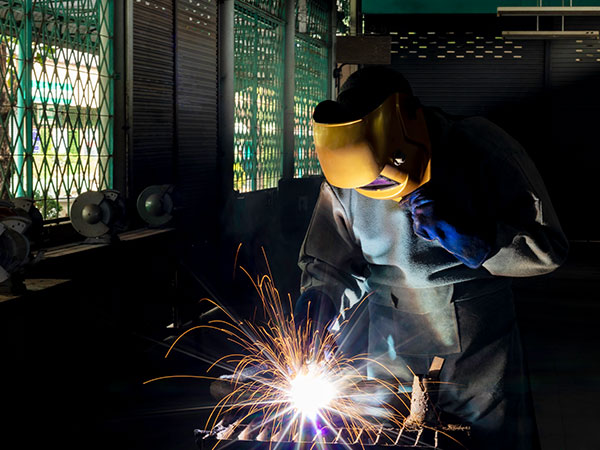
Correct welding parameters are essential for achieving high-quality, defect-free welds. Parameters such as current, voltage, travel speed, wire feed rate, and shielding gas flow directly influence how the welding process behaves.
Current and Voltage Optimization in the Welding process
Current controls penetration depth, while voltage controls arc length. Too much current can cause burn-through, excessive splatter, or overheating. Too little current results in weak fusion and insufficient penetration. Voltage imbalance can destabilize the arc, leading to inconsistent bead appearance and poor structural quality.
When the welding process is performed with improper current or voltage, the weld may suffer from:
- Unvollständige Fusion
- Excessive reinforcement
- Irregular bead profile
- Surface defects
To optimize parameters, welders consult the WPS, welding charts, or machine presets.
Travel Speed and Heat Input
The speed at which the welder moves the torch, electrode, or filler influences heat distribution. A slow travel speed introduces excessive heat, increasing the risk of distortion or burn-through. A fast travel speed cools the weld too quickly, leading to incomplete penetration.
Heat input must be controlled to ensure proper metallurgical bonding during the welding process. Calculating heat input requires understanding current, voltage, and travel speed simultaneously.
Shielding Gas Flow Control
Incorrect gas flow rates can cause turbulence or insufficient protection. Proper flow ensures that the molten pool remains shielded from nitrogen, oxygen, or other contaminants.
Wire Feed and Electrode Selection
Wire feed speed determines filler metal deposition. Too slow or too fast feed rates cause inconsistencies in bead size. Electrode selection affects penetration, arc stability, and weld appearance.
This rule emphasizes the importance of combining technical knowledge with practical adjustments during the welding process. Mastery of welding parameters allows for consistent, predictable, and structurally sound welds.
Rule Four: Managing Heat and Distortion During the Welding process
Heat is an unavoidable part of the welding process. However, when unmanaged, heat introduces distortion, material stress, cracking, and deformation. Rule four focuses on heat control strategies.
Understanding Thermal Expansion in the Welding process
When metals are heated, they expand. When they cool, they contract. Uneven expansion and contraction during the welding process cause:
- Schrägwerbung
- Bowing
- Residual stress
- Dimensional inaccuracies
In industries like automotive manufacturing, aerospace fabrication, or structural engineering, even small distortions can result in unusable components.
Preheating and Interpass Temperature Control
Preheating reduces thermal gradients and stabilizes the welding process. Interpass temperature control ensures consistent heat accumulation between welding passes. This helps prevent cracking, reduce hardness, and maintain metallurgical integrity.
Heat Sink and Clamping Methods
Heat sinks absorb excess heat, while clamps hold the material in place. These tools minimize distortion during the welding process by restricting movement and distributing heat more evenly.
Sequence Planning
Welders use techniques such as:
- Backstep welding
- Skip welding
- Balanced welding
These strategies reduce heat concentration in one area, preventing distortion.
Managing heat is essential for achieving dimensional stability during the welding process. Without proper heat control, even well-prepared materials and correct parameters may fail to produce acceptable welds.
Rule Five: Preventing Defects During the Welding process
Defect prevention is one of the most important rules in the welding process. Common defects include porosity, cracks, slag inclusion, undercut, incomplete fusion, excessive spatter, and oxidation. This section explains how to prevent these issues.
Porosity Prevention During the Welding process
Porosity occurs when gas becomes trapped in the weld. Causes include:
- Moisture
- Contaminated surfaces
- Incorrect shielding gas flow
By maintaining clean surfaces, controlling environmental factors, and ensuring proper gas coverage, welders prevent porosity.
Crack Prevention During the Welding process
Cracks may form from:
- Excessive heat
- Rapid cooling
- Improper material selection
- High stress concentration
Preheating, slow cooling, and proper joint design reduce crack risk.
Preventing Slag Inclusion and Incomplete Fusion
Slag inclusion occurs when slag becomes trapped between weld layers. Cleaning between passes and adjusting technique prevents this issue. Incomplete fusion results from poor technique or insufficient heat.
Preventing Undercut and Excessive Spatter
Undercut weakens joints and occurs when excessive heat melts the base metal unevenly. Adjusting travel speed and angle prevents undercut. Excessive spatter results from incorrect parameters and poor technique.
Preventing defects ensures that the welding process produces structurally sound, visually clean, and reliable welds.
Mid-Section Table: Welding process Challenges and Solutions
Here is the required table positioned in the middle of the article:
| Welding process Issue | Ursache | Warnschild | Empfohlene Aktion |
|---|---|---|---|
| Porosität | Contaminants, moisture | Bubbles, weak joints | Clean surfaces, improve shielding |
| Knacken | High heat, rapid cooling | Visible cracks | Preheat, slow cooling |
| Distortion | Uneven heat | Warping, misalignment | Use clamps, control heat |
| Incomplete Fusion | Low heat, fast travel | Weak bonding | Increase heat, adjust speed |
| Undercut | Excessive heat | Groove along edges | Reduce heat, modify technique |
| Slag Inclusion | Poor cleaning | Dark spots | Clean between passes |
Rule Six: Ensuring Inspection and Quality Verification After the Welding process
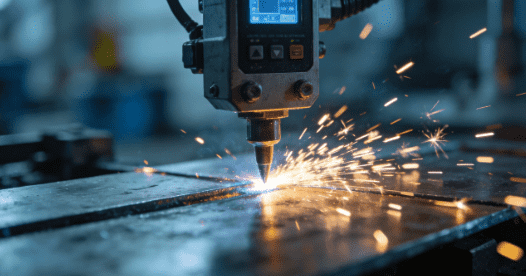
Quality inspection is essential to verify the reliability and safety of welds. Even when all rules are followed, inspection confirms that the welding process was executed correctly.
Visual Inspection After the Welding process
Visual inspection checks for:
- Porosität
- Undercut
- Spatter
- Risse
- Inconsistent bead shape
This method identifies immediate surface defects.
Dimensional and Structural Inspection
Measuring tools verify alignment, weld size, and dimensional accuracy.
Non-Destructive Testing After the Welding process
NDT techniques include:
- Ultraschallprüfung
- Röntgenuntersuchung
- Magnetpartikelprüfung
- Dye penetrant inspection
These methods reveal internal defects.
Destructive Testing
Destructive testing, such as bend tests or tensile tests, evaluates mechanical properties. This is usually performed on sample pieces.
Documentation and Compliance
In regulated industries, welds must comply with codes such as:
- ASME
- AWS
- ISO
Proper documentation ensures traceability and accountability.
Inspection confirms that the welding process meets safety, structural, and performance standards.
Abschluss
Mastering the six essential welding process rules ensures that welders achieve high-quality, structurally sound, and defect-free welds. These rules—preparation, environmental control, parameter optimization, heat management, defect prevention, and thorough inspection—form the foundation of reliable welding operations. When followed consistently, these principles improve efficiency, reduce rework, enhance safety, and support long-term structural integrity.
As manufacturing industries evolve, these welding process rules remain relevant for manual and automated systems alike. Whether producing small components or large structural assemblies, welders and engineers who adhere to these principles can ensure dependable performance, operational reliability, and compliance with industry standards.
Häufig gestellte Fragen
What is the most important rule in the welding process?
Preparation is often considered the most crucial rule because it sets the foundation for all subsequent steps.
Why does the welding process require environmental control?
Environmental factors like humidity, wind, and contaminants can affect shielding gas, heat transfer, and metal behavior.
How can I prevent defects during the welding process?
Clean surfaces, correct parameters, and proper technique reduce the risk of porosity, cracking, slag inclusion, and undercut.
Do all welded components require inspection?
Yes. Inspection ensures structural integrity and compliance with industry standards.
Can automation improve the welding process?
Automation increases consistency, reduces human error, and maintains stable parameters during welding.
Produktkategorien
- Ventilteile
- Wasserpumpenteile
- Lagergehäuseteile
- Druckgussteile
- Pumpenprodukte aus Edelstahl
- Pumpenprodukte aus Gusseisen
- Ventilteile für den Automobilgebrauch
- Autoteile
- Ventilteile für den zivilen Gebrauch
- Vakuumpumpenteile KF

Lassen Sie uns Ihr nächstes Projekt starten!
Starten Sie Ihr Projekt mit Leierwo
1. Senden Sie Ihre Anfrage
2. Kostenkalkulation
3. Produktion starten
4. Lieferung vereinbaren
Häufig gestellte Fragen
Ja, wir verfügen über umfassende Erfahrung im internationalen Handel und unterstützen unsere Kunden gerne bei der Exportzollabfertigung und Versandabwicklung. Wir bieten verschiedene Handelsbedingungen wie FOB, CIF und DDP an, um unterschiedlichen Logistikanforderungen gerecht zu werden. Wir akzeptieren verschiedene internationale Zahlungsmethoden, darunter T/T (Telegraphic Transfer), elektronische Überweisung und Akkreditiv (L/C). Die Zahlungsbedingungen können Sie mit unserem Vertriebsteam besprechen.
Durch die Partnerschaft mit Leierwo profitieren Sie von wettbewerbsfähigen Preisen und überlegener Qualität im Vergleich zu anderen Anbietern. Darüber hinaus bieten wir eine Komplettlösung für die Lieferung fertiger Teile, einschließlich CNC-Bearbeitung und Oberflächenbehandlung, und gewährleisten so einen reibungslosen Produktionsprozess.
Wir verfügen über moderne Gussanlagen und strenge Qualitätskontrollsysteme. Unsere monatliche Produktionskapazität ist beträchtlich und wir können Produkte nach Kundenzeichnungen oder Mustern fertigen. Wir akzeptieren sowohl kleine Probeaufträge als auch Großserienproduktionen.
Unsere Produkte entsprechen internationalen Normen wie ASTM, AISI, DIN und JIS. Wir stellen Materialprüfberichte und entsprechende Zertifizierungen bereit, um sicherzustellen, dass die Produktqualität den Kundenanforderungen entspricht.
Wir befolgen strikt das Qualitätsmanagementsystem ISO 9001 und führen während des gesamten Produktionsprozesses zahlreiche Prüfungen durch, darunter spektrografische Analysen, Röntgenprüfungen, Ultraschallprüfungen und Maßmessungen. Diese Qualitätskontrollmaßnahmen garantieren, dass unsere Gussteile den höchsten Standards entsprechen.
Unsere Mindestbestellmenge hängt von der Art und Komplexität des Produkts ab. Wir sind jedoch flexibel und offen für die Besprechung Ihrer spezifischen Anforderungen.
Unsere Standardproduktionszeit beträgt 4–6 Wochen, abhängig von Bestellmenge und Produktkomplexität. Wir sind bestrebt, die Lieferzeiten zu verkürzen, um den Kundenanforderungen gerecht zu werden.
Ja, wir können Muster zur Qualitätsprüfung bereitstellen. Musterkosten und Versandkosten können ausgehandelt werden. Die Mustergebühren können bei einer formellen Bestellung erstattet werden.
 German
  English
  Spanish
  Arabic
  Malay
Malay