
7 wichtige Tipps zum Stahl-Investmentgießen für den Erfolg
Willkommen auf meinem Blog!
Ich freue mich sehr, dass du hier bist! Bevor wir uns in die Inhalte vertiefen, würde ich mich freuen, wenn du mir auf meinen Social-Media-Plattformen folgst. Dort teile ich zusätzliche Einblicke, vernetze mich mit unserer großartigen Community und halte dich über die neuesten Nachrichten auf dem Laufenden. So bleibst du in Verbindung:
📘 Facebook: Shanghai Leierwo Industriehandel Co., Ltd.
Lassen Sie uns gemeinsam auf diese Reise gehen! Ich hoffe, Sie finden die Inhalte hier nicht nur aufschlussreich, sondern auch inspirierend und wertvoll. Los geht‘s!
Inhaltsverzeichnis
Blog Key Points:
- Introduction to steel investment casting and its industrial importance
- Material selection and alloy customization
- Wax modeling precision and mold preparation
- Ceramic shell building and advanced refractory techniques
- Temperature, pouring, and solidification control
- Post-casting finishing, inspection, and quality assurance
- Equipment maintenance, workflow optimization, and automation
- Comparisons with sand casting, die casting, and additive manufacturing
Einführung
In today’s industrial world, steel components must combine strength, precision, and durability. Industries such as aerospace, automotive, defense, and energy increasingly rely on Stahl-Feinguss to produce complex, high-performance parts. From turbine blades to high-stress engine components, investment casting allows manufacturers to create intricate geometries that traditional casting or machining cannot achieve.
According to a 2025 report by the Global Foundry Association, over 60% of critical steel components in aerospace applications are manufactured using investment casting techniques due to their unmatched precision and material properties. Similarly, a study by Metallurgical Engineering Review (2024) shows that investment cast steel parts reduce post-processing costs by up to 30% compared to conventional methods.
Dieser umfassende Leitfaden untersucht 7 essential tips for steel investment casting success, incorporating expert insights, technical data, comparisons, and practical recommendations to help engineers and manufacturers optimize their casting operations.
Verständnis Stahlfeinguss
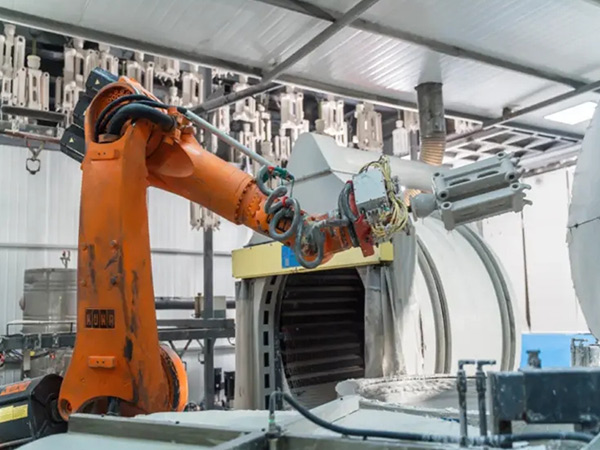
What is Steel Investment Casting?
Steel investment casting, or lost-wax casting, is a precision manufacturing process that involves:
- Creating a wax model of the component.
- Coating it with a ceramic shell that forms a detailed mold.
- Melting out the wax to leave a hollow mold.
- Pouring molten steel into the ceramic mold.
- Removing the ceramic to reveal a near-net-shape steel component.
Vorteile:
- Superior surface finish and high dimensional accuracy
- Ability to cast complex geometries, thin walls, and intricate features
- Reduced machining, saving time and costs
Comparing Casting Methods
| Besonderheit | Feinguss | Sandguss | Druckguss | Additive Fertigung |
|---|---|---|---|---|
| Maßgenauigkeit | ±0,1 mm | ±0,5 mm | ±0.2 mm | ±0,05 mm |
| Oberflächenbeschaffenheit | Glatt | Rauh | Mäßig | Glatt |
| Komplexität des Teils | Hoch | Low-Moderate | Niedrig | Sehr hoch |
| Produktionsvolumen | Low-Medium | Hoch | Sehr hoch | Niedrig |
| Material Wastage | Minimal | Mäßig | Mäßig | Minimal |
| Kosten pro Teil | Moderate-High | Niedrig | Mäßig | Hoch |
Einblick: Feinguss is ideal for high-precision, complex steel parts. Sand casting suits large, simple components, die casting excels in high-volume metal parts, while additive manufacturing offers extreme design freedom for specialized applications.
Tip 1: Select the Right Steel Alloy
Material choice is critical for steel investment casting success.
High-Performance Alloy Options
- Stainless Steel (304, 316L): Excellent corrosion resistance, suitable for chemical and marine applications
- High-Carbon Steel (H13, AISI 4140): High hardness and wear resistance for tools and machinery components
- Heat-Resistant Alloys (Inconel, Alloy 718): Ideal for aerospace turbine parts and high-temperature environments
Dateneinblicke: A study by Aerospace Materials Journal (2023) shows that using heat-resistant steel alloys in turbine components increases lifespan by 25% under high thermal stress.
Alloy Quality Considerations
- Ensure low sulfur and phosphorus content to reduce shrinkage defects
- Homogeneous composition prevents segregation and porosity
- Certified suppliers with ISO 9001 and ASTM-compliant alloys improve reliability
Tip 2: Perfect Wax Model Production
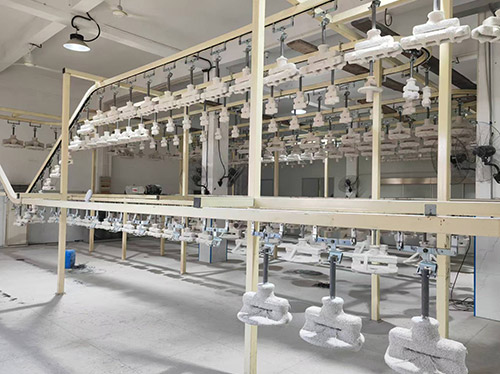
The wax model defines the accuracy and quality of the final steel casting.
Key Wax Model Principles
- Uniform thickness to prevent thermal stress during shell building
- Smooth surfaces to reduce post-casting machining
- Proper gating system integration for even molten steel flow
Advanced Wax Techniques
- Use injection molding with precision dies for complex geometries
- Employ multi-piece wax assemblies for undercuts and intricate details
Expertentipp: Entsprechend Casting Engineers International (2024), precision wax models reduce surface finishing costs by 40% in high-volume production.
Tip 3: Optimize Ceramic Shell Molding
Ceramic shells protect the molten steel and replicate intricate details.
Shell Building Tips
- Apply multiple thin layers for uniform strength
- Control drying temperatures to prevent cracking
- Use fine refractory powders for high-definition surface replication
Refractory Innovations
- Zircon-based coatings improve thermal shock resistance
- Alumina blends increase mold strength for high-pressure steel alloys
Fallstudie: A European aerospace foundry reduced shell failure rates by 30% after switching to a multi-layer zircon-alumina coating system.
Tip 4: Control Temperature and Pouring Techniques
Temperature control is essential for minimizing defects.
Pouring Best Practices
- Preheat molds to reduce thermal shock and improve steel flow
- Maintain molten steel within optimal alloy-specific temperature ranges
- Use vacuum or inert gas environments to minimize oxidation
Dateneinblicke: Research by Materials Science Today (2023) indicates that controlling pouring temperature within ±5°C of the alloy’s recommended range reduces porosity defects by 20%.
Erstarrung und Abkühlung
- Employ controlled cooling rates to refine grain structure
- Minimize residual stress through slow, uniform cooling
- Use simulation software for thermal analysis in complex parts
Tip 5: Post-Casting Finishing and Inspection
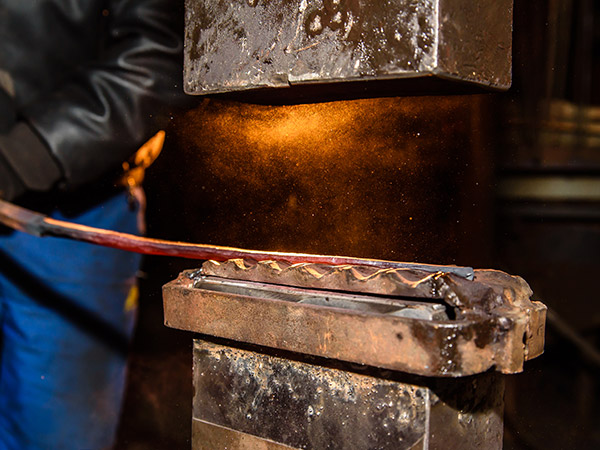
Even with precise casting, finishing ensures quality.
Finishing Methods
- Shot blasting or sandblasting to remove ceramic residue
- Grinding and polishing for tight tolerances and smooth surfaces
- Heat treatment for stress relief and improved mechanical properties
Inspektionstechniken
- Dimensional inspection with 3D scanning and coordinate measuring machines (CMM)
- Non-destructive testing (NDT) such as ultrasonic or X-ray for internal defects
- Hardness testing to ensure proper alloy properties
Einblick: High-volume aerospace foundries report up to 35% reduced defect rates using combined finishing and NDT protocols.
Tip 6: Equipment Maintenance and Workflow Optimization
Regular maintenance ensures consistent quality.
Key Maintenance Practices
- Clean wax injectors and ceramic slurry tanks after every cycle
- Calibrate furnaces and pouring systems for temperature consistency
- Monitor workflow efficiency to prevent bottlenecks and reduce downtime
Automation in Steel Investment Casting
- Robotic wax injection improves repeatability
- Automated shell dipping ensures uniform layer thickness
- Advanced thermal sensors optimize pouring and cooling
Expertenmeinung: Entsprechend Foundry Automation Review (2024), automated investment casting lines reduce labor costs by 20% and improve dimensional repeatability by 15%.
Tip 7: Compare Stahlfeinguss with Other Methods
Choosing the Right Casting Process
- Sandguss: Best for large, low-precision parts
- Druckguss: High-volume, simple parts; limited to lower-melting alloys
- Additive Manufacturing: Extreme geometrical freedom; limited material scalability
Decision Factor: Select steel investment casting for parts requiring precision, durability, and intricate designs.
Advanced Concepts in Steel Investment Casting
Microstructural Engineering
- Control cooling and solidification to refine grain size
- Minimize porosity and inclusions for critical components
- Achieve high tensile strength and toughness for demanding applications
Alloy Customization and Hybrid Casting
- Blend multiple steels to achieve specific hardness and corrosion resistance
- Combine casting with machining or additive manufacturing for complex assemblies
Häufig gestellte Fragen
Was ist Stahl-Feinguss Verwendet für?
Used in aerospace, automotive, defense, energy, and heavy machinery for precise steel components.
How precise is Stahl-Feinguss?
Typically ±0.1mm, ideal for intricate shapes.
What alloys are suitable for steel investment casting?
Stainless steel, high-carbon steel, heat-resistant alloys, and custom blends.
How is the wax removed?
Wax is melted and drained during burnout, leaving a ceramic mold.
Kann Stahl-Feinguss replace machining?
Yes, it produces near-net-shape parts, reducing machining needs.
What common defects occur?
Porosity, cold shuts, inclusions, and shell cracks. Proper temperature and mold control minimize these.
How should equipment be maintained?
Regular cleaning, calibration, and workflow monitoring. Automation further improves consistency.
Is steel investment casting cost-effective?
For complex and high-value parts, it reduces post-processing, scrap, and improves long-term reliability.
Produktkategorien
- Ventilteile
- Wasserpumpenteile
- Lagergehäuseteile
- Druckgussteile
- Pumpenprodukte aus Edelstahl
- Pumpenprodukte aus Gusseisen
- Ventilteile für den Automobilgebrauch
- Autoteile
- Ventilteile für den zivilen Gebrauch
- Vakuumpumpenteile KF

Lassen Sie uns Ihr nächstes Projekt starten!
Starten Sie Ihr Projekt mit Leierwo
1. Senden Sie Ihre Anfrage
2. Kostenkalkulation
3. Produktion starten
4. Lieferung vereinbaren
Häufig gestellte Fragen
Ja, wir verfügen über umfassende Erfahrung im internationalen Handel und unterstützen unsere Kunden gerne bei der Exportzollabfertigung und Versandabwicklung. Wir bieten verschiedene Handelsbedingungen wie FOB, CIF und DDP an, um unterschiedlichen Logistikanforderungen gerecht zu werden. Wir akzeptieren verschiedene internationale Zahlungsmethoden, darunter T/T (Telegraphic Transfer), elektronische Überweisung und Akkreditiv (L/C). Die Zahlungsbedingungen können Sie mit unserem Vertriebsteam besprechen.
Durch die Partnerschaft mit Leierwo profitieren Sie von wettbewerbsfähigen Preisen und überlegener Qualität im Vergleich zu anderen Anbietern. Darüber hinaus bieten wir eine Komplettlösung für die Lieferung fertiger Teile, einschließlich CNC-Bearbeitung und Oberflächenbehandlung, und gewährleisten so einen reibungslosen Produktionsprozess.
Wir verfügen über moderne Gussanlagen und strenge Qualitätskontrollsysteme. Unsere monatliche Produktionskapazität ist beträchtlich und wir können Produkte nach Kundenzeichnungen oder Mustern fertigen. Wir akzeptieren sowohl kleine Probeaufträge als auch Großserienproduktionen.
Unsere Produkte entsprechen internationalen Normen wie ASTM, AISI, DIN und JIS. Wir stellen Materialprüfberichte und entsprechende Zertifizierungen bereit, um sicherzustellen, dass die Produktqualität den Kundenanforderungen entspricht.
Wir befolgen strikt das Qualitätsmanagementsystem ISO 9001 und führen während des gesamten Produktionsprozesses zahlreiche Prüfungen durch, darunter spektrografische Analysen, Röntgenprüfungen, Ultraschallprüfungen und Maßmessungen. Diese Qualitätskontrollmaßnahmen garantieren, dass unsere Gussteile den höchsten Standards entsprechen.
Unsere Mindestbestellmenge hängt von der Art und Komplexität des Produkts ab. Wir sind jedoch flexibel und offen für die Besprechung Ihrer spezifischen Anforderungen.
Unsere Standardproduktionszeit beträgt 4–6 Wochen, abhängig von Bestellmenge und Produktkomplexität. Wir sind bestrebt, die Lieferzeiten zu verkürzen, um den Kundenanforderungen gerecht zu werden.
Ja, wir können Muster zur Qualitätsprüfung bereitstellen. Musterkosten und Versandkosten können ausgehandelt werden. Die Mustergebühren können bei einer formellen Bestellung erstattet werden.
 German
  English
  Spanish
  Arabic
  Malay
Malay