
Cast Iron Impeller Water Pump Casting Solutions
يسعدني وجودك هنا! قبل أن نتعمق في المحتوى، أود أن تنضموا إليّ على منصات التواصل الاجتماعي. هناك أشارككم أفكارًا إضافية، وأتواصل مع مجتمعنا الرائع، وأُطلعكم على آخر الأخبار. إليكم كيفية البقاء على تواصل:
📘 فيسبوك: شركة شنغهاي لييروو الصناعية التجارية المحدودة
الآن، لننطلق في هذه الرحلة معًا! آمل أن تجدوا هذا المحتوى مفيدًا ومُلهمًا وقيّمًا. هيا بنا!
جدول المحتويات
مقدمة
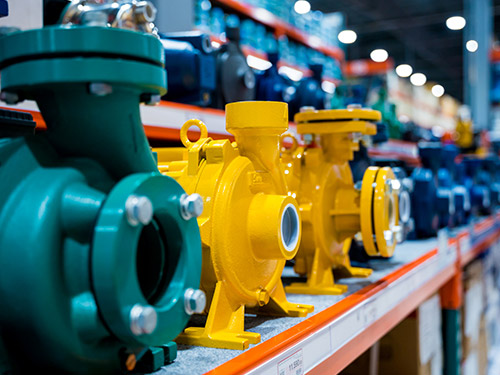
In industrial fluid systems, pump failure is rarely caused by a single issue—it is usually the result of material mismatch, poor hydraulic design, or non-optimized manufacturing processes. This is why custom water pump casting has become a critical engineering solution across mining, agriculture, municipal water supply, and heavy manufacturing sectors.
According to multiple industrial manufacturing reports (including global pump market studies published by engineering associations such as ISO-aligned fluid machinery guidelines), more than 60% of pump performance inefficiencies are linked to component design limitations rather than system configuration. Among all pump components, the المكره is the most sensitive part affecting efficiency, wear rate, and energy consumption.
A properly engineered cast iron impeller water pump can significantly improve:
- Hydraulic efficiency by 8%–18%
- Service life by 30%–50% in abrasive environments
- Maintenance interval by up to 2x compared to non-optimized designs
This article provides a complete breakdown of custom casting technologies, engineering principles, material selection strategies, and industrial applications, helping buyers and engineers make informed decisions.
Key Insights of Custom Water Pump Casting (Extended Overview)
- How custom casting improves pump hydraulic performance and durability
- Why cast iron remains dominant in heavy-duty impeller applications
- Differences between sand casting, centrifugal casting, and investment casting
- Engineering principles behind impeller geometry optimization
- Real industrial use cases across mining, agriculture, and wastewater systems
- International standards affecting pump casting quality control
- Cost-performance analysis for OEM pump manufacturing
- Buyer decision framework for selecting the right casting solution
Understanding Custom Water Pump Casting in Industrial Engineering
What Defines Custom Water Pump Casting
Custom water pump casting refers to a precision manufacturing process where pump components—especially impellers, housings, and volutes—are produced based on application-specific engineering requirements.
Unlike standardized mass production, custom casting allows:
- Geometry optimization based on fluid dynamics
- Material tuning for wear and corrosion resistance
- Structural reinforcement for high-pressure systems
This approach is widely used in OEM manufacturing and industrial pump engineering.
Engineering Purpose of Customization
Custom casting is not just about shape differences—it directly affects hydraulic behavior.
Key engineering goals include:
- Reducing turbulence loss inside pump chambers
- Increasing volumetric efficiency
- Enhancing cavitation resistance
- Balancing rotational stability
In high-load systems such as mining slurry pumps, even a 3% efficiency improvement can translate into thousands of dollars in annual energy savings.
Cast Iron Impeller Water Pump: Material Science Breakdown
Why Cast Iron Dominates Impeller Manufacturing
Cast iron remains one of the most widely used materials in pump impellers due to its unique combination of properties:
- Density: ~7.1–7.3 g/cm³
- Compressive strength: 600–1200 MPa depending on grade
- Excellent damping capacity
- High wear resistance in abrasive fluid conditions
These properties make it particularly suitable for continuous industrial operation.
Types of Cast Iron Used in Pump Casting
Gray Cast Iron (HT Series)
- Good machinability
- High vibration absorption
- Common in general industrial pumps
Ductile Cast Iron (QT Series)
- Higher tensile strength (up to 800 MPa)
- Better impact resistance
- Used in high-pressure systems
Alloy Cast Iron
- مقاومة التآكل المحسنة
- Suitable for chemical and wastewater systems
Performance Limitations
Despite advantages, cast iron has limitations:
- Lower corrosion resistance compared to stainless steel
- Not ideal for highly acidic or saline environments
- Requires protective coatings in certain applications
Custom Water Pump Casting Manufacturing Process
Step 1: Engineering Design & Simulation
Modern OEM casting often uses CFD (Computational Fluid Dynamics) simulation tools.
These tools help analyze:
- Flow velocity distribution
- Pressure zones
- Cavitation risk points
Step 2: Pattern Making
Patterns are created using CNC machining or 3D printing.
Accuracy tolerance typically ranges:
- ±0.2 mm for industrial pumps
- ±0.05 mm for precision impeller systems
Step 3: Mold Preparation
Sand molds remain the most widely used method due to flexibility and cost efficiency.
Key standards often follow:
- ISO 8062 (Casting dimensional tolerance)
- ASTM A48 (Gray iron casting standard)
Step 4: Melting & Pouring
Cast iron is melted at approximately:
- 1200°C – 1350°C
Controlled pouring ensures:
- Reduced porosity
- Uniform grain structure
Step 5: Cooling & Solidification
Cooling rate directly affects:
- صلابة
- Internal stress
- Crack formation
Controlled cooling is essential for long-term durability.
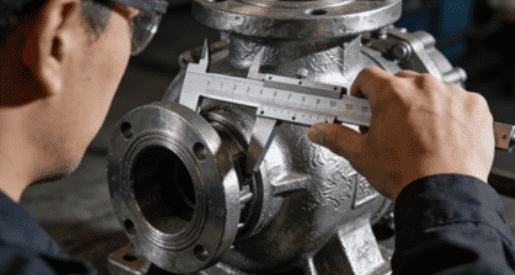
Step 6: Machining & Surface Treatment
Final machining ensures:
- Dimensional precision
- Balanced rotation
- Surface smoothness
Common treatments:
- Anti-corrosion coating
- Epoxy sealing
- التفجير بالرصاص
Comparison: Custom vs Standard Pump Casting
| ميزة | Standard Casting | Custom Water Pump Casting |
|---|---|---|
| Design Method | Fixed geometry | CFD-optimized design |
| Efficiency | واسطة | High (up to +18%) |
| مقاومة التآكل | General | Application-specific |
| استهلاك الطاقة | أعلى | أدنى |
| تكلفة دورة الحياة | Unstable | Predictable |
Pump Casting Methods Explained in Detail
Sand Casting (Most Common)
المزايا:
- تكلفة منخفضة
- Suitable for large parts
- Flexible design changes
القيود:
- Lower surface finish
- Higher machining requirement
صب الطرد المركزي
This method is widely used for cast iron impeller water pump manufacturing.
فوائد:
- High density structure
- Reduced internal defects
- Improved fatigue resistance
الاستثمار في الصب
Used for:
- High-end pump systems
- Chemical industry pumps
فوائد:
- Extremely high accuracy
- Smooth surface finish
Engineering Optimization of Cast Iron Impeller Water Pump
Hydraulic Efficiency Design
Efficiency depends on:
- Blade curvature
- Inlet angle
- Outlet diameter
Even a small geometry change can affect:
- Flow rate by 5%–12%
- Energy consumption by 3%–10%
Cavitation Resistance Design
Cavitation is one of the main causes of impeller failure.
Design strategies include:
- Increasing inlet diameter
- Optimizing blade thickness
- Reducing pressure drop zones
Structural Reinforcement Strategy
Industrial impellers often require:
- Rib reinforcement
- Balanced weight distribution
- Stress simulation testing
Industry Application Case Studies
Case 1: Mining Slurry Transport System
A mining operation replaced standard impellers with custom cast iron designs.
Results:
- Service life increased by 42%
- Maintenance downtime reduced by 35%
- Energy consumption reduced by 11%
Case 2: Agricultural Irrigation Network
Customized low-head impellers improved:
- Water distribution efficiency
- Pump stability under variable load
Case 3: Municipal Water Supply System
Optimized casting reduced:
- Pump vibration levels by 25%
- Repair frequency by 30%
Industry Standards and Quality Control Systems
Key International Standards
- ISO 9906: Pump performance testing
- ASTM A48: Gray iron casting
- ISO 8062: Dimensional tolerances
Quality Testing Methods
- Ultrasonic defect detection
- Hydraulic pressure testing
- Dynamic balancing tests
- Hardness testing (Brinell scale)
Market Trends and Industry Insights
Global Pump Market Growth
According to industrial manufacturing forecasts:
- Global pump market expected to grow at 4%–6% CAGR
- Asia-Pacific dominates industrial pump demand
- OEM casting demand increasing in developing economies
Key Trend: OEM Customization
Manufacturers increasingly shift toward:
- Energy-efficient pumps
- Application-specific impellers
- Smart monitoring integration
Industry Whitepaper Insight
Engineering reports highlight:
- 70% of pump lifecycle cost comes from energy consumption
- Optimized impeller design reduces lifecycle cost significantly
Buyer Selection Guide for Cast Iron Impeller Water Pump
Key Evaluation Criteria
- Operating environment (abrasive, corrosive, clean water)
- Flow rate requirements
- Pressure range
- Maintenance cycle expectations
Decision Framework
If cost priority:
- Standard sand casting impeller
If performance priority:
- Centrifugal cast custom impeller
If precision priority:
- Investment casting solution
Common Buyer Search Intent Questions
- What is the best material for pump impeller casting?
- How long does a cast iron impeller last in industrial use?
- What is the difference between OEM and standard pump casting?
- Which casting process is best for high-efficiency water pumps?
- Can custom casting reduce energy consumption in pumps?
خاتمة
Custom water pump casting has evolved into a core engineering strategy for modern fluid systems. With the increasing demand for energy efficiency, durability, and system reliability, the cast iron impeller water pump remains a foundational solution across global industries.
Through advanced casting techniques, CFD-based design optimization, and strict quality control standards, manufacturers can significantly improve pump performance while reducing lifecycle costs. As industries continue to move toward precision engineering and OEM customization, custom casting will remain a critical driver of innovation in pump technology.
الأسئلة الشائعة
What is the main advantage of custom water pump casting?
It allows optimization of hydraulic efficiency, durability, and performance based on real working conditions.
Why is cast iron still widely used in pump impellers?
Because it offers a balance of cost efficiency, strength, and wear resistance suitable for industrial environments.
Is custom casting suitable for small-scale applications?
Yes, but it is more cost-effective in medium to large industrial systems.
Which casting method is best for impellers?
Centrifugal casting is often preferred for high-strength and balanced impeller production.
Does custom casting improve energy efficiency?
Yes, optimized impeller geometry can improve efficiency by up to 18% in certain applications.
فئات المنتجات
- أجزاء الصمامات
- أجزاء مضخة المياه
- أجزاء صندوق المحمل
- أجزاء الصب بالقالب
- منتجات مضخات الفولاذ المقاوم للصدأ
- منتجات مضخات الحديد الزهر
- قطع غيار الصمامات لاستخدام السيارات
- قطع غيار السيارات
- أجزاء الصمامات للاستخدام المدني
- قطع غيار مضخة التفريغ KF

لنبدأ مشروعك القادم!
ابدأ مشروعك مع Leierwo
1. أرسل استفسارك
2. حساب التكلفة
3. بدء الإنتاج
4. ترتيب التسليم
الأسئلة الشائعة
نعم، لدينا خبرة واسعة في التجارة الدولية ويمكننا مساعدة العملاء في التخليص الجمركي للتصدير وترتيبات الشحن. نحن نقدم شروطًا تجارية مختلفة مثل FOB و CIF و DDP لتلبية الاحتياجات اللوجستية المختلفة، ونقبل طرق الدفع الدولية المختلفة، بما في ذلك T/T (التحويل البرقي) والتحويل البرقي وخطاب الاعتماد (L/C). يمكن مناقشة شروط الدفع مع فريق المبيعات لدينا.
من خلال الشراكة مع Leierwo، يمكنك الاستمتاع بأسعار تنافسية وجودة فائقة مقارنةً بالموردين الآخرين. بالإضافة إلى ذلك، نقدم حلاً شاملاً لتسليم الأجزاء الجاهزة، بما في ذلك التصنيع باستخدام الحاسب الآلي والمعالجة السطحية، مما يضمن عملية إنتاج سلسة.
لدينا معدات صب متقدمة وأنظمة صارمة لمراقبة الجودة. قدرتنا الإنتاجية الشهرية كبيرة، ويمكننا تصنيع المنتجات بناءً على الرسومات أو العينات المقدمة من العملاء. نحن نقبل كلاً من الطلبات التجريبية الصغيرة والإنتاج على نطاق واسع.
تتوافق منتجاتنا مع المعايير الدولية مثل ASTM و AISI و DIN و JIS. ويمكننا تقديم تقارير اختبار المواد والشهادات ذات الصلة لضمان توافق جودة المنتج مع متطلبات العملاء.
نحن نتبع بدقة نظام إدارة الجودة ISO 9001 ونجري عمليات فحص متعددة في جميع مراحل عملية الإنتاج، بما في ذلك التحليل الطيفي، واختبار الأشعة السينية، والاختبار بالموجات فوق الصوتية، وقياسات الأبعاد. تضمن تدابير مراقبة الجودة هذه أن مصبوباتنا تلبي أعلى المعايير.
يعتمد موك لدينا على نوع المنتج ومدى تعقيده، ومع ذلك، نحن مرنون ومنفتحون لمناقشة احتياجاتك الخاصة.
تتراوح مهلة الإنتاج القياسية لدينا من 4 إلى 6 أسابيع، حسب كمية الطلب وتعقيد المنتج. نسعى جاهدين لتقصير أوقات التسليم لتلبية طلبات العملاء.
نعم، يمكننا تقديم عينات لفحص الجودة. يمكن التفاوض بشأن تكاليف العينات ورسوم الشحن، ويمكن استرداد رسوم العينات عند تقديم طلب رسمي.
 Arabic
  English
  Spanish
  Malay
Malay  German