
ما هي عملية صب الاستثمار؟ دليل كامل ومهني
مرحباً بكم في مدونتي!
يسعدني وجودك هنا! قبل أن نتعمق في المحتوى، أود أن تنضموا إليّ على منصات التواصل الاجتماعي. هناك أشارككم أفكارًا إضافية، وأتواصل مع مجتمعنا الرائع، وأُطلعكم على آخر الأخبار. إليكم كيفية البقاء على تواصل:
📘 فيسبوك: شركة شنغهاي لييروو الصناعية التجارية المحدودة
الآن، لننطلق في هذه الرحلة معًا! آمل أن تجدوا هذا المحتوى مفيدًا ومُلهمًا وقيّمًا. هيا بنا!
جدول المحتويات
In today’s rapidly evolving manufacturing industry, precision and reliability are no longer optional—they are essential. Components used in aerospace, automotive, medical devices, and energy systems must meet extremely tight tolerances while maintaining material integrity. This is where الصب الاستثماري, also known as lost-wax casting, has become a cornerstone technology. Understanding what is investment casting and its process can help engineers, manufacturers, and buyers make informed decisions for complex metal parts.
This guide will explore:
- A detailed explanation of what is investment casting
- Step-by-step process, from wax pattern to finished part
- Material selection, mold types, and surface finishes
- Advantages over sand casting, die casting, and machining
- Cost, scalability, and sustainability considerations
- Common applications and case studies
- Industry trends, automation, and future innovations
- FAQs based on real-world queries from engineers and buyers
Step 1: Introduction to Investment Casting
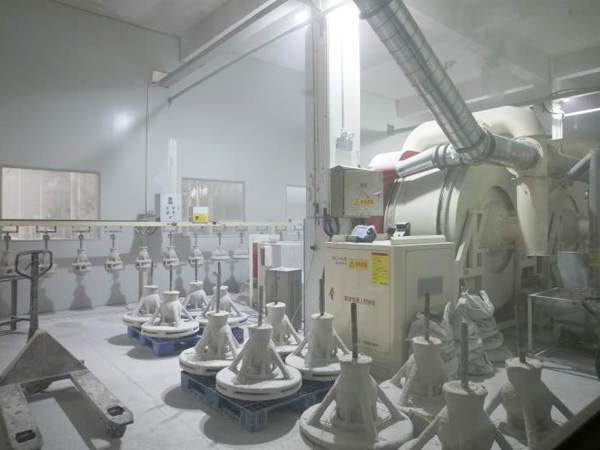
Concept and Definition
صب الاستثمار is a metal casting process that allows for highly precise, complex, and near-net-shape components. Unlike sand casting, investment casting produces parts with tight dimensional tolerances, smooth surface finishes, and minimal post-processing.
The process involves creating a wax pattern, coating it with a ceramic shell, melting out the wax, and then pouring molten metal into the cavity. Once cooled, the ceramic shell is broken away, leaving a finished metal part.
Historical Background
Investment casting dates back to 2000 BC, with evidence of lost-wax casting in Mesopotamia and ancient Egypt. Modern industrial investment casting emerged in the 20th century, evolving into high-precision processes suitable for aerospace, medical implants, and automotive components.
تحليل البيانات: According to a 2024 report by the الاستثمار في الصب Institute, investment casting accounts for over 15% of all precision metal components in aerospace and defense applications worldwide.
Step 2: Key Materials Used in Investment Casting
Metals for Casting
Investment casting can accommodate a wide range of metals:
- Stainless steel: corrosion-resistant, widely used in valves, pumps, and medical instruments
- Aluminum: lightweight, low-cost, ideal for automotive and aerospace components
- Titanium: high strength-to-weight ratio, essential for aerospace and implants
- Cobalt-chrome alloys: used in medical and dental prosthetics due to biocompatibility
- Bronze and copper alloys: popular for decorative and heat-conductive parts
Fact: Titanium components produced via investment casting can achieve up to 30% weight reduction compared to machined counterparts.
Wax and Ceramic Materials
The wax pattern must precisely replicate the design of the final part. Modern waxes are thermoplastic, reusable, and can be injection molded for complex shapes.
Ceramic shells are built using silica, zircon, and alumina powders, providing thermal resistance and structural integrity. Multi-layer shell systems ensure the mold withstands molten metal temperatures up to 1,600°C.
Step 3: Detailed Step-by-Step الاستثمار في الصب عملية
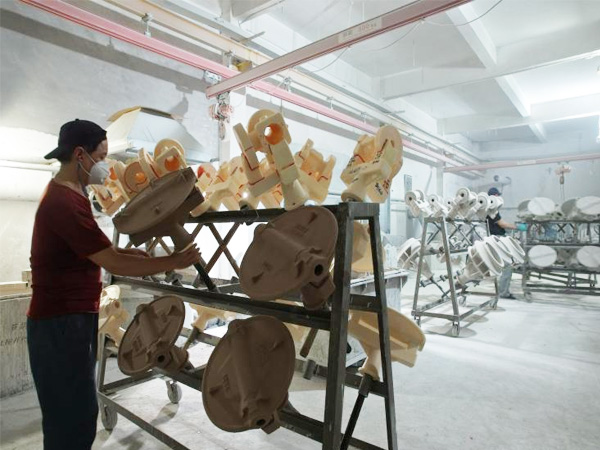
3.1 Wax Pattern Creation
Wax injection molds produce high-fidelity patterns. Patterns can be standalone or assembled into trees, which allows multiple parts to be cast simultaneously, improving efficiency.
دراسة حالة: A European aerospace supplier produces 50 turbine blades per wax tree, reducing cycle time and labor costs by 40%.
3.2 Ceramic Shell Building
Wax patterns are repeatedly dipped in ceramic slurry and coated with fine refractory powders. Layers are applied until the shell is thick enough to handle molten metal.
ملاحظة فنية: Shell thickness usually ranges from 8–15 mm, depending on part size and alloy.
3.3 Dewaxing and Shell Firing
The ceramic shell is heated to remove wax (dewaxing), leaving a hollow cavity. This process can occur in an autoclave or furnace. Subsequent firing strengthens the shell to withstand high-temperature metal pouring.
تحليل البيانات: Controlled firing reduces micro-cracking and ensures less than 0.05% porosity in critical aerospace components.
3.4 Metal Pouring and Cooling
Molten metal is poured into the ceramic shell under gravity or vacuum-assisted conditions. Investment casting allows high-melting-point alloys such as superalloys for turbine engines.
Fact: Cooling rates are carefully controlled to prevent shrinkage defects. Advanced foundries use thermocouples and infrared sensors to monitor temperature gradients.
3.5 Shell Removal and Finishing
After cooling, ceramic shells are mechanically or chemically removed. Minimal post-processing is needed, but some parts may undergo grinding, machining, heat treatment, or surface coating to meet exact specifications.
مثال: A medical device company produces surgical implants with surface roughness below 1.5 μm using الصب الاستثماري, eliminating additional machining.
Step 4: Advantages of Investment Casting
4.1 High Precision and Complex Shapes
Investment casting allows for thin walls, intricate features, and internal cavities, making it ideal for aerospace and medical applications.
4.2 Material Versatility
Almost any metal, including high-performance alloys like Inconel and Hastelloy, can be cast, offering flexibility in engineering design.
4.3 Superior Surface Finish
The process produces a smooth surface finish (Ra 1–3 μm), reducing post-processing and improving component fatigue life.
Step 5: Investment Casting vs Other Casting Methods
| ميزة | الاستثمار في الصب | صب الرمل | صب القوالب |
|---|---|---|---|
| Precision | Very High (±0.1 mm) | Moderate (±1–2 mm) | High (±0.2 mm) |
| تشطيب السطح | Smooth (Ra 1–3 μm) | خشن | ناعم |
| تعقيد | Intricate & thin walls | Simple & thick | معتدل |
| تنوع المواد | Wide, including superalloys | محدود | Mostly non-ferrous |
| يكلف | Higher per part | قليل | معتدل |
| حجم الدفعة | صغيرة إلى متوسطة | كبير | كبير |
البصيرة الرئيسية: Investment casting is preferred for high-value, complex, or safety-critical parts, despite higher initial costs.
Step 6: Common Applications
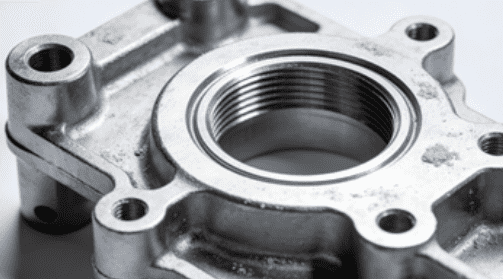
- Aerospace: turbine blades, combustion chambers, structural brackets
- Automotive: valve bodies, gear components, high-performance parts
- Medical: surgical instruments, orthopedic implants, dental prosthetics
- Industrial: pumps, valves, heat exchangers, decorative components
دراسة حالة: A US aerospace supplier reduced weight by 12% and improved performance by 15% using investment casting for titanium brackets.
Step 7: Cost, Scalability, and Sustainability
عوامل التكلفة
صب الاستثمار costs depend on material, complexity, size, batch quantity, and finishing requirements. While the per-part cost is higher than sand casting, reduced machining and fewer defects lower overall production expenses.
ممارسات الاستدامة
Modern foundries adopt wax recycling, ceramic reuse, and energy-efficient kilns. Investment casting also reduces scrap metal, contributing to environmentally responsible manufacturing.
مثال: A Spanish foundry reported a 35% reduction in carbon footprint by switching to reusable ceramic shells and recycled wax.
Step 8: Automation and Industry Trends
Emerging Technologies
- Robotic shell coating and dewaxing improves consistency
- 3D-printed wax patterns allow for rapid prototyping and design flexibility
- Real-time sensors for thermal monitoring reduce defects
نظرة معمقة على القطاع: According to Global Metal Casting Report, automated investment casting is projected to grow 8% annually, driven by aerospace and medical demand.
خاتمة
صب الاستثمار remains a cornerstone of precision manufacturing. قدرتها على الإنتاج complex, high-precision components from a wide range of materials makes it invaluable across aerospace, medical, automotive, and industrial applications. Understanding what is investment casting empowers engineers and buyers to select the right method for quality, efficiency, and sustainability.
With emerging technologies like 3D-printed wax patterns, robotic automation, and real-time monitoring, investment casting is set to remain a leading method for high-performance, precision metal parts well into the future.
الأسئلة الشائعة
Q1: How does الصب الاستثماري differ from الطباعة ثلاثية الأبعاد?
A: Investment casting produces functional metal parts directly, while 3D printing often creates patterns or prototypes.
Q2: Can investment casting handle small or large production runs?
A: Yes, it is ideal for small to medium batches, especially high-value or complex components.
Q3: What metals can be used?
A: Stainless steel, aluminum, titanium, cobalt-chrome, bronze, superalloys.
Q4: Is investment casting environmentally sustainable?
A: Modern methods recycle wax, ceramic shells, and use energy-efficient furnaces.
Q5: How accurate is investment casting?
A: Dimensional tolerance can be ±0.1 ملم, and surface roughness as smooth as Ra 1–3 μm.
فئات المنتجات
- أجزاء الصمامات
- أجزاء مضخة المياه
- أجزاء صندوق المحمل
- أجزاء الصب بالقالب
- منتجات مضخات الفولاذ المقاوم للصدأ
- منتجات مضخات الحديد الزهر
- قطع غيار الصمامات لاستخدام السيارات
- قطع غيار السيارات
- أجزاء الصمامات للاستخدام المدني
- قطع غيار مضخة التفريغ KF

 Arabic
  English
  Spanish
  Malay
Malay  German