
Top Uses of Stainless Steel Investment Castings: Industry Insights, Standards & Practical Guidance
مرحباً بكم في مدونتي!
يسعدني وجودك هنا! قبل أن نتعمق في المحتوى، أود أن تنضموا إليّ على منصات التواصل الاجتماعي. هناك أشارككم أفكارًا إضافية، وأتواصل مع مجتمعنا الرائع، وأُطلعكم على آخر الأخبار. إليكم كيفية البقاء على تواصل:
📘 فيسبوك: شركة شنغهاي لييروو الصناعية التجارية المحدودة
الآن، لننطلق في هذه الرحلة معًا! آمل أن تجدوا هذا المحتوى مفيدًا ومُلهمًا وقيّمًا. هيا بنا!
جدول المحتويات
What This Guide Covers
- What stainless steel investment castings are and how they’re made
- Metallurgy fundamentals and common material grades
- Detailed industrial applications with real examples
- Comparison with other manufacturing and materials
- Design, quality control, and inspection practices
- Cost, lead time, and supply chain considerations
- Tips for engineers and procurement professionals
- Common questions answered in practical language
مقدمة
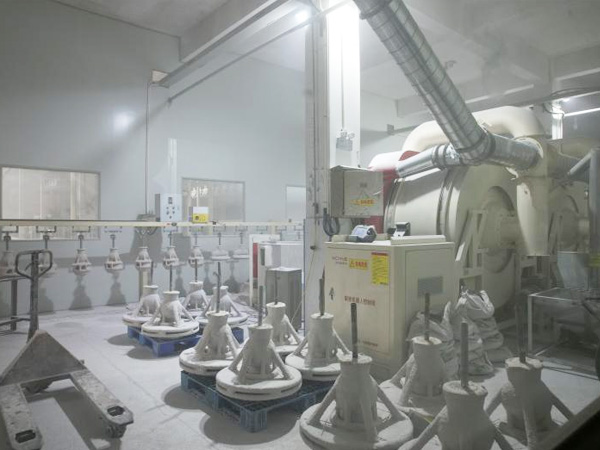
Across advanced manufacturing, there’s a continual push for components that are stronger, lighter, and more precise. At the same time, companies want to reduce lead times and end‑of‑line defects. In this context, stainless steel investment castings are not just a traditional process—they have evolved into a strategic manufacturing choice for hundreds of critical applications worldwide.
From engine brackets in aerospace to precision valves in petrochemical plants, investment cast stainless steel parts combine near‑net shape accuracy, excellent surface finish, and high mechanical performance. These attributes reduce machining time and improve product reliability.
In a 2024 industry survey, more than 62% of mid‑to‑high complexity metal components in machinery and equipment were produced using precision casting rather than rough machining or fabrication methods. This reflects a broader shift toward manufacturing processes that deliver value through precision and consistency, not just cheap bulk production.
ما هي Stainless Steel Investment Castings?
Stainless steel investment casting is a precision casting process that creates detailed metal parts by:
- Making a wax master pattern
- Coating the pattern with a refractory ceramic shell
- Melting out the wax (“lost wax” process)
- Pouring molten stainless steel into the shell
- Breaking away the shell once cooled
- Finishing and inspecting the metal part
This process enables the creation of shapes that would otherwise require assembling multiple pieces or extensive machining. Complex internal passages, thin walls, and detailed geometry can be achieved in one casting step, making it ideal for high‑performance parts where reliability and precision matter.
Metallurgical Foundation: Stainless Steel Grades and Properties
Stainless steels are defined by their chromium content (≥10.5%) which forms a passive oxide layer on the surface, providing superior resistance to corrosion. Additional elements like nickel, molybdenum, and nitrogen further tailor their performance.
Major Stainless Steel Families Used in Investment Castings
Austenitic Steels (e.g., 304 / 316 / 316L)
- مقاومة ممتازة للتآكل
- Good ductility and formability
- Widely used in marine, food processing, medical, and chemical industries
Martensitic & Ferritic (e.g., 410 / 420)
- Higher hardness
- Better wear resistance
- Often used in valves, pumps, and industrial hardware
Precipitation Hardening (e.g., 17‑4 PH)
- Heat treatable for high strength
- Suitable for aerospace, defense, and high‑stress applications
Duplex Grades (e.g., 2205)
- Balanced ferritic‑austenitic structure
- Excellent corrosion resistance and strength
- Used in offshore oil & gas industries
Here’s a snapshot of these grades and their typical behavior:
| سبيكة | الاستخدام النموذجي | مقاومة التآكل | Strength Highlights |
|---|---|---|---|
| 304 | General industrial | جيد | Standard austenitic |
| 316 | Marine, chemical | مرتفع جداً | Molybdenum enhances resistance |
| 410 | Mechanical hardware | معتدل | Hardenable, good wear resistance |
| 17‑4 PH | الفضاء الجوي | عالي | High tensile strength after heat treat |
| 2205 Duplex | Oil & gas | ممتاز | Dual‑phase strength + corrosion resistance |
How Stainless Steel Investment Casting Is Made
The process is both art and science, involving precise control at each stage:
Wax Pattern Fabrication
Patterns are created with high‑precision tooling. Sometimes dozens of patterns are attached to a central sprue to form a “tree,” allowing multiple parts to be cast simultaneously.
Key point: Good pattern design minimizes excess porosity and ensures uniform metal flow.
Ceramic Shell Building
Multiple layers of ceramic slurry and stucco are applied and dried. This shell must be strong enough to withstand molten steel at temperatures exceeding 1500 °C while preserving fine details.
Pouring and Cooling
Molten stainless steel is poured into the shell mold in a controlled environment. Cooling rates and solidification patterns influence grain structure and mechanical properties.
التشطيب
After shell removal, parts undergo deflashing, grinding, heat treatment, and surface finishing as required. Quality checks ensure each part meets specifications.
Where Stainless Steel Investment Castings Are Used

Below we explore specific industries and common components:
Aerospace & Aviation
In aerospace, safety and reliability are paramount. Investment cast stainless steel parts are used for:
- Engine brackets and housings
- Fuel system fittings
- Turbine and compressor components
These parts often operate under extreme temperatures and high cyclic loads, making thermal stability and fatigue resistance key requirements. In many jet engine assemblies, 17‑4 PH stainless steel castings have replaced welded assemblies, improving reliability and reducing assembly time.
Real Example: A major commercial engine manufacturer has standardized more than 200 critical parts in 17‑4 PH investment castings, citing a 25% reduction in machining time و 15% weight savings compared to machined forgings.
Automotive & Transportation
Stainless steel investment castings find use in:
- Exhaust system components
- Gear and transmission housings
- Turbocharger parts
The automotive industry increasingly values parts that deliver tight tolerances and reduced vibration, especially in high‑performance and electric vehicles.
Case Insight: In high‑end turbocharger rotors, investment castings have enabled designs that reduce back pressure and improve engine responsiveness—benefits difficult to achieve with traditional methods.
Medical & Surgical Instruments
316L stainless steel is a common choice for surgical instruments and implantable hardware due to:
- Sterilization compatibility
- التوافق الحيوي
- High surface finish
Precision castings reduce the need for post‑machining, allowing manufacturers to meet stringent hygiene and tolerancing requirements.
Note: Many surgical instruments undergo electropolishing after casting to achieve mirror‑like surfaces that resist bacterial retention.
Oil, Gas & Chemical Processing
Extreme environments in oil and gas demand materials that resist sulfide stress cracking, chloride pitting, and high pressure.
Duplex stainless steel castings—especially 2205—have become a material staple in:
- Valves and actuators
- مساكن المضخة
- Subsea fittings
These components must maintain integrity over long service intervals (often measured in decades), even in deepwater conditions.
Industry Statistic: A 2023 industry report noted that duplex stainless steels now represent over 18% of materials specified in new offshore equipment due to performance advantages over austenitic grades.
Marine & Desalination
Saltwater corrosion accelerates material degradation. Investment cast components in marine environments typically use 316 or duplex grades for:
- Propeller hubs
- Sea water pumps
- Hydraulic fittings
In desalination plants, where high chloride exposure and cyclic operation are normal, castings help ensure longevity with minimal maintenance.
مزايا صب الاستثمار في الفولاذ المقاوم للصدأ
Why do manufacturers choose this process?
High Precision and Shape Freedom
Complex channels, thin walls, internal cavities, and features that would require assembly from multiple pieces can be cast in one step. This reduces assembly time and potential failure points.
Reduced Machining and Material Waste
By producing near‑net shape parts, material waste is minimized and costly machining time is dramatically reduced—especially valuable for expensive alloys.
Corrosion Resistance That Lasts
The chromic oxide layer in stainless steels means castings can resist many aggressive environments without protective coatings, often a cost and maintenance advantage.
Comparisons: Casting vs Machining vs Fabrication
| Metric | الاستثمار في الصب | تصنيع الآلات باستخدام الحاسب الآلي | Fabricated Welded Assembly |
|---|---|---|---|
| تعقيد | ممتاز | محدود | محدود |
| Precision | عالي | عالي | واسطة |
| نفايات المواد | قليل | عالي | واسطة |
| Assembly Steps | الحد الأدنى | معتدل | عالي |
| Total Cost (Medium Batch) | قليل | عالي | واسطة |
Investment casting is often more economical than machining from a solid block when complexity is high and batch sizes are moderate.
Quality Control and Industry Standards
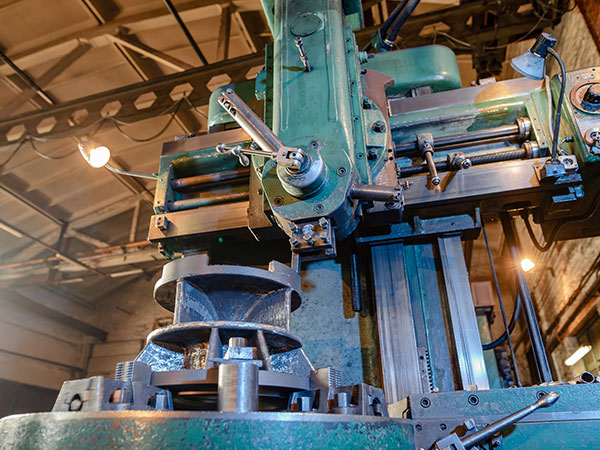
Stainless steel investment castings must conform to strict standards:
Material Standards
- ASTM A240 / A743: Defines composition and mechanical requirements
- ISO 15510: International stainless steel classification
التسامح الأبعاد
- ISO 8062 / CT Grades: Defines achievable tolerances for casting dimensions
- ASME Y14.5: Geometric Dimensioning & Tolerancing standards used in many engineering drawings
Quality Management
- ISO 9001: Quality management frameworks
- AS9100: For aerospace applications
تقنيات الفحص
- Non‑Destructive Testing (NDT): X‑ray, ultrasonic, dye penetrant
- Coordinate Measuring Machines (CMM): For verifying tight tolerances
- Metallurgical Analysis: Microstructure and composition checks
Such control practices help assure component integrity in critical applications.
Design for Manufacturing: Practical Tips
سمك الجدار الموحد
Avoid large variations in wall thickness to reduce shrinkage and distortion.
Smooth Transitions & Radii
Sharp corners can lead to stress concentrations. Rounded geometry improves flow and strength.
Strategic Use of Cores
Internal features should be designed for effective ceramic core placement to ensure quality.
Use of Simulation Tools
Solidification modeling helps predict potential defects and improve first‑pass success rates.
Cost, Lead Time, and Procurement Considerations
Typical timelines often look like:
- Design & tooling: 2‑4 weeks
- Prototype & sampling: 1‑2 weeks
- Production run: 4‑8 weeks depending on volume and complexity
Batch sizes from a few dozen to several thousand are common. Some foundries support piece weights from grams to hundreds of kilograms.
With stable supply chains, lead time predictability has improved, but long‑lead raw materials (like high‑nickel alloys) can affect delivery timelines.
الأسئلة الشائعة
Q: Are cast components as strong as machined parts?
In many cases yes—especially when using appropriate heat treatments. Castings with controlled microstructures can match or exceed machined pieces for strength and fatigue life.
Q: Can I use investment cast parts in high‑temperature environments?
Yes—certain grades (e.g., 17‑4 PH and high‑nickel alloys) perform well up to several hundred °C depending on service conditions.
Q: Are stainless steel investment castings expensive?
Cost depends on complexity, volume, and material. For complex parts in medium volumes, they’re often more cost‑effective than machining or fabrication.
Real‑World Case Snapshots
- A global aerospace OEM reported a 20% reduction in assembly time after converting machined parts to investment castings for select fuel system components.
- In oil & gas, duplex cast parts in subsea valves have demonstrated >15 years of reliable service, reducing maintenance shutdown costs.
- A food equipment manufacturer saw 30% less machining waste by switching to cast 316L pump bodies.
خاتمة
Stainless steel investment castings remain a powerful manufacturing choice for demanding applications. Their combination of precision, corrosion resistance, and design freedom makes them a go‑to solution across industries ranging from aerospace and defense to medical, chemical, and marine.
Whether you’re engineering the next high‑performance system or sourcing components for industrial equipment, understanding how stainless steel investment castings perform—and how to design for them—will help you make better decisions, reduce costs, and improve product performance.
فئات المنتجات
- أجزاء الصمامات
- أجزاء مضخة المياه
- أجزاء صندوق المحمل
- أجزاء الصب بالقالب
- منتجات مضخات الفولاذ المقاوم للصدأ
- منتجات مضخات الحديد الزهر
- قطع غيار الصمامات لاستخدام السيارات
- قطع غيار السيارات
- أجزاء الصمامات للاستخدام المدني
- قطع غيار مضخة التفريغ KF

 Arabic
  English
  Spanish
  Malay
Malay  German