
Duplex vs Super Duplex Stainless Steel Castings: Which Grade Fits Your Project?
جدول المحتويات
- Duplex stainless steel combines ferritic and austenitic microstructures, providing a useful balance of strength, toughness, and corrosion resistance.
- Standard duplex grades are frequently considered for pumps, impellers, valve bodies, chemical equipment, marine components, and water-treatment systems.
- Super duplex stainless steel contains higher levels of key alloying elements and is intended for more aggressive chloride, seawater, chemical, and offshore environments.
- A higher alloy grade is not automatically the correct choice; fluid chemistry, temperature, pressure, geometry, production method, and inspection requirements must be considered together.
- PREN can help compare resistance to localized corrosion, but it cannot independently predict service performance.
- Casting chemistry, solution heat treatment, phase balance, cooling rate, and defect control influence whether the finished component achieves the intended properties.
- Investment casting is suitable for detailed pump and valve parts, while resin sand casting can support larger and heavier components.
- Material selection should be confirmed by engineering evaluation rather than relying only on the names “2205” or “2507.”
Duplex stainless steel has become increasingly relevant to industrial equipment operating in seawater, chemical solutions, chloride-bearing water, and other corrosive environments. Recent search interest around duplex stainless steel, super duplex stainless steel, 2205, and 2507 reflects a broader need for materials that combine corrosion resistance with high mechanical strength.
However, comparing duplex and super duplex stainless steel is not simply a matter of choosing the grade with the highest chromium or molybdenum content. The material must be matched to the component, casting process, service environment, heat treatment, machining requirements, and quality-control plan.
For cast pump impellers, valve bodies, casings, and flow-control components, these factors determine whether the finished part will perform as expected.
What Is Duplex Stainless Steel?

Duplex stainless steel is a family of stainless steels containing a mixed microstructure of ferrite and austenite. The two phases are intended to provide a balanced combination of mechanical strength, toughness, fabrication performance, and corrosion resistance.
The ferritic phase contributes strength and resistance to chloride stress corrosion cracking, while the austenitic phase contributes ductility and toughness. The final balance depends on chemical composition, casting conditions, section thickness, and heat treatment.
According to the International Molybdenum Association, standard duplex grades generally contain approximately 21–25% chromium, 2–3% molybdenum, and controlled nitrogen. Among wrought grades, 2205 has become one of the most widely used members of this material family.
Duplex Microstructure
The term “duplex” refers to the presence of two main metallurgical phases rather than a single-phase stainless steel structure. Both phases must be properly developed for the material to achieve its intended properties.
A casting that meets nominal chemistry but receives unsuitable heat treatment may contain an undesirable phase balance or harmful intermetallic phases. Material designation alone therefore does not guarantee final performance.
Standard Duplex Grades
Standard duplex grades are used where 300-series stainless steel may not provide sufficient strength or resistance to chloride-related corrosion. They are common in water treatment, chemical processing, marine equipment, pulp and paper systems, pumps, and valves.
For cast components, the grade should be specified using an applicable casting standard and designation. A wrought 2205 designation should not be copied onto a casting drawing without confirming its cast equivalent.
What Is Super Duplex Stainless Steel?
Super duplex stainless steel is a more highly alloyed category within the duplex family. It normally contains higher chromium, molybdenum, and nitrogen levels than standard duplex grades, producing greater resistance to pitting and crevice corrosion in aggressive environments.
The material is frequently considered for seawater systems, desalination plants, offshore equipment, chemical processing, high-chloride services, and pressure-containing pump and valve components.
Higher Alloy Content
Chromium supports the formation of a protective passive film. Molybdenum and nitrogen further improve resistance to localized corrosion, particularly in chloride-containing environments.
The additional alloying content improves performance potential, but it also places greater demands on melting, casting, heat treatment, welding, and machining. Improper processing can prevent the component from achieving the expected corrosion resistance.
Super Duplex 2507
2507 is one of the best-known super duplex designations. It is commonly associated with demanding chloride, seawater, chemical, and offshore applications.
For castings, the project drawing should identify the relevant casting grade and standard instead of using only the wrought term “2507.” Chemistry, mechanical properties, heat treatment, corrosion testing, and inspection requirements should be clearly defined.
Duplex vs Super Duplex Stainless Steel: Main Differences
Both materials use a ferritic-austenitic structure, but their performance levels and typical operating environments are different.
| Selection factor | دوبلكس ستانلس ستيل | Super duplex stainless steel |
|---|---|---|
| Typical reference grade | 2205 family | 2507 family |
| Alloying level | Moderate chromium, molybdenum, and nitrogen | Higher chromium, molybdenum, and nitrogen |
| قوة | Higher than many austenitic stainless steels | Generally higher than standard duplex grades |
| Pitting resistance | Suitable for many industrial and moderately aggressive chloride services | Intended for more severe chloride and seawater exposure |
| Crevice corrosion resistance | Good when correctly selected and processed | Stronger resistance in more demanding environments |
| Stress corrosion cracking resistance | Strong performance in many chloride environments | Suitable for more severe combinations of chlorides, stress, and pressure |
| Casting control | Requires controlled chemistry and solution heat treatment | Requires tighter control of chemistry, heat treatment, and phase formation |
| التصنيع | More demanding than common austenitic stainless steel | Usually more demanding because of higher strength and work hardening |
| Typical applications | Pumps, valve bodies, water treatment, chemical equipment | Offshore systems, seawater pumps, desalination and severe chemical service |
| Selection priority | Balanced industrial performance | Maximum localized-corrosion resistance where justified |
مقاومة التآكل
Super duplex stainless steel normally provides stronger resistance to pitting and crevice corrosion because of its higher chromium, molybdenum, and nitrogen content. This difference becomes important in warm seawater, concentrated chlorides, stagnant zones, narrow gaps, and deposits.
Standard duplex stainless steel may already provide sufficient performance in less aggressive applications. Selecting super duplex without evaluating the environment can add processing complexity without delivering a meaningful operational advantage.
القوة الميكانيكية
Both categories provide high strength compared with many austenitic stainless steels. This strength can support compact component design, thinner sections in appropriate applications, or improved resistance to pressure and mechanical loading.
However, high strength does not eliminate the need to check fatigue, impact loading, casting discontinuities, section transitions, and stress concentrations. A pump impeller or valve body must be evaluated as a complete component.
Manufacturing Difficulty
Standard duplex stainless steel already requires careful melting and heat-treatment control. Super duplex castings can have a narrower processing window because excessive time at unsuitable temperatures may promote unwanted phases.
Large differences in section thickness can also influence cooling and microstructure. The foundry must plan the mold, feeding system, heat treatment, and inspection around the actual geometry.
Why Duplex Stainless Steel Is Trending in 2026

Current Google Trends-related searches around duplex steel increasingly overlap with seawater, desalination, chemical processing, pump materials, valve materials, and comparisons between 2205 and 2507. This reflects an industry shift toward longer-lasting components for corrosive fluid systems.
The interest is not limited to raw material. Search behavior is becoming more application-specific, with engineers asking whether duplex stainless steel suits an impeller, whether super duplex is necessary for seawater, and how cast grades differ from wrought grades.
Desalination and Water Infrastructure
Desalination systems expose pumps, valves, piping, and flow-control components to chloride-rich water. Material selection must account for concentration, temperature, oxygen level, velocity, deposits, and shutdown conditions.
Super duplex stainless steel may be appropriate for severe zones, while standard duplex may be sufficient for less aggressive sections of the system. Using one material for every component is not always technically or economically necessary.
Offshore and Marine Equipment
Offshore equipment operates under combinations of seawater, pressure, mechanical loading, crevices, and limited maintenance access. These conditions increase interest in materials that resist localized corrosion and stress corrosion cracking.
Duplex and super duplex stainless steel castings can be used in pump housings, valve bodies, impellers, manifolds, and other flow-control components. Each application still requires an appropriate grade, casting standard, and inspection plan.
المعالجة الكيميائية
Chemical plants handle fluids with varying concentrations, temperatures, impurities, and oxidizing or reducing conditions. A material that performs well in one solution may behave differently when the concentration or temperature changes.
The material-selection process should therefore use actual process data. Describing a fluid only as “acid,” “chemical water,” or “salt solution” is not sufficient for reliable alloy selection.
Longer Equipment Service Requirements
Industrial operators increasingly evaluate maintenance access, shutdown risk, component traceability, and service continuity. Corrosion-resistant alloys can support these goals when they are properly matched to the environment.
This has increased search interest in duplex stainless steel properties, super duplex applications, cast grades, heat treatment, PREN, and inspection requirements.
Understanding PREN in Duplex Stainless Steel Selection
PREN stands for Pitting Resistance Equivalent Number. It is a calculated value used to compare the theoretical resistance of stainless steel grades to pitting corrosion.
One commonly used formula is:
PREN = %Cr + 3.3 × %Mo + 16 × %N
ال British Stainless Steel Association explains that PREN is useful for ranking stainless steel grades based on chemistry, but it cannot by itself predict whether a material will be suitable for a specific application.
What PREN Can Tell You
A higher calculated value generally indicates stronger potential resistance to chloride-induced pitting. It is useful when comparing standard duplex, super duplex, and austenitic stainless steel grades at an early selection stage.
PREN also helps explain why higher chromium, molybdenum, and nitrogen levels matter in seawater and chloride-bearing environments.
What PREN Cannot Tell You
PREN does not include component geometry, surface condition, inclusions, heat treatment, phase balance, crevices, welding effects, fluid velocity, temperature, deposits, or actual exposure time.
Two castings with similar calculated PREN values can perform differently if their microstructures, defect levels, heat treatments, or surface conditions are different. It should therefore be used as one selection tool rather than a complete approval criterion.
Duplex Stainless Steel Castings vs Wrought Duplex Steel
Search results often group cast and wrought grades together, but they are manufactured differently. Wrought plate, bar, pipe, and forgings are mechanically worked after solidification, while castings solidify directly into a near-final shape.
This distinction influences standards, grade designations, microstructure, defect evaluation, heat treatment, and mechanical-property requirements.
Cast Duplex Stainless Steel
Casting allows curved passages, internal cavities, blade profiles, valve bodies, and other complex forms to be produced near their final shape. It is especially useful for pump and valve components that would require extensive material removal from solid stock.
The casting process must manage metal cleanliness, mold filling, shrinkage, gas, section thickness, and cooling behavior. The component normally receives solution heat treatment before final machining and inspection.
Wrought Duplex Stainless Steel
Wrought products are formed through rolling, forging, extrusion, or related mechanical-working processes. The resulting grain flow and manufacturing history differ from those of a casting.
A wrought 2205 or 2507 specification should not automatically replace a cast grade on a drawing. The applicable material specification must match the production route.
Why the Difference Matters
If an RFQ states only “2205 stainless steel,” the foundry may not know whether the designer expects a wrought designation, a cast equivalent, or a particular corrosion-test requirement.
A complete specification should identify the applicable standard, grade, heat treatment, mechanical requirements, supplementary tests, and required certification.
Applicable Standards for Duplex Stainless Steel Castings
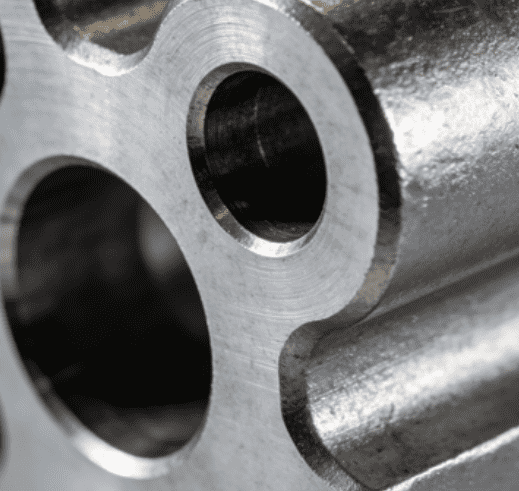
ASTM A890/A890M is an important specification for corrosion-resistant iron-chromium-nickel-molybdenum duplex castings intended for general applications.
The current ASTM A890/A890M specification covers chemistry and heat-treatment requirements for duplex stainless steel castings. ASTM notes that correct heat treatment is generally necessary to enhance corrosion resistance and, in some cases, achieve the required mechanical properties.
Pressure-containing components may be governed by other product-specific specifications or supplementary requirements. The project engineer should confirm which standard applies to the valve, pump, pressure system, or end-use industry.
التركيب الكيميائي
The standard controls elements such as chromium, nickel, molybdenum, nitrogen, carbon, manganese, silicon, phosphorus, sulfur, copper, and tungsten according to the selected grade.
Meeting chemistry limits is necessary, but it does not replace heat-treatment verification or final property testing.
المعالجة الحرارية
Duplex stainless steel castings are normally solution heat-treated and rapidly cooled. This process helps dissolve unwanted phases and develop the intended ferritic-austenitic structure.
The appropriate temperature and cooling conditions depend on the grade, section thickness, furnace loading, and applicable specification.
Supplementary Requirements
Some projects may require corrosion tests, impact tests, ferrite assessment, radiographic examination, penetrant testing, additional test bars, or more detailed certification.
These requirements should appear in the RFQ and purchase specification before production begins. Adding them after casting can create delays or make compliance impossible to demonstrate.
Selecting Duplex Stainless Steel for Pump Castings
Pump components operate under fluid velocity, pressure, vibration, corrosion, erosion, and sometimes cavitation. Different parts within the same pump may experience different exposure conditions.
Leierwo’s pump manufacturing capabilities include pump bodies, impellers, sleeves, guide components, casting, machining, and inspection. Material selection can therefore be considered together with component geometry and the final manufacturing route.
Pump Impellers
An impeller contains curved blades and flow passages that directly influence hydraulic performance. Material selection must consider corrosion, cavitation, erosion, rotational stress, and the characteristics of the pumped fluid.
Standard duplex stainless steel may suit many industrial water and chemical services. Super duplex may be considered when chloride concentration, temperature, pressure, and localized-corrosion risk are more severe.
Pump Casings
Pump casings contain pressure and direct fluid through the pump. They may contain heavy sections, flanges, internal passages, and machined sealing surfaces.
Resin sand casting is often practical for larger casings, while investment casting may suit smaller and more detailed designs. Wall thickness and feeding conditions must be controlled to reduce shrinkage in heavy sections.
Shafts and Sleeves
Shafts and sleeves have different loading and wear conditions from impellers and casings. A material suitable for a casing is not automatically the best choice for a rotating shaft.
The manufacturer should evaluate strength, wear, galling, corrosion, machining, and compatibility with adjacent components.
Duplex and Super Duplex Stainless Steel in Valve Castings
Valve bodies, discs, gates, balls, seats, and stems experience different combinations of pressure, flow, sealing contact, corrosion, and wear. Grade selection should be performed for the actual component rather than the valve assembly in general.
Leierwo’s safety valve body is manufactured through silica sol precision casting or resin sand casting according to component requirements. Duplex stainless steel can be considered for marine and chemical applications where resistance to stress corrosion and localized attack is important.
Valve Bodies
Valve bodies contain pressure and often include changes in wall thickness, flanges, internal cavities, and complex flow passages. Casting quality and heat treatment affect both structural reliability and corrosion performance.
Areas around seats, body joints, and stagnant cavities deserve attention because crevice conditions can be more aggressive than exposed surfaces.
Flow-Control Components
Discs, gates, balls, and plugs may experience erosion, pressure differentials, repeated movement, and contact with sealing materials. Corrosion resistance alone does not determine suitability.
Hardness, dimensional stability, machining, surface finish, and wear behavior must also be included in the material decision.
Investment Casting vs Sand Casting for Duplex Components
Both methods can produce duplex stainless steel components, but they serve different size, geometry, surface, and production requirements.
| عامل | صب الاستثمار | صب الرمل بالراتنج |
|---|---|---|
| Typical component size | صغيرة إلى متوسطة | Medium to large |
| Geometric detail | Strong capability | Suitable for large and complex shapes |
| As-cast surface | Generally smoother | Generally rougher |
| Tooling approach | Sacrificial pattern and ceramic shell | Pattern, sand mold, and cores |
| Machining requirement | Reduced on some surfaces | Usually greater on critical surfaces |
| Suitable components | Impellers, valve internals, small bodies | Pump casings, large valve bodies, heavy impellers |
| Section-thickness concern | Thin sections and shell filling | Heavy sections, feeding, and shrinkage |
| Production planning | Detailed repeat parts | Flexible sizes and lower-volume components |
الاستثمار في الصب
Investment casting can reproduce detailed blades, narrow flow passages, and complex external features. It is often considered for smaller pump impellers, valve components, and precision industrial parts.
Leierwo’s investment casting service supports stainless steel, duplex stainless steel, carbon steel, alloy steel, and other casting materials for pump, valve, transportation, machinery, and petrochemical applications.
صب الرمل الراتنجي
Resin sand casting accommodates larger components and heavier sections. It can be used for pump bodies, large impellers, valve bodies, and industrial equipment components.
The mold material, binder system, gating, feeding, pouring parameters, and heat-treatment route must be planned for the selected duplex grade.
Heat Treatment and Phase Balance
The performance of duplex stainless steel depends on maintaining an appropriate balance between ferrite and austenite while avoiding harmful secondary phases.
Casting solidification naturally begins with a high ferrite content. Austenite develops as the material cools and during subsequent solution heat treatment.
Excessive Ferrite
Excessive ferrite may reduce toughness and affect corrosion performance. It can result from chemistry variation, rapid cooling, or an unsuitable heat-treatment cycle.
Ferrite measurement may be required for critical projects, but the acceptable range should come from the applicable specification or engineering requirement.
Excessive Austenite
An unsuitable phase balance in the opposite direction can also affect strength and corrosion behavior. The goal is not to maximize one phase but to develop the intended duplex structure.
Chemistry, heat-treatment temperature, holding time, section thickness, and cooling rate all influence the final result.
Harmful Intermetallic Phases
Exposure to unsuitable temperature ranges can promote sigma phase and other precipitates. These phases may reduce toughness and localized-corrosion resistance.
Super duplex stainless steel can require particularly careful heat-treatment control because of its higher alloy content. Furnace uniformity and rapid cooling therefore become important production variables.
Machining Duplex Stainless Steel Castings
Duplex stainless steel has high strength and can work-harden during machining. Super duplex grades may place even greater demands on cutting tools and machining stability.
Critical features such as bores, keyways, sealing faces, threads, mounting surfaces, and shaft interfaces normally require CNC machining after heat treatment.
Stable Cutting Conditions
Rigid workholding, suitable tooling, controlled cutting parameters, and consistent coolant application help maintain dimensional accuracy. Tool rubbing should be avoided because it can increase work hardening.
Machining allowances must be established during casting design so that enough material remains for final cleanup without creating unnecessary machining volume.
Surface Integrity
The machined surface should not contain uncontrolled heat damage, embedded contamination, deep tool marks, or unremoved casting defects.
For corrosion-sensitive applications, cleaning and passivation requirements may also need to be specified after machining.
Quality Control for Duplex Stainless Steel Castings
A duplex casting should not be approved solely because a handheld analyzer identifies chromium, nickel, and molybdenum. Complete quality control connects material traceability with heat treatment, mechanical properties, microstructure, dimensions, and casting integrity.
Material and Heat Traceability
Each casting should remain traceable to its heat, chemical analysis, heat-treatment batch, and inspection records. Material certificates should use the grade and standard specified by the project.
Traceability becomes particularly important when standard and super duplex grades are manufactured within the same supply chain.
الاختبارات الميكانيكية
Tensile, yield, elongation, hardness, and impact testing may be required depending on the grade and application. Test frequency and specimen location should follow the relevant specification.
Mechanical results should be reviewed together with heat treatment and chemistry rather than as isolated values.
Corrosion Testing
Some projects require pitting or intergranular-corrosion testing. The test method, acceptance criteria, specimen preparation, and sampling frequency must be stated in advance.
PREN calculations cannot replace a specified corrosion test when direct verification is required.
الاختبارات غير المدمرة
Liquid penetrant testing can identify surface-breaking discontinuities. Radiographic or ultrasonic inspection may be specified for internal quality, depending on component geometry and acceptance requirements.
Pressure-containing valve and pump components may need more extensive examination than non-critical structural parts.
فحص الأبعاد
Cast surfaces, machined interfaces, wall thicknesses, flow passages, bores, and flange relationships should be inspected according to their functional importance.
For impellers, blade geometry and rotational concentricity are particularly important. Final balancing may also be required after machining.
When Should You Choose Duplex or Super Duplex?
The decision should begin with service conditions, not the assumption that the higher grade is always safer.
Choose standard duplex stainless steel when the application requires increased strength, good chloride stress-corrosion resistance, and stronger localized-corrosion performance than common austenitic stainless steel, but the environment does not justify a super duplex grade.
Choose super duplex stainless steel when chloride concentration, temperature, seawater exposure, pressure, crevice conditions, chemical severity, or maintenance consequences demand a higher level of localized-corrosion resistance.
Questions to Ask Before Selecting a Grade
- What fluid will contact the component?
- What are the normal and maximum operating temperatures?
- What is the chloride concentration?
- Is the fluid stagnant, flowing, aerated, or contaminated?
- Are crevices or deposits likely to form?
- What pressure and mechanical loads will the casting experience?
- Is erosion, cavitation, or abrasive wear expected?
- Which casting standard and grade apply?
- Is corrosion testing required?
- What non-destructive testing and certification are needed?
- Will the component be investment-cast or sand-cast?
- Which surfaces require CNC machining?
- Does the component require welding or repair welding?
- What are the consequences of an in-service failure?
Common Duplex Stainless Steel Selection Mistakes
Specifying Only “2205” or “2507”
These terms are commonly associated with wrought materials. A casting RFQ should identify the applicable cast grade, standard, heat treatment, mechanical requirements, and supplementary tests.
Ambiguous material specifications can lead to inconsistent quotations and prevent accurate comparison between manufacturing proposals.
Selecting by PREN Alone
PREN is a useful screening calculation, but it does not represent all environmental and manufacturing variables.
Temperature, crevices, phase balance, surface condition, inclusions, heat treatment, fluid chemistry, and operating stress can all change actual performance.
Assuming Super Duplex Is Always Better
Super duplex offers higher corrosion-resistance potential, but it is not necessary for every water, pump, or valve application. It also requires tighter processing control.
The correct material is the lowest grade that reliably satisfies the full operating and inspection requirements, with appropriate engineering margins.
Ignoring Casting Geometry
A material may be suitable in laboratory testing but difficult to process in a casting with heavy hubs, thin blades, isolated hot spots, or large section changes.
Casting simulation, feeding design, mold selection, heat treatment, and inspection should be evaluated before the grade is finalized.
Treating Heat Treatment as a Routine Step
Heat treatment determines whether the required microstructure is developed and whether harmful phases are controlled.
The foundry should record the heat-treatment cycle and follow the relevant grade specification. Uncontrolled reheating during repair can also affect local microstructure.
Information to Include in a Duplex Casting RFQ
A complete RFQ helps the manufacturer evaluate material, casting process, heat treatment, machining, inspection, and documentation as one project.
Provide:
- 3D CAD file and controlled 2D drawing
- Applicable ASTM, EN, ISO, or customer material specification
- Cast grade rather than only a wrought trade designation
- Fluid composition and chloride concentration
- Normal and maximum operating temperatures
- Design and test pressure
- Required mechanical properties
- Solution heat-treatment requirements
- Ferrite or phase-balance requirements
- Corrosion-test method and acceptance criteria
- Non-destructive testing requirements
- Critical dimensions and machining tolerances
- Surface-finish requirements
- Welding or repair restrictions
- Material certification requirements
- Sample quantity and production quantity
- Required inspection reports
Leierwo’s stainless steel casting capabilities combine silica sol shell making, resin sand casting, heat treatment, machining, and inspection for stainless steel and related alloy components. A complete specification allows the engineering team to determine whether standard duplex, super duplex, or another corrosion-resistant alloy better matches the component.
خاتمة
Duplex and super duplex stainless steel castings provide valuable combinations of strength and corrosion resistance for pumps, valves, impellers, marine systems, desalination equipment, and chemical-processing components. Their advantages, however, depend on correct grade selection and disciplined manufacturing control.
Standard duplex stainless steel is suitable for many demanding industrial environments and often provides a strong balance between mechanical properties, corrosion resistance, and manufacturing requirements. Super duplex stainless steel extends localized-corrosion resistance for more aggressive seawater, chloride, offshore, and chemical conditions.
The difference cannot be reduced to a simple comparison between 2205 and 2507. Casting standards, fluid chemistry, temperature, pressure, crevice conditions, section thickness, heat treatment, phase balance, machining, corrosion testing, and non-destructive inspection all influence the final decision.
A reliable duplex stainless steel casting begins with a complete operating specification. It ends with traceable chemistry, controlled heat treatment, verified properties, accurate machining, and inspection records appropriate to the component’s service risk.
الأسئلة الشائعة
Is super duplex stainless steel always better than duplex stainless steel?
No. Super duplex provides higher resistance to pitting and crevice corrosion, but standard duplex may already meet the requirements of many pump, valve, water-treatment, and chemical applications. The correct choice depends on chlorides, temperature, pressure, crevices, loading, processing, and required testing.
Is 2205 the same as cast duplex stainless steel?
2205 commonly refers to a wrought duplex stainless steel family. Cast components should be specified using an appropriate casting grade and standard, such as a relevant grade under ASTM A890/A890M. Chemistry may be comparable, but manufacturing route, heat treatment, properties, testing, and designation are not automatically identical.
Can duplex stainless steel be used for seawater pump impellers?
Yes, duplex stainless steel is used for selected seawater pump components, but suitability depends on water temperature, chloride level, flow velocity, oxygen, crevices, deposits, cavitation, and expected service conditions. More severe exposure may justify super duplex, while the casting must still receive correct heat treatment and inspection.
Why is solution heat treatment important for duplex castings?
Solution heat treatment helps develop the required ferritic-austenitic structure and dissolve harmful secondary phases. Rapid cooling after treatment helps preserve the intended microstructure. Incorrect temperature, holding time, or cooling can reduce toughness and corrosion resistance even when the casting meets nominal chemical composition.
What should be inspected on a duplex stainless steel casting?
Inspection may include chemical analysis, heat-treatment records, mechanical testing, ferrite or phase assessment, corrosion testing, dimensional inspection, liquid penetrant testing, radiography or ultrasonic testing, and material traceability. The exact plan should reflect the casting standard, component geometry, pressure duty, and failure risk.
فئات المنتجات
- أجزاء الصمامات
- أجزاء مضخة المياه
- أجزاء صندوق المحمل
- أجزاء الصب بالقالب
- منتجات مضخات الفولاذ المقاوم للصدأ
- منتجات مضخات الحديد الزهر
- قطع غيار الصمامات لاستخدام السيارات
- قطع غيار السيارات
- أجزاء الصمامات للاستخدام المدني
- قطع غيار مضخة التفريغ KF

لنبدأ مشروعك القادم!
ابدأ مشروعك مع Leierwo
1. أرسل استفسارك
2. حساب التكلفة
3. بدء الإنتاج
4. ترتيب التسليم
الأسئلة الشائعة
نعم، لدينا خبرة واسعة في التجارة الدولية ويمكننا مساعدة العملاء في التخليص الجمركي للتصدير وترتيبات الشحن. نحن نقدم شروطًا تجارية مختلفة مثل FOB و CIF و DDP لتلبية الاحتياجات اللوجستية المختلفة، ونقبل طرق الدفع الدولية المختلفة، بما في ذلك T/T (التحويل البرقي) والتحويل البرقي وخطاب الاعتماد (L/C). يمكن مناقشة شروط الدفع مع فريق المبيعات لدينا.
من خلال الشراكة مع Leierwo، يمكنك الاستمتاع بأسعار تنافسية وجودة فائقة مقارنةً بالموردين الآخرين. بالإضافة إلى ذلك، نقدم حلاً شاملاً لتسليم الأجزاء الجاهزة، بما في ذلك التصنيع باستخدام الحاسب الآلي والمعالجة السطحية، مما يضمن عملية إنتاج سلسة.
لدينا معدات صب متقدمة وأنظمة صارمة لمراقبة الجودة. قدرتنا الإنتاجية الشهرية كبيرة، ويمكننا تصنيع المنتجات بناءً على الرسومات أو العينات المقدمة من العملاء. نحن نقبل كلاً من الطلبات التجريبية الصغيرة والإنتاج على نطاق واسع.
تتوافق منتجاتنا مع المعايير الدولية مثل ASTM و AISI و DIN و JIS. ويمكننا تقديم تقارير اختبار المواد والشهادات ذات الصلة لضمان توافق جودة المنتج مع متطلبات العملاء.
نحن نتبع بدقة نظام إدارة الجودة ISO 9001 ونجري عمليات فحص متعددة في جميع مراحل عملية الإنتاج، بما في ذلك التحليل الطيفي، واختبار الأشعة السينية، والاختبار بالموجات فوق الصوتية، وقياسات الأبعاد. تضمن تدابير مراقبة الجودة هذه أن مصبوباتنا تلبي أعلى المعايير.
يعتمد موك لدينا على نوع المنتج ومدى تعقيده، ومع ذلك، نحن مرنون ومنفتحون لمناقشة احتياجاتك الخاصة.
تتراوح مهلة الإنتاج القياسية لدينا من 4 إلى 6 أسابيع، حسب كمية الطلب وتعقيد المنتج. نسعى جاهدين لتقصير أوقات التسليم لتلبية طلبات العملاء.
نعم، يمكننا تقديم عينات لفحص الجودة. يمكن التفاوض بشأن تكاليف العينات ورسوم الشحن، ويمكن استرداد رسوم العينات عند تقديم طلب رسمي.
 Arabic
  English
  Spanish
  Malay
Malay  German