
Contract Manufacturer vs OEM: Which Fits Your Business Model?
مرحباً بكم في مدونتي!
يسعدني وجودك هنا! قبل أن نتعمق في المحتوى، أود أن تنضموا إليّ على منصات التواصل الاجتماعي. هناك أشارككم أفكارًا إضافية، وأتواصل مع مجتمعنا الرائع، وأُطلعكم على آخر الأخبار. إليكم كيفية البقاء على تواصل:
📘 فيسبوك: شركة شنغهاي لييروو الصناعية التجارية المحدودة
الآن، لننطلق في هذه الرحلة معًا! آمل أن تجدوا هذا المحتوى مفيدًا ومُلهمًا وقيّمًا. هيا بنا!
جدول المحتويات
In today’s competitive global market, choosing the right manufacturing partner can define your success. From startups introducing new products to multinational corporations scaling production, deciding between a contract manufacturer and an OEM impacts cost, quality, lead times, and intellectual property protection.
Understanding the contract manufacturer vs OEM differences is crucial for business leaders, product managers, and engineers. This guide provides a professional and comprehensive view of the topic, combining real-world examples, data-backed insights, and actionable guidance.
Understanding Contract Manufacturers and OEMs
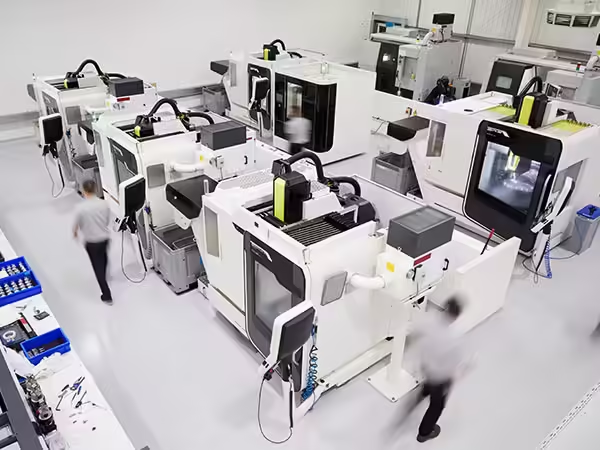
What is a Contract Manufacturer?
أ contract manufacturer (CM) is a company that produces products strictly according to a client’s design specifications. The client retains full control over the product design and intellectual property.
- Key Benefits of CMs:
- Retain IP and design control
- Lower upfront investment
- Flexible production for small to medium batches
مثال: A European electronics startup used a CM to produce 500 smart sensors monthly, reducing capital expenditure by 40% while keeping full IP ownership.
What is an OEM?
An Original Equipment Manufacturer (OEM) designs and manufactures products, often providing turnkey solutions. OEMs can influence design and engineering, sometimes requiring joint IP agreements.
- Key Advantages of OEMs:
- Turnkey production, including tooling and engineering
- Access to specialized manufacturing equipment
- High-volume scalability
مثال: A U.S. automotive supplier partnered with an OEM to manufacture titanium engine brackets, improving performance by 15%, though lead times were longer due to complex prototyping.
Key Differences Between Contract Manufacturer and OEM
Design Control and Intellectual Property
The main difference lies in design ownership:
- CM: Full control remains with the client; no IP sharing is required.
- OEM: Design may involve manufacturer input; IP agreements often needed.
نظرة معمقة على القطاع: A 2025 survey by Global Manufacturing Insights reported 68% of startups choose CMs for IP-sensitive products, compared to 22% for OEMs.
مرونة الإنتاج
- CM: High flexibility for small batches, custom designs, and rapid changes.
- OEM: Optimized for consistent, high-volume production; less suitable for design changes on short notice.
Cost Implications
- CM: Low initial investment; cost mainly per unit produced.
- OEM: Higher upfront costs due to tooling, engineering, and R&D, but lower unit costs at scale.
مهلة
- CM: Faster for ready-to-manufacture designs.
- OEM: Longer lead times due to prototyping, verification, and complex engineering.
Manufacturing Capabilities and Technology
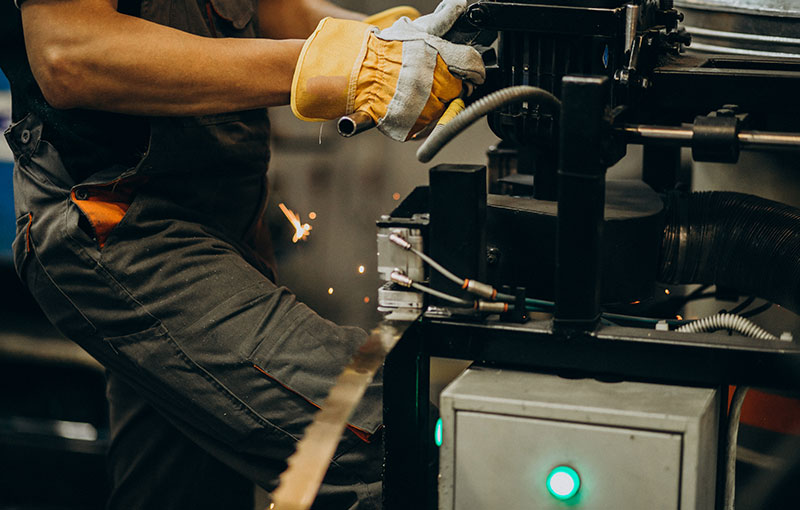
Production Equipment
- CMs typically have versatile lines for multiple products but may lack specialized machinery.
- OEMs invest in high-precision, automated equipment suitable for aerospace, automotive, and medical-grade products.
Material Handling
- CMs handle standard materials: aluminum, steel, and common plastics.
- OEMs can manage advanced materials: titanium, superalloys, and high-performance polymers.
مثال: Shenzhen CMs can produce consumer electronics components efficiently, but aerospace-grade titanium brackets require OEM-level machinery.
ضمان الجودة
Both CMs and OEMs implement quality measures, but the depth differs:
- CMM (Coordinate Measuring Machines): Verifies dimensions.
- Non-Destructive Testing (NDT): X-ray, ultrasonic, or dye penetrant testing.
- ISO Certifications: ISO 9001 for CMs; ISO 9001 and AS9100 or ISO 13485 for OEMs in aerospace and medical sectors.
Comparative Analysis: Contract Manufacturer vs OEM
| ميزة | Contract Manufacturer | OEM | Ideal Scenario |
|---|---|---|---|
| Design Control | Client-controlled | Shared/negotiated | Startups, IP-sensitive products |
| IP Ownership | Retained by client | May require agreements | Proprietary designs |
| Production Volume | Small-medium | Medium-large | Pilot production vs mass production |
| مهلة | قصير | Longer due to engineering | Rapid prototyping vs complex products |
| Cost Structure | Low upfront | High upfront | Startups vs scaling enterprises |
| Material & Technology | Standard | Advanced & specialized | Common parts vs aerospace/medical components |
| Flexibility | عالي | معتدل | Rapid changes vs stable production |
| الدعم الفني | محدود | Extensive | Simple products vs engineered components |
Key Insight: Startups often benefit from CMs for agility and cost efficiency, while OEMs are better for complex, high-value, or regulated components.
Evaluating Risks and Managing Quality
When selecting a manufacturing partner, understanding and mitigating risks is critical. Both contract manufacturers و OEMs have unique challenges that affect quality, lead times, and overall business outcomes. Proactive management ensures that your product meets specifications while minimizing production delays or costly defects.
Risk Factors in Contract Manufacturing
Variable Quality if QA is Weak
Contract manufacturers can be highly efficient, but quality varies significantly depending on their quality assurance processes. Without rigorous QA, products may suffer from dimensional inconsistencies, surface defects, or material non-conformities.
Case Example: A European electronics startup sourced from a small CM and experienced a 12% rejection rate in the first batch due to inconsistent soldering on circuit boards. Implementing detailed QA checklists reduced defects to under 2% in subsequent runs.
Dependence on Third-Party Schedules
CMs often serve multiple clients, which can create scheduling conflicts. Delays at the CM can impact your time-to-market, particularly if your product launch is time-sensitive.
Limited Engineering Support
Most CMs focus purely on manufacturing, so they may not provide in-depth engineering guidance, process optimization, or prototyping support. This can be a limitation for complex or highly customized products.
Mitigation Strategies:
- Establish service-level agreements (SLAs) with clearly defined quality metrics and delivery timelines.
- Schedule regular audits to verify adherence to client standards.
- Implement sample testing for early detection of defects.
Risk Factors in OEM Partnerships
IP Sharing Risks
OEMs often participate in the design or engineering process, which can involve sharing proprietary product details. Without robust IP agreements, sensitive designs could be exposed.
Longer Development Cycles
OEMs usually integrate design, engineering, and production. While this produces high-quality, engineered solutions, it can extend lead times, particularly for new or complex products.
Potential Single-Source Dependency
Reliance on a single OEM for critical components can create supply chain vulnerability. If production halts due to equipment failure or logistical issues, the entire product line can be delayed.
Mitigation Strategies:
- Negotiate detailed IP agreements and NDAs.
- Maintain secondary suppliers for contingency.
- Plan production schedules with built-in buffer times for critical components.
Best Practices for Quality Assurance
Perform Factory Audits and Sample Testing
Conducting comprehensive audits helps identify gaps in manufacturing practices, equipment maintenance, and QA protocols. Sample testing before full-scale production ensures that your standards are consistently met.
Request Third-Party Inspections for Critical Components
Independent inspections provide unbiased verification of product quality, particularly for safety-critical or high-value components.
Monitor Production Through Digital Tools and Reporting Dashboards
Modern manufacturing software allows real-time tracking of production metrics, defect rates, and delivery schedules, enabling proactive intervention before issues escalate.
تحليل البيانات: Companies that integrate digital monitoring report a 20–30% reduction in defective parts over a 12-month period.
Cost Analysis and Scalability
Understanding the financial implications of choosing a CM or OEM is essential for long-term business strategy. Costs vary based on production volume, complexity, material, and required services.
Contract Manufacturer Costs
- Mainly Per-Unit Costs: Minimal setup or tooling fees; ideal for low-volume or prototype production.
- Flexible Budgeting: Expenses scale directly with production volume, which is advantageous for startups or pilot runs.
مثال: A consumer electronics startup produced 500 units of smart sensors with a CM at $45/unit. Using the CM allowed rapid market testing without significant upfront investment.
OEM Costs
- Upfront Investment: OEMs typically require investment in tooling, engineering, and sometimes prototyping.
- Economies of Scale: High-volume production reduces per-unit costs over time.
Case Example:
A medical device company produced 1,000 units with a CM at $50/unit. When scaling to 10,000 units with an OEM, the unit cost dropped to $35, but required a $150,000 investment in tooling and engineering. Despite the higher initial cost, the total savings at scale exceeded $100,000.
Scalability Considerations
- Contract Manufacturers: Ideal for early-stage scaling or products that require frequent design changes.
- OEMs: Better for long-term mass production, high-precision parts, and products with complex engineering requirements.
Insight: Businesses often start with CMs for flexibility, then transition to OEMs as product demand grows and the design stabilizes.
Choosing the Right Model Based on Business Goals
Startups and Early-Stage Companies
Advantages of CMs:
- Flexibility in production volume and scheduling
- Lower upfront costs
- Retention of intellectual property
Ideal Use: Minimum Viable Products (MVPs), prototypes, or pilot runs where speed and cost control are paramount.
Real-World Example: A European wearable tech startup used a CM to manufacture 1,000 fitness trackers. They were able to test market demand, iterate designs quickly, and reduce investment risk.
Established Brands and Complex Products
Advantages of OEMs:
- Turnkey solutions including engineering support
- Advanced manufacturing capabilities for high-precision or regulated products
- Long-term partnerships for consistent quality
Ideal Use: Scaling production for complex, high-value, or regulated components in automotive, aerospace, or medical industries.
Real-World Example: A U.S. automotive supplier collaborated with an OEM for titanium engine brackets. While lead times increased, component performance improved by 15% and defect rates dropped to below 1%.
Hybrid Approach
Some companies combine both approaches to optimize efficiency, quality, and cost:
- CMs for standard or non-critical components: Maintain flexibility and reduce costs.
- OEMs for critical or high-value components: Ensure precision, quality, and regulatory compliance.
تحليل البيانات: Hybrid strategies are increasingly common; a 2024 survey by Global Manufacturing Insights found 42% of mid-size manufacturers adopt a mixed CM/OEM model to balance cost, speed, and quality.
دراسات حالة من واقع الحياة
Case 1: Consumer Electronics Startup
- Product: Smart home sensors
- Manufacturing: CM
- Outcome: Fast prototyping, low cost, scalable production to 2,000 units/month
Case 2: Automotive Supplier
- Product: Titanium engine brackets
- Manufacturing: OEM
- Outcome: 15% improved performance, longer lead time, high-precision parts
Emerging Trends in Manufacturing Partnerships
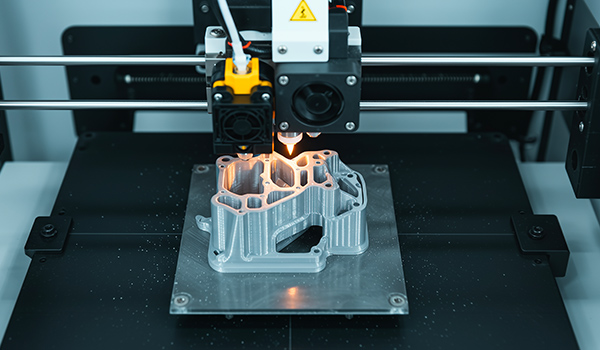
Automation and Digital Manufacturing
- Robotic assembly and automated QA reduce errors
- CAD/CAM, 3D printing, and digital twins streamline design and testing
Sustainability Practices
- Recycling materials, energy-efficient machinery, and reduced scrap
- OEMs often implement green manufacturing practices at scale
Global Sourcing Trends
- Regional vs overseas manufacturing decisions consider cost, logistics, and risk
- Trade policies, tariffs, and geopolitical factors influence partner selection
خاتمة
Choosing between a contract manufacturer and an OEM requires understanding the contract manufacturer vs OEM differences across design control, cost, volume, material capabilities, and time-to-market.
- Contract Manufacturers: Flexible, cost-efficient, ideal for startups and small batches.
- OEMs: Provide engineering support, high-precision manufacturing, and turnkey solutions for complex or high-volume products.
By analyzing your business model, product complexity, and growth strategy, you can select the partner that ensures quality, scalability, and long-term success in a competitive global market.
الأسئلة الشائعة
Q1: Can I start with a CM and later switch to an OEM?
Yes. Many businesses prototype with CMs, then scale production with OEMs for complex, high-volume products.
Q2: Which is better for IP-sensitive products?
Contract manufacturers are preferred for IP protection and client-controlled designs.
Q3: How do I evaluate OEM technical capabilities?
Check certifications, past projects, equipment, engineering expertise, and request factory audits.
Q4: Are hybrid models common?
Yes, using CMs for standard parts and OEMs for critical components is increasingly popular.
Q5: Typical lead times?
CM: 2–6 weeks; OEM: 3–6 months including design, prototyping, and production.
فئات المنتجات
- أجزاء الصمامات
- أجزاء مضخة المياه
- أجزاء صندوق المحمل
- أجزاء الصب بالقالب
- منتجات مضخات الفولاذ المقاوم للصدأ
- منتجات مضخات الحديد الزهر
- قطع غيار الصمامات لاستخدام السيارات
- قطع غيار السيارات
- أجزاء الصمامات للاستخدام المدني
- قطع غيار مضخة التفريغ KF

 Arabic
  English
  Spanish
  Malay
Malay  German