
هل تصنيع القوالب مناسب لأجزائك؟
مرحباً بكم في مدونتي!
يسعدني وجودك هنا! قبل أن نتعمق في المحتوى، أود أن تنضموا إليّ على منصات التواصل الاجتماعي. هناك أشارككم أفكارًا إضافية، وأتواصل مع مجتمعنا الرائع، وأُطلعكم على آخر الأخبار. إليكم كيفية البقاء على تواصل:
📘 فيسبوك: شركة شنغهاي لييروو الصناعية التجارية المحدودة
الآن، لننطلق في هذه الرحلة معًا! آمل أن تجدوا هذا المحتوى مفيدًا ومُلهمًا وقيّمًا. هيا بنا!
جدول المحتويات
A Deep Dive Into Applications, Costs, Design Rules, Material Choices, and Performance Requirements
Manufacturing die casting is one of the most widely used metal-forming processes across automotive, aerospace, electronics, medical devices, and industrial machinery. But whether it’s the ideal choice for your specific part is not always obvious. Many companies jump into tooling investment without fully understanding long-term advantages, limitations, cost curves, or alternative manufacturing technologies.
This article helps you determine—with data-backed insights, engineering principles, and real-world examples—whether manufacturing die casting fits your project’s technical and economic requirements.
الوجبات الرئيسية لهذه المادة
- Why manufacturers choose die casting for high-volume production
- When die casting is not the best option
- Important concepts such as thermal behavior, tooling amortization, porosity control, and alloy selection
- Real manufacturing cost comparisons
- A detailed table for choosing materials and processes
- Expert opinions from industry engineers & reputable institutions
- A practical checklist to decide if manufacturing die casting is right for your part
- Common engineering FAQs based on Google’s natural search patterns
مقدمة
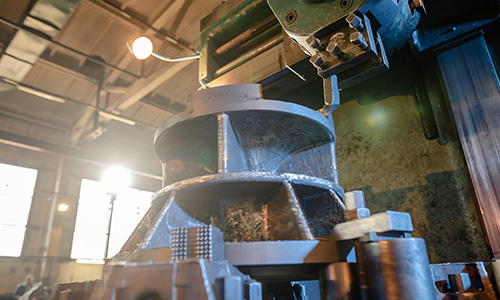
The global pressure on manufacturers is increasing. Components must be lighter, stronger, dimensionally stable, corrosion-resistant, and produced at scale. According to the World Foundry Organization (WFO), die casting demand has grown 14% year-over-year, primarily driven by electric vehicles, industrial automation, and smart device enclosures.
But the explosion of new manufacturing technologies—CNC machining, additive manufacturing, injection molding, metal sintering, and advanced forging—has forced engineers to rethink whether manufacturing die casting truly fits their needs.
This guide aims to give you clarity.
What Is Manufacturing Die Casting?
Manufacturing die casting is a metal-forming process where molten metal is injected under high pressure into a steel mold (die). This produces consistent, high-volume parts with excellent surface finish and tight dimensional tolerances.
Key Concept: High-Pressure Injection
Die casting typically uses 10,000–25,000 psi of injection pressure, allowing molten metal to fill complex geometries quickly.
Key Concept: Reusable Steel Tooling
Dies made of H13 tool steel can withstand tens or hundreds of thousands of shots, spreading tooling cost over long production cycles.
Key Concept: Excellent Repeatability
Once tooling is optimized, part-to-part variation is extremely low—often <0.1 mm, according to NADCA (North American Die Casting Association) standards.
Why Many Engineers Choose Manufacturing Die Casting
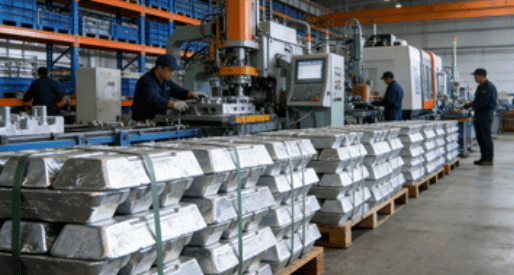
Geometry Capability
Die casting supports:
- Thin walls (<1.5 mm for aluminum)
- Complex cavities
- Integral fasteners
- Ribs & bosses
- Logos & surface textures
- Threaded inserts
Material Efficiency
Die casting yields 95–98% material usage, significantly reducing waste compared to CNC machining.
Cost Efficiency at Scale
When volumes exceed 5,000–10,000 pieces annually, die casting becomes extremely cost competitive.
Strong Mechanical Properties
Modern die casting alloys allow:
- Tensile strength of up to 380 MPa
- Hardness up to 120 Brinell
- مقاومة عالية للصدمات
When Manufacturing Die Casting Is NOT Your Best Option
Despite its advantages, die casting isn’t universal.
Limitation: Tooling Cost
Initial tooling often ranges from $8,000–$75,000+, depending on size and complexity.
Limitation: Extremely High Melting Temperature Materials
Steel, titanium, and Inconel cannot be die cast using conventional machines.
Limitation: Weldability
Die-cast parts may be harder to weld due to porosity and alloy composition.
Limitation: Ultra-Low Volume
For prototyping or small batches, CNC machining or 3D printing is typically more economical.
Understanding the True Economics of Manufacturing Die Casting
The Cost Equation
Die casting cost is influenced by:
- Tooling
- اختيار المواد
- Cycle time
- Machine tonnage
- Post-processing
- تشطيب السطح
- Scrap rate
- Annual volume
Tooling Amortization Concept
If a mold costs $20,000 and you produce 100,000 parts, the tooling adds $0.20 per part—a massive scaling advantage.
وقت الدورة
Typical cycle times range from 20–60 seconds. Fast cycles dramatically reduce production costs.
Table: Die Casting vs CNC Machining vs 3D Printing (Cost & Performance Comparison)
| Feature / Metric | صب القوالب | تصنيع الآلات باستخدام الحاسب الآلي | 3D Printing (Metal) |
|---|---|---|---|
| أفضل حالة استخدام | High-volume metal parts | High strength + low volume | Complex prototypes |
| تكلفة الوحدة | Very low at scale | متوسط مرتفع | عالي |
| Tooling Cost | عالي | لا أحد | لا أحد |
| نفايات المواد | Very low | عالي | معتدل |
| تشطيب السطح | ممتاز | ممتاز | Poor–Moderate |
| الخصائص الميكانيكية | جيد | ممتاز | جيد |
| مرونة التصميم | واسطة | عالي | مرتفع جداً |
| مهلة | واسطة | سريع | سريع |
Choosing the Right Alloy for Manufacturing Die Casting
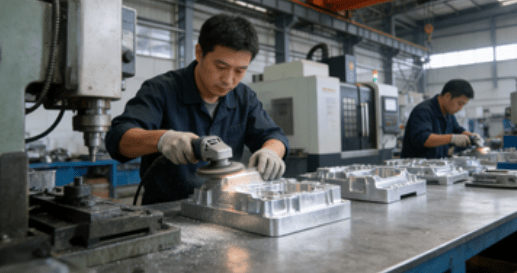
Common Materials
- الألومنيوم (A380, A360, ADC12)
- الزنك (Zamak 3, Zamak 5)
- المغنيسيوم (AZ91D)
Alloy Comparison: Key Concepts
الموصلية الحرارية
Aluminum offers the highest thermal conductivity, suitable for heat sinks and automotive housings.
Fluidity
Zinc flows exceptionally well, enabling extremely detailed parts.
Weight
Magnesium is the lightest structural metal, ideal for aerospace and electronics.
Engineering Concepts That Matter When Selecting Die Casting
Concept: Draft Angle
Most die-cast parts require 1–3 degrees of draft to eject from molds cleanly.
Concept: Wall Thickness Uniformity
Uniform thickness reduces warping, shrinkage, and porosity.
Concept: Porosity Management
Porosity can affect strength, surface finish, and sealing capability.
Techniques used:
- Vacuum die casting
- Squeeze casting
- Shot speed optimization
Concept: Heat Treatment Limitation
Traditional die-cast aluminum generally cannot be heat treated (T6) due to porosity.
لكن،, semi-solid die casting can allow heat treatable microstructures.
Applications Where Manufacturing Die Casting Is the Industry Standard
السيارات
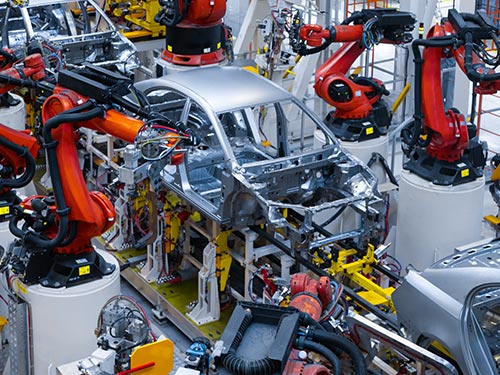
- Transmission housings
- Engine mounts
- مكونات التوجيه
- EV battery enclosures
Consumer Electronics
- Laptop frames
- Smartphone housings
- Smart home devices
Industrial & Mechanical
- Pump bodies
- علب العتاد
- مكونات الصمام
Aerospace & Military
- إطارات الطائرات بدون طيار
- Radar housings
- Lightweight structural components
Expert Opinions on Manufacturing Die Casting
NADCA Engineering Director’s View
According to David Weiss, NADCA technical chair:
“Die casting remains unmatched in combining precision, lightweighting, and scalability—especially for aluminum and magnesium alloys.”
MIT Materials Science Study
A 2024 MIT manufacturing analysis concluded:
“For metallic components between 10,000 and 500,000 annual volume, die casting is the most cost-efficient and energy-efficient process available.”
Automotive OEM Insights
A leading EV manufacturer reported:
- Switching certain machined parts to die casting reduced weight by 18%
- Production cost savings reached 32%
- Assembly time improved due to integrated geometries
Should You Choose Manufacturing Die Casting? A Practical Checklist
You should consider die casting if your part requires:
- High annual volume (>5,000–10,000 units)
- Complex geometry
- التحمل الضيق
- Lightweight metal
- Strong but thin-walled structures
- Excellent surface finish
- Integrated features that reduce assembly
Avoid die casting if you require:
- Extremely low volume
- Heavy steel components
- Heat-treated aluminum (unless using special processes)
- Maximum structural integrity (CNC is better)
A Deeper Look at Design for Die Casting (DFDC)
Gate & Runner Design
Optimized runner systems reduce turbulence and porosity.
Ejection System Design
Uniform ejection reduces stress points.
الإدارة الحرارية
Balanced cooling channels ensure stable microstructure.
Mold Venting Principles
Insufficient venting leads to gas entrapment—one of the major porosity sources.
The Long-Term Reliability of Die-Cast Parts
Fatigue Strength
Die-cast aluminum exhibits fatigue strength between 40–90 MPa, depending on alloy and porosity level.
مقاومة التآكل
Zinc excels in indoor applications; aluminum excels outdoors.
Dimensional Stability
Thermal cycling tests show <0.2% dimensional change after 100 cycles for aluminum A380.
Comparison: Die Casting vs Permanent Mold Casting
| ميزة | صب القوالب | صب القالب الدائم |
|---|---|---|
| تشطيب السطح | ممتاز | جيد |
| Tool Cost | أعلى | أدنى |
| Volume Suitability | عالي | واسطة |
| تعقيد | عالي | واسطة |
| قوة | معتدل | Higher (less porosity) |
Additional Concepts for Engineers & Purchasing Managers
Shot Sleeve Design
Controls molten metal flow speed.
Plunger Velocity
Affects turbulence and oxide formation.
Die Lubrication
Improper lubrication leads to cold shuts and sticking.
Solidification Time
Determines shrinkage pattern.
Manufacturing Die Casting in the Modern EV Industry
- Gigacasting approaches using >6000-ton machines
- Integrated structural die casting
- Single-piece underbodies
- Weight reduction of 20–40%
Tesla, NIO, XPeng, and Volvo all heavily invest in the process.
Environmental Impact Considerations
المزايا
- Excellent recyclability
- Low scrap
- Low carbon footprint per unit at scale
التحديات
- High energy use during melting
- Tool steel production environmental burden
الأسئلة الشائعة
What is the minimum volume to justify manufacturing die casting?
Most manufacturers recommend at least 5,000–10,000 parts per year, depending on size.
Can die-cast aluminum replace machined aluminum?
Yes—for many housings, covers, and structural components. CNC is still better for ultra-high precision.
Is die casting suitable for waterproof products?
With proper sealing surfaces and machining, yes. Many IP67 housings are die cast.
How long does tooling last?
- Zinc: up to 1,000,000 shots
- Aluminum: 100,000–250,000 shots
- Magnesium: 150,000–300,000 shots
What is the typical lead time?
عن 25–45 days for tooling + trial samples.
Final Verdict: Is Manufacturing Die Casting Right for Your Parts?
Yes—if you need scalable production, tight tolerances, and cost efficiency at medium-to-high volumes.
No—if you need tiny volumes, heat-treated alloys, or extreme structural strength.
Manufacturing die casting continues to evolve with bigger machines, smarter automation, and advanced materials. For many industries, it remains the most efficient path from concept to mass production.
فئات المنتجات
- أجزاء الصمامات
- أجزاء مضخة المياه
- أجزاء صندوق المحمل
- أجزاء الصب بالقالب
- منتجات مضخات الفولاذ المقاوم للصدأ
- منتجات مضخات الحديد الزهر
- قطع غيار الصمامات لاستخدام السيارات
- قطع غيار السيارات
- أجزاء الصمامات للاستخدام المدني
- قطع غيار مضخة التفريغ KF

لنبدأ مشروعك القادم!
ابدأ مشروعك مع Leierwo
1. أرسل استفسارك
2. حساب التكلفة
3. بدء الإنتاج
4. ترتيب التسليم
الأسئلة الشائعة
نعم، لدينا خبرة واسعة في التجارة الدولية ويمكننا مساعدة العملاء في التخليص الجمركي للتصدير وترتيبات الشحن. نحن نقدم شروطًا تجارية مختلفة مثل FOB و CIF و DDP لتلبية الاحتياجات اللوجستية المختلفة، ونقبل طرق الدفع الدولية المختلفة، بما في ذلك T/T (التحويل البرقي) والتحويل البرقي وخطاب الاعتماد (L/C). يمكن مناقشة شروط الدفع مع فريق المبيعات لدينا.
من خلال الشراكة مع Leierwo، يمكنك الاستمتاع بأسعار تنافسية وجودة فائقة مقارنةً بالموردين الآخرين. بالإضافة إلى ذلك، نقدم حلاً شاملاً لتسليم الأجزاء الجاهزة، بما في ذلك التصنيع باستخدام الحاسب الآلي والمعالجة السطحية، مما يضمن عملية إنتاج سلسة.
لدينا معدات صب متقدمة وأنظمة صارمة لمراقبة الجودة. قدرتنا الإنتاجية الشهرية كبيرة، ويمكننا تصنيع المنتجات بناءً على الرسومات أو العينات المقدمة من العملاء. نحن نقبل كلاً من الطلبات التجريبية الصغيرة والإنتاج على نطاق واسع.
تتوافق منتجاتنا مع المعايير الدولية مثل ASTM و AISI و DIN و JIS. ويمكننا تقديم تقارير اختبار المواد والشهادات ذات الصلة لضمان توافق جودة المنتج مع متطلبات العملاء.
نحن نتبع بدقة نظام إدارة الجودة ISO 9001 ونجري عمليات فحص متعددة في جميع مراحل عملية الإنتاج، بما في ذلك التحليل الطيفي، واختبار الأشعة السينية، والاختبار بالموجات فوق الصوتية، وقياسات الأبعاد. تضمن تدابير مراقبة الجودة هذه أن مصبوباتنا تلبي أعلى المعايير.
يعتمد موك لدينا على نوع المنتج ومدى تعقيده، ومع ذلك، نحن مرنون ومنفتحون لمناقشة احتياجاتك الخاصة.
تتراوح مهلة الإنتاج القياسية لدينا من 4 إلى 6 أسابيع، حسب كمية الطلب وتعقيد المنتج. نسعى جاهدين لتقصير أوقات التسليم لتلبية طلبات العملاء.
نعم، يمكننا تقديم عينات لفحص الجودة. يمكن التفاوض بشأن تكاليف العينات ورسوم الشحن، ويمكن استرداد رسوم العينات عند تقديم طلب رسمي.
 Arabic
  English
  Spanish
  Malay
Malay  German