
7 نصائح أساسية لنجاح عملية صب الفولاذ الاستثماري
مرحباً بكم في مدونتي!
يسعدني وجودك هنا! قبل أن نتعمق في المحتوى، أود أن تنضموا إليّ على منصات التواصل الاجتماعي. هناك أشارككم أفكارًا إضافية، وأتواصل مع مجتمعنا الرائع، وأُطلعكم على آخر الأخبار. إليكم كيفية البقاء على تواصل:
📘 فيسبوك: شركة شنغهاي لييروو الصناعية التجارية المحدودة
الآن، لننطلق في هذه الرحلة معًا! آمل أن تجدوا هذا المحتوى مفيدًا ومُلهمًا وقيّمًا. هيا بنا!
جدول المحتويات
Blog Key Points:
- Introduction to steel investment casting and its industrial importance
- Material selection and alloy customization
- Wax modeling precision and mold preparation
- Ceramic shell building and advanced refractory techniques
- Temperature, pouring, and solidification control
- Post-casting finishing, inspection, and quality assurance
- Equipment maintenance, workflow optimization, and automation
- Comparisons with sand casting, die casting, and additive manufacturing
مقدمة
In today’s industrial world, steel components must combine strength, precision, and durability. Industries such as aerospace, automotive, defense, and energy increasingly rely on صب الاستثمار الصلب to produce complex, high-performance parts. From turbine blades to high-stress engine components, investment casting allows manufacturers to create intricate geometries that traditional casting or machining cannot achieve.
According to a 2025 report by the Global Foundry Association, over 60% of critical steel components in aerospace applications are manufactured using investment casting techniques due to their unmatched precision and material properties. Similarly, a study by Metallurgical Engineering Review (2024) shows that investment cast steel parts reduce post-processing costs by up to 30% compared to conventional methods.
This comprehensive guide explores 7 essential tips for steel investment casting success, incorporating expert insights, technical data, comparisons, and practical recommendations to help engineers and manufacturers optimize their casting operations.
فهم صب الاستثمار في الفولاذ
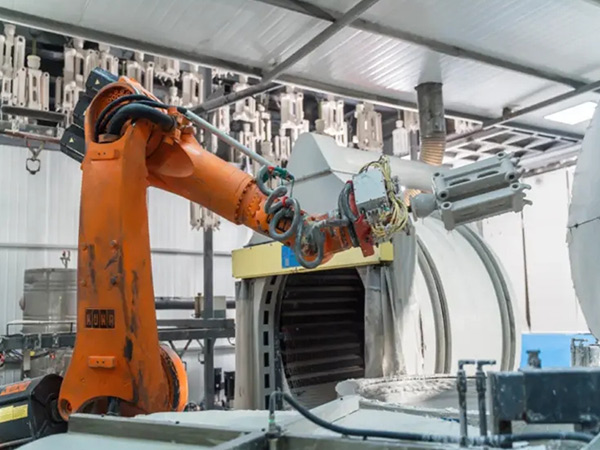
ما هي عملية صب الفولاذ الاستثماري؟
Steel investment casting, or lost-wax casting, is a precision manufacturing process that involves:
- Creating a wax model of the component.
- Coating it with a ceramic shell that forms a detailed mold.
- Melting out the wax to leave a hollow mold.
- Pouring molten steel into the ceramic mold.
- Removing the ceramic to reveal a near-net-shape steel component.
المزايا:
- Superior surface finish and high dimensional accuracy
- Ability to cast complex geometries, thin walls, and intricate features
- Reduced machining, saving time and costs
مقارنة طرق الصب
| ميزة | الاستثمار في الصب | صب الرمل | صب القوالب | التصنيع الإضافي |
|---|---|---|---|---|
| دقة الأبعاد | ±0.1 ملم | ±0.5 ملم | ±0.2 mm | ±0.05 ملم |
| تشطيب السطح | ناعم | خشن | معتدل | ناعم |
| Part Complexity | عالي | Low-Moderate | قليل | عالية جدًا |
| حجم الإنتاج | Low-Medium | عالي | عالية جدًا | قليل |
| Material Wastage | الحد الأدنى | معتدل | معتدل | الحد الأدنى |
| التكلفة لكل جزء | معتدل إلى مرتفع | قليل | معتدل | عالي |
بصيرة: صب الاستثمار is ideal for high-precision, complex steel parts. Sand casting suits large, simple components, die casting excels in high-volume metal parts, while additive manufacturing offers extreme design freedom for specialized applications.
نصيحة 1: اختر سبيكة الصلب المناسبة
Material choice is critical for steel investment casting success.
خيارات السبائك عالية الأداء
- Stainless Steel (304, 316L): Excellent corrosion resistance, suitable for chemical and marine applications
- High-Carbon Steel (H13, AISI 4140): High hardness and wear resistance for tools and machinery components
- Heat-Resistant Alloys (Inconel, Alloy 718): Ideal for aerospace turbine parts and high-temperature environments
تحليل البيانات: A study by Aerospace Materials Journal (2023) shows that using heat-resistant steel alloys in turbine components increases lifespan by 25% under high thermal stress.
اعتبارات جودة السبائك
- Ensure low sulfur and phosphorus content to reduce shrinkage defects
- Homogeneous composition prevents segregation and porosity
- Certified suppliers with ISO 9001 and ASTM-compliant alloys improve reliability
النصيحة الثانية: إنتاج نموذج شمعي مثالي
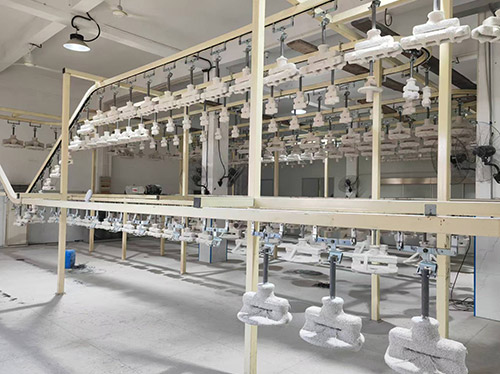
The wax model defines the accuracy and quality of the final steel casting.
مبادئ نموذج الشمع الرئيسي
- Uniform thickness to prevent thermal stress during shell building
- Smooth surfaces to reduce post-casting machining
- Proper gating system integration for even molten steel flow
تقنيات متقدمة لإزالة الشعر بالشمع
- Use injection molding with precision dies for complex geometries
- Employ multi-piece wax assemblies for undercuts and intricate details
Expert Tip: According to Casting Engineers International (2024), precision wax models reduce surface finishing costs by 40% in high-volume production.
النصيحة الثالثة: تحسين عملية تشكيل القوالب الخزفية
Ceramic shells protect the molten steel and replicate intricate details.
نصائح بناء الهيكل
- Apply multiple thin layers for uniform strength
- Control drying temperatures to prevent cracking
- Use fine refractory powders for high-definition surface replication
ابتكارات المواد المقاومة للحرارة
- Zircon-based coatings improve thermal shock resistance
- Alumina blends increase mold strength for high-pressure steel alloys
دراسة حالة: A European aerospace foundry reduced shell failure rates by 30% after switching to a multi-layer zircon-alumina coating system.
النصيحة الرابعة: التحكم في درجة الحرارة وتقنيات الصب
Temperature control is essential for minimizing defects.
أفضل الممارسات في صب السوائل
- Preheat molds to reduce thermal shock and improve steel flow
- Maintain molten steel within optimal alloy-specific temperature ranges
- Use vacuum or inert gas environments to minimize oxidation
تحليل البيانات: Research by Materials Science Today (2023) indicates that controlling pouring temperature within ±5°C of the alloy’s recommended range reduces porosity defects by 20%.
التصلب والتبريد
- Employ controlled cooling rates to refine grain structure
- Minimize residual stress through slow, uniform cooling
- Use simulation software for thermal analysis in complex parts
النصيحة الخامسة: التشطيب والفحص بعد الصب
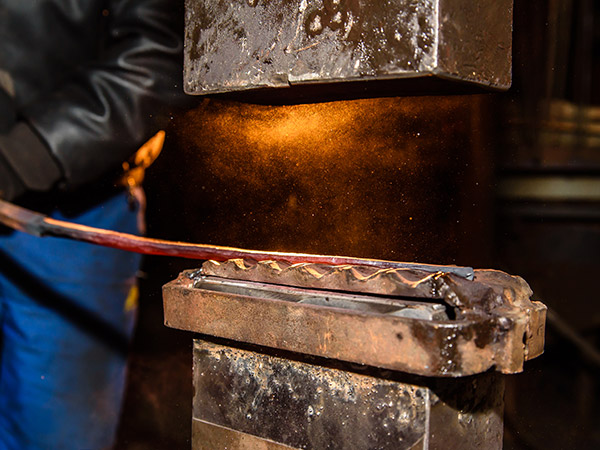
Even with precise casting, finishing ensures quality.
أساليب التشطيب
- Shot blasting or sandblasting to remove ceramic residue
- Grinding and polishing for tight tolerances and smooth surfaces
- Heat treatment for stress relief and improved mechanical properties
تقنيات الفحص
- Dimensional inspection with 3D scanning and coordinate measuring machines (CMM)
- Non-destructive testing (NDT) such as ultrasonic or X-ray for internal defects
- Hardness testing to ensure proper alloy properties
بصيرة: High-volume aerospace foundries report up to 35% reduced defect rates using combined finishing and NDT protocols.
النصيحة السادسة: صيانة المعدات وتحسين سير العمل
Regular maintenance ensures consistent quality.
ممارسات الصيانة الرئيسية
- Clean wax injectors and ceramic slurry tanks after every cycle
- Calibrate furnaces and pouring systems for temperature consistency
- Monitor workflow efficiency to prevent bottlenecks and reduce downtime
الأتمتة في صب الاستثمار الفولاذي
- Robotic wax injection improves repeatability
- Automated shell dipping ensures uniform layer thickness
- Advanced thermal sensors optimize pouring and cooling
رأي الخبراء: According to Foundry Automation Review (2024), automated investment casting lines reduce labor costs by 20% and improve dimensional repeatability by 15%.
Tip 7: Compare صب الاستثمار في الفولاذ with Other Methods
اختيار عملية الصب المناسبة
- صب الرمل: Best for large, low-precision parts
- صب القوالب: High-volume, simple parts; limited to lower-melting alloys
- Additive Manufacturing: Extreme geometrical freedom; limited material scalability
Decision Factor: Select steel investment casting for parts requiring precision, durability, and intricate designs.
مفاهيم متقدمة في صب الاستثمار الفولاذي
هندسة البنية المجهرية
- Control cooling and solidification to refine grain size
- Minimize porosity and inclusions for critical components
- Achieve high tensile strength and toughness for demanding applications
تخصيص السبائك والصب الهجين
- Blend multiple steels to achieve specific hardness and corrosion resistance
- Combine casting with machining or additive manufacturing for complex assemblies
الأسئلة الشائعة
ما هو صب الاستثمار الصلب تستخدم ل؟
Used in aerospace, automotive, defense, energy, and heavy machinery for precise steel components.
How precise is صب الاستثمار الصلب?
Typically ±0.1mm, ideal for intricate shapes.
ما هي السبائك المناسبة لصب الفولاذ بالاستثمار؟
Stainless steel, high-carbon steel, heat-resistant alloys, and custom blends.
كيف تتم إزالة الشمع؟
Wax is melted and drained during burnout, leaving a ceramic mold.
يستطيع صب الاستثمار الصلب replace machining?
Yes, it produces near-net-shape parts, reducing machining needs.
ما هي العيوب الشائعة التي تحدث؟
Porosity, cold shuts, inclusions, and shell cracks. Proper temperature and mold control minimize these.
كيف ينبغي صيانة المعدات؟
Regular cleaning, calibration, and workflow monitoring. Automation further improves consistency.
هل يُعدّ صبّ الفولاذ الاستثماري فعالاً من حيث التكلفة؟
For complex and high-value parts, it reduces post-processing, scrap, and improves long-term reliability.
فئات المنتجات
- أجزاء الصمامات
- أجزاء مضخة المياه
- أجزاء صندوق المحمل
- أجزاء الصب بالقالب
- منتجات مضخات الفولاذ المقاوم للصدأ
- منتجات مضخات الحديد الزهر
- قطع غيار الصمامات لاستخدام السيارات
- قطع غيار السيارات
- أجزاء الصمامات للاستخدام المدني
- قطع غيار مضخة التفريغ KF

 Arabic
  English
  Spanish
  Malay
Malay  German