
4 Powerful 3D Printing Trends for 2026
مرحباً بكم في مدونتي!
يسعدني وجودك هنا! قبل أن نتعمق في المحتوى، أود أن تنضموا إليّ على منصات التواصل الاجتماعي. هناك أشارككم أفكارًا إضافية، وأتواصل مع مجتمعنا الرائع، وأُطلعكم على آخر الأخبار. إليكم كيفية البقاء على تواصل:
📘 فيسبوك: شركة شنغهاي لييروو الصناعية التجارية المحدودة
الآن، لننطلق في هذه الرحلة معًا! آمل أن تجدوا هذا المحتوى مفيدًا ومُلهمًا وقيّمًا. هيا بنا!
جدول المحتويات
مقدمة
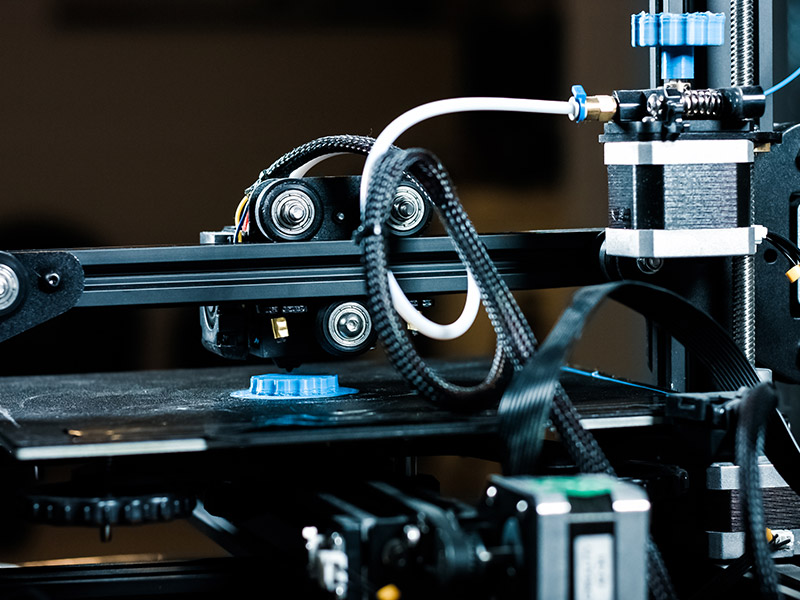
الطباعة ثلاثية الأبعاد, also known as additive manufacturing, is transforming the manufacturing landscape at an unprecedented rate. By 2026, it is expected to dominate industries from aerospace and automotive to healthcare and consumer products. Unlike traditional manufacturing, 3D Printing builds objects layer by layer, enabling complex geometries, faster prototyping, and highly customizable production.
In this comprehensive article, you will learn:
- ال top 4 3D Printing trends for 2026 and their real-world implications
- Advantages and challenges of each trend, backed by authoritative data
- Comparisons of 3D Printing with traditional manufacturing methods
- Industry-specific case studies illustrating cost reduction, efficiency, and innovation
- FAQs and practical guidance for adopting these trends
- Expert opinions and insights from leading researchers and engineers
By the end, you will understand how to leverage these trends to improve productivity, sustainability, and competitiveness in your business.
Additive Manufacturing Goes Mainstream
Concept: Industrial Adoption Across Sectors
Additive manufacturing is no longer experimental. In aerospace, companies like Boeing and Airbus are now producing over 50,000 3D-printed parts annually, from engine components to brackets. According to Wohlers Report 2025, more than 80% of aerospace companies are integrating additive manufacturing into functional production, reducing prototyping cycles and material waste.
Benefits of Mainstream Adoption
- Faster lead times: Traditional methods can take 4–8 weeks; 3D Printing reduces this to 1–2 days for prototypes.
- Mass customization: Each part can be tailored to customer specifications without raising costs.
- Inventory optimization: Producing on-demand reduces storage and logistics expenses.
Traditional vs Additive Manufacturing Comparison
| ميزة | Traditional Manufacturing | الطباعة ثلاثية الأبعاد | ملحوظات |
|---|---|---|---|
| مهلة | 4–8 weeks | 1–2 days | Faster design iterations enable rapid innovation |
| نفايات المواد | عالي | قليل | Additive layer-by-layer method uses only required material |
| تعقيد | محدود | عالية جدًا | Complex geometries possible only with 3D Printing |
| Cost for Low Volume | عالي | قليل | Ideal for small-batch or custom production |
رأي الخبراء: “Additive manufacturing allows rapid design validation while maintaining structural performance, which is a game-changer for product development,” says Dr. Jennifer A. Lewis, Harvard SEAS.
Multi-Material and Functional Printing
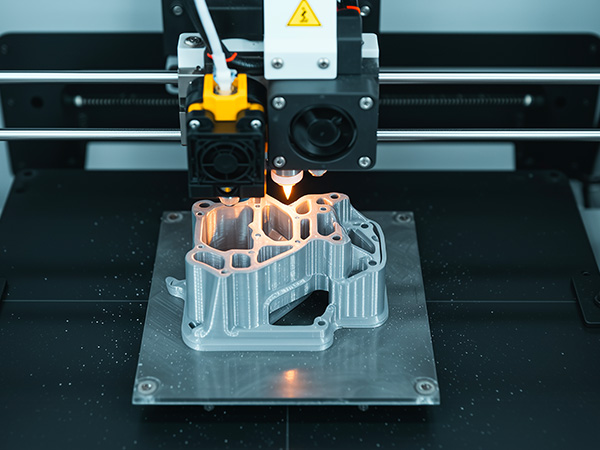
Concept: Combining Multiple Materials
By 2026, multi-material الطباعة ثلاثية الأبعاد will enable the creation of single components with varying properties. Printers can now combine metals, polymers, ceramics, and composites in one print. Functional parts may also integrate electronics, sensors, or conductive pathways without additional assembly.
فوائد
- Produces ready-to-use, highly functional parts
- Reduces assembly time and post-processing
- Enables smart and embedded technologies in a single component
Practical Industry Applications
- Aerospace brackets with embedded wiring printed in one operation
- Robotic grippers combining flexible joints and rigid components
- Wearable medical devices with integrated soft sensors
Comparison: Single vs Multi-Material
| ميزة | Single Material | Multi-Material | ملحوظات |
|---|---|---|---|
| مرونة التصميم | معتدل | عالي | Multi-material allows complex functional parts |
| ما بعد المعالجة | Required | الحد الأدنى | Reduces labor and assembly |
| Embedded Electronics | No | نعم | Enables smart, connected devices |
Sustainable 3D Printing Practices
Concept: Eco-Friendly Manufacturing
Sustainability is a growing priority. Companies are adopting recycled filaments, biodegradable polymers, and energy-efficient printing methods. According to a 2025 ASTM study, switching from traditional injection molding to recycled 3D Printing materials can reduce CO2 emissions by up to 40%.
فوائد
- Reduces material waste and energy consumption
- Supports corporate sustainability initiatives
- Meets growing consumer demand for eco-conscious products
Key Industry Insights
- Nike and Adidas are experimenting with 3D-printed shoe soles made from recycled plastics.
- GE Aviation uses recycled metal powders to reduce waste by 25% while maintaining high-strength components.
Materials Innovations
- PLA and PHA polymers: Biodegradable and suitable for lightweight parts
- Recycled PET: Cost-effective and environmentally friendly
- Metal powders: Can be reused multiple times in laser sintering, reducing material costAI-Driven and Automated الطباعة ثلاثية الأبعاد
Concept: Intelligent Manufacturing
Artificial intelligence enhances 3D Printing by optimizing toolpaths, predicting thermal distortions, and detecting defects in real time. Automated systems reduce human error, improve efficiency, and maintain consistent part quality.
فوائد
- Higher first-time-right print success rate
- Reduced operator intervention
- Optimized material usage and energy efficiency
Comparison: Manual vs AI-Driven Printing
| ميزة | Manual 3D Printing | AI-Driven 3D Printing | ملحوظات |
|---|---|---|---|
| Print Accuracy | معتدل | عالي | AI compensates for warping and shrinkage |
| Human Intervention | عالي | قليل | Automation reduces labor costs |
| Material Efficiency | معيار | Advanced | AI minimizes waste and energy usage |
رأي الخبراء: According to MIT CSAIL, AI-assisted الطباعة ثلاثية الأبعاد can reduce print failures by up to 60%, dramatically cutting costs and waste in industrial production.
Emerging Materials and Techniques
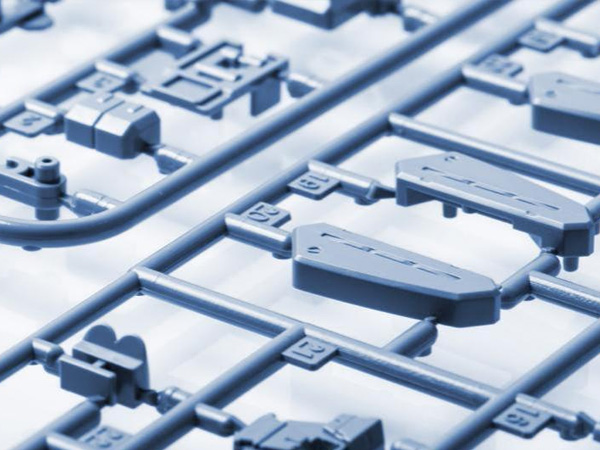
Metal Additive Manufacturing
- LPBF and DED: Produce aerospace-grade metal components with minimal post-processing
- Lightweight engine brackets and structural parts with high mechanical strength
Bioprinting and Healthcare
- Tissue scaffolds and implants: Customized prosthetics and regenerative medicine solutions
- Reduces surgery preparation time and improves patient outcomes
Composite and Carbon Fiber Printing
- Carbon fiber reinforced filaments provide superior strength-to-weight ratios
- Used in drones, automotive panels, and sports equipment for performance optimization
Mass Customization and On-Demand Production
- Consumer Products: Personalized jewelry, sneakers, and home décor
- طبي: Patient-specific prosthetics, dental crowns, and surgical guides
- Automotive and Aerospace: Small-batch or specialized components without tooling costs
فوائد:
- Reduces inventory costs and overproduction
- Meets growing demand for personalized products
- Shortens product launch cycles significantly
الطباعة ثلاثية الأبعاد in Extreme Environments
- Space Applications: NASA and ESA are experimenting with in-orbit 3D Printing for spacecraft parts
- Underwater and Subsea: Custom parts printed on-demand for maintenance and repairs
- High-Temperature Applications: Metal and ceramic printing for industrial furnaces and aerospace components
رأي الخبراء: “3D Printing in space and extreme environments allows mission-critical components to be produced on-site, avoiding supply chain delays,” says Dr. Mark Weislogel, NASA engineer.
تطبيقات الصناعة
Aerospace and Defense
- Engine components, brackets, and ducts
- Reduces part weight by up to 30%
- Accelerates prototyping and production timelines
السيارات
- Lightweight housings, brackets, and tooling
- Increases fuel efficiency and reduces assembly costs
- Allows rapid iteration of concept models
Medical and Dental
- Prosthetics, implants, and surgical guides
- Personalized patient fit improves outcomes
- Faster production and lower costs
Consumer Products
- Custom sneakers, jewelry, and décor
- High personalization with low inventory
- On-demand production for market responsiveness
Productivity, Efficiency, and ROI
Efficiency Gains
- 3D Printing can reduce prototyping lead times by 50–70%
- Automated AI-driven systems minimize human intervention
كفاءة الطاقة
- Modern printers consume 30–40% less energy per part than older models
- AI optimization reduces material usage and motor load
Return on Investment
- Medium-sized manufacturers can see ROI in 12–18 months
- Faster time-to-market, reduced waste, and labor savings contribute to profitability
Safety and Compliance
- Proper ventilation for polymer and metal powders
- Protective equipment and training for operators
- Compliance with ISO/ASTM standards and EU REACH
- Stage V emissions compliance for industrial machines
خاتمة
ال 4 powerful 3D Printing trends for 2026—mainstream adoption, multi-material printing, sustainability, and AI-driven automation—are reshaping global manufacturing. Businesses that embrace these trends can reduce costs, increase efficiency, and deliver high-quality, customized products faster than ever. Understanding materials, technology, and industry applications will be critical for companies seeking a competitive edge in the next generation of manufacturing.
Key Takeaway: الطباعة ثلاثية الأبعاد is no longer optional. Integrating innovation, efficiency, and sustainability positions businesses for success in the rapidly evolving industrial landscape.
الأسئلة الشائعة
Q1: Is الطباعة ثلاثية الأبعاد faster than traditional methods?
A: For prototypes and low-volume custom parts, yes. Mass production may still favor traditional methods.
Q2: Can 3D Printing produce functional metal parts?
A: Yes. LPBF and DED allow aerospace-grade metal printing with high strength.
Q3: Are 3D-printed parts durable?
A: With the right materials and post-processing, printed components can match or exceed traditional parts.
Q4: How does AI improve print quality?
A: AI predicts warping, adjusts paths, and optimizes material usage for higher accuracy.
Q5: Can 3D Printing reduce environmental impact?
A: Yes. Using recycled or biodegradable materials, additive manufacturing reduces waste and energy consumption.
Q6: What industries will benefit most by 2026?
A: Aerospace, automotive, medical, dental, robotics, and consumer goods.
Q7: How cost-effective is multi-material printing?
A: While upfront costs are higher, reduced assembly and faster time-to-market provide strong ROI.
Q8: Will 3D Printing replace CNC and injection molding?
A: Not completely. It complements them for complex, small-batch, or customized parts.
Q9: How safe is printing with metal powders?
A: With proper ventilation, protective equipment, and training, risks are manageable.
Q10: How can small businesses adopt AI-driven printing?
A: Entry-level AI-enabled printers are now available, making automation and optimization accessible even for SMEs.
فئات المنتجات
- أجزاء الصمامات
- أجزاء مضخة المياه
- أجزاء صندوق المحمل
- أجزاء الصب بالقالب
- منتجات مضخات الفولاذ المقاوم للصدأ
- منتجات مضخات الحديد الزهر
- قطع غيار الصمامات لاستخدام السيارات
- قطع غيار السيارات
- أجزاء الصمامات للاستخدام المدني
- قطع غيار مضخة التفريغ KF

 Arabic
  English
  Spanish
  Malay
Malay  German