
High Precision Investment Casting Parts Guide for Industrial Applications
Welcome to My Blog!
I’m thrilled to have you here! Before we dive into the content, I’d love for you to join me on my social media platforms. It’s where I share extra insights, connect with our amazing community, and keep you updated on the latest news. Here’s how you can stay connected:
📘 Facebook: Shanghai Leierwo Industry Trade Co., Ltd.
Now, let’s embark on this journey together! I hope you find the content here not only insightful but also inspiring and valuable. Let’s get started!
Table of Contents
Key Highlights of This Guide
- Deep technical understanding of investment casting parts and process flow
- Industry standards, tolerances, and engineering data
- Real-world applications across aerospace, automotive, energy, and medical sectors
- Cost structure, efficiency comparison, and ROI analysis
- Material engineering insights with performance benchmarks
- Case studies and industrial use scenarios
- Quality control systems and international standards (ISO, ASTM)
- Market trends, innovation outlook, and industry reports
- Comprehensive FAQ section for buyers and engineers
Introduction
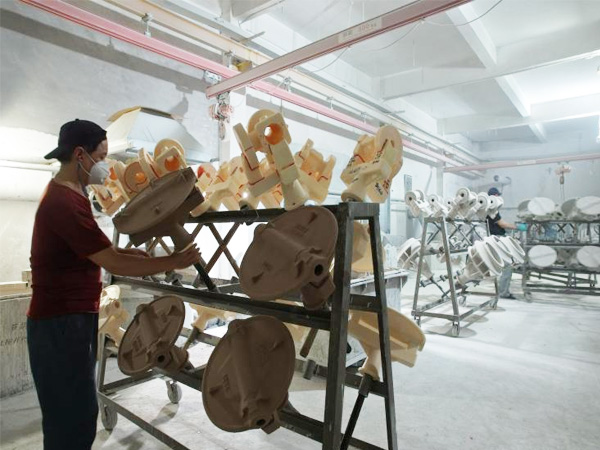
In today’s precision-driven manufacturing environment, industries are shifting toward processes that reduce machining, improve dimensional accuracy, and support complex geometries. Among these technologies, investment casting parts have become one of the most reliable solutions for high-performance applications.
Unlike traditional casting methods, investment casting enables engineers to achieve near-net-shape components with exceptional repeatability. This directly impacts production cost, lead time, and product performance. According to industry manufacturing reports, up to 60–80% reduction in machining operations can be achieved when switching from forging or sand casting to precision investment casting in complex components.
Global demand continues to grow, especially in aerospace, automotive electrification, and industrial automation sectors, where precision and lightweight design are critical.
What Are Investment Casting Parts?
Precision Metal Forming Process Overview
Investment casting parts are manufactured using a lost-wax process that allows molten metal to replicate highly detailed molds with extreme accuracy.
Process Breakdown (Engineering View)
- Wax pattern creation using injection molding
- Ceramic shell layering (5–9 layers typically)
- Dewaxing at 150–200°C
- High-temperature shell firing at 800–1100°C
- Metal pouring at controlled temperatures
- Shell breakage and finishing
Key Engineering Principle
The process ensures isotropic material properties, meaning strength distribution is uniform across the part, unlike forged components that often have directional grain structures.
Industry Standards for Investment Casting Parts
ISO & ASTM Compliance
High-quality manufacturers typically follow:
- ISO 8062: Geometrical tolerances for castings
- ASTM A958 / A995: Stainless steel casting standards
- ISO 9001:2015: Quality management system certification
- NADCAP certification (aerospace suppliers)
Typical Tolerance Ranges
| Parameter | Standard Range |
|---|---|
| Linear Tolerance | ±0.1 mm to ±0.5 mm |
| Surface Roughness | Ra 1.6 – 6.3 μm |
| Minimum Wall Thickness | 1.5 – 3 mm |
| Maximum Part Weight | Up to 100 kg (industrial casting lines) |
High Precision Investment Casting Parts Explained
Dimensional Accuracy Advantage
High precision casting eliminates multiple machining steps. This results in:
- Reduced production cost (up to 25–40% savings in machining-intensive parts)
- Improved assembly compatibility
- Lower defect rate in mass production
Surface Finish Performance
Investment casting achieves surface finishes significantly better than sand casting.
| Method | Surface Roughness (Ra) |
|---|---|
| Investment Casting | 1.6–6.3 μm |
| Sand Casting | 6.3–25 μm |
| Forging (after machining) | 0.8–3.2 μm |
Materials Used in Investment Casting Parts
Stainless Steel (304, 316, 17-4PH)
- Corrosion resistance up to marine-grade environments
- High temperature tolerance (up to 870°C for 316 stainless)
- Common in valves, pumps, and marine hardware
Carbon Steel (A216 WCB)
- Tensile strength: 485–655 MPa
- Cost-effective for structural applications
- Widely used in industrial machinery
Superalloys (Inconel, Hastelloy)
- Temperature resistance above 1000°C
- Used in aerospace turbine systems
- High cost but superior performance
Industrial Applications of Investment Casting Parts
Aerospace Industry
Investment casting is essential for turbine blades, fuel system components, and structural brackets.
Performance Requirement
- Temperature resistance: 900–1100°C
- Weight optimization critical
- Defect tolerance: near zero
Automotive Engineering
Used in:
- Turbocharger housings
- Transmission components
- Steering system parts
Electric vehicle growth has increased demand for lightweight precision castings by over 18% CAGR globally.
Energy Sector
Used in:
- Gas turbines
- Wind turbine hubs
- Nuclear valve systems
Medical Equipment
- Surgical tools
- Orthopedic implants
- Imaging device components
Investment Casting Parts vs Other Manufacturing Methods
Engineering Comparison Table
| Feature | Investment Casting | Forging | Sand Casting | CNC Machining |
|---|---|---|---|---|
| Precision | High | Medium | Low | Very High |
| Cost Efficiency | Medium | Medium | Low | Low |
| Design Complexity | Excellent | Limited | Moderate | Excellent |
| Material Waste | Low | Medium | High | High |
| Mass Production Suitability | High | High | Medium | Low |
Strategic Insight
Investment casting fills the gap between forging and machining by balancing complexity, cost, and production scalability.
Manufacturing Process Deep Dive
Wax Pattern Engineering
Precision wax injection molds define final geometry accuracy.
- Dimensional shrinkage compensation: 1.5–2.0%
- Pattern repeatability: ±0.05 mm in high-end systems
Ceramic Shell Technology
Modern shells use:
- Zircon sand for outer layers
- Silica sol or ethyl silicate binders
- 5–9 alternating layers for strength
Metal Pouring Control
- Temperature accuracy: ±10°C
- Vacuum or inert gas environments used for superalloys
Quality Control Systems in Investment Casting Parts
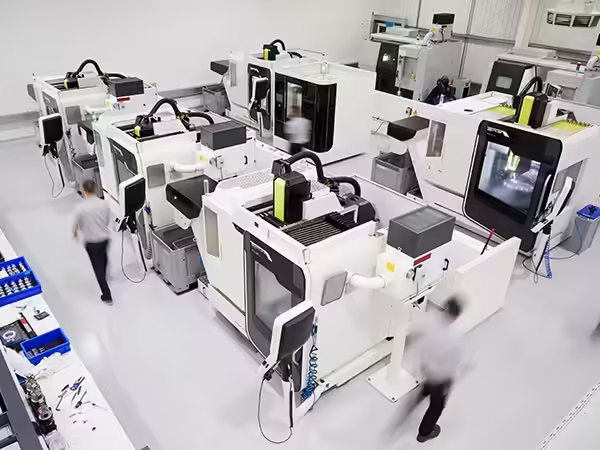
Inspection Methods
- X-ray radiography for internal defects
- Coordinate Measuring Machines (CMM)
- Spectrographic material analysis
- Dye penetrant testing
Defect Rate Benchmark
- Advanced facilities: <1.5% defect rate
- Standard industry: 3–5% defect rate
Cost Structure Analysis of Investment Casting Parts
Cost Drivers
- Tooling (wax injection dies)
- Material selection
- Shell building cycles
- Post-processing and machining
Example Cost Breakdown
| Component | Cost Share |
|---|---|
| Tooling | 20–30% |
| Material | 25–35% |
| Processing | 30–40% |
| Finishing | 10–15% |
ROI Consideration
Although initial tooling is high, long-term production reduces cost per unit significantly after 1,000+ cycles.
Industry Case Studies
Case Study 1: Aerospace Supplier Optimization
A turbine component manufacturer reduced machining time by 72% after switching to investment casting.
Case Study 2: Automotive Gear Housing
A European automotive supplier achieved:
- 35% cost reduction
- 40% weight reduction
- 20% faster production cycle
Case Study 3: Industrial Valve Systems
Stainless steel valve bodies showed:
- 50% improvement in corrosion resistance lifespan
- Reduced leakage failure rate by 60%
Market Trends & Industry Reports
Global Market Growth
According to manufacturing industry reports:
- Global investment casting market is expected to exceed USD 28–32 billion by 2030
- CAGR estimated at 4.5%–6.2% annually
Key Growth Drivers
- Aerospace lightweighting demand
- EV manufacturing expansion
- Industrial automation growth
- Renewable energy infrastructure
Technology Trends
- 3D printed wax patterns
- AI-based defect detection
- Hybrid CNC + casting manufacturing
- Digital twin simulation for mold design
Advantages of Investment Casting Parts
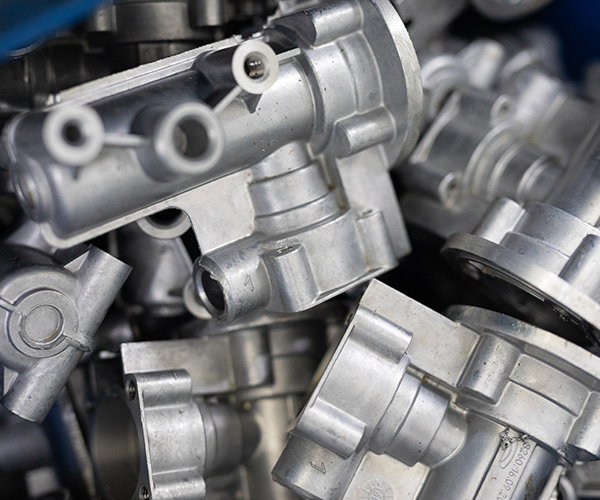
Engineering Benefits
- Complex geometry capability
- High dimensional repeatability
- Reduced assembly requirements
Economic Benefits
- Lower machining dependency
- Reduced material waste
- Scalable mass production
Environmental Benefits
- Lower scrap rates
- Energy-efficient compared to forging in small batch production
Limitations and Engineering Challenges
High Initial Tooling Cost
Tooling can range from $5,000 to $50,000 depending on complexity.
Longer Production Cycle
Compared to die casting, cycle time is longer due to shell building.
Size Limitation
Extremely large components may require alternative casting methods.
How to Choose the Right Investment Casting Parts Supplier
Evaluation Criteria
- ISO 9001 certification
- Engineering simulation capability
- Material traceability system
- Defect rate performance history
Buyer Checklist
- Can they provide CMM reports?
- Do they support OEM customization?
- What is their lead time stability?
- Do they support small batch prototyping?
FAQ
What industries use investment casting parts most?
Aerospace, automotive, energy, and industrial machinery are the largest users.
Are investment casting parts expensive?
Initial tooling is high, but unit cost decreases significantly in mass production.
What is the accuracy of investment casting?
Typically ±0.1 mm for precision components depending on geometry.
Can investment casting replace forging?
Not fully. It replaces forging in complex, lightweight, or precision-demanding parts.
What is the lifespan of investment casting parts?
Depending on material, lifespan can exceed 10–20 years in industrial environments.
Conclusion
Investment casting technology continues to evolve as industries demand higher precision, lower weight, and more complex geometries. With strong compatibility across aerospace, automotive, and industrial sectors, investment casting parts remain a cornerstone of modern manufacturing.
The combination of precision engineering, material flexibility, and scalable production ensures this process will continue to play a critical role in global industrial supply chains for decades to come.
Product Categories
- Valve Parts
- Water Pump Parts
- Bearing Box Parts
- Die Casting Parts
- Stainless Steel Pump Products
- Cast Iron Pump Products
- Valve Parts For Automobile Use
- Auto Parts
- Valve Parts For Civil Use
- Vacuum Pump Parts KF

Let’s start your next project!
Start Your Project with Leierwo
1. Submit Your Inquiry
2. Cost Calculation
3. Start Production
4. Arrange Delivery
FAQ
Yes, we have extensive experience in international trade and can assist customers with export customs clearance and shipping arrangements. We offer various trade terms such as FOB, CIF, and DDP to accommodate different logistics needs.We accept various international payment methods, including T/T (Telegraphic Transfer), wire transfer, and Letter of Credit (L/C). Payment terms can be discussed with our sales team.
By partnering with Leierwo, you can enjoy competitive pricing and superior quality compared to other suppliers. Additionally, we offer a one-stop solution to deliver finished parts, including CNC machining and surface treatment, ensuring a seamless production process.
We have advanced casting equipment and strict quality control systems. Our monthly production capacity is substantial, and we can manufacture products based on customer-provided drawings or samples. We accept both small trial orders and large-scale production.
Our products comply with international standards such as ASTM, AISI, DIN, and JIS. We can provide material test reports and relevant certifications to ensure product quality meets customer requirements.
We strictly follow the ISO 9001 quality management system and conduct multiple inspections throughout the production process, including spectrographic analysis, X-ray testing, ultrasonic testing, and dimensional measurements. These quality control measures guarantee that our castings meet the highest standards.
Our MOQ depends on the product type and complexity, However, we are flexible and open to discussing your specific needs.
Our standard production lead time is 4-6 weeks, depending on order quantity and product complexity. We strive to shorten delivery times to meet customer demands.
Yes, we can provide samples for quality inspection. Sample costs and shipping fees can be negotiated, and sample fees may be refunded upon placing a formal order.
 English
  Spanish
  Arabic
  Malay
Malay  German