
Sand Casting Procedure Steps: A Complete Practical Guide
Selamat Datang ke Blog Saya!
Saya teruja untuk mempunyai anda di sini! Sebelum kita menyelami kandungan, saya ingin anda menyertai saya di platform media sosial saya. Di situlah saya berkongsi cerapan tambahan, berhubung dengan komuniti kami yang hebat dan memaklumkan anda tentang berita terkini. Begini cara anda boleh terus berhubung:
📘 Facebook: Shanghai Leierwo Industry Trade Co., Ltd.
Sekarang, mari kita mulakan perjalanan ini bersama-sama! Saya harap anda mendapati kandungan di sini bukan sahaja bernas tetapi juga memberi inspirasi dan berharga. Mari mulakan!
Jadual Kandungan
- Master the full sand casting procedure from raw material to finished part
- Learn step-by-step sand casting workflow used in real foundries
- Understand key parameters, standards, and process control methods
- Explore defects, quality inspection, and improvement strategies
- Compare sand casting with other casting processes for better selection
- Discover real-world case studies and industry applications
- Get practical answers to conversational, search-driven questions
pengenalan
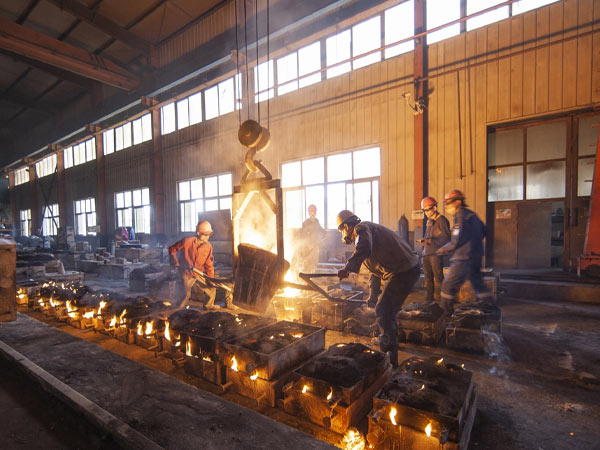
In today’s highly advanced manufacturing landscape—where CNC machining, additive manufacturing, and automated production lines are rapidly evolving—the sand casting procedure remains one of the most widely used and trusted metal forming processes worldwide.
According to industry reports, sand casting accounts for over 60% of all metal casting production globally, especially in sectors like automotive, heavy machinery, and infrastructure. Its adaptability to complex geometries, wide material compatibility, and low tooling cost make it indispensable for both prototyping and large-scale production.
If you are exploring sourcing options or evaluating manufacturing methods, understanding the sand casting procedure steps is essential. It not only helps in cost control but also improves communication with suppliers and ensures product quality meets engineering requirements.
Overview of Sand Casting Procedure
The sand casting procedure is a manufacturing process in which molten metal is poured into a sand mold cavity and allowed to solidify into the desired shape.
The process involves several sequential steps:
- Pattern creation
- Mold preparation
- Core placement
- Metal melting and pouring
- Cooling and solidification
- Shakeout and finishing
Each step plays a critical role in determining the final casting quality.
Sand Casting Procedure Steps Explained in Detail
Pattern Making in Sand Casting Procedure
Purpose of Pattern Design
A pattern is a physical model used to form the mold cavity. It is typically made slightly larger than the final product to compensate for shrinkage during cooling.
Patterns can be made from wood, plastic, aluminum, or steel depending on production volume and precision requirements.
Allowances in Pattern Making
Pattern design includes:
- Shrinkage allowance (typically 1–3%)
- Machining allowance
- Draft angles for easy removal
These considerations ensure dimensional accuracy and manufacturability.
Mold Preparation in Sand Casting Procedure
Sand Composition and Properties
Molding sand typically consists of:
- 85–95% silica sand
- 5–10% clay (binder)
- 2–5% water
This mixture provides:
- Strength to hold shape
- Permeability for gas escape
- Refractoriness to withstand high temperatures
Mold Formation Process
The sand is packed around the pattern in a molding box. Once compacted, the pattern is removed, leaving a cavity.
This cavity defines the external geometry of the casting.
Core Making for Internal Structures
Role of Cores in Sand Casting Procedure
Cores are used to create hollow sections or internal cavities in castings.
They are made from specially bonded sand mixtures to ensure strength during pouring.
Core Placement Accuracy
Proper positioning of cores is critical. Misalignment can result in dimensional defects or weak structures.
Gating System Design
Function of Gating System
The gating system controls how molten metal flows into the mold. It includes:
- Sprue
- Runner
- Gate
A well-designed gating system minimizes turbulence and prevents defects.
Risers and Feeding Systems
Risers act as reservoirs of molten metal to compensate for shrinkage during solidification.
This ensures the casting remains dense and free of voids.
Metal Melting and Pouring
Furnace Types and Temperature Control
Common furnaces include:
- Induction furnaces
- Electric arc furnaces
- Cupola furnaces
Temperature ranges vary by material:
- Aluminum: 660–750°C
- Cast iron: 1150–1300°C
- Steel: 1500–1600°C
Precise temperature control ensures proper fluidity and reduces defects.
Pouring Techniques
Molten metal must be poured smoothly to avoid:
- Air entrapment
- Oxidation
- Turbulence
Proper pouring improves casting integrity.
Cooling and Solidification Behavior
Solidification Dynamics
Cooling rate influences:
- Grain structure
- Mechanical strength
- Internal stress
Slow cooling results in coarse grains, while rapid cooling produces finer microstructures.
Directional Solidification
Engineers design molds to ensure metal solidifies progressively from one end to another, reducing shrinkage defects.
Shakeout and Casting Extraction
Mold Breakdown Process
After solidification, the sand mold is broken to remove the casting. This is known as shakeout.
The sand can often be recycled after processing.
Cleaning, Fettling, and Finishing
Removal of Excess Material
Gates, risers, and flash are removed using cutting or grinding.
Surface Treatment
Common finishing processes include:
- Letupan tembakan
- Sandblasting
- Pemesinan
These steps improve surface quality and dimensional accuracy.
Key Process Parameters in Sand Casting Procedure
| Parameter | Typical Value Range | Impact on Casting Quality |
|---|---|---|
| Pouring Temperature | 660–1600°C | Affects flow and defect formation |
| Sand Grain Size | 0.1–1 mm | Determines surface finish |
| Moisture Content | 2–8% | Influences mold strength |
| Cooling Rate | Variable | Controls microstructure |
| Shrinkage Allowance | 1–3% | Ensures dimensional accuracy |
Kelebihan daripada Sand Casting Procedure
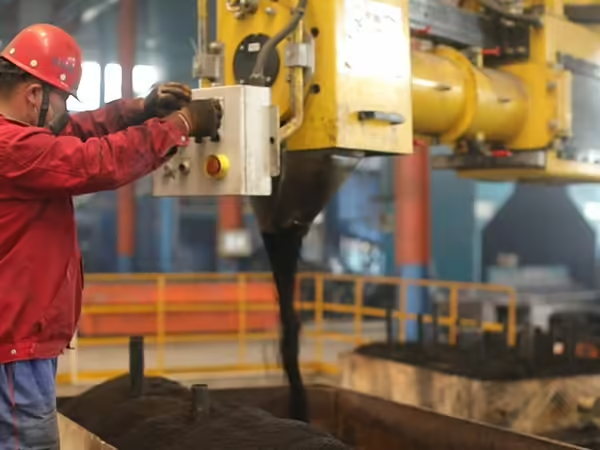
High Versatility
The process supports a wide range of metals, including iron, steel, aluminum, and copper alloys.
Kecekapan Kos
Tooling costs are relatively low, making it suitable for both small and large production runs.
Kebolehskalaan
Sand casting can produce components ranging from a few grams to several tons.
Limitations of Sand Casting Procedure
Kekasaran Permukaan
Compared to precision casting methods, sand casting produces rougher surfaces.
Lower Dimensional Accuracy
Tolerances are wider, requiring secondary machining in some cases.
Sand Casting vs Other Casting Methods
Tuangan Pasir vs Tuangan Mati
- Sand casting: lower cost, flexible
- Die casting: high precision, high volume
Sand Casting vs Investment Casting
- Sand casting: suitable for large parts
- Investment casting: superior surface finish
Sand Casting vs Permanent Mold Casting
- Sand molds are disposable
- Permanent molds improve consistency
Piawaian Industri dan Kawalan Kualiti
Common Standards
- ASTM A48: Gray iron castings
- ASTM A27: Steel castings
- ISO 8062: Dimensional tolerances
These standards ensure consistency and reliability across global supply chains.
Kaedah Pemeriksaan
Quality control includes:
- Visual inspection
- Ujian ultrasonik
- Pemeriksaan sinar-X
- Dimensional measurement
Common Defects and Prevention
Gas Porosity
Caused by trapped gases. Prevented by improving mold permeability and venting.
Shrinkage Cavities
Reduced by proper riser design and directional solidification.
Kemasukan Pasir
Avoided through proper mold preparation and cleaning.
Real-World Case Studies
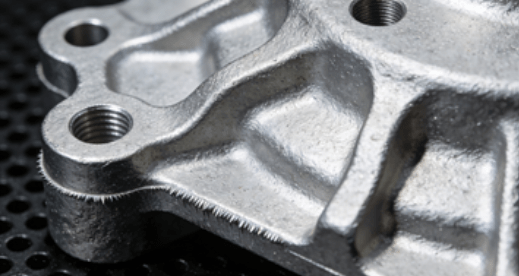
Automotive Engine Block Production
Sand casting is widely used for engine blocks due to its ability to produce complex internal geometries.
Manufacturers achieve:
- Kekuatan tinggi
- Cost efficiency
- Scalable production
Heavy Machinery Components
Large components like pump housings and valve bodies are produced using sand casting due to size flexibility.
Emerging Trends in Sand Casting
Automation in Foundries
Modern foundries use robotic systems for:
- Mold handling
- Menuang
- Penamat
This improves efficiency and consistency.
Sustainable Casting Practices
Recycling sand and reducing emissions are key focus areas in modern manufacturing.
Soalan Lazim
What are the steps in the sand casting procedure?
The process includes pattern making, mold preparation, core placement, melting, pouring, cooling, shakeout, and finishing. Each step ensures casting quality and accuracy.
Why is sand casting widely used?
It is cost-effective, flexible, and suitable for a wide range of metals and sizes. It is ideal for both prototypes and large-scale production.
Seberapa tepat tuangan pasir?
It offers moderate accuracy compared to other casting methods. Secondary machining is often required for tight tolerances.
What industries use sand casting?
Industries include automotive, construction, energy, and heavy machinery manufacturing.
Can sand casting produce complex shapes?
Yes, especially with the use of cores, sand casting can create intricate internal and external geometries.
Kesimpulan
The sand casting procedure continues to be a foundational manufacturing method due to its flexibility, cost efficiency, and wide applicability. By understanding each step and the factors influencing quality, manufacturers and buyers can make informed decisions that improve performance and reduce costs.
Whether you are sourcing components or optimizing production, mastering the sand casting procedure steps is essential for achieving consistent and high-quality results in modern industry.
Kategori Produk
- Bahagian Injap
- Bahagian Pam Air
- Bahagian Kotak Galas
- Bahagian Die Casting
- Produk Pam Keluli Tahan Karat
- Produk Pam Besi Tuang
- Bahagian Injap Untuk Kegunaan Kereta
- Bahagian Kenderaan
- Bahagian Injap Untuk Kegunaan Awam
- Bahagian Pam Vakum KF

Mari mulakan projek anda yang seterusnya!
Mulakan Projek Anda dengan Leierwo
1. Hantar Pertanyaan Anda
2. Pengiraan Kos
3. Mulakan Pengeluaran
4. Susun Penghantaran
Soalan Lazim
Ya, kami mempunyai pengalaman yang luas dalam perdagangan antarabangsa dan boleh membantu pelanggan dengan urusan pelepasan kastam dan penghantaran eksport. Kami menawarkan pelbagai syarat perdagangan seperti FOB, CIF dan DDP untuk menampung keperluan logistik yang berbeza. Kami menerima pelbagai kaedah pembayaran antarabangsa, termasuk T/T (Pemindahan Telegraf), pindahan kawat dan Letter of Credit (L/C). Syarat pembayaran boleh dibincangkan dengan pasukan jualan kami.
Dengan bekerjasama dengan Leierwo, anda boleh menikmati harga yang kompetitif dan kualiti unggul berbanding pembekal lain. Selain itu, kami menawarkan penyelesaian sehenti untuk menghantar bahagian siap, termasuk pemesinan CNC dan rawatan permukaan, memastikan proses pengeluaran yang lancar.
Kami mempunyai peralatan pemutus termaju dan sistem kawalan kualiti yang ketat. Kapasiti pengeluaran bulanan kami adalah besar, dan kami boleh mengeluarkan produk berdasarkan lukisan atau sampel yang disediakan oleh pelanggan. Kami menerima kedua-dua pesanan percubaan kecil dan pengeluaran berskala besar.
Produk kami mematuhi piawaian antarabangsa seperti ASTM, AISI, DIN dan JIS. Kami boleh menyediakan laporan ujian material dan pensijilan yang berkaitan untuk memastikan kualiti produk memenuhi keperluan pelanggan.
Kami mematuhi sistem pengurusan kualiti ISO 9001 dengan ketat dan menjalankan pelbagai pemeriksaan sepanjang proses pengeluaran, termasuk analisis spektrografi, ujian X-ray, ujian ultrasonik dan ukuran dimensi. Langkah kawalan kualiti ini menjamin bahawa tuangan kami memenuhi piawaian tertinggi.
MOQ kami bergantung pada jenis produk dan kerumitan, Walau bagaimanapun, kami fleksibel dan terbuka untuk membincangkan keperluan khusus anda.
Masa utama pengeluaran standard kami ialah 4-6 minggu, bergantung pada kuantiti pesanan dan kerumitan produk. Kami berusaha untuk memendekkan masa penghantaran untuk memenuhi permintaan pelanggan.
Ya, kami boleh menyediakan sampel untuk pemeriksaan kualiti. Kos sampel dan yuran penghantaran boleh dirundingkan, dan yuran sampel boleh dikembalikan apabila membuat pesanan rasmi.
 Malay
Malay  English
  Spanish
  Arabic
  German