
Sand Casting Services Process: Complete Industrial Guide
Selamat Datang ke Blog Saya!
Saya teruja untuk mempunyai anda di sini! Sebelum kita menyelami kandungan, saya ingin anda menyertai saya di platform media sosial saya. Di situlah saya berkongsi cerapan tambahan, berhubung dengan komuniti kami yang hebat dan memaklumkan anda tentang berita terkini. Begini cara anda boleh terus berhubung:
📘 Facebook: Shanghai Leierwo Industry Trade Co., Ltd.
Sekarang, mari kita mulakan perjalanan ini bersama-sama! Saya harap anda mendapati kandungan di sini bukan sahaja bernas tetapi juga memberi inspirasi dan berharga. Mari mulakan!
Jadual Kandungan
pengenalan
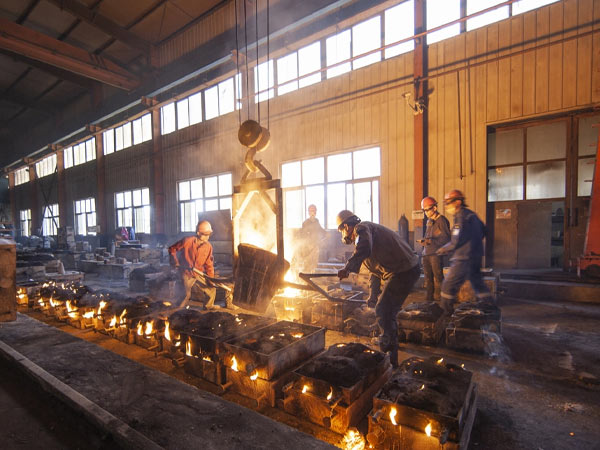
Sand casting remains one of the oldest yet most widely used metal forming technologies in global manufacturing. According to industry reports from the American Foundry Society (AFS), over 60% of metal castings worldwide are produced through sand casting services, especially in heavy machinery, automotive components, and industrial equipment.
Despite the rise of precision casting methods like investment casting and die casting, sand casting continues to dominate due to its low tooling cost, scalability, and material versatility.
This guide provides a complete breakdown of the perkhidmatan tuang pasir process, supported by industrial standards, real-world applications, technical data, and procurement insights.
Key Takeaways of This Guide
- Full breakdown of the industrial sand casting services process
- Technical explanation of materials, equipment, and standards
- Comparison with alternative casting technologies
- Cost structure and production efficiency analysis
- Real industrial application cases and global trends
- FAQ based on real buyer search intent
Perkhidmatan Tuang Pasir Overview (Industrial Definition)
What Is Sand Casting in Modern Manufacturing?
Sand casting services refer to a metal forming process where molten metal is poured into a sand-based mold cavity to create a final part after solidification.
This method is widely adopted in:
- Automotive engine production
- Pump and valve manufacturing
- Mining and construction machinery
- Railway and marine components
Why Sand Casting Still Dominates
Even with modern CNC machining and 3D printing integration, sand casting remains essential due to:
- Low initial tooling investment
- Ability to cast parts from 0.5 kg to over 20 tons
- Compatibility with ferrous and non-ferrous metals
- Flexible production volumes
Sand Casting Services Process (Full Industrial Workflow)
Step 1: Engineering Design & Pattern Creation
The process begins with CAD design and pattern development.
Pattern Tolerances
Typical industrial tolerances:
- Aluminum castings: ±0.5 mm to ±1.5 mm
- Iron castings: ±1 mm to ±3 mm
Patterns are typically made from:
- Wood (prototype stage)
- Aluminum (medium durability)
- Resin or plastic (high precision production)
Step 2: Mold Preparation Using Green Sand or Resin Sand
Sand Types Used in Industry
| Sand Type | Permohonan | Strength Level | kos |
|---|---|---|---|
| Green Sand | Mass production | Sederhana | rendah |
| Resin Sand | Ketepatan tinggi | tinggi | Sederhana |
| Shell Sand | Fine detail casting | Very high | tinggi |
Green sand remains the most widely used due to cost efficiency and recyclability.
Step 3: Core Making for Internal Geometry
Cores define hollow sections inside cast parts.
Core Materials
- Oil-bonded sand cores
- Resin-bonded cores
- CO₂ hardened sodium silicate cores
Core strength can reach up to 6–12 MPa compressive resistance, depending on binder system.
Step 4: Melting and Alloy Control
Common Melting Temperatures
| Logam | Melting Point |
|---|---|
| Besi Kelabu | 1150–1200°C |
| Keluli Karbon | 1450–1520°C |
| Aloi Aluminium | 660–750°C |
Precise temperature control is critical for:
- Reducing porosity
- Improving mechanical strength
- Ensuring uniform grain structure
Step 5: Pouring Process Control
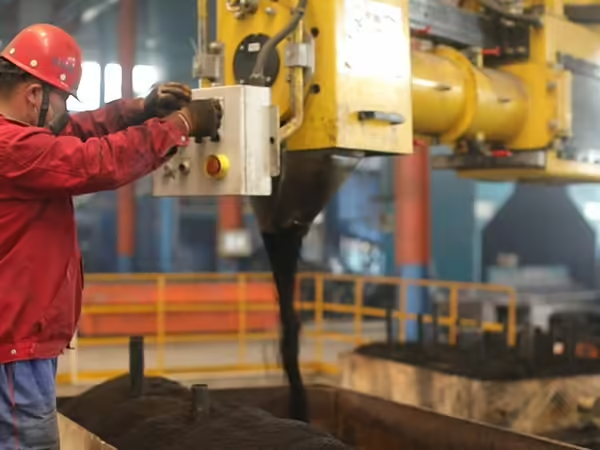
Pouring must be controlled to avoid turbulence.
Industry Standards
- Pouring speed: 2–5 kg/sec (small castings)
- Ladle temperature drop: <50°C
- Filling time control: <30 seconds for precision parts
Step 6: Cooling and Solidification Behavior
Cooling rate directly impacts material strength.
- Rapid cooling → finer grain structure
- Slow cooling → improved ductility
Typical cooling time:
- Small parts: 30 minutes – 2 hours
- Large castings: 12 – 48 hours
Step 7: Shakeout, Cleaning, and Finishing
Post-processing includes:
- Sand removal
- Letupan tembakan
- Grinding and machining
- Heat treatment (optional)
Surface roughness after casting:
- Ra 6.3 – Ra 25 μm (typical range)
Perkhidmatan Tuang Pasir vs Other Manufacturing Methods
Technical Comparison
| Teknologi | Ketepatan | kos | Production Scale | Best Use Case |
|---|---|---|---|---|
| Tuangan Pasir | Sederhana | rendah | High flexibility | Heavy parts |
| Die Casting | tinggi | tinggi | Mass production | Small precision parts |
| Pemutus Pelaburan | Sangat Tinggi | Sangat Tinggi | Sederhana | Complex components |
| Pemesinan CNC | Sangat Tinggi | tinggi | Low–Medium | Final finishing |
Sand casting remains the most cost-efficient solution for large structural components.
Industrial Standards in Sand Casting Services
Key International Standards
- ISO 8062: Dimensional tolerances for castings
- ASTM A48: Gray iron castings specification
- ASTM A27: Carbon steel castings standard
- DIN 1691: Foundry sand quality requirements
Compliance ensures:
- Mechanical stability
- Dimensional accuracy
- Repeatable production quality
Real Industry Case Studies
Case Study 1: Automotive Engine Block Production
A European OEM reduced production cost by 32% by switching from machining from billet to sand casting engine blocks.
Results:
- Material waste reduced by 45%
- Production time reduced by 28%
- Annual cost savings: $2.3 million
Case Study 2: Pump Housing Manufacturing
A water treatment equipment manufacturer used sand casting services to produce corrosion-resistant pump housings.
Outcome:
- Improved service life from 5 years to 9 years
- Reduced leakage defects by 70%
- Achieved ISO 9001 quality compliance
Market Trends & Industry News (2024–2025)
According to Global Foundry Market Report 2025:
- Global sand casting market expected to grow at 4.8% CAGR
- Asia-Pacific accounts for over 52% of production capacity
- Automation in foundries increases efficiency by up to 35%
Key trend:
Digital simulation tools (like MAGMASOFT and ProCAST) are now widely used to reduce defect rates before production.
Cost Structure of Sand Casting Services
Main Cost Drivers
| Faktor | Impact Level |
|---|---|
| Material type | tinggi |
| Mold complexity | tinggi |
| Production volume | Sederhana |
| Post-processing | Sederhana |
| Energy consumption | Sederhana |
Typical cost breakdown:
- Material: 40–55%
- Labor: 20–30%
- Energy: 10–15%
- Finishing: 10–20%
Advanced Concepts in Perkhidmatan Tuang Pasir
Simulation Technology
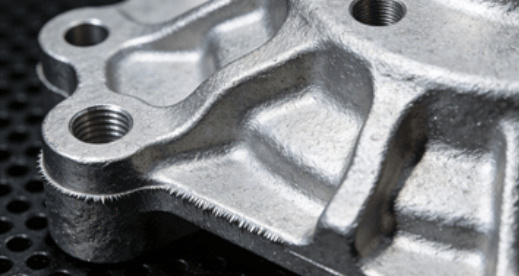
Modern foundries use simulation software to predict:
- Metal flow behavior
- Solidification defects
- Shrinkage and porosity
Defect reduction rate: up to 60% improvement when simulation is applied.
Automation in Foundries
Robotic systems are now used for:
- Mold handling
- Pouring control
- Sand recycling
Automation improves:
- Keselamatan
- Consistency
- Output efficiency
Sand Casting Sustainability & Recycling
Sand used in molds can be recycled up to 90–95% efficiency depending on system design.
Environmental benefits:
- Reduced landfill waste
- Lower raw sand consumption
- Energy-efficient reclaim systems
Soalan Lazim
Industri apa yang digunakan perkhidmatan tuang pasir yang paling?
Automotive, construction machinery, energy equipment, and marine industries are the largest users.
Is sand casting suitable for precision parts?
Yes, but typically within medium tolerance ranges (±0.5 mm to ±3 mm).
What is the lifespan of sand molds?
Most molds are single-use, but sand itself is highly recyclable.
How does sand casting compare to 3D printing?
3D printing is faster for prototyping, but sand casting is more cost-effective for large-scale production.
What is the biggest limitation of sand casting?
Lower surface finish quality compared to die casting or investment casting.
Final Conclusion
The perkhidmatan tuang pasir process continues to be a cornerstone of global industrial manufacturing. Its unmatched flexibility, low tooling cost, and ability to produce large and complex metal components make it indispensable across multiple industries.
With the integration of simulation technology, automation, and improved material science, sand casting is evolving into a highly efficient and data-driven manufacturing process suitable for modern industrial demands.
Kategori Produk
- Bahagian Injap
- Bahagian Pam Air
- Bahagian Kotak Galas
- Bahagian Die Casting
- Produk Pam Keluli Tahan Karat
- Produk Pam Besi Tuang
- Bahagian Injap Untuk Kegunaan Kereta
- Bahagian Kenderaan
- Bahagian Injap Untuk Kegunaan Awam
- Bahagian Pam Vakum KF

Mari mulakan projek anda yang seterusnya!
Mulakan Projek Anda dengan Leierwo
1. Hantar Pertanyaan Anda
2. Pengiraan Kos
3. Mulakan Pengeluaran
4. Susun Penghantaran
Soalan Lazim
Ya, kami mempunyai pengalaman yang luas dalam perdagangan antarabangsa dan boleh membantu pelanggan dengan urusan pelepasan kastam dan penghantaran eksport. Kami menawarkan pelbagai syarat perdagangan seperti FOB, CIF dan DDP untuk menampung keperluan logistik yang berbeza. Kami menerima pelbagai kaedah pembayaran antarabangsa, termasuk T/T (Pemindahan Telegraf), pindahan kawat dan Letter of Credit (L/C). Syarat pembayaran boleh dibincangkan dengan pasukan jualan kami.
Dengan bekerjasama dengan Leierwo, anda boleh menikmati harga yang kompetitif dan kualiti unggul berbanding pembekal lain. Selain itu, kami menawarkan penyelesaian sehenti untuk menghantar bahagian siap, termasuk pemesinan CNC dan rawatan permukaan, memastikan proses pengeluaran yang lancar.
Kami mempunyai peralatan pemutus termaju dan sistem kawalan kualiti yang ketat. Kapasiti pengeluaran bulanan kami adalah besar, dan kami boleh mengeluarkan produk berdasarkan lukisan atau sampel yang disediakan oleh pelanggan. Kami menerima kedua-dua pesanan percubaan kecil dan pengeluaran berskala besar.
Produk kami mematuhi piawaian antarabangsa seperti ASTM, AISI, DIN dan JIS. Kami boleh menyediakan laporan ujian material dan pensijilan yang berkaitan untuk memastikan kualiti produk memenuhi keperluan pelanggan.
Kami mematuhi sistem pengurusan kualiti ISO 9001 dengan ketat dan menjalankan pelbagai pemeriksaan sepanjang proses pengeluaran, termasuk analisis spektrografi, ujian X-ray, ujian ultrasonik dan ukuran dimensi. Langkah kawalan kualiti ini menjamin bahawa tuangan kami memenuhi piawaian tertinggi.
MOQ kami bergantung pada jenis produk dan kerumitan, Walau bagaimanapun, kami fleksibel dan terbuka untuk membincangkan keperluan khusus anda.
Masa utama pengeluaran standard kami ialah 4-6 minggu, bergantung pada kuantiti pesanan dan kerumitan produk. Kami berusaha untuk memendekkan masa penghantaran untuk memenuhi permintaan pelanggan.
Ya, kami boleh menyediakan sampel untuk pemeriksaan kualiti. Kos sampel dan yuran penghantaran boleh dirundingkan, dan yuran sampel boleh dikembalikan apabila membuat pesanan rasmi.
 Malay
Malay  English
  Spanish
  Arabic
  German