
TPU Innovations Revolutionizing 3D Printing
Selamat Datang ke Blog Saya!
Saya teruja untuk mempunyai anda di sini! Sebelum kita menyelami kandungan, saya ingin anda menyertai saya di platform media sosial saya. Di situlah saya berkongsi cerapan tambahan, berhubung dengan komuniti kami yang hebat dan memaklumkan anda tentang berita terkini. Begini cara anda boleh terus berhubung:
📘 Facebook: Shanghai Leierwo Industry Trade Co., Ltd.
Sekarang, mari kita mulakan perjalanan ini bersama-sama! Saya harap anda mendapati kandungan di sini bukan sahaja bernas tetapi juga memberi inspirasi dan berharga. Mari mulakan!
Jadual Kandungan
pengenalan
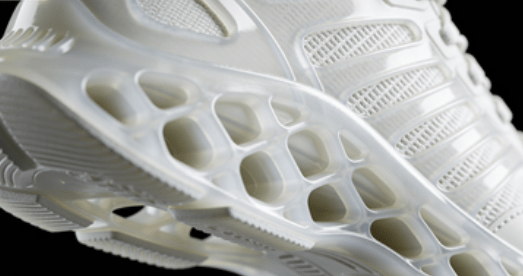
Thermoplastic polyurethane, commonly known as TPU, has emerged as one of the most versatile materials in the Percetakan 3D industry. Its unique combination of flexibility, durability, and chemical resistance has made it a preferred choice for engineers, designers, and manufacturers looking to create parts that require both strength and elasticity. Unlike rigid thermoplastics, TPU allows for functional prototypes, wearable devices, and industrial components to be printed with complex geometries and consistent performance.
In recent years, advancements in 3D printing technologies have expanded the applications of TPU, enabling designers to push the boundaries of what was previously possible in prototyping and small-batch production. Industries such as medical, automotive, consumer electronics, and sports equipment have begun leveraging TPU’s properties to improve product performance, reduce assembly parts, and accelerate development cycles.
This article explores the key properties, applications, benefits, and considerations of TPU in 3D printing, providing insights for both beginners and experienced professionals.
What Is TPU?
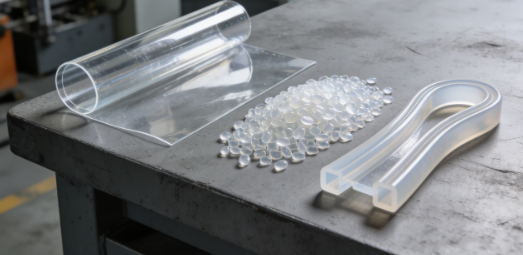
Thermoplastic polyurethane, widely known as TPU, is a high-performance elastomer recognized for its exceptional combination of flexibility, durability, and processability. As a block copolymer composed of alternating soft and hard segments, TPU exhibits a unique dual-phase structure. The soft segments are responsible for elasticity and deformation recovery, while the hard segments provide tensile strength, stiffness, and abrasion resistance. This molecular arrangement enables TPU to behave like rubber while retaining the ease of processing typically seen in thermoplastics.
Unlike conventional flexible materials such as silicone or latex, TPU can be extruded, injection molded, and 3D-printed using standard equipment. This versatility has allowed TPU to become a preferred material in fields ranging from footwear manufacturing to medical devices, and more recently, high-precision additive manufacturing.
With the growth of flexible electronics, wearable technology, and complex prototype development, TPU has evolved into one of the most indispensable materials in the modern Percetakan 3D landscape.
Key Characteristics of TPU
TPU’s hybrid material structure results in several high-value performance characteristics that make it particularly advantageous for Percetakan 3D applications:
Extreme Elasticity
TPU can stretch between 500%–700% of its original length before breaking, depending on the formulation. This level of elongation makes it suitable for bending, stretching, compressing, and repeated stress without material fatigue. In 3D printing, this allows for the creation of flexible joints, wearable components, and impact-absorbing structures that rigid plastics cannot replicate.
High Abrasion and Tear Resistance
Because of its high tear strength and durability, TPU excels in environments involving friction, impact, or mechanical stress. Industrial prototypes, protective housings, drone parts, and gaskets benefit greatly from TPU’s resistance to surface wear, making it ideal for functional testing and small-batch production.
Chemical Resistance
TPU is resistant to oils, hydraulic fluids, industrial greases, and many solvents. This property makes it a leading choice for seals, hoses, automotive components, and chemical-exposed prototypes that require long-term integrity.
Consistent Thermal Stability
Although TPU is not designed for high-temperature environments, most grades maintain mechanical performance at temperatures between –30°C and 80–100°C, depending on formulation. This temperature range is sufficient for the vast majority of consumer and industrial prototype applications.
Rubber-like Performance with Thermoplastic Convenience
One of TPU’s major advantages lies in its ability to replicate rubber-like behavior while utilizing thermoplastic processing methods. Unlike traditional elastomers that require vulcanization, TPU can be re-melted, reshaped, and recycled, making it significantly easier to use in digital manufacturing workflows.
Types of TPU for 3D Printing
Different formulations of TPU offer varying levels of elasticity, strength, and hardness. Understanding these categories helps engineers and designers select the ideal grade for each application.
Soft TPU (Shore 85A–95A)
This grade provides maximum flexibility and comfort, making it suitable for:
- Wearable devices
- Medical models
- Ergonomic grips
- Shock-absorbing pads
- Flexible enclosures
Soft TPU behaves similarly to silicone but offers better printability and structural definition.
Medium-Flex TPU (Shore 95A–98A)
Medium-flex TPU achieves an optimal balance between structural strength and elasticity. This category is ideal for:
- Functional prototypes
- Flexible mechanical connectors
- Living hinges
- Industrial seals
- Durable consumer products
It is the most commonly used grade in FDM 3D printing due to its stability and print consistency.
High-Strength TPU (Shore 98A and above)
High-strength TPU is tougher, more rigid, and suitable for applications requiring precise dimensional performance with moderate flexibility:
- Industrial machine parts
- Protective housings
- Komponen automotif
- High-load connectors
- Wear-resistant prototypes
This category is widely used in engineering environments where durability and impact resistance are top priorities.
Additional Categories of TPU Used in Industry
To provide more technical depth, here are further classifications often referenced in industrial additive manufacturing:
Ester-Based TPU
Offers superior abrasion and solvent resistance. Common in automotive, industrial belts, and tool grips.
Ether-Based TPU
Provides excellent hydrolysis resistance and better flexibility at low temperatures. Essential in medical components, wearable electronics, and outdoor equipment.
Conductive TPU
Infused with carbon or metallic particles, conductive TPU is used in flexible electronics, sensors, and anti-static components.
Reinforced TPU
Blended with fibers or additives to increase strength while maintaining moderate flexibility. Used in aerospace and high-performance engineering applications.
Why TPU Works So Well in 3D Printing
TPU’s thermoplastic nature allows it to melt and solidify repeatedly, making it compatible with FDM, SLS, and multi-material printing systems. At the same time, its inherent elasticity enables designers to create flexible hinges, vibration-damping structures, and wearable components that would be impossible to achieve using standard rigid polymers.
With the rise of high-speed extrusion systems and improved filament formulations, TPU printing has become faster, more stable, and more accessible, even for desktop 3D printers. As a result, TPU has rapidly transitioned from a niche material to a mainstream option across multiple industries.
Understanding TPU Properties in 3D Printing
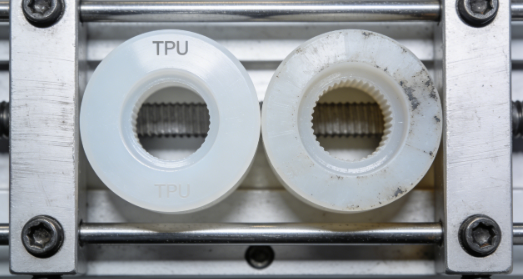
The performance of TPU in additive manufacturing depends on a combination of mechanical, thermal, and chemical properties. Understanding these properties helps in selecting the right TPU grade for a specific application.
Flexibility and Elasticity
TPU is highly flexible, with elongation at break often exceeding 500%, depending on the formulation. This allows printed parts to bend, stretch, and compress without cracking, making it ideal for applications such as wearable devices, seals, and vibration-absorbing components.
Abrasion and Impact Resistance
The durability of TPU is a key advantage in Percetakan 3D. Parts printed with TPU exhibit excellent resistance to abrasion, tearing, and mechanical impact, extending their lifespan in functional applications such as protective housings or industrial gaskets.
Chemical and Thermal Stability
TPU demonstrates resistance to oils, greases, and many solvents. It can maintain structural integrity under moderate heat conditions, typically up to 80–100°C, which is sufficient for most prototyping and low-volume production scenarios. Understanding these properties ensures that printed components perform reliably in their intended environments.
Kemasan Permukaan dan Pemprosesan Pasca
While TPU prints can achieve smooth surface finishes, its elasticity can pose challenges during post-processing. Sanding, coating, or coloring requires careful handling to maintain the material’s flexibility and mechanical properties.
Applications of TPU in 3D Printing
TPU’s combination of flexibility, strength, and chemical resistance enables a broad range of applications in modern 3D printing. Some of the most common uses include:
Wearable Devices and Protective Gear
Flexible TPU is used in wearable technology, such as wristbands, ergonomic grips, and protective cases. Its elasticity allows for comfortable fitting and repeated deformation without material fatigue.
Automotive and Aerospace Components
In automotive applications, TPU is utilized for vibration-damping mounts, flexible connectors, and prototype parts. In aerospace, TPU enables lightweight components with shock absorption capabilities, reducing assembly complexity.
Industrial and Functional Prototypes
Engineers use TPU to print functional prototypes for testing fit, form, and function. Components like gaskets, seals, and hoses benefit from TPU’s chemical and mechanical resistance, providing accurate simulations of final products.
Consumer Products
From phone cases to flexible toys and sports equipment, TPU allows designers to produce visually appealing, durable, and flexible products with minimal post-processing.
The following table compares TPU with other common 3D printing materials, illustrating its unique properties and applications:
MaterialFlexibility (Elongation %)Durability (Impact & Abrasion)Thermal ResistanceChemical ResistanceIdeal ApplicationsTPU400–700HighModerateHighWearables, automotive, industrial prototypesPLA5–10LowLowLowDisplay models, educational printsABS30–50ModerateModerateModerateFunctional prototypes, housingsNylon100–300HighHighModerateFunctional parts, gears, mechanical componentsPETG50–150ModerateModerateModerateConsumer products, mechanical housings
This comparison highlights why TPU is often chosen for applications requiring both elasticity and durability, outperforming rigid polymers in wear-prone and flexible parts.
Advantages of Using TPU in Percetakan 3D
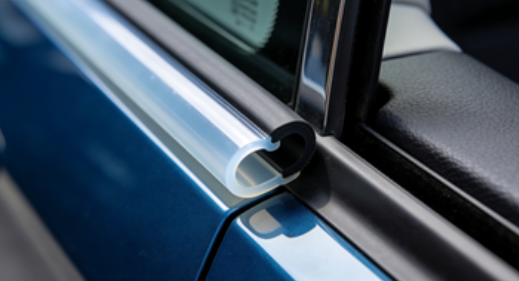
The benefits of TPU extend beyond its intrinsic material properties, impacting production efficiency, part performance, and overall design possibilities.
Enhanced Design Flexibility
TPU allows designers to print complex geometries, including living hinges, flexible joints, and interlocking components, without the need for assembly.
Improved Part Durability
TPU’s abrasion resistance and toughness reduce the risk of part failure during use, making it suitable for prototypes, functional testing, and small-batch production.
Cost and Time Efficiency
Although TPU is generally more expensive than standard PLA or ABS, its ability to produce functional, ready-to-use parts reduces post-processing, assembly, and material waste.
Compatibility with Multi-Material Printing
TPU can be combined with rigid filaments or other polymers to create hybrid structures, enabling variable stiffness or functional gradients within a single part.
Lightweight and Ergonomic Components
Parts made from TPU are lighter than metal or reinforced composites, making it suitable for wearable technology, flexible electronics, and ergonomic products.
Considerations When Using TPU
Despite its advantages, successful TPU printing requires attention to printer settings, material handling, and design adjustments.
Printer Compatibility and Settings
Not all FDM or 3D printers can reliably print TPU. Flexible filaments require controlled feeding, slower print speeds, and proper nozzle selection to prevent clogging or under-extrusion.
Faktor Persekitaran
Humidity and temperature can affect TPU filament properties. Proper storage in sealed containers with desiccants is recommended to maintain performance.
Design Adjustments
Due to TPU’s elasticity, overhangs, thin walls, and bridging can be challenging. Designers must consider part orientation, support placement, and minimum wall thickness to ensure print success.
Post-Processing
Sanding, painting, or coating TPU requires care to avoid compromising its flexibility. UV exposure or harsh solvents can degrade the material over time.
Kesimpulan
TPU has established itself as a transformative material in the 3D printing industry. Its combination of flexibility, durability, and chemical resistance allows for the creation of high-precision, functional, and visually appealing parts across industries ranging from wearable technology to automotive, aerospace, and industrial prototypes. By understanding TPU’s properties, applications, and printing considerations, designers and engineers can maximize its potential to innovate, reduce assembly, and deliver high-performance products efficiently.
Soalan Lazim
Q1: What is TPU used for in Percetakan 3D?
A1: TPU is used for flexible, durable, and high-precision parts, including wearable devices, automotive components, functional prototypes, and consumer products.
Q2: How do I choose the right TPU filament?
A2: Selection depends on part requirements for flexibility, durability, thermal resistance, and surface finish. Manufacturer datasheets provide guidance for specific grades.
Q3: Can TPU be post-processed?
A3: Yes, TPU can undergo light sanding, coating, or painting, but care must be taken to maintain its flexibility and elasticity.
Q4: What printers are compatible with TPU?
A4: Most FDM printers with direct-drive extruders or specialized flexible filament settings support TPU. Slow print speeds and careful extrusion are essential.
Q5: Are there any storage precautions for TPU?
A5: TPU filaments are sensitive to moisture and should be stored in sealed containers with desiccants to preserve print quality and mechanical properties.
Kategori Produk
- Bahagian Injap
- Bahagian Pam Air
- Bahagian Kotak Galas
- Bahagian Die Casting
- Produk Pam Keluli Tahan Karat
- Produk Pam Besi Tuang
- Bahagian Injap Untuk Kegunaan Kereta
- Bahagian Kenderaan
- Bahagian Injap Untuk Kegunaan Awam
- Bahagian Pam Vakum KF

 Malay
Malay  English
  Spanish
  Arabic
  German