
How to Choose a Precision Casting Manufacturer
Jadual Kandungan
pengenalan
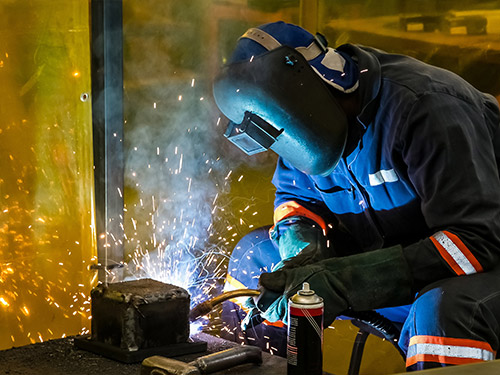
Choosing a precision casting manufacturer is not simply a matter of finding a foundry capable of pouring metal into a mold. For industrial components, the supplier must be able to understand drawings, select an appropriate casting route, control material quality, manage dimensional variation, perform secondary machining when necessary, verify critical features, and maintain repeatable production across future batches.
This becomes especially important when the parts are used in pumps, valves, machinery, automotive systems, industrial couplings, or other assemblies where dimensional accuracy and material reliability affect the performance of the entire product.
A supplier may appear competitive during the initial quotation stage but still create significant downstream problems if tooling control, process engineering, inspection, or machining capability is weak. Rework, inconsistent dimensions, unexpected porosity, material discrepancies, and communication delays can easily become more expensive than the original difference between two quotations.
For this reason, buyers should evaluate a precision casting manufacturer as a complete manufacturing partner rather than judge the supplier only by unit price.
What Should a Precision Casting Manufacturer Be Able to Do?
A capable precision casting manufacturer should be able to transform an engineering drawing into a controlled manufacturing process.
That process normally begins with understanding the part geometry, material, operating environment, tolerance requirements, annual volume, surface specifications, and any critical functional areas. The manufacturer should then determine which production method and secondary processes are appropriate.
Depending on the component, this may involve investment casting, sand casting, CNC machining, heat treatment, surface finishing, or a combination of these processes.
Leierwo, for example, integrates precision casting and related manufacturing services including investment casting, sand casting, and CNC machining. This type of multi-process capability can be valuable when a project contains both near-net-shape casting requirements and tighter machined features.
The strongest casting manufacturers therefore do more than reproduce a drawing. They help determine how that drawing can be manufactured consistently.
Start With the Manufacturer’s Core Casting Capability
The first question should be whether the supplier actually specializes in the casting process required by the project.
Precision casting is a broad term. Different foundries may focus on investment casting, sand casting, die casting, centrifugal casting, or other processes. Even within investment casting, process routes, alloy experience, component size ranges, and dimensional capabilities can vary significantly.
A manufacturer that performs well on small stainless steel valve components may not necessarily be the best choice for large carbon steel housings. Likewise, a supplier experienced in general machinery castings may not automatically understand the requirements of high-pressure pump components.
Buyers should therefore compare the manufacturer’s actual production history with the intended application.
Useful questions include whether the supplier has experience with similar geometries, similar materials, comparable component sizes, critical sealing surfaces, thin sections, complex internal shapes, and required production quantities.
A close match between past manufacturing experience and the new project generally reduces development risk.
Evaluate Material Capability, Not Just the Casting Process
Casting quality depends heavily on material control.
Two parts can look almost identical while behaving very differently in service because of alloy composition, heat treatment, microstructure, or material cleanliness.
A precision casting manufacturer should therefore be able to support the specific alloy required by the application rather than simply offer a broad list of metals.
Typical precision casting materials include stainless steel, carbon steel, and alloy steel. Each group may contain many grades designed for different mechanical and environmental conditions.
For example, stainless steel may be selected for corrosion resistance in fluid-handling components, while carbon steel may be suitable for structural applications where strength and general mechanical performance are more important. Alloy steels can be used where wear resistance, fatigue performance, temperature resistance, or higher strength is required.
When reviewing a supplier, buyers should confirm how material grades are identified, how alloy chemistry is controlled, whether material certificates can be provided when required, and what heat-treatment processes are used for the selected grade.
Material capability should always be matched to the actual working environment of the component.
Check Whether the Manufacturer Provides Engineering Review
One of the clearest differences between a basic foundry and a professional precision casting manufacturer is engineering support before tooling begins.
Not every CAD model is automatically optimized for casting.
A design originally created for machining may contain unnecessary material, abrupt section changes, difficult-to-fill areas, unrealistic cast tolerances, or features that could be produced more efficiently through secondary machining.
An experienced manufacturer should review factors such as wall thickness, transitions between thin and thick sections, fillet radii, potential shrinkage zones, gating positions, machining allowances, and critical dimensions.
This Design for Manufacturability review can improve both casting quality and overall manufacturing efficiency.
More importantly, it can identify problems before tooling and production begin. Correcting an unsuitable feature in a CAD model is usually much easier than diagnosing repeated casting defects after the first production batch.
The supplier should therefore be willing to discuss the drawing rather than simply accept it without technical feedback.
Understand the Manufacturer’s Tolerance Strategy
Precision casting can achieve relatively good dimensional accuracy, but not every dimension should be assigned the tightest possible tolerance.
A professional manufacturer should understand which dimensions can reasonably remain as-cast and which features should be machined.
This distinction is important because demanding machining-level accuracy from every cast feature may increase tooling complexity, process instability, inspection requirements, and rejection risk without improving the actual performance of the component.
Critical areas commonly requiring additional machining include bearing seats, precision bores, sealing faces, threaded holes, alignment surfaces, and mating interfaces.
Other non-critical external surfaces can often remain as-cast.
International guidance such as ISO 8062-3 provides a framework for dimensional and geometrical tolerances and machining allowance grades for castings. Rather than applying arbitrary tolerances, engineers and suppliers should agree on realistic requirements based on part function and manufacturing capability.
A trustworthy precision casting manufacturer should be able to explain these trade-offs clearly.
Look for Integrated CNC Machining Capability
Many precision cast components are not completely finished when they leave the foundry.
Casting creates complex geometry efficiently, while CNC machining is often used for the smaller number of features requiring tighter functional accuracy.
For this reason, integrated machining capability can provide a significant advantage.
When casting and machining are coordinated by the same supplier, the manufacturing team can plan casting allowances, datums, fixture locations, and machining references from the beginning of the project.
This reduces the risk that a casting will technically meet its own drawing requirements but create difficulties during later machining.
Leierwo combines casting with Perkhidmatan pemesinan CNC, allowing critical surfaces and dimensional features to be finished after the casting stage when required.
For buyers, this can simplify supplier management while improving continuity between casting and final part production.
Examine the Supplier’s Quality Control Process

A precision casting manufacturer should be able to explain how quality is controlled throughout production.
Final inspection alone is not enough.
Many casting defects originate earlier in the process, during wax pattern production, shell preparation, molding, melting, pouring, cooling, heat treatment, or machining.
A strong quality system therefore relies on process control as well as final measurement.
Inspection may include visual examination, dimensional checks, chemical composition verification, hardness testing, mechanical property testing, surface inspection, and non-destructive testing depending on the component and application.
Not every part needs every inspection method.
The appropriate inspection plan should be based on the risk and function of the part.
For example, an aesthetic bracket and a pressure-containing valve component should not automatically use the same inspection strategy.
The supplier should be able to identify the critical characteristics of the part and develop an inspection approach around those requirements.
Ask How the Manufacturer Controls Casting Defects
No casting process is completely free from defect risk. What matters is whether the manufacturer understands the causes and has methods to prevent, detect, and correct them.
Common issues in precision casting may include shrinkage, porosity, incomplete filling, inclusions, distortion, cracking, dimensional variation, or surface defects.
A manufacturer should understand how part geometry, gating, pouring temperature, mold condition, alloy behavior, and cooling affect these problems.
When evaluating a supplier, ask how they handle recurring defects.
A weak answer is simply that defective parts will be replaced.
A stronger answer explains how root causes are identified and how the process is changed to prevent the defect from appearing again.
For long-term production programs, process improvement is more valuable than repeated sorting and replacement.
Review Prototype and Sample Validation Procedures
The sample stage is one of the best opportunities to evaluate a precision casting manufacturer before committing to larger production quantities.
A sample should not only demonstrate that the supplier can produce something visually similar to the drawing.
It should confirm whether the proposed manufacturing process can consistently meet critical requirements.
During sample evaluation, buyers should review dimensional accuracy, material compliance, surface condition, machining quality, assembly compatibility, functional performance, and any important cosmetic requirements.
Critical dimensions should be identified clearly before sample production.
If every dimension is treated as equally important, engineering resources may be spent on areas that have little effect on actual performance.
Conversely, if a sealing surface or assembly interface is not highlighted early, a sample may technically pass general inspection while still failing during installation.
A structured sample approval process reduces these risks.
Compare Process Capability With Your Production Volume
A supplier that can manufacture five acceptable samples is not automatically prepared to manufacture thousands of consistent production parts.
Volume changes the manufacturing challenge.
As quantities increase, tooling durability, wax or mold repeatability, pouring stability, production scheduling, inspection efficiency, machining fixtures, and process documentation become increasingly important.
Before selecting a precision casting manufacturer, buyers should discuss expected annual demand and batch size.
The manufacturer should explain whether the proposed process is appropriate for prototype, low-volume, medium-volume, or larger repeat production.
Leierwo states that its manufacturing model supports single-piece, small-batch, and larger-scale production, which is useful for customers whose volumes may change as a product moves from development into regular production.
Production scalability should therefore be considered during supplier selection rather than after demand increases.
Evaluate Experience With Your Industry
Industry familiarity is valuable because similar-looking cast parts can have very different performance requirements.
A pump component may need corrosion resistance and smooth fluid paths. A valve body may need structural integrity and reliable sealing. Automotive parts may place greater emphasis on repeatability and assembly compatibility, while industrial machinery components may prioritize wear resistance and mechanical strength.
A manufacturer experienced with the relevant application is more likely to understand which areas of the drawing deserve the most attention.
Leierwo currently supports applications including pump manufacturing, valve manufacturing, automotive components, mechanical manufacturing, industrial couplings, and other customized metal parts.
This type of application diversity can be useful, but buyers should still request examples that are relevant to their own project rather than rely only on a general industry list.
Consider Communication as Part of Manufacturing Quality
Communication is often underestimated during supplier evaluation.
Precision casting projects involve technical decisions about materials, dimensions, machining allowances, heat treatment, surface finish, inspection, packaging, and production changes.
Poor communication at any stage can introduce manufacturing risk.
A good supplier should be able to read engineering drawings, identify unclear specifications, respond to technical questions, document changes, and communicate manufacturing issues before they affect delivery.
For international sourcing, this becomes even more important because buyer and supplier engineering teams may be located thousands of kilometers apart.
Fast responses are useful, but clarity is more important than speed alone.
A manufacturer that immediately agrees to every requirement without asking technical questions is not necessarily demonstrating strong service. In some cases, thoughtful technical questions are evidence that the supplier is genuinely reviewing the project.
Do Not Select a Precision Casting Manufacturer by Price Alone
Unit price matters, but it should not be evaluated separately from manufacturing risk.
The lowest initial quotation can become expensive if the supplier later requires repeated tooling corrections, high machining allowances, extensive sorting, rework, delayed deliveries, or frequent replacement of defective parts.
Buyers should instead evaluate total manufacturing value.
This includes tooling reliability, casting yield, machining requirements, material utilization, inspection, communication, rejection rate, packaging, consistency, and the ability to support design changes.
A slightly higher quotation from a manufacturer with stronger process control can sometimes result in lower overall project cost.
This is particularly true for parts where one defective casting can create assembly delays or equipment failure downstream.
Precision Casting Manufacturer Evaluation Checklist
A structured comparison makes supplier selection easier.
| Evaluation Area | Apa yang Perlu Disemak | Mengapa Ia Penting |
|---|---|---|
| Casting capability | Process, part size, geometry experience | Confirms technical fit |
| Material capability | Grades, chemistry control, heat treatment | Protects mechanical performance |
| Engineering support | Drawing review and DFM | Reduces development risk |
| Tolerance control | As-cast vs machined requirements | Prevents unnecessary complexity |
| pemesinan CNC | Secondary finishing capability | Supports critical dimensions |
| Quality control | Inspection plan and process monitoring | Improves repeatability |
| Defect management | Root-cause and corrective action | Reduces recurring failures |
| Sample validation | Dimensional and functional approval | Confirms process feasibility |
| Production capacity | Batch and repeat-production capability | Supports future demand |
| Pengalaman industri | Relevant component applications | Improves technical understanding |
| Komunikasi | Drawing review and change control | Reduces sourcing risk |
This checklist should be used as a starting point rather than a rigid scorecard. The importance of each category depends on the specific project.
Warning Signs When Evaluating a Casting Supplier
Some warning signs should encourage a buyer to investigate further before approving a supplier.
One is an unwillingness to discuss technical requirements beyond material and quantity. Precision casting projects normally involve questions about tolerances, geometry, machining, and operating conditions.
Another warning sign is the inability to explain how critical dimensions will be controlled.
If a supplier claims that every feature can easily be cast to extremely tight tolerances without discussing geometry or machining, the claim should be verified carefully.
Buyers should also be cautious when material grades are described only generically, inspection procedures are unclear, or defect handling relies entirely on replacement rather than root-cause analysis.
Finally, inconsistent communication during the quotation and sampling stage often becomes more problematic during production.
Supplier evaluation should therefore include both technical capability and project-management behavior.
What Information Should You Send to a Precision Casting Manufacturer?
Accurate project information allows the manufacturer to evaluate feasibility more effectively.
A complete RFQ should ideally contain the 3D CAD model, 2D engineering drawing, material grade, expected quantity, critical tolerances, machining requirements, surface finish, heat-treatment requirements, inspection expectations, and intended operating conditions.
Buyers should also identify which dimensions are functionally critical.
For example, a casting drawing may contain dozens of dimensions, but only a small number may determine sealing, alignment, assembly, or motion.
Highlighting those features helps the supplier develop a more appropriate manufacturing and inspection strategy.
Information about temperature, corrosion exposure, load, pressure, vibration, or wear conditions can also help engineers evaluate material and manufacturing choices more accurately.
The better the input information, the more meaningful the supplier’s technical proposal will be.
Kesimpulan
Selecting the right precision casting manufacturer requires more than comparing quotations.
A reliable supplier should demonstrate appropriate casting technology, material experience, engineering support, realistic tolerance control, secondary machining capability, structured inspection, defect prevention, sample validation, production scalability, and clear technical communication.
The best manufacturer is not necessarily the one promising the tightest tolerances or lowest initial price. It is the supplier capable of translating the drawing into a stable and repeatable manufacturing process while understanding which requirements truly matter to the function of the final component.
For projects involving pumps, valves, machinery, automotive components, industrial couplings, or other custom metal parts, early technical collaboration can reduce both manufacturing risk and unnecessary complexity.
Leierwo combines precision casting, investment casting, sand casting, CNC machining, and multi-material manufacturing capabilities to support customized industrial components from drawing review through repeat production. Buyers developing a new casting project can submit drawings and operating requirements through Leierwo’s website for technical evaluation.
FAQ About Choosing a Precision Casting Manufacturer
What is the most important factor when choosing a precision casting manufacturer?
There is no single factor that applies to every project. The most important consideration is whether the supplier’s process, material, engineering, machining, and quality capabilities match the actual technical requirements of the component.
Should a casting manufacturer also provide CNC machining?
It is not mandatory, but integrated CNC machining can be highly beneficial for parts requiring precision bores, sealing surfaces, threads, bearing locations, or other tight-tolerance features.
How can I verify a manufacturer’s casting quality?
Review sample parts, dimensional inspection results, material documentation, inspection procedures, defect-control methods, and examples of similar components. Where necessary, audits and third-party inspections can provide additional verification.
Why is engineering support important in precision casting?
Engineering review can identify casting risks before tooling begins, including unsuitable wall transitions, shrinkage-sensitive areas, unrealistic tolerances, and features that may be better produced through machining.
Is the cheapest precision casting supplier usually the best option?
Not necessarily. Lower initial prices may be offset by higher rejection rates, inconsistent machining, delayed production, rework, or quality issues. Total manufacturing value is usually a more meaningful comparison.
Kategori Produk
- Bahagian Injap
- Bahagian Pam Air
- Bahagian Kotak Galas
- Bahagian Die Casting
- Produk Pam Keluli Tahan Karat
- Produk Pam Besi Tuang
- Bahagian Injap Untuk Kegunaan Kereta
- Bahagian Kenderaan
- Bahagian Injap Untuk Kegunaan Awam
- Bahagian Pam Vakum KF

Mari mulakan projek anda yang seterusnya!
Mulakan Projek Anda dengan Leierwo
1. Hantar Pertanyaan Anda
2. Pengiraan Kos
3. Mulakan Pengeluaran
4. Susun Penghantaran
Soalan Lazim
Ya, kami mempunyai pengalaman yang luas dalam perdagangan antarabangsa dan boleh membantu pelanggan dengan urusan pelepasan kastam dan penghantaran eksport. Kami menawarkan pelbagai syarat perdagangan seperti FOB, CIF dan DDP untuk menampung keperluan logistik yang berbeza. Kami menerima pelbagai kaedah pembayaran antarabangsa, termasuk T/T (Pemindahan Telegraf), pindahan kawat dan Letter of Credit (L/C). Syarat pembayaran boleh dibincangkan dengan pasukan jualan kami.
Dengan bekerjasama dengan Leierwo, anda boleh menikmati harga yang kompetitif dan kualiti unggul berbanding pembekal lain. Selain itu, kami menawarkan penyelesaian sehenti untuk menghantar bahagian siap, termasuk pemesinan CNC dan rawatan permukaan, memastikan proses pengeluaran yang lancar.
Kami mempunyai peralatan pemutus termaju dan sistem kawalan kualiti yang ketat. Kapasiti pengeluaran bulanan kami adalah besar, dan kami boleh mengeluarkan produk berdasarkan lukisan atau sampel yang disediakan oleh pelanggan. Kami menerima kedua-dua pesanan percubaan kecil dan pengeluaran berskala besar.
Produk kami mematuhi piawaian antarabangsa seperti ASTM, AISI, DIN dan JIS. Kami boleh menyediakan laporan ujian material dan pensijilan yang berkaitan untuk memastikan kualiti produk memenuhi keperluan pelanggan.
Kami mematuhi sistem pengurusan kualiti ISO 9001 dengan ketat dan menjalankan pelbagai pemeriksaan sepanjang proses pengeluaran, termasuk analisis spektrografi, ujian X-ray, ujian ultrasonik dan ukuran dimensi. Langkah kawalan kualiti ini menjamin bahawa tuangan kami memenuhi piawaian tertinggi.
MOQ kami bergantung pada jenis produk dan kerumitan, Walau bagaimanapun, kami fleksibel dan terbuka untuk membincangkan keperluan khusus anda.
Masa utama pengeluaran standard kami ialah 4-6 minggu, bergantung pada kuantiti pesanan dan kerumitan produk. Kami berusaha untuk memendekkan masa penghantaran untuk memenuhi permintaan pelanggan.
Ya, kami boleh menyediakan sampel untuk pemeriksaan kualiti. Kos sampel dan yuran penghantaran boleh dirundingkan, dan yuran sampel boleh dikembalikan apabila membuat pesanan rasmi.
 Malay
Malay  English
  Spanish
  Arabic
  German