
How 3D Printing Advancements Change Manufacturing
Selamat Datang ke Blog Saya!
Saya teruja untuk mempunyai anda di sini! Sebelum kita menyelami kandungan, saya ingin anda menyertai saya di platform media sosial saya. Di situlah saya berkongsi cerapan tambahan, berhubung dengan komuniti kami yang hebat dan memaklumkan anda tentang berita terkini. Begini cara anda boleh terus berhubung:
📘 Facebook: Shanghai Leierwo Industry Trade Co., Ltd.
Sekarang, mari kita mulakan perjalanan ini bersama-sama! Saya harap anda mendapati kandungan di sini bukan sahaja bernas tetapi juga memberi inspirasi dan berharga. Mari mulakan!
Jadual Kandungan
Additive manufacturing — commonly known as Percetakan 3D — has rapidly evolved from a prototyping curiosity into a disruptive force reshaping global manufacturing. What began as simple plastic models crafted layer by layer now powers innovations across aerospace, healthcare, automotive, and even construction. 3D Printing Advancements are rewriting the rules of design, production, and supply chain strategy — transforming what was once custom corner‑case fabrication into mainstream end‑use manufacturing.
In this comprehensive guide, we explore how the latest advances in 3D printing technology are accelerating innovation, enhancing efficiency, and opening new frontiers in how products are conceived, developed, and delivered.
We’ll cover real industry data, business cases, standard practices, powerful comparisons, and practical insights that every engineer, designer, and manufacturing professional should know.
pengenalan
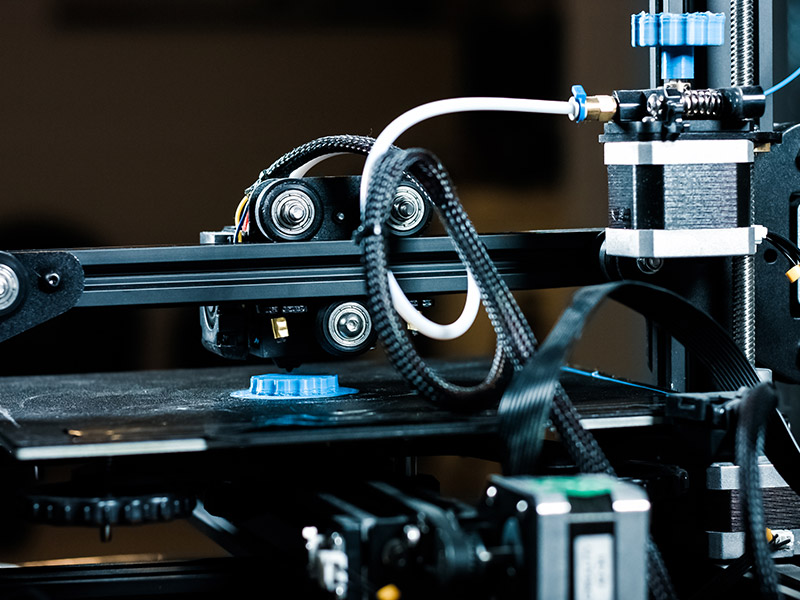
Manufacturing has always been defined by challenges of efficiency, speed, and cost. For centuries, subtractive processes like machining, forging, and molding dominated because they were well understood and highly scalable. But 3D printing advancements have introduced a fundamentally different paradigm — one where material is added exactly where needed, not removed from a block, and designs once impossible are now manufacturable.
Today’s Percetakan 3D technology is no longer limited to black boxes of fused plastic. It now includes sophisticated metal additive systems, advanced polymer platforms, biocompatible materials, and integrated digital workflows. These innovations are not just incremental upgrades — they mark a transformation of manufacturing itself.
The State of 3D Printing in Manufacturing Today
To understand how Percetakan 3D is changing manufacturing, consider the market scale and projected growth:
- The global metal 3D printing market was valued at around USD 7.73 billion in 2023 and is forecast to reach over USD 35.3 billion by 2030, growing at a CAGR of about 24.2% — illustrating rapid adoption beyond prototyping and into full production.
- In metal additive manufacturing specifically, research suggests market demand will expand significantly by 2035 as industries like aerospace and automotive increasingly embrace 3D‑printed end‑use parts.
These trends reveal that 3D printing advancements are moving from niche to necessary, particularly where complex, lightweight, and high‑performance components are required.
What Are 3D Printing Advancements?
3D Printing Advancements encompass a broad range of innovations — from improvements in hardware and materials to smarter software and integrated manufacturing systems.
At its core, additive manufacturing produces physical objects by building them layer by layer based on a digital file, typically a CAD model. But the phrase “3D printing advancements” refers to the technologies that:
- Improve printing speed and throughput
- Enable higher resolution and precision
- Expand available materials, including metals, composites, ceramics, and bio‑materials
- Integrate automated workflows, AI optimization, and industrial IoT connectivity
These advancements empower manufacturers to rethink design constraints, reduce reliance on tooling, and enhance supply chain flexibility.
Material Innovations Driving 3D Printing Advancements
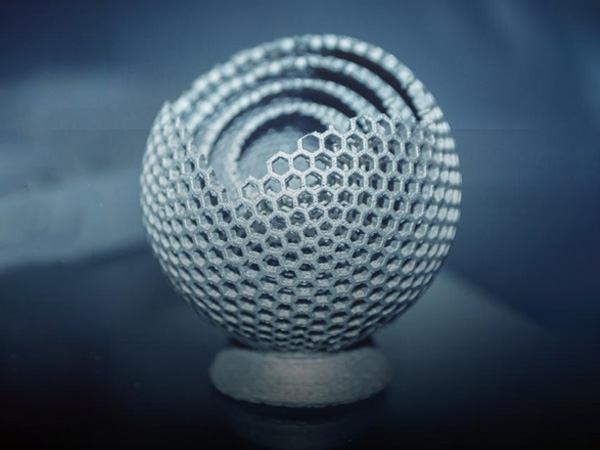
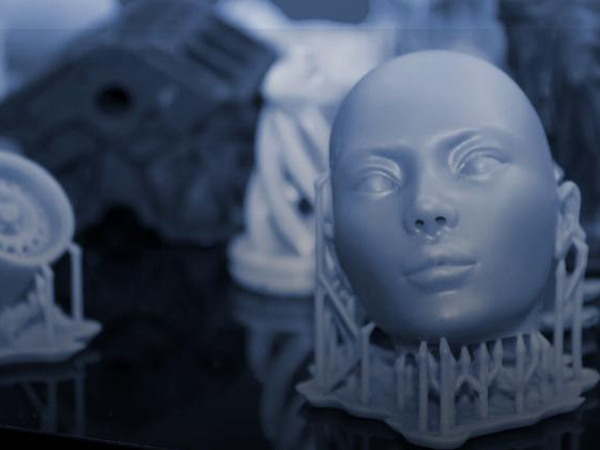
One of the most exciting aspects of 3D printing today lies in material development — offering properties once impossible to combine through conventional processes.
Metals: Titanium, Stainless Steel, and Beyond
Advanced metal powders are now at the heart of many industrial 3D printing systems. Titanium — known for strength, corrosion resistance, and lightweight properties — captured nearly 44.5% of the metal 3D printing segment in 2024.
Stainless steel is also emerging as a fast‑growing material, projected to grow at a CAGR of 15.8% due to its mechanical versatility and industry applicability.
These materials are used across aerospace, medical, and automotive sectors where strength‑to‑weight ratios and performance are critical.
Biocompatible and Composite Materials
Beyond metals, innovations in biocompatible polymers and composites are fueling growth in custom medical implants dan prosthetics. These materials adhere to stringent medical standards while providing patient‑specific performance.
Emerging research even explores printing ultra‑hard materials like tungsten carbide — traditionally impossible due to extreme hardness — using novel techniques that “soften rather than melt” the material during printing.
How 3D Printing Advancements Improve Manufacturing Efficiency
The impact of technological advancements in Percetakan 3D goes beyond novelty; they bring measurable improvements in modern manufacturing processes.
Rapid Prototyping & Faster Time‑to‑Market
One of the earliest and still most influential benefits of 3D printing advancements is rapid prototyping. Designs that used to take weeks or months to prototype through traditional tooling can now be produced in days or even hours. This accelerates the innovation cycle, letting teams test, refine, and iterate designs faster than ever.
A trend report shows an increasing number of businesses choose additive manufacturing primarily because it reduces lead times significantly compared to traditional methods.
Reduction in Material Waste
Unlike machining, where up to 60% or more of raw material is often cut away and discarded, additive methods use only the material needed for the part. This not only lowers material costs but also supports sustainability initiatives by minimizing waste — an increasingly important factor in global manufacturing.
Small‑Batch and Customized Production
Traditional mass production relies on expensive tooling and economies of scale. In contrast, 3D printing advances make small‑batch runs economically viable, especially for customized parts that don’t justify dedicated tooling.
In industries like healthcare, this capability enables patient‑specific implants and devices that would be impractical through conventional fabrication.
Industry Case Studies Showcasing 3D Printing Advancements
The real test of any technology lies in its application. Below are industry examples demonstrating how Percetakan 3D advancements are changing manufacturing at scale.
Aerospace: Lightweight Parts with Complex Structures
In aerospace, manufacturers are using advanced metal 3D printing to produce components that are lighter, stronger, and more efficient than traditionally manufactured parts. Complex geometries, such as internal cooling channels or lattice structures, are often only possible through additive workflows.
Organizations including Rocket Lab are pushing this further by using 3D printing to build rocket engines that are up to 80% additive manufactured, reducing build times from months to days.
These applications not only cut costs and lead times but also enhance performance through design freedom.
Automotive: Custom and High‑Performance Components
Automakers use 3D printing to produce everything from prototype bodies and parts to lightweight structural elements that contribute to improved fuel efficiency and performance. Cases like the 3D‑printed hypercar illustrate how additive manufacturing can disrupt traditional automotive supply chains by producing complex components faster and with less waste.
Medical: Patient‑Specific Devices and Implants
Healthcare manufacturers have adopted advanced 3D printing technologies to create custom medical implants, surgical guides, and prosthetics tailored to individual patient anatomy. These advancements not only improve outcomes but also reduce surgical complications and recovery times.
Comparing 3D Printing Advancements vs. Traditional Manufacturing
| Aspect | Traditional Manufacturing | 3D Printing Advancements |
|---|---|---|
| Masa Utama | Weeks to Months | Hours to Days |
| Sisa Bahan | tinggi | Minimal (Additive) |
| Design Complexity | Limited by Tooling | Highly Complex Possible |
| Penyesuaian | Expensive | Cost‑Effective |
| Production Scale | Large Batches | Small to Medium Batches |
| Kelestarian | Often Less Eco‑Friendly | Reduced Material Use |
This comparison highlights that while traditional methods still excel for very high‑volume production, 3D printing advancements bring unmatched flexibility and customization, especially important in sectors like aerospace and healthcare.
Standards, Best Practices, and Implementation
As Percetakan 3D goes beyond prototyping into critical manufacturing roles, standards and best practices are essential to ensure quality, repeatability, and safety.
Organizations such as ASTM International and ISO have developed standards for additive manufacturing that cover material specifications, process control, and quality assurance. These standards help manufacturers confidently integrate 3D printing into regulated sectors like medical devices and aerospace.
Good implementation also involves integrated digital workflows — from design and simulation to production and inspection — ensuring consistency and traceability across the production lifecycle.
Challenges and Limitations Despite Advancements
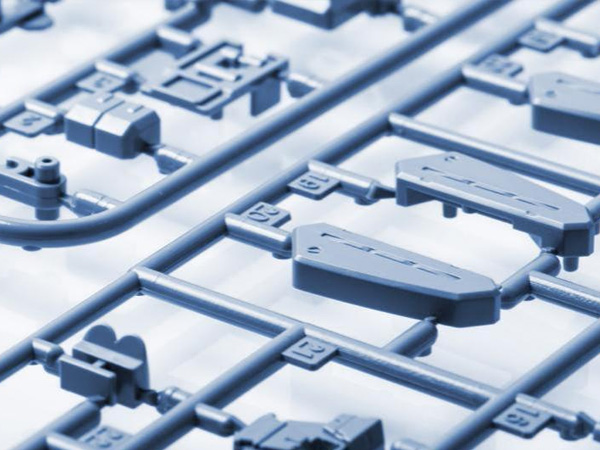
No technology is without limitations, and 3D printing faces several challenges even with current advancements.
Cost and Scalability
High‑end industrial 3D printers and materials can be expensive. Businesses must consider return‑on‑investment carefully, especially for production beyond small to medium batch sizes.
Material and Process Limitations
While materials have expanded dramatically, engineers still encounter limits in performance, especially when compared with traditionally forged or machined alloys. Process control and repeatability remain areas of active research.
Post‑Processing Needs
Many 3D‑printed parts require post‑processing — such as heat treatment, support removal, or surface finishing — adding time, cost, and complexity to the workflow.
Soalan Lazim
Q: Are 3D‑printed parts as strong as traditionally manufactured parts?
In many cases, especially with advanced metals and optimized printing parameters, 3D‑printed parts can match or even exceed the strength of traditionally made components. However, this depends on material selection and process control.
Q: What industries benefit most from 3D printing advancements?
Aerospace, automotive, healthcare, and industrial machinery sectors benefit significantly due to the demand for complex geometry, customization, and rapid iteration.
Q: Can 3D printing fully replace traditional manufacturing?
Not yet. While Percetakan 3D is disruptive, it often complements traditional methods. It shines in customization and complexity, but high‑volume, simple parts are still more cost‑effective to make with conventional techniques.
Q: What new materials are emerging in 3D printing?
Beyond metals and polymers, researchers are pushing into composites, ceramics, and even ultra‑hard materials like tungsten carbide — expanding applications once unreachable by additive methods.
Q: How do standards impact 3D‑printed manufacturing?
Standards from ASTM and ISO ensure quality, repeatability, and performance, allowing manufacturers to adopt 3D printing with confidence — especially in safety‑critical industries.
Kesimpulan
The impact of 3D printing advancements on manufacturing is profound and accelerating. What began as a prototyping technique has blossomed into a versatile production tool capable of delivering complex, customized parts with efficiency and precision. Driven by material innovation, integrated digital workflows, and expanding industrial adoption, additive manufacturing is now a strategic pillar in modern manufacturing.
As markets continue to grow — with metal Percetakan 3D poised for multi‑billion‑dollar expansion through 2030 and beyond — companies that embrace these advancements will lead in innovation, sustainability, and competitive differentiation.
Kategori Produk
- Bahagian Injap
- Bahagian Pam Air
- Bahagian Kotak Galas
- Bahagian Die Casting
- Produk Pam Keluli Tahan Karat
- Produk Pam Besi Tuang
- Bahagian Injap Untuk Kegunaan Kereta
- Bahagian Kenderaan
- Bahagian Injap Untuk Kegunaan Awam
- Bahagian Pam Vakum KF

 Malay
Malay  English
  Spanish
  Arabic
  German