
Aluminum Casting Die: Material Insights
Selamat Datang ke Blog Saya!
Saya teruja untuk mempunyai anda di sini! Sebelum kita menyelami kandungan, saya ingin anda menyertai saya di platform media sosial saya. Di situlah saya berkongsi cerapan tambahan, berhubung dengan komuniti kami yang hebat dan memaklumkan anda tentang berita terkini. Begini cara anda boleh terus berhubung:
📘 Facebook: Shanghai Leierwo Industry Trade Co., Ltd.
Sekarang, mari kita mulakan perjalanan ini bersama-sama! Saya harap anda mendapati kandungan di sini bukan sahaja bernas tetapi juga memberi inspirasi dan berharga. Mari mulakan!
Jadual Kandungan
Blog Key Points
- kenapa aluminum casting die material selection is critical
- Overview of common die materials and their properties
- Material performance in industrial applications
- Cost and ROI analysis for different materials
- Maintenance and lifecycle management for dies
- Advanced manufacturing techniques
- Supplier selection strategies
- Real-world case studies and examples
- Frequently Asked Questions (FAQ)
pengenalan
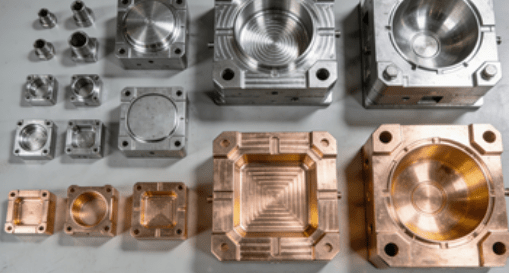
In modern manufacturing, precision and efficiency are non-negotiable. Aluminum casting dies are at the heart of high-quality casting operations, directly influencing production speed, part quality, and operational costs. Choosing the right aluminum casting die material can be the difference between smooth production runs and costly downtime.
Industry reports indicate that over 40% of die failures in automotive and aerospace casting operations are linked to inappropriate material selection, improper thermal management, or poor maintenance practices. For companies producing high-volume components, a die that wears out too quickly can cost tens of thousands of dollars annually in downtime, repair, and replacement. Understanding die material properties, thermal conductivity, wear resistance, and cost-effectiveness is critical to maximizing ROI.
This blog provides an in-depth guide to aluminum casting die materials, from traditional steel to copper alloys and aluminum prototypes, detailing how each material affects performance, maintenance, and operational cost.
Understanding Aluminum Casting Dies
What is an Aluminum Casting Die?
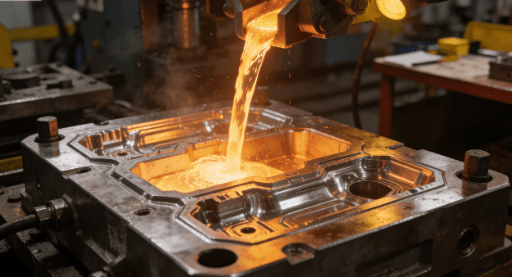
An aluminum casting die is a mold used to shape molten aluminum into precise components. These dies must withstand extreme temperatures, high pressures, and repeated cycles without deforming. The die’s material determines its ability to handle heat, resist wear, and maintain dimensional accuracy over long production runs.
Mengapa Bahan Penting
Die material affects thermal conductivity, hardness, surface finish, and durability. Poor material choice can lead to thermal fatigue, cracking, or surface defects in the casted parts. In high-volume production environments, this can result in production delays, increased maintenance costs, and even safety hazards.
Common Materials Used in Aluminum Casting Dies
Tool Steel
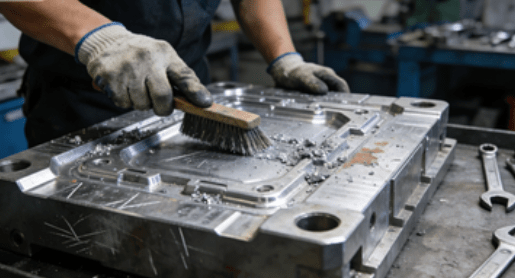
Tool steel is the industry standard for high-volume, heavy-duty production. It provides excellent hardness, wear resistance, and dimensional stability. Heat-treated tool steel can withstand temperatures up to 600°C and remain precise over thousands of casting cycles.
Kelebihan:
- High wear resistance
- Excellent durability
- Maintains tight tolerances
Disadvantages:
- Slower thermal conductivity compared to copper
- Higher initial cost
Aloi Tembaga
Copper alloys are valued for their high thermal conductivity, which allows faster cooling cycles and improved surface finish. They are ideal for high-volume applications where production speed and part quality are critical.
Kelebihan:
- Superior heat dissipation
- Reduces cycle time
- Improves surface finish
Disadvantages:
- Softer than tool steel, higher wear over long runs
- Requires more frequent maintenance
Aluminum Dies
Aluminum dies are lightweight and primarily used for prototyping or small batch production. They offer quick heat dissipation but cannot withstand prolonged heavy-duty use.
Kelebihan:
- Low cost for prototypes
- Rapid heat transfer
- Easy to machine and modify
Disadvantages:
- Low durability
- Limited suitability for high-volume production
Material Properties Comparison
| bahan | Kekerasan | Thermal Conductivity | Ketahanan | Ideal Applications |
|---|---|---|---|---|
| Tool Steel | tinggi | Sederhana | Sangat Tinggi | Automotive, industrial machinery |
| Copper Alloy | Sederhana | tinggi | Sederhana | High-volume production |
| aluminium | rendah | tinggi | rendah | Prototypes, small batches |
Material Performance in Industrial Applications
Thermal Management
Proper thermal control reduces cycle times and prevents defects like warping or porosity. Copper alloys excel in thermal conductivity, reducing cooling times by 20–30% compared to tool steel, whereas aluminum dies cool even faster but lack durability.
Rintangan Haus
Tool steel dies can last 5–10 years in heavy-duty production with minimal maintenance. Copper dies typically require more frequent refurbishment after 2–4 years, while aluminum dies may only last a few months in repeated high-volume operations.
Kemasan Permukaan
The hardness and thermal properties of die materials impact surface finish. High-conductivity materials like copper provide smooth surfaces by dissipating heat quickly, while tool steel maintains dimensional accuracy over thousands of cycles.
Comparing Aluminum Casting Die Materials by Industry
Industri Automotif
- Tool steel is preferred for die-cast automotive parts due to high wear resistance.
- Copper alloys are used for precision components requiring smooth surface finish.
Aerospace Industry
- Lightweight aluminum dies are suitable for low-volume prototype production.
- Tool steel is critical for high-performance components with strict tolerances.
Jentera Perindustrian
- Tool steel provides long-lasting durability for repeated heavy-duty casting.
- Copper alloys maintain efficiency and surface quality for medium-volume production.
Electronics and Consumer Goods
- Copper alloy dies accelerate cooling and improve surface finish, ideal for delicate or small parts.
- Aluminum dies are used for prototyping or experimental designs due to low cost and ease of machining.
Cost Considerations and Return on Investment
Initial Cost vs. Long-Term Savings
Investing in high-quality tool steel or copper dies increases upfront costs but reduces maintenance and replacement expenses over time.
Example: 5-Year Cost Analysis
| Die Material | Initial Cost | Annual Maintenance | Expected Lifespan | 5-Year Total Cost |
|---|---|---|---|---|
| Tool Steel | $7,000 | $500 | 10 years | $9,500 |
| Copper Alloy | $5,500 | $1,000 | 6 years | $10,500 |
| aluminium | $3,500 | $1,500 | 3 years | $10,000 |
Investing in durable materials often provides the best long-term ROI despite higher initial costs.
Advanced Manufacturing Techniques
CNC Machining and Precision Finishing
High-quality aluminum casting dies are often machined using CNC equipment, which ensures tight tolerances and consistent production quality. Tolerances as tight as ±0.02 mm are achievable for complex geometries.
Rawatan Permukaan
Techniques like nitriding, PVD coatings, atau hard chrome plating improve wear resistance and extend die life. These treatments can increase die lifespan by 30–50%, depending on production volume.
Thermal Management
Incorporating cooling channels or conformal cooling systems within the die improves heat transfer and reduces cycle time by up to 25%.
Pemeriksaan Berkala
Non-destructive testing (NDT), including ultrasonic and dye penetrant inspections, can detect micro-cracks before they lead to die failure. Scheduled inspections prevent unexpected downtime and maintain quality.
Selecting a Reliable Aluminum Casting Die Supplier
Supplier Expertise
Choose suppliers who understand the strengths and weaknesses of different die materials and can recommend the best solution for your application.
Manufacturing Capabilities
Ensure the supplier has modern machining, heat treatment, and quality control capabilities. Ask about their experience with CNC machining, thermal management, and surface treatment technologies.
Samples and Testing
Request sample dies or small batch production to validate die performance, surface finish, and thermal behavior before committing to large orders.
References and Case Studies
Reliable suppliers provide client references or case studies demonstrating their experience in producing high-quality aluminum casting dies for your industry.
Real-World Case Studies
Automotive Casting Success
A global automotive supplier replaced copper alloy dies with tool steel dies for high-volume engine components. Results:
- Die lifespan increased from 3 years to 8 years
- Production downtime reduced by 40%
- Surface finish consistency improved, reducing post-processing costs
Aerospace Prototype Development
An aerospace manufacturer used aluminum dies for low-volume prototypes of lightweight components. Benefits:
- Rapid turnaround for design testing
- Low upfront cost
- Flexible modifications allowed quick iterations
Industrial Machinery Production
A manufacturer producing heavy-duty pump housings switched to copper alloy dies for high-volume batches. Outcome:
- Cycle times reduced by 20%
- Surface defects decreased by 15%
- Maintenance frequency optimized
Kesimpulan
Understanding the material properties of aluminum casting dies is essential for selecting the right die for your production needs. Tool steel, copper alloys, and aluminum each offer unique benefits depending on volume, application, and desired surface quality. By evaluating durability, thermal behavior, wear resistance, and cost, manufacturers can optimize production efficiency, minimize downtime, and maximize ROI.
Investing in the right material and a reliable supplier ensures long die life, consistent quality, and operational success across industries ranging from automotive and aerospace to industrial machinery.
Soalan Lazim
What is the most durable aluminum casting die material?
Tool steel is the most durable, providing excellent wear resistance and long lifespan in heavy-duty production.
Can aluminum dies be used for high-volume production?
Aluminum dies are suitable for low-volume production or prototypes. For high-volume runs, tool steel or copper alloys are preferred.
How does die material affect casting surface finish?
High thermal conductivity materials like copper reduce surface imperfections, while harder materials like tool steel maintain dimensional accuracy.
How often should dies be maintained?
Tool steel dies may require minimal maintenance, while copper and aluminum dies need frequent inspections, especially in high-volume operations.
Are cost-effective alternatives available for small production runs?
Yes, aluminum dies provide low-cost solutions for prototyping and short production cycles, with rapid heat dissipation and easy machining.
How long can I expect an aluminum casting die to last?
Lifespan varies: tool steel dies last 5–10 years, copper alloys 2–4 years, aluminum dies 6–12 months for high-volume operations.
Kategori Produk
- Bahagian Injap
- Bahagian Pam Air
- Bahagian Kotak Galas
- Bahagian Die Casting
- Produk Pam Keluli Tahan Karat
- Produk Pam Besi Tuang
- Bahagian Injap Untuk Kegunaan Kereta
- Bahagian Kenderaan
- Bahagian Injap Untuk Kegunaan Awam
- Bahagian Pam Vakum KF

Mari mulakan projek anda yang seterusnya!
Mulakan Projek Anda dengan Leierwo
1. Hantar Pertanyaan Anda
2. Pengiraan Kos
3. Mulakan Pengeluaran
4. Susun Penghantaran
Soalan Lazim
Ya, kami mempunyai pengalaman yang luas dalam perdagangan antarabangsa dan boleh membantu pelanggan dengan urusan pelepasan kastam dan penghantaran eksport. Kami menawarkan pelbagai syarat perdagangan seperti FOB, CIF dan DDP untuk menampung keperluan logistik yang berbeza. Kami menerima pelbagai kaedah pembayaran antarabangsa, termasuk T/T (Pemindahan Telegraf), pindahan kawat dan Letter of Credit (L/C). Syarat pembayaran boleh dibincangkan dengan pasukan jualan kami.
Dengan bekerjasama dengan Leierwo, anda boleh menikmati harga yang kompetitif dan kualiti unggul berbanding pembekal lain. Selain itu, kami menawarkan penyelesaian sehenti untuk menghantar bahagian siap, termasuk pemesinan CNC dan rawatan permukaan, memastikan proses pengeluaran yang lancar.
Kami mempunyai peralatan pemutus termaju dan sistem kawalan kualiti yang ketat. Kapasiti pengeluaran bulanan kami adalah besar, dan kami boleh mengeluarkan produk berdasarkan lukisan atau sampel yang disediakan oleh pelanggan. Kami menerima kedua-dua pesanan percubaan kecil dan pengeluaran berskala besar.
Produk kami mematuhi piawaian antarabangsa seperti ASTM, AISI, DIN dan JIS. Kami boleh menyediakan laporan ujian material dan pensijilan yang berkaitan untuk memastikan kualiti produk memenuhi keperluan pelanggan.
Kami mematuhi sistem pengurusan kualiti ISO 9001 dengan ketat dan menjalankan pelbagai pemeriksaan sepanjang proses pengeluaran, termasuk analisis spektrografi, ujian X-ray, ujian ultrasonik dan ukuran dimensi. Langkah kawalan kualiti ini menjamin bahawa tuangan kami memenuhi piawaian tertinggi.
MOQ kami bergantung pada jenis produk dan kerumitan, Walau bagaimanapun, kami fleksibel dan terbuka untuk membincangkan keperluan khusus anda.
Masa utama pengeluaran standard kami ialah 4-6 minggu, bergantung pada kuantiti pesanan dan kerumitan produk. Kami berusaha untuk memendekkan masa penghantaran untuk memenuhi permintaan pelanggan.
Ya, kami boleh menyediakan sampel untuk pemeriksaan kualiti. Kos sampel dan yuran penghantaran boleh dirundingkan, dan yuran sampel boleh dikembalikan apabila membuat pesanan rasmi.
 Malay
Malay  English
  Spanish
  Arabic
  German