
7 Petua Penting untuk Pelaburan Keluli untuk Kejayaan
Selamat Datang ke Blog Saya!
Saya teruja untuk mempunyai anda di sini! Sebelum kita menyelami kandungan, saya ingin anda menyertai saya di platform media sosial saya. Di situlah saya berkongsi cerapan tambahan, berhubung dengan komuniti kami yang hebat dan memaklumkan anda tentang berita terkini. Begini cara anda boleh terus berhubung:
📘 Facebook: Shanghai Leierwo Industry Trade Co., Ltd.
Sekarang, mari kita mulakan perjalanan ini bersama-sama! Saya harap anda mendapati kandungan di sini bukan sahaja bernas tetapi juga memberi inspirasi dan berharga. Mari mulakan!
Jadual Kandungan
Blog Key Points:
- Introduction to steel investment casting and its industrial importance
- Material selection and alloy customization
- Wax modeling precision and mold preparation
- Ceramic shell building and advanced refractory techniques
- Temperature, pouring, and solidification control
- Post-casting finishing, inspection, and quality assurance
- Equipment maintenance, workflow optimization, and automation
- Comparisons with sand casting, die casting, and additive manufacturing
pengenalan
In today’s industrial world, steel components must combine strength, precision, and durability. Industries such as aerospace, automotive, defense, and energy increasingly rely on steel investment casting to produce complex, high-performance parts. From turbine blades to high-stress engine components, investment casting allows manufacturers to create intricate geometries that traditional casting or machining cannot achieve.
According to a 2025 report by the Global Foundry Association, over 60% of critical steel components in aerospace applications are manufactured using investment casting techniques due to their unmatched precision and material properties. Similarly, a study by Metallurgical Engineering Review (2024) shows that investment cast steel parts reduce post-processing costs by up to 30% compared to conventional methods.
This comprehensive guide explores 7 essential tips for steel investment casting success, incorporating expert insights, technical data, comparisons, and practical recommendations to help engineers and manufacturers optimize their casting operations.
Kefahaman Tuangan Pelaburan Keluli
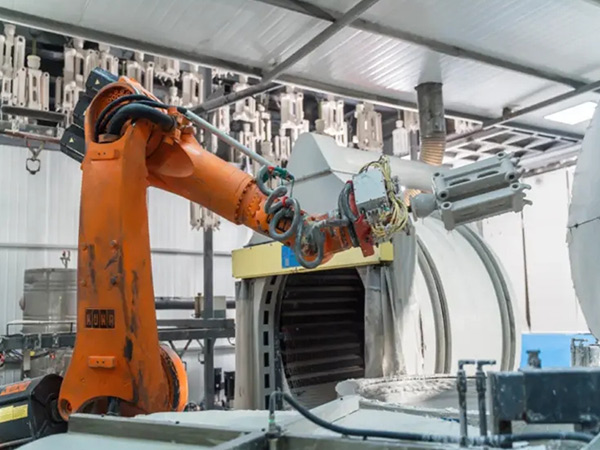
What is Steel Investment Casting?
Steel investment casting, or lost-wax casting, is a precision manufacturing process that involves:
- Creating a wax model of the component.
- Coating it with a ceramic shell that forms a detailed mold.
- Melting out the wax to leave a hollow mold.
- Pouring molten steel into the ceramic mold.
- Removing the ceramic to reveal a near-net-shape steel component.
Kelebihan:
- Superior surface finish and high dimensional accuracy
- Ability to cast complex geometries, thin walls, and intricate features
- Reduced machining, saving time and costs
Comparing Casting Methods
| Ciri | Pemutus Pelaburan | Tuangan Pasir | Die Casting | Additive Manufacturing |
|---|---|---|---|---|
| Ketepatan Dimensi | ±0.1 mm | ±0.5 mm | ±0.2 mm | ±0.05 mm |
| Kemasan Permukaan | Licin | Kasar | Sederhana | Licin |
| Part Complexity | tinggi | Low-Moderate | rendah | Sangat Tinggi |
| Jumlah Pengeluaran | Low-Medium | tinggi | Sangat Tinggi | rendah |
| Material Wastage | minima | Sederhana | Sederhana | minima |
| Cost per Part | Sederhana-Tinggi | rendah | Sederhana | tinggi |
Wawasan: Pemutus pelaburan is ideal for high-precision, complex steel parts. Sand casting suits large, simple components, die casting excels in high-volume metal parts, while additive manufacturing offers extreme design freedom for specialized applications.
Tip 1: Select the Right Steel Alloy
Material choice is critical for steel investment casting success.
High-Performance Alloy Options
- Stainless Steel (304, 316L): Excellent corrosion resistance, suitable for chemical and marine applications
- High-Carbon Steel (H13, AISI 4140): High hardness and wear resistance for tools and machinery components
- Heat-Resistant Alloys (Inconel, Alloy 718): Ideal for aerospace turbine parts and high-temperature environments
Data Insight: A study by Aerospace Materials Journal (2023) shows that using heat-resistant steel alloys in turbine components increases lifespan by 25% under high thermal stress.
Alloy Quality Considerations
- Ensure low sulfur and phosphorus content to reduce shrinkage defects
- Homogeneous composition prevents segregation and porosity
- Certified suppliers with ISO 9001 and ASTM-compliant alloys improve reliability
Tip 2: Perfect Wax Model Production
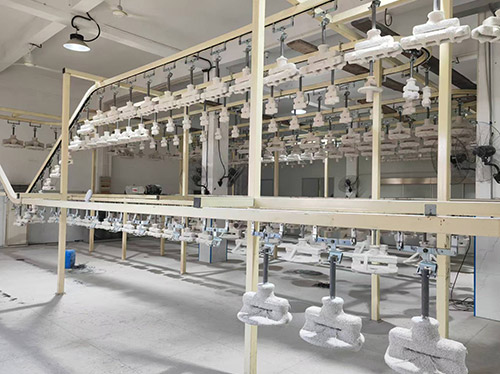
The wax model defines the accuracy and quality of the final steel casting.
Key Wax Model Principles
- Uniform thickness to prevent thermal stress during shell building
- Smooth surfaces to reduce post-casting machining
- Proper gating system integration for even molten steel flow
Advanced Wax Techniques
- Use injection molding with precision dies for complex geometries
- Employ multi-piece wax assemblies for undercuts and intricate details
Petua Pakar: Menurut Casting Engineers International (2024), precision wax models reduce surface finishing costs by 40% in high-volume production.
Tip 3: Optimize Ceramic Shell Molding
Ceramic shells protect the molten steel and replicate intricate details.
Shell Building Tips
- Apply multiple thin layers for uniform strength
- Control drying temperatures to prevent cracking
- Use fine refractory powders for high-definition surface replication
Refractory Innovations
- Zircon-based coatings improve thermal shock resistance
- Alumina blends increase mold strength for high-pressure steel alloys
Kajian Kes: A European aerospace foundry reduced shell failure rates by 30% after switching to a multi-layer zircon-alumina coating system.
Tip 4: Control Temperature and Pouring Techniques
Temperature control is essential for minimizing defects.
Pouring Best Practices
- Preheat molds to reduce thermal shock and improve steel flow
- Maintain molten steel within optimal alloy-specific temperature ranges
- Use vacuum or inert gas environments to minimize oxidation
Data Insight: Research by Materials Science Today (2023) indicates that controlling pouring temperature within ±5°C of the alloy’s recommended range reduces porosity defects by 20%.
Pemejalan dan Penyejukan
- Employ controlled cooling rates to refine grain structure
- Minimize residual stress through slow, uniform cooling
- Use simulation software for thermal analysis in complex parts
Tip 5: Post-Casting Finishing and Inspection
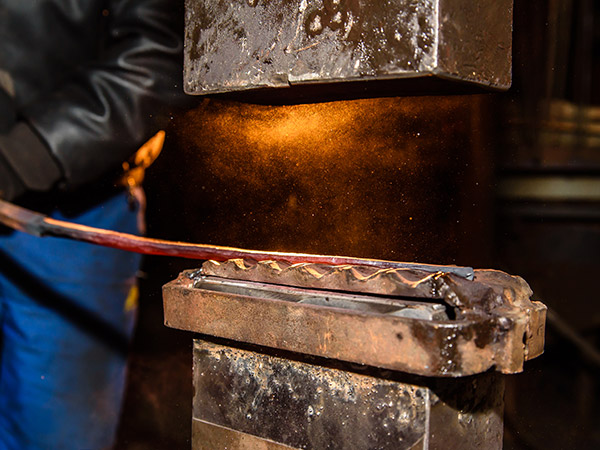
Even with precise casting, finishing ensures quality.
Finishing Methods
- Shot blasting or sandblasting to remove ceramic residue
- Grinding and polishing for tight tolerances and smooth surfaces
- Heat treatment for stress relief and improved mechanical properties
Inspection Techniques
- Dimensional inspection with 3D scanning and coordinate measuring machines (CMM)
- Non-destructive testing (NDT) such as ultrasonic or X-ray for internal defects
- Hardness testing to ensure proper alloy properties
Wawasan: High-volume aerospace foundries report up to 35% reduced defect rates using combined finishing and NDT protocols.
Tip 6: Equipment Maintenance and Workflow Optimization
Regular maintenance ensures consistent quality.
Key Maintenance Practices
- Clean wax injectors and ceramic slurry tanks after every cycle
- Calibrate furnaces and pouring systems for temperature consistency
- Monitor workflow efficiency to prevent bottlenecks and reduce downtime
Automation in Steel Investment Casting
- Robotic wax injection improves repeatability
- Automated shell dipping ensures uniform layer thickness
- Advanced thermal sensors optimize pouring and cooling
Expert Opinion: Menurut Foundry Automation Review (2024), automated investment casting lines reduce labor costs by 20% and improve dimensional repeatability by 15%.
Tip 7: Compare Tuangan Pelaburan Keluli with Other Methods
Choosing the Right Casting Process
- Tuangan Pasir: Best for large, low-precision parts
- Die Casting: High-volume, simple parts; limited to lower-melting alloys
- Additive Manufacturing: Extreme geometrical freedom; limited material scalability
Decision Factor: Select steel investment casting for parts requiring precision, durability, and intricate designs.
Advanced Concepts in Steel Investment Casting
Microstructural Engineering
- Control cooling and solidification to refine grain size
- Minimize porosity and inclusions for critical components
- Achieve high tensile strength and toughness for demanding applications
Alloy Customization and Hybrid Casting
- Blend multiple steels to achieve specific hardness and corrosion resistance
- Combine casting with machining or additive manufacturing for complex assemblies
Soalan Lazim
Apa itu steel investment casting digunakan untuk?
Used in aerospace, automotive, defense, energy, and heavy machinery for precise steel components.
How precise is steel investment casting?
Typically ±0.1mm, ideal for intricate shapes.
What alloys are suitable for steel investment casting?
Stainless steel, high-carbon steel, heat-resistant alloys, and custom blends.
How is the wax removed?
Wax is melted and drained during burnout, leaving a ceramic mold.
boleh steel investment casting replace machining?
Yes, it produces near-net-shape parts, reducing machining needs.
What common defects occur?
Porosity, cold shuts, inclusions, and shell cracks. Proper temperature and mold control minimize these.
How should equipment be maintained?
Regular cleaning, calibration, and workflow monitoring. Automation further improves consistency.
Is steel investment casting cost-effective?
For complex and high-value parts, it reduces post-processing, scrap, and improves long-term reliability.
Kategori Produk
- Bahagian Injap
- Bahagian Pam Air
- Bahagian Kotak Galas
- Bahagian Die Casting
- Produk Pam Keluli Tahan Karat
- Produk Pam Besi Tuang
- Bahagian Injap Untuk Kegunaan Kereta
- Bahagian Kenderaan
- Bahagian Injap Untuk Kegunaan Awam
- Bahagian Pam Vakum KF

Mari mulakan projek anda yang seterusnya!
Mulakan Projek Anda dengan Leierwo
1. Hantar Pertanyaan Anda
2. Pengiraan Kos
3. Mulakan Pengeluaran
4. Susun Penghantaran
Soalan Lazim
Ya, kami mempunyai pengalaman yang luas dalam perdagangan antarabangsa dan boleh membantu pelanggan dengan urusan pelepasan kastam dan penghantaran eksport. Kami menawarkan pelbagai syarat perdagangan seperti FOB, CIF dan DDP untuk menampung keperluan logistik yang berbeza. Kami menerima pelbagai kaedah pembayaran antarabangsa, termasuk T/T (Pemindahan Telegraf), pindahan kawat dan Letter of Credit (L/C). Syarat pembayaran boleh dibincangkan dengan pasukan jualan kami.
Dengan bekerjasama dengan Leierwo, anda boleh menikmati harga yang kompetitif dan kualiti unggul berbanding pembekal lain. Selain itu, kami menawarkan penyelesaian sehenti untuk menghantar bahagian siap, termasuk pemesinan CNC dan rawatan permukaan, memastikan proses pengeluaran yang lancar.
Kami mempunyai peralatan pemutus termaju dan sistem kawalan kualiti yang ketat. Kapasiti pengeluaran bulanan kami adalah besar, dan kami boleh mengeluarkan produk berdasarkan lukisan atau sampel yang disediakan oleh pelanggan. Kami menerima kedua-dua pesanan percubaan kecil dan pengeluaran berskala besar.
Produk kami mematuhi piawaian antarabangsa seperti ASTM, AISI, DIN dan JIS. Kami boleh menyediakan laporan ujian material dan pensijilan yang berkaitan untuk memastikan kualiti produk memenuhi keperluan pelanggan.
Kami mematuhi sistem pengurusan kualiti ISO 9001 dengan ketat dan menjalankan pelbagai pemeriksaan sepanjang proses pengeluaran, termasuk analisis spektrografi, ujian X-ray, ujian ultrasonik dan ukuran dimensi. Langkah kawalan kualiti ini menjamin bahawa tuangan kami memenuhi piawaian tertinggi.
MOQ kami bergantung pada jenis produk dan kerumitan, Walau bagaimanapun, kami fleksibel dan terbuka untuk membincangkan keperluan khusus anda.
Masa utama pengeluaran standard kami ialah 4-6 minggu, bergantung pada kuantiti pesanan dan kerumitan produk. Kami berusaha untuk memendekkan masa penghantaran untuk memenuhi permintaan pelanggan.
Ya, kami boleh menyediakan sampel untuk pemeriksaan kualiti. Kos sampel dan yuran penghantaran boleh dirundingkan, dan yuran sampel boleh dikembalikan apabila membuat pesanan rasmi.
 Malay
Malay  English
  Spanish
  Arabic
  German