
Valve Safety Standards for Cast Components: A Buyer-Oriented Guide for Industrial Reliability
Selamat Datang ke Blog Saya!
Saya teruja untuk mempunyai anda di sini! Sebelum kita menyelami kandungan, saya ingin anda menyertai saya di platform media sosial saya. Di situlah saya berkongsi cerapan tambahan, berhubung dengan komuniti kami yang hebat dan memaklumkan anda tentang berita terkini. Begini cara anda boleh terus berhubung:
📘 Facebook: Shanghai Leierwo Industry Trade Co., Ltd.
Sekarang, mari kita mulakan perjalanan ini bersama-sama! Saya harap anda mendapati kandungan di sini bukan sahaja bernas tetapi juga memberi inspirasi dan berharga. Mari mulakan!
Jadual Kandungan
Intipati Utama Artikel Ini
- Comprehensive overview of valve safety in industrial applications
- How to choose the right materials for valve castings
- Comparison of casting methods and impact on safety
- Understanding international and regional safety standards
- Best practices for maintenance, monitoring, and risk management
- Real-world case studies demonstrating the importance of valve safety
- Guidelines for procurement and cost-benefit evaluation
pengenalan
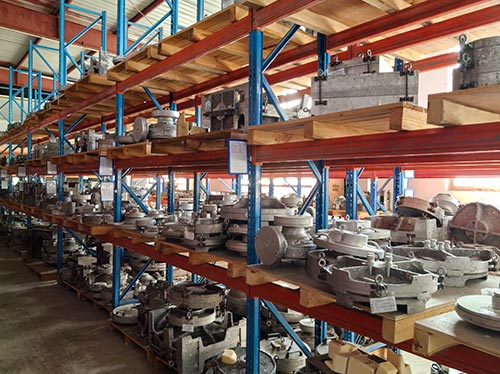
In industrial processes, valves are the critical control points that regulate fluid flow, pressure, and safety. According to the International Society of Automation (ISA), valve failures account for approximately 25% of all process equipment incidents globally, leading to downtime, environmental hazards, and potential safety incidents.
Valve safety begins at the design and manufacturing stage. Cast components, including valve bodies, covers, and sealing elements, must withstand extreme conditions: high temperature, high pressure, and corrosive fluids. Poorly selected materials or substandard casting processes can compromise safety, resulting in leaks, structural failures, or catastrophic accidents.
In this comprehensive guide, we provide a procurement-focused approach, combining technical insights, real-world data, and expert recommendations to help industrial buyers ensure valve safety and operational reliability.
Perkara penting yang diliputi
- Material selection strategies for safe valve performance
- Casting methods: investment, sand, and hybrid approaches
- Compliance with global valve safety standards
- Advanced monitoring and predictive maintenance strategies
- Cost-benefit analysis for procurement decisions
- Real-world case studies of valve safety incidents
Materials Matter: Choosing Safe Cast Components
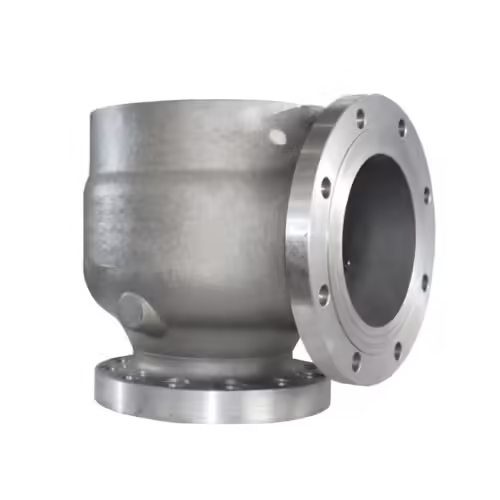
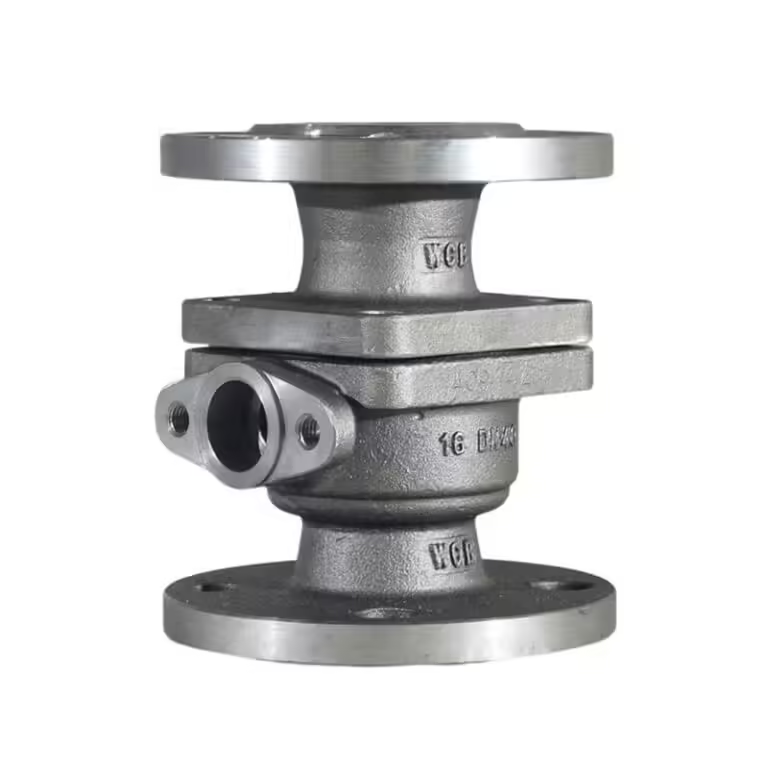
Stainless Steel for Corrosion and Temperature Resistance
Stainless steel is the most common choice for high-performance valves.
Popular Alloys:
- 316/316L: Chloride-resistant, ideal for marine, chemical, and petroleum industries
- 304/304L: Cost-effective, moderate corrosion resistance
- 17-4PH: Precipitation-hardened steel with high strength and corrosion resistance
- 410: Martensitic stainless steel, suitable for high-temperature steam valves
Wawasan Industri:
According to Valve World Magazine, valves made of 316L stainless steel have shown 30% longer lifespan in high-chloride environments compared to 304L. This directly reduces downtime and maintenance costs, increasing operational safety.
Carbon Steel Castings for General Applications
Carbon steel is widely used for medium- to low-pressure systems.
Common Grades:
- WCB: Standard for general-purpose valves at room temperature
- 4130: High-strength option for medium-high pressure and temperature
Perbandingan:
| Harta benda | 304 Stainless Steel | WCB Carbon Steel |
|---|---|---|
| Rintangan Kakisan | tinggi | Sederhana |
| High-Temperature Strength | Sederhana | tinggi |
| kos | Lebih tinggi | Lebih rendah |
| Kekerapan Penyelenggaraan | rendah | Sederhana |
Specialty Alloys for Extreme Conditions
Specialty alloys provide exceptional stress, temperature, and corrosion resistance.
Examples:
- 2205 Duplex Stainless Steel: High resistance to stress corrosion cracking
- Cobalt Alloys (Co6, Co12): Ideal for valves in high-temperature erosion applications
Expert Opinion:
Dr. Michael Hart, a materials engineer at Industrial Valve Research Institute, notes: “Selecting the right alloy can improve valve lifespan by up to 50% in high-temperature chemical operations, directly enhancing valve safety and operational reliability.”
Casting Methods and Their Impact on Keselamatan Injap
Pemutus Pelaburan
Investment casting is preferred for complex, high-pressure valves.
Benefits:
- Precision tolerance (≤ Ra1.6µm)
- Complex internal cavities
- Reduced porosity and defects
Application:
Best for stainless steel and alloy valves operating under high pressure in chemical, petrochemical, and energy industries.
Tuangan Pasir
Sand casting is efficient for large, simple-shaped valves.
Kelebihan:
- Cost-effective for mass production
- Suitable for low-pressure water and municipal systems
- Moderate precision ensures safety for non-critical applications
Trade-off:
While sand casting is safe for low-pressure systems, investment casting is preferred for high-pressure, high-precision valves where valve safety is critical.
CNC Machining Post-Casting
CNC machining ensures critical surfaces meet tight tolerances.
Impact on Safety:
- Flatness and perpendicularity ≤0.02mm/m
- Ensures leak-free assembly
- Supports tight sealing in high-pressure systems
Kajian Kes:
A chemical plant retrofitted 50 WCB sand-cast valves with CNC-machined seats, reducing leakage incidents from 6 per year to zero, demonstrating tangible safety improvements.
Valve Safety Standards and Compliance
International and Regional Standards
- API 600 / API 602: Gate and globe valves
- ISO 10434 / ISO 5208: Pressure testing, leakage rates
- ASME B16.34: Valve construction and pressure ratings
Importance:
Compliance ensures cast components meet design pressure, temperature, and corrosion resistance requirements. Non-compliance can lead to unsafe operation or regulatory penalties.
Testing Methods
- Hydrostatic Testing: Confirms pressure ratings
- X-Ray/Ultrasonic Inspection: Detects internal casting defects
- Dimensional Verification: Ensures tight tolerances and proper assembly
Industry Practice:
Leading valve manufacturers, including Leierwo, report that over 95% of valve failures in industrial plants are due to insufficient testing or material misselection. Proper adherence to standards mitigates these risks.
Installation, Operation, and Maintenance for Valve Safety
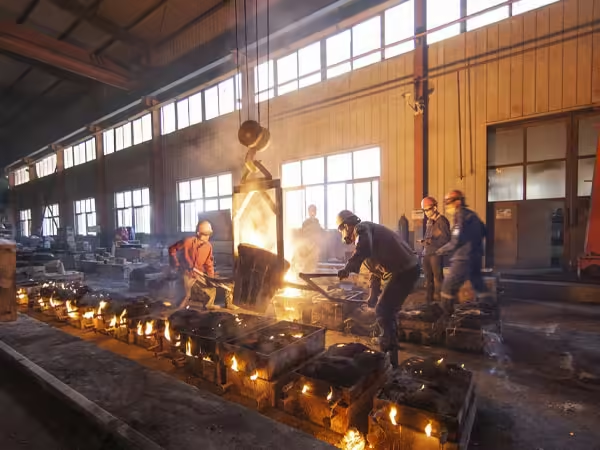
Proper Installation
- Torque per manufacturer specs
- Flange alignment verification
- Gasket compatibility checks
Why it matters:
Incorrect installation can compromise sealing and lead to leaks or catastrophic failures, reducing overall valve safety.
Routine Maintenance
- Lubrication of moving components
- Inspection of seals and stems
- Monitoring for corrosion or wear
Benefit:
Proactive maintenance increases service life, ensures safety, and minimizes unplanned downtime.
Smart Monitoring
- IoT-enabled sensors for pressure, temperature, and flow
- Predictive maintenance using analytics
- Automated alarms for abnormal conditions
Trend:
Modern plants integrate smart sensors, reducing valve-related incidents by up to 40% according to Industrial Valve Safety Report 2024.
Procurement Strategies for Keselamatan Injap
Cost vs Safety Trade-Off
Balancing upfront costs and long-term operational safety is critical.
| Consideration | Low-Cost Option | High-Safety Option |
|---|---|---|
| bahan | WCB Carbon Steel | 316L Stainless Steel |
| Kaedah Pemutus | Tuangan Pasir | Pemutus Pelaburan |
| Maintenance Requirement | tinggi | rendah |
| Jangka hayat | 5–10 years | 15–25 years |
| Safety Margin | Sederhana | tinggi |
Selecting Vendors
- Evaluate manufacturing experience
- Verify compliance certificates (ISO, API, ASME)
- Check post-sales support for maintenance and training
Real-World Case Studies
Case Study 1: Petrochemical Plant Valve Failure
- Problem: Low-grade WCB sand-cast valve failed under 25 bar steam pressure
- Impact: Production downtime 48 hours, $250k losses
- Solution: Replaced with 316L stainless steel investment cast valve; no incidents in 5 years
Case Study 2: Municipal Water Supply Upgrade
- Problem: Corrosion in low-cost cast valves
- Solution: Duplex stainless steel 2205 valves installed; improved safety and lifespan
- ROI: Reduced maintenance costs by 35% over 10 years
Kesimpulan
Ensuring valve safety begins with the careful selection of materials, precision casting methods, and adherence to international standards. Incorporating predictive monitoring, smart maintenance, and informed procurement strategies helps industries minimize risk, reduce operational costs, and maintain regulatory compliance.
Takeaway for Buyers:
Investing in high-quality cast components and modern monitoring solutions is not optional—it is a strategic decision that safeguards industrial operations, personnel, and environmental compliance.
Soalan Lazim
Faktor apa yang paling mempengaruhi valve safety?
Material selection, casting method, and compliance with international standards.
How often should industrial cast valves be inspected?
Critical systems: quarterly; non-critical: semi-annually.
Can valve safety be monitored remotely?
Yes, IoT sensors can track pressure, temperature, and flow in real time.
Is investment casting always safer than sand casting?
For high-pressure, complex valves, yes. For low-pressure, simple valves, sand casting is sufficient.
How to calculate ROI on valve safety investments?
Factor in replacement costs, downtime, maintenance, safety risk mitigation, and regulatory compliance.
Can specialty alloys prevent premature valve failures?
Yes, they offer resistance to erosion, corrosion, and high-temperature wear.
Are CNC-machined surfaces necessary for valve safety?
Essential for precise sealing surfaces and leak-free operation.
Which international standards should be prioritized?
API, ISO, ASME are key; local regulatory requirements must also be considered.
Kategori Produk
- Bahagian Injap
- Bahagian Pam Air
- Bahagian Kotak Galas
- Bahagian Die Casting
- Produk Pam Keluli Tahan Karat
- Produk Pam Besi Tuang
- Bahagian Injap Untuk Kegunaan Kereta
- Bahagian Kenderaan
- Bahagian Injap Untuk Kegunaan Awam
- Bahagian Pam Vakum KF

Mari mulakan projek anda yang seterusnya!
Mulakan Projek Anda dengan Leierwo
1. Hantar Pertanyaan Anda
2. Pengiraan Kos
3. Mulakan Pengeluaran
4. Susun Penghantaran
Soalan Lazim
Ya, kami mempunyai pengalaman yang luas dalam perdagangan antarabangsa dan boleh membantu pelanggan dengan urusan pelepasan kastam dan penghantaran eksport. Kami menawarkan pelbagai syarat perdagangan seperti FOB, CIF dan DDP untuk menampung keperluan logistik yang berbeza. Kami menerima pelbagai kaedah pembayaran antarabangsa, termasuk T/T (Pemindahan Telegraf), pindahan kawat dan Letter of Credit (L/C). Syarat pembayaran boleh dibincangkan dengan pasukan jualan kami.
Dengan bekerjasama dengan Leierwo, anda boleh menikmati harga yang kompetitif dan kualiti unggul berbanding pembekal lain. Selain itu, kami menawarkan penyelesaian sehenti untuk menghantar bahagian siap, termasuk pemesinan CNC dan rawatan permukaan, memastikan proses pengeluaran yang lancar.
Kami mempunyai peralatan pemutus termaju dan sistem kawalan kualiti yang ketat. Kapasiti pengeluaran bulanan kami adalah besar, dan kami boleh mengeluarkan produk berdasarkan lukisan atau sampel yang disediakan oleh pelanggan. Kami menerima kedua-dua pesanan percubaan kecil dan pengeluaran berskala besar.
Produk kami mematuhi piawaian antarabangsa seperti ASTM, AISI, DIN dan JIS. Kami boleh menyediakan laporan ujian material dan pensijilan yang berkaitan untuk memastikan kualiti produk memenuhi keperluan pelanggan.
Kami mematuhi sistem pengurusan kualiti ISO 9001 dengan ketat dan menjalankan pelbagai pemeriksaan sepanjang proses pengeluaran, termasuk analisis spektrografi, ujian X-ray, ujian ultrasonik dan ukuran dimensi. Langkah kawalan kualiti ini menjamin bahawa tuangan kami memenuhi piawaian tertinggi.
MOQ kami bergantung pada jenis produk dan kerumitan, Walau bagaimanapun, kami fleksibel dan terbuka untuk membincangkan keperluan khusus anda.
Masa utama pengeluaran standard kami ialah 4-6 minggu, bergantung pada kuantiti pesanan dan kerumitan produk. Kami berusaha untuk memendekkan masa penghantaran untuk memenuhi permintaan pelanggan.
Ya, kami boleh menyediakan sampel untuk pemeriksaan kualiti. Kos sampel dan yuran penghantaran boleh dirundingkan, dan yuran sampel boleh dikembalikan apabila membuat pesanan rasmi.
 Malay
Malay  English
  Spanish
  Arabic
  German