
8 Teknik Pengecoran Pasir yang Berkuasa untuk Ketepatan
Selamat Datang ke Blog Saya!
Saya teruja untuk mempunyai anda di sini! Sebelum kita menyelami kandungan, saya ingin anda menyertai saya di platform media sosial saya. Di situlah saya berkongsi cerapan tambahan, berhubung dengan komuniti kami yang hebat dan memaklumkan anda tentang berita terkini. Begini cara anda boleh terus berhubung:
📘 Facebook: Shanghai Leierwo Industry Trade Co., Ltd.
Sekarang, mari kita mulakan perjalanan ini bersama-sama! Saya harap anda mendapati kandungan di sini bukan sahaja bernas tetapi juga memberi inspirasi dan berharga. Mari mulakan!
Jadual Kandungan
pengenalan
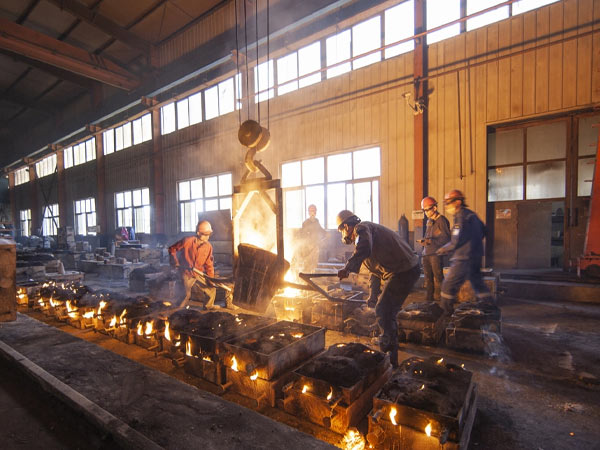
In today’s fast-paced manufacturing industry, achieving precision in metal components is no longer optional—it is a key competitive advantage. Sand casting foundries are at the heart of producing high-quality parts for industries ranging from automotive and aerospace to heavy machinery and defense. A single casting defect can lead to costly rework, material waste, and production delays.
Modern sand casting foundries are no longer just about melting metal and pouring it into molds; they are about integrating advanced techniques, digital tools, and quality control measures to produce precise, repeatable, and high-performance parts. By applying powerful techniques, foundries can minimize defects, reduce costs, and achieve dimensional accuracy that meets today’s rigorous industrial standards.
In this comprehensive guide, we will cover:
- Key concepts of sand casting foundries
- 8 powerful techniques to improve precision
- Material and mold selection strategies
- Common defects and how to prevent them
- Cost optimization and production efficiency tips
- Comparative analysis of techniques
- Environmental and safety considerations
- Expert insights and real-world case studies
- Frequently asked questions from professionals
This guide is designed for foundry engineers, production managers, and quality control specialists who aim to enhance casting precision while maintaining efficiency and cost-effectiveness.
Kefahaman Pengecoran Pasir
What Are Sand Casting Foundries?
Sand casting foundries are specialized manufacturing facilities where molten metal is poured into sand molds to create components of various shapes, sizes, and complexities. This method is widely used due to its flexibility, cost-effectiveness, and scalability.
Core Concepts in Sand Casting:
- Mold Types: Green sand, chemically bonded sand, and shell molds. Each offers different precision, surface finish, and cost characteristics.
- Metal Selection: Common metals include aluminum, cast iron, bronze, and steel. The choice of metal affects mold design, pouring temperature, and cooling rates.
- Defect Control: Proper gating, venting, sand composition, and temperature control are essential to reduce porosity, shrinkage, and surface imperfections.
Industry Perspective:
Dr. Liang Chen, a foundry engineering expert at the International Metallurgy Institute, states: “Precision in sand casting is not just about metal pouring—it’s about controlling every step of the process, from sand selection to final inspection.”
Technique 1: Optimized Sand Composition
The foundation of precise casting starts with high-quality sand molds. Sand composition directly impacts mold stability, surface finish, and dimensional accuracy.
Key Factors:
- Sand Type: Silica sand is most common, but specialized sands can improve heat resistance and surface smoothness.
- Clay and Moisture Ratio: Proper clay content and moisture balance increase mold cohesion and reduce deformation.
- Additives: Organic binders or chemical additives can reduce surface defects and improve mold strength.
Practical Tip:
Adjust sand composition based on metal type and complexity of the casting. For aluminum alloys, a finer sand grain improves surface finish, while cast iron requires higher mold strength for large parts.
Technique 2: Advanced Mold Compaction Methods


Compaction ensures uniform mold density and improves dimensional stability. Common methods include:
- Manual Ramming: Simple but labor-intensive, best for small-scale operations.
- Hydraulic Pressing: Provides uniform pressure, reducing shrinkage defects.
- Vibratory Compaction: Uses high-frequency vibration to settle sand evenly, ideal for complex geometries.
Impact on Precision:
- Consistent wall thickness
- Reduced sand erosion during pouring
- Minimized internal stress in cast parts
Technique 3: Precision Gating and Venting Design
Gating and venting systems control metal flow and air escape. Poor design causes turbulence, porosity, and cold shuts.
Design Principles:
- Smooth gate transitions reduce turbulence
- Adequate vent placement ensures trapped air escapes
- Riser design compensates for shrinkage
Expert Advice:
According to a survey by the American Foundry Society, 70% of high-precision casting defects are related to improper gating or venting. Using flow simulation software can drastically reduce trial-and-error adjustments.
Technique 4: Temperature Control During Pouring
Metal temperature affects flow, mold fill, and shrinkage. For example:
- Aluminum alloys: 660–750°C
- Cast iron: 1150–1250°C
- Steel: 1400–1600°C
Best Practices:
- Use thermocouples to monitor pouring temperature
- Maintain consistent temperature for each batch
- Preheat molds to avoid thermal shock
Benefit:
Maintaining precise temperature ensures repeatable accuracy, reduces porosity, and improves surface finish.
Technique 5: Shell and Coating Technologies
Applying shell coatings or refractory layers improves mold performance:
- Prevents metal-sand reactions
- Reduces surface roughness
- Allows finer detail reproduction
Tip:
Thin shell coatings can produce edges and corners with tolerances within ±0.5 mm, ideal for aerospace or automotive components.
Technique 6: Controlled Cooling and Heat Treatment
Post-pour cooling affects dimensional stability and mechanical properties. Rapid cooling may cause internal stress and warping, while controlled cooling ensures uniform solidification.
Heat Treatment Options:
- Annealing to reduce stress
- Quenching for hardness
- Tempering for ductility
Impact:
Precision castings maintain their dimensions, improve mechanical properties, and reduce post-processing corrections.
Technique 7: Automation and CNC Integration
Automation in modern sand casting foundries includes:
- Automated mold preparation
- CNC-controlled gating and trimming
- Digital temperature and flow monitoring
Benefits:
- High repeatability and reduced human error
- Faster production cycles
- Consistent quality across batches
Kajian Kes:
A European automotive foundry integrated CNC-controlled mold trimming, achieving 25% higher dimensional accuracy dan 15% faster production rates.
Technique 8: Quality Inspection and Feedback Loops
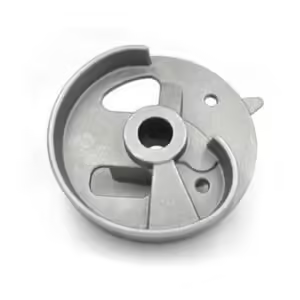
Real-time quality control ensures each casting meets tolerance requirements. Techniques include:
- 3D scanning to detect dimensional deviations
- Pemeriksaan sinar-X for internal porosity
- Coordinate Measuring Machines (CMM) for precision verification
Feedback Loops:
Inspection data informs mold adjustments, gating redesign, or sand composition optimization for the next batch. This reduces scrap rates by up to 12%.
Material Selection and Optimization
Aluminum vs Cast Iron vs Steel:
| Logam | Kelebihan | Challenges | Best Use |
|---|---|---|---|
| aluminium | Lightweight, corrosion-resistant | Shrinkage sensitive | Automotive, aerospace |
| Besi tuang | Durable, wear-resistant | Brittle, heavy | Engine blocks, industrial machinery |
| Steel | High strength, versatile | High pouring temp | Structural components, machinery |
Wawasan:
Selecting the right metal, paired with optimized mold techniques, directly improves casting precision and reduces post-processing.
Common Defects and How to Prevent Them
Typical Sand Casting Defects:
- Keliangan: Caused by trapped gases; prevent with venting and degassing techniques
- Cold Shuts: Result from low pouring temperature; prevent by controlling metal temp
- Misruns: Metal fails to fill mold completely; prevent with proper gating and temperature
- Surface Roughness: Excessive sand movement; prevent by shell coatings and proper compaction
Practical Tip:
A combination of optimized sand, controlled pouring, and inspection loops can reduce defect rate below 5% in high-volume foundries.
Cost Optimization Strategies
- Use reusable sand where possible
- Minimize scrap through simulation and inspection
- Invest in automation for labor-intensive processes
- Implement energy-efficient furnaces to reduce metal heating costs
Data Insight:
According to the International Foundry Association, adopting these strategies can reduce overall production cost by 10–18% without compromising precision.
Environmental and Safety Practices
Modern sand casting foundries focus on:
- Dust and particulate control
- Recyclable sand usage
- Energy-efficient melting systems
- Safe handling of molten metals
Expert View:
“Foundries integrating sustainable practices not only reduce environmental impact but also improve workplace safety and operational efficiency,” notes Dr. Emily Hart, a metallurgical engineer.
Best Practices for Precision in Sand Casting Foundries
- Conduct regular sand quality and mold integrity tests.
- Implement advanced gating and venting design using software simulation.
- Monitor metal temperature rigorously with thermocouples or infrared cameras.
- Apply shell coatings for fine surface finish and precise edges.
- Use controlled cooling and heat treatment protocols.
- Integrate automation and CNC systems for high-volume repeatability.
- Establish real-time inspection and feedback loops.
- Invest in operator training and continuous improvement programs.
By following these practices, sand casting foundries can consistently produce high-precision, low-defect metal components for demanding industries.
Soalan Lazim
Q1: What metals can be used in sand casting foundries for high precision?
A1: Aluminum, steel, bronze, and cast iron are the most commonly used metals in sand casting foundries. The choice depends on mechanical properties, tolerance requirements, and intended application. High-precision components often require aluminum or steel due to their consistent flow and low shrinkage rates. Selecting the right metal helps sand casting foundries achieve tight dimensional tolerances.
Q2: How does sand quality affect casting?
A2: High-quality, properly mixed sand ensures mold stability, accurate dimensions, and smooth surface finish.
Q3: Can defects be predicted before casting?
A3: Yes, simulation software predicts flow, solidification, and potential defects, allowing proactive adjustments.
Q4: Is automation worth the investment?
A4: Absolutely. Automation increases repeatability, reduces errors, and improves output consistency, especially for large-scale production.
Q5: How do foundries maintain consistency across batches?
A5: Through CNC-controlled molds, temperature monitoring, in-process inspections, and feedback loops from previous batches.
Q6: Can sand casting foundries produce parts with complex geometries?
A8: Yes. With advanced mold design, simulation software, and precise sand compaction, sand casting foundries can produce highly complex shapes while maintaining dimensional accuracy. Proper gating and venting strategies are critical to avoid defects in intricate castings.
Q7: How does mold preheating affect precision in sand casting foundries?
A9: Preheating molds reduces thermal shock, ensures even metal flow, and prevents defects like cold shuts. Many sand casting foundries preheat molds based on metal type and casting size to improve surface finish and dimensional accuracy.
Kategori Produk
- Bahagian Injap
- Bahagian Pam Air
- Bahagian Kotak Galas
- Bahagian Die Casting
- Produk Pam Keluli Tahan Karat
- Produk Pam Besi Tuang
- Bahagian Injap Untuk Kegunaan Kereta
- Bahagian Kenderaan
- Bahagian Injap Untuk Kegunaan Awam
- Bahagian Pam Vakum KF

 Malay
Malay  English
  Spanish
  Arabic
  German