
Alloy Steel Castings: A Comprehensive Guide to Material, Process, and Applications
Table of Contents
Introduction
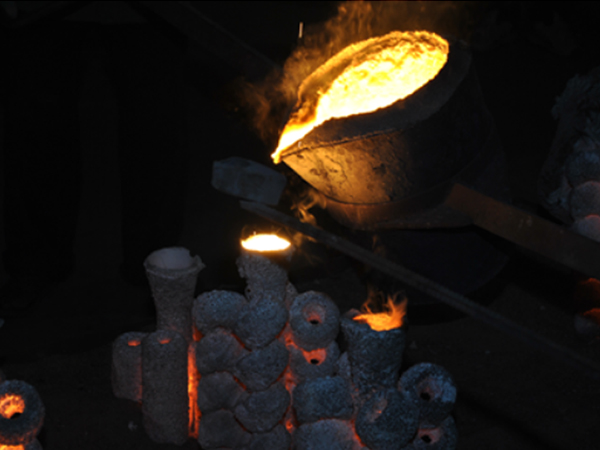
Alloy Steel Castings are metal components produced by pouring molten alloy steel into molds, forming parts with high strength, durability, and wear resistance. By modifying the base composition of carbon steel with elements like chromium, nickel, or molybdenum, alloy steel offers tailored properties for demanding industrial applications.
What Makes Alloy Steel Castings Important?
They play a vital role in modern engineering, providing superior performance where ordinary carbon steels fail—such as in heavy machinery, mining equipment, power generation, and transportation.
Understanding the Basics of Alloy Steel Castings
The Concept of Alloy Steel
Alloy steel is steel combined with one or more alloying elements (Cr, Ni, Mo, Mn, V, Si, etc.) to enhance its mechanical and chemical properties.
These additions alter the steel’s internal structure, improving strength, toughness, corrosion resistance, and temperature stability.
How Alloy Steel Differs from Carbon Steel
While carbon steel relies mainly on carbon content for strength, alloy steel depends on the synergy between multiple elements.
As a result, alloy steel castings can achieve higher performance under stress, wear, or heat conditions compared to carbon steel castings.
Types of Alloy Steel Castings
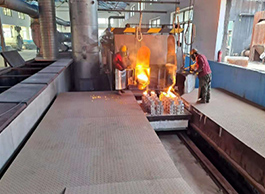
Low-Alloy Steel Castings
Contain small amounts of alloying elements (typically <5%). They balance cost and performance, offering good strength and toughness for general engineering applications.
High-Alloy Steel Castings
Feature higher concentrations of alloying elements, such as chromium and nickel, delivering enhanced corrosion and heat resistance. Commonly used in marine and chemical environments.
Special-Purpose Alloy Castings
Designed for specific performance needs—such as wear-resistant, heat-resistant, or cryogenic steels—used in mining, energy, and aerospace sectors.
Alloying Elements and Their Effects
| Element | Function | Key Benefit |
|---|---|---|
| Chromium (Cr) | Increases hardness and corrosion resistance | Wear & rust prevention |
| Nickel (Ni) | Improves toughness and impact resistance | Enhanced ductility |
| Molybdenum (Mo) | Boosts high-temperature strength | Heat performance |
| Vanadium (V) | Refines grain structure | Increased strength |
| Silicon (Si) | Enhances oxidation resistance | Surface stability |
These elements work together to create microstructures that balance strength, toughness, and durability in alloy steel castings.
Manufacturing Process of Alloy Steel Castings
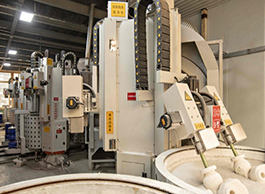
Melting and Refining
The process starts by melting raw materials in an electric arc or induction furnace. Refining techniques like AOD or VOD remove impurities and control composition.
Molding and Pouring
Sand or 3D-printed molds shape the liquid metal. Precise temperature and flow control ensure uniform solidification and minimal defects.
Heat Treatment
Post-casting heat treatment—such as quenching and tempering—adjusts the hardness and ductility. It transforms the internal structure to achieve target mechanical properties.
Machining and Inspection
Machining ensures dimensional accuracy, while non-destructive testing (UT, RT, PT) confirms internal quality and defect-free casting integrity.
Key Properties of Alloy Steel Castings
Mechanical Strength
Alloy steel castings offer superior tensile and yield strength, ideal for components under high stress.
Toughness and Ductility
They retain impact resistance even in low temperatures or heavy-load environments.
Corrosion and Wear Resistance
Chromium and molybdenum additions provide enhanced surface protection against oxidation, abrasion, and chemical attack.
Comparison: Alloy Steel Castings vs Carbon Steel Castings
| Property | Alloy Steel Casting | Carbon Steel Casting |
|---|---|---|
| Strength | Higher, customizable | Moderate |
| Corrosion Resistance | Excellent | Limited |
| Heat Resistance | High | Moderate |
| Cost | Higher (due to alloy elements) | Lower |
| Applications | Heavy-duty, specialized | General-purpose |
Choosing between alloy and carbon steel castings depends on the balance of performance requirements, cost, and environmental conditions.
Common Applications of Alloy Steel Castings
Industrial Equipment
Used in turbines, valve bodies, pump casings, and pressure vessels where strength and heat resistance are essential.
Mining and Construction
Wear-resistant castings for crushers, mills, and excavators.
Transportation and Marine
Components like gears, axles, and propellers that endure stress and vibration.
Energy and Power Generation
Turbine housings, boiler parts, and fittings exposed to high temperature and pressure.
Quality Standards and Certification
Common standards for alloy steel castings include ASTM A148, ASTM A217, EN 10293, and ISO 3755.
Manufacturers typically implement ISO 9001 quality management systems, ensuring traceability, mechanical property verification, and material certification.
Innovations and Future Trends in Alloy Steel Castings
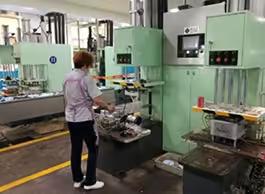
Smart and Digital Foundries
Integration of AI, sensors, and digital twins enables real-time quality monitoring and predictive maintenance.
Sustainable Manufacturing
Use of recycled steel, energy-efficient furnaces, and low-emission casting processes support green manufacturing.
Computational Alloy Design
Machine learning models and CALPHAD simulations are redefining alloy composition optimization, accelerating material innovation.
Conclusion
Alloy Steel Castings stand at the intersection of material science and industrial innovation. By combining multiple alloying elements and advanced manufacturing methods, they deliver unmatched strength, reliability, and adaptability. As digital foundries and sustainable metallurgy evolve, alloy steel will continue to shape the backbone of next-generation engineering and manufacturing.
FAQ
What are Alloy Steel Castings used for?
They’re used in applications that require strength, wear resistance, or heat tolerance—such as turbines, pumps, and mining parts.
Are Alloy Steel Castings better than Carbon Steel?
Yes, for high-performance environments. Alloy steels outperform carbon steels in strength, durability, and corrosion resistance, though they come at a higher cost.
Can Alloy Steel Castings rust?
While not immune, properly alloyed and treated steels (especially with chromium) resist rust far better than plain carbon steels.
How are Alloy Steel Castings heat-treated?
They typically undergo quenching and tempering to achieve the desired hardness and toughness balance.
What’s the difference between cast and forged alloy steel?
Cast alloy steel is melted and poured into molds—ideal for complex shapes. Forged steel is deformed under pressure—better for uniform grain and higher fatigue strength.
How do I choose the right alloy for my casting?
Consider the environment (temperature, corrosion exposure, wear) and required mechanical performance, then select an alloy accordingly.
Stay Connected with Us

Thank you for reading! We hope this blog provided you with valuable insights and inspiration on acoustic panel ceilings. If you enjoyed the content and want to stay updated with the latest trends, tips, and behind-the-scenes updates, we’d love to connect with you on social media.
📘 Follow us on Facebook: Shanghai Leierwo Industry Trade Co., Ltd.
Join our growing community where we share expert advice, product highlights, and interactive discussions with professionals and design enthusiasts from around the world.
Let’s keep the conversation going—see you there!
Product Categories
- Valve Parts
- Water Pump Parts
- Bearing Box Parts
- Die Casting Parts
- Stainless Steel Pump Products
- Cast Iron Pump Products
- Valve Parts For Automobile Use
- Auto Parts
- Valve Parts For Civil Use
- Vacuum Pump Parts KF

 English
  Spanish
  Arabic
  Malay
Malay  German